
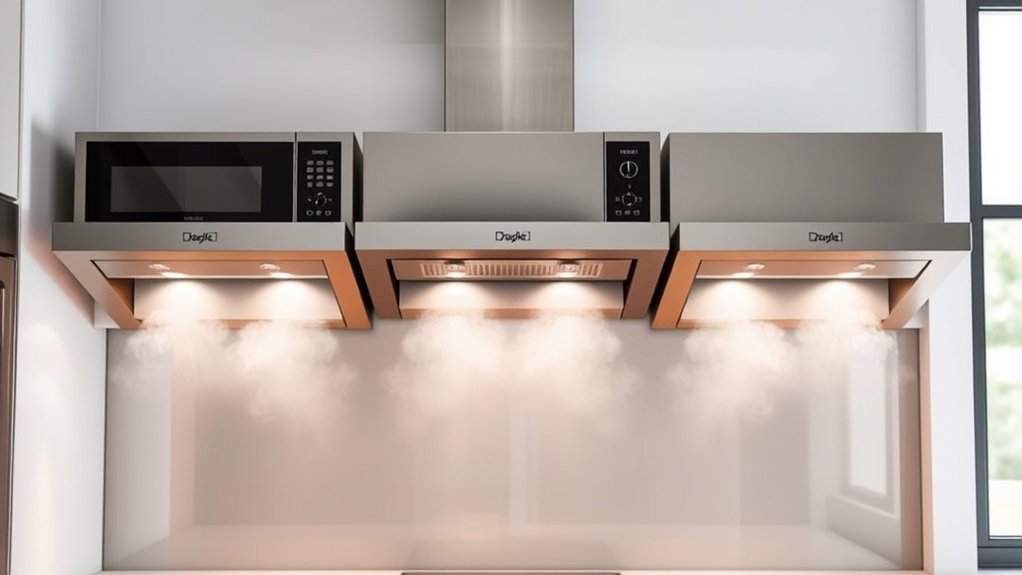
Top 3 Microwave Oven Exhaust Hoods for Efficient Ventilation
Cooking odors, smoke, and lingering grease can quickly make your kitchen uncomfortable. You’re not alone—many people struggle to find a microwave exhaust hood that offers strong ventilation without excessive noise or complicated maintenance.
For efficient ventilation, choose a microwave exhaust hood that matches your cooking style. The best overall model balances dependable airflow, multiple fan speeds, a cooktop light, and accessible filters.
A budget option keeps costs low with two fan settings and washable aluminum mesh filters.
For frying, searing, or grilling, choose a model rated at least 300 CFM with external venting and a broad intake area.
Compare duct requirements, noise, controls, and maintenance details to find your best fit, and you’ll uncover which features matter most.
Key Takeaways
- Choose a vented microwave exhaust hood for stronger removal of smoke, heat, grease, and moisture than recirculating models.
- Prioritize at least 300 CFM and a broad intake area for frying, searing, grilling, and other heavy cooking.
- Look for multiple fan speeds, manageable noise levels, responsive controls, and an effective cooktop light.
- Select models with accessible, washable filters and wipeable surfaces to simplify monthly cleaning and grease removal.
- Confirm cabinet dimensions, electrical access, duct size, mounting points, and door clearance before installation.
Best Overall Microwave Exhaust Hood: Balanced Power and Value
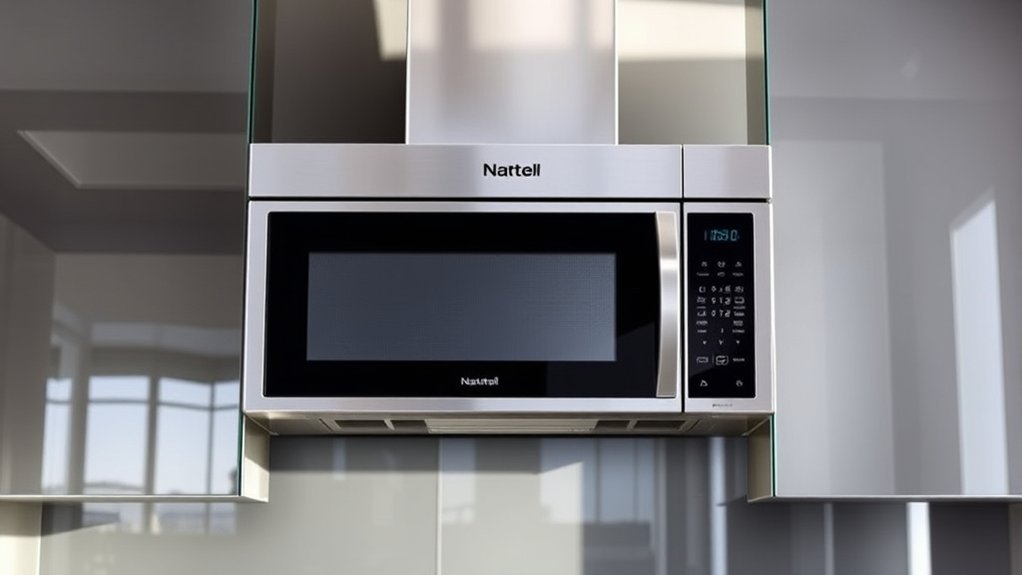
The best overall microwave exhaust hood balances strong ventilation, practical features, and a reasonable price. When you choose one, look for dependable airflow, multiple fan speeds, and a cooktop light that illuminates your workspace. A recirculating model can filter odors effectively, while a vented design usually removes smoke, heat, and moisture more efficiently. Check the noise rating, control layout, and filter availability before you buy, so daily cooking feels convenient rather than frustrating.
Installation tips include measuring the cabinet space, confirming electrical requirements, and matching the hood’s duct location to your kitchen setup. If you’re replacing an existing unit, verify mounting points and exhaust dimensions first. You’ll also want controls that respond easily and a door that opens without blocking nearby cabinets.
Review the maintenance requirements before committing. Choose accessible filters, wipeable surfaces, and clear replacement instructions. With balanced performance and thoughtful design, you’ll get reliable ventilation without paying for unnecessary features or sacrificing everyday usability.
Best Budget Microwave Exhaust Hood: Affordable Everyday Ventilation
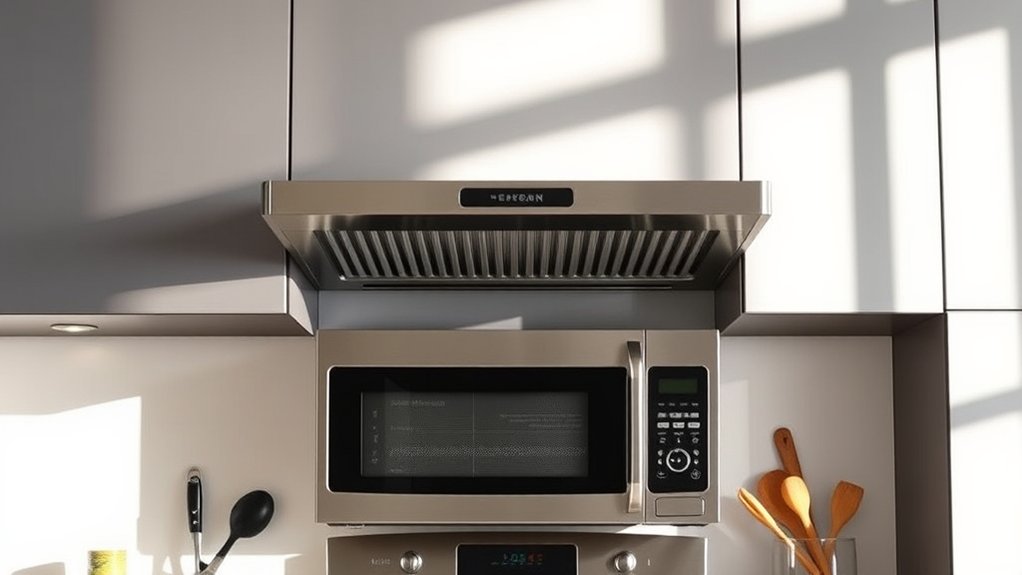
For affordable everyday ventilation, look for a budget microwave exhaust hood that delivers dependable airflow without unnecessary extras. Choose a compact model with simple controls, a washable filter, and either recirculating or vented operation to suit your kitchen.
| Feature | What to Check | Benefit |
|---|---|---|
| Fan settings | Two practical speeds | Easy daily control |
| Filter | Washable aluminum mesh | Lower replacement costs |
Before buying, measure your cabinet space and confirm the outlet location. Installation tips include securing the mounting bracket firmly, leaving clearance above the cooktop, and following the manufacturer’s wiring instructions.
If you’re replacing an older unit, verify that the duct connection matches before installation.
Use maintenance routines to keep performance consistent. Wash the filter monthly, wipe grease from the intake, and clean the underside with a mild degreaser.
A budget hood won’t need premium features to handle routine cooking odors and light steam. Compare warranty coverage, noise ratings, and user reviews, then select the model that offers reliable basics without stretching your budget.
Best for Powerful Ventilation: Handling Smoke and Heavy Cooking
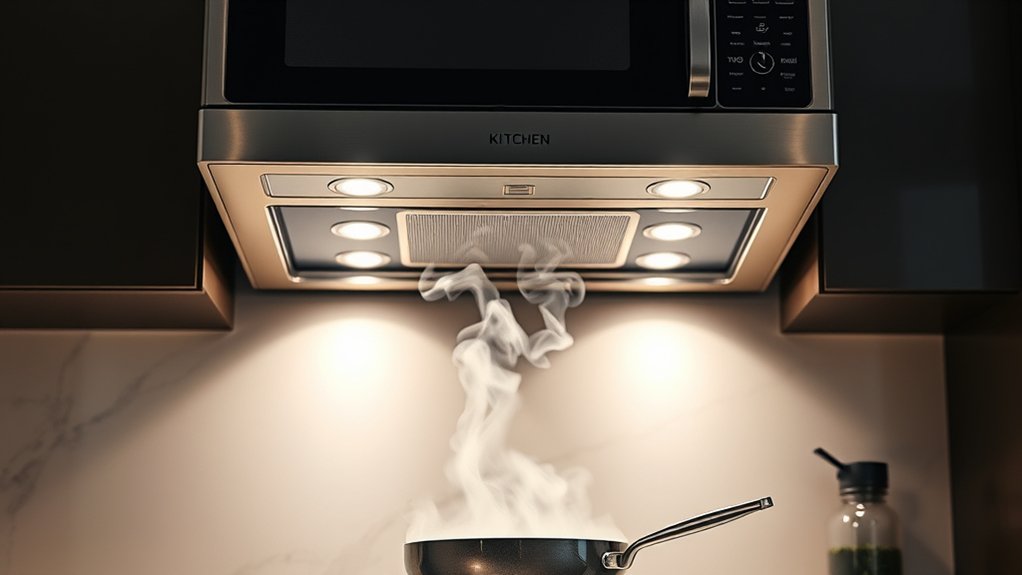
When searing, frying, or grilling creates heavy smoke, choose a microwave exhaust hood with high airflow, effective capture, and a properly installed external duct.
For demanding cooking, look for a model rated at least 300 CFM, though higher capacity may suit frequent wok cooking or indoor grilling. A broad intake area and strong capture design help pull smoke, grease, and steam away before they spread through your kitchen.
An external vent usually outperforms recirculating models because it expels contaminants instead of relying solely on air filtration.
Check the hood’s duct size, route, and installation requirements before buying. Short, straight ductwork improves performance, while sharp bends and undersized pipes restrict airflow.
You’ll also want to compare noise levels, especially if you cook often or share an open-plan living space. Select multiple fan speeds so you can use maximum power during heavy cooking and a quieter setting for everyday meals.
Clean filters regularly to maintain reliable ventilation and protect the fan.
Frequently Asked Questions
How Often Should I Clean My Microwave Exhaust Hood Filters?
You should clean your microwave exhaust hood filters every month if you cook frequently, especially when frying or grilling. For lighter use, clean them every two to three months.
This cleaning frequency supports effective filter maintenance and helps prevent grease buildup, odors, and reduced ventilation. Wash reusable metal filters with hot water and degreasing dish soap, then dry them completely before reinstalling.
Replace disposable filters according to the manufacturer’s instructions, usually every six to twelve months.
Can I Install an Exhaust Hood Without Existing Exterior Ductwork?
Yes, you can install an exhaust hood without existing exterior ductwork by choosing a recirculating, or ductless, model. It filters grease and odors, then returns air to your kitchen. Replace or clean its charcoal and grease filters regularly to support indoor air quality.
However, ductless ventilation won’t remove heat, moisture, or combustion pollutants as effectively as venting outdoors. For kitchen ventilation safety, follow manufacturer instructions and consider professional installation when modifying cabinets or electrical connections.
What Size Microwave Exhaust Hood Fits My Kitchen Space?
Measure your cooking area first: you’ll usually choose a microwave hood matching your range’s 30-inch width, though 24- or 36-inch models may suit smaller or larger spaces. Think of your kitchen as a tailored suit; the hood should fit its workspace without crowding surrounding cabinets.
Check cabinet height, depth, and clearance above the cooktop. Balance kitchen aesthetics with ventilation effectiveness, and confirm the model’s dimensions, mounting requirements, and duct direction before buying.
Are Microwave Exhaust Hoods Safe to Use Over Gas Stovetops?
Yes, you can safely use a microwave exhaust hood over a gas stovetop if you install and operate it according to the manufacturer’s instructions. Maintain the required clearance above the burners, confirm the unit is rated for gas cooking, and use proper venting whenever possible.
For kitchen safety, keep flames away from filters and combustible materials. Good ventilation efficiency helps remove heat, smoke, grease, and potentially harmful combustion gases effectively.
How Loud Are Microwave Exhaust Hoods During Regular Operation?
You’ll usually hear a steady kitchen hum, with microwave exhaust hoods producing roughly 45–65 decibels during regular operation, about as loud as a quiet conversation to moderate traffic. Lower fan settings stay gentler, while high settings create a stronger rush of air.
Check the manufacturer’s stated noise levels before buying. Models with sound insulation, brushless motors, or better airflow design often run more quietly. Clean filters also help prevent extra rattling and vibration.
Conclusion
Choosing the right microwave exhaust hood is like choosing a trusted guide through a smoky forest. The best overall model leads with balance, the budget pick opens a reliable path without draining your wallet, and the most powerful option clears even the thickest haze.
As you compare them, think beyond features: you’re investing in cleaner air, easier cooking, and a more comfortable home. Let your kitchen’s needs guide you, and you’ll find the right microwave exhaust hood to help every meal shine.