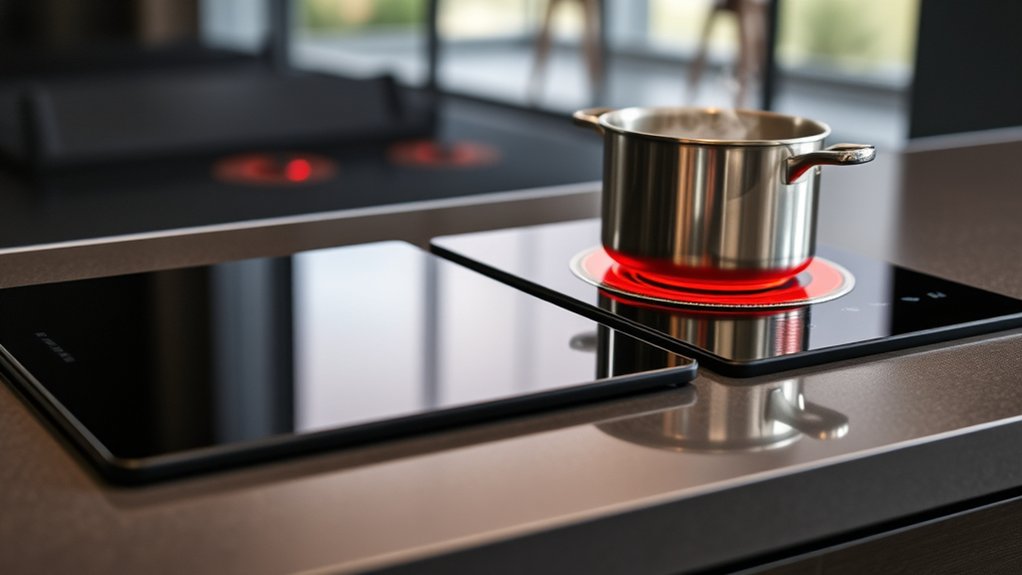
Induction Cooktop Vs Electric: 5 Key Differences
Choosing the right cooktop can be frustrating, especially when you want faster cooking, easier cleanup, and lower energy use. You’re not alone—many people struggle to decide between an induction cooktop and electric models because each has clear advantages.
Induction Cooktop Vs Electric: 5 Key Differences
Induction cooktops heat compatible pans directly with magnetic energy, while electric models heat elements that transfer warmth to cookware. You’ll usually boil water faster and use less energy with induction.
Its surface stays cooler, cleans more easily, and offers features like pan detection, though electric cooktops remain hot longer.
Induction costs more upfront, requires magnetic cookware, and may need electrical upgrades.
Electric models cost less and accept most pans. Keep exploring to compare each difference in detail.
Key Takeaways
- Heating method: Induction heats compatible cookware directly using electromagnetic energy. Electric cooktops heat an element that transfers heat to the pan.
- Boiling speed: Induction generally boils water faster and provides quicker temperature adjustments than conventional electric cooktops.
- Energy efficiency: Induction typically wastes less energy because heat is generated directly inside the cookware.
- Safety and cleaning: Induction surfaces remain relatively cool and are easier to clean. Electric elements stay hot after use.
- Cost and cookware: Electric cooktops cost less initially and accept most pans. Induction costs more and requires magnetic cookware.
How Do Induction and Electric Cooktops Heat?
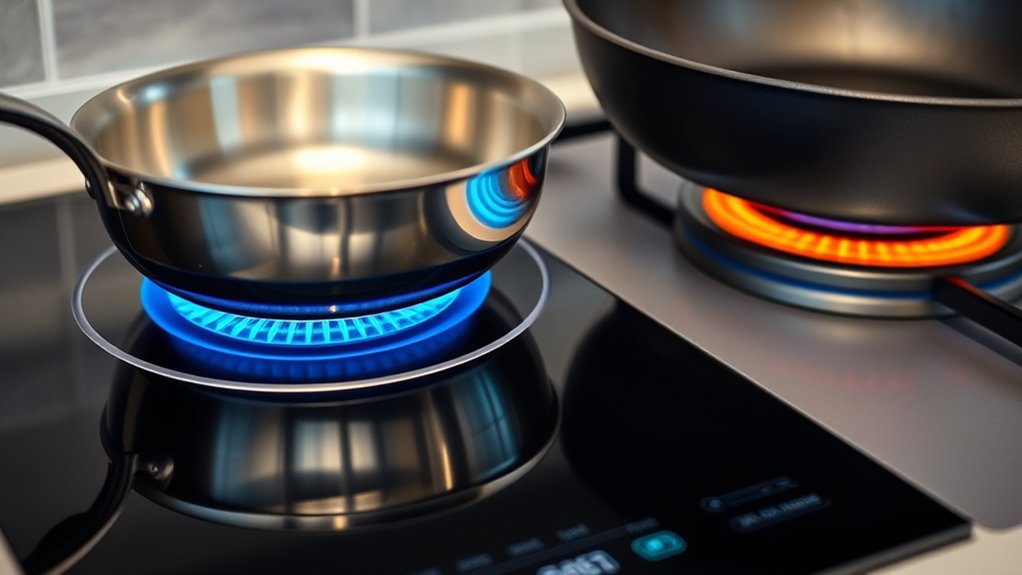
Induction cooktops use electromagnetic energy to heat compatible cookware directly, while electric cooktops send electricity through heating elements that transfer heat to your pots and pans. With magnetic induction, a copper coil beneath the glass surface creates a rapidly changing magnetic field.
Induction heats compatible cookware directly with electromagnetic energy, while electric cooktops rely on heated elements to transfer warmth.
When you place a compatible pan over it, the field generates electrical currents inside the pan’s metal base. The pan produces heat itself, while the cooktop surface stays relatively cooler.
Electric heating works differently. Electricity flows through a metal coil or radiant element, causing it to heat up. That element transfers heat to the cookware through direct contact or radiant energy.
The glass surface may also become hot because the pan transfers heat back to it. You’ll need flat, suitable cookware for either design, but induction requires magnetic materials, such as cast iron or magnetic stainless steel.
Your control experience also differs: induction responds to cookware placement, while electric elements continue heating after you adjust or remove the pan.
Which Cooktop Boils Water Faster?
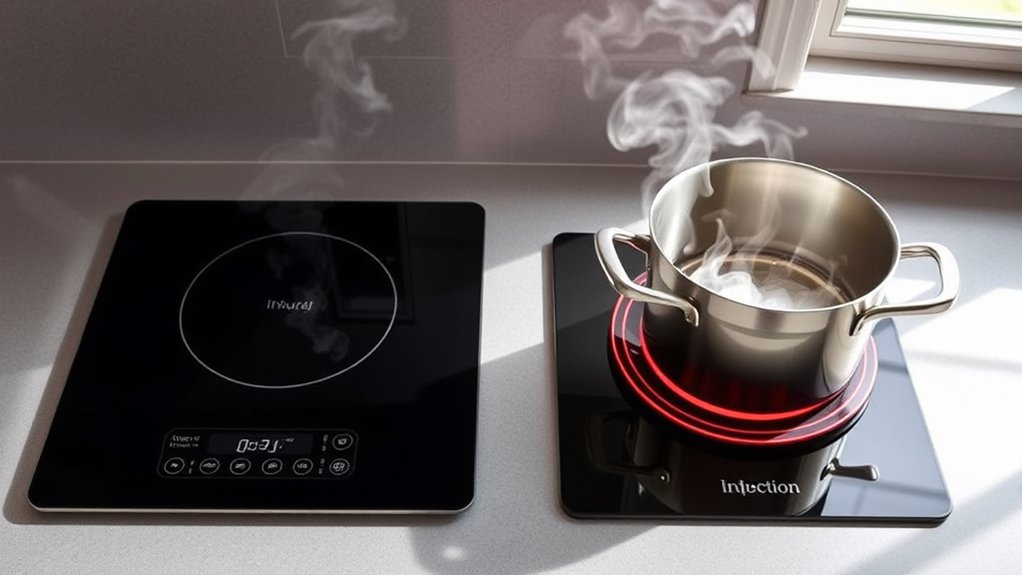
When speed matters, induction cooktops typically boil water faster than electric models because they heat the pan directly with less energy loss. If you’re preparing pasta, soup, or tea, you’ll usually notice induction reaches a rolling boil sooner.
Its magnetic field transfers heat directly to compatible cookware, while an electric element must first heat itself, then the pan, and finally the water. Your results will depend on wattage, pan size, lid use, and the amount of water you add.
Still, induction generally delivers superior boiling efficiency, especially when you use a flat, induction-ready pot that matches the cooking zone. You’ll also gain precise temperature control, allowing you to reduce heat quickly once the water boils and avoid unnecessary bubbling.
Electric cooktops can still perform well, particularly with high-powered radiant elements, but they often respond more slowly. For the quickest boil, choose induction and cover the pot to retain heat during cooking.
Which Cooktop Uses Less Energy?
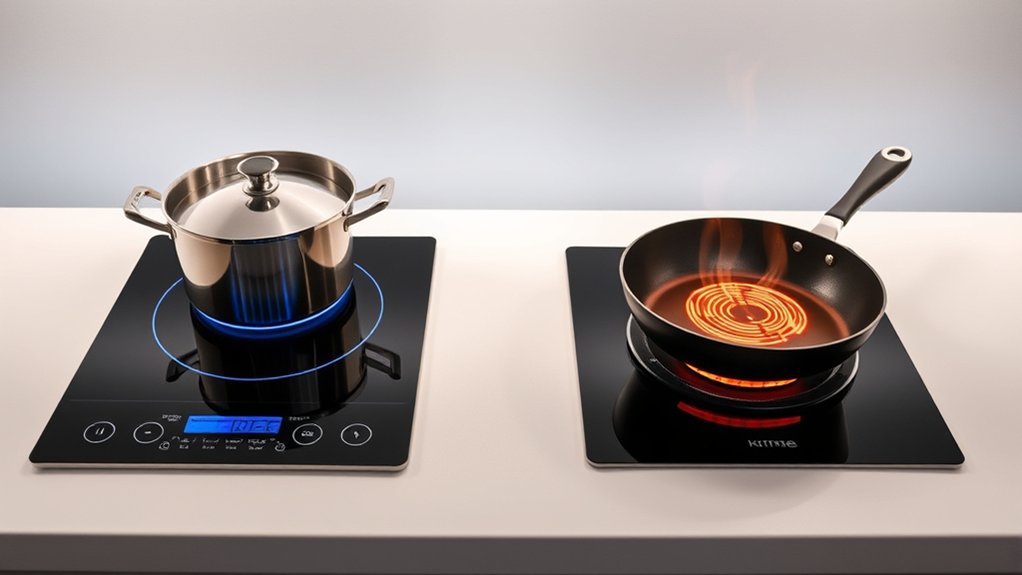
For lower energy use, induction cooktops generally outperform electric models because they transfer heat directly to compatible cookware. When you choose induction, electromagnetic energy heats the pan itself, so less power escapes into the surrounding air or the cooktop surface.
This higher energy efficiency can reduce electricity consumption during everyday cooking, especially when you prepare several meals each week.
Traditional electric cooktops heat a coil or radiant element first, then transfer that heat to your cookware. That extra step creates more energy loss and usually extends cooking times.
Although your exact savings depend on cookware, habits, power rates, and appliance settings, induction typically uses electricity more effectively.
Lower consumption can also reduce your environmental impact, particularly if your electricity comes partly from fossil fuels. You’ll get the greatest benefit by matching pan sizes to cooking zones, covering pots, and switching off the cooktop as soon as cooking finishes.
Check the manufacturer’s efficiency information before you buy.
Which Cooktop Is Safer and Easier to Clean?
Safety and cleanup are two areas where induction cooktops usually have an advantage. Their surface heats cookware directly, so the surrounding glass stays relatively cool. You’re less likely to burn yourself on a nearby area, and spilled food won’t bake onto the surface as quickly.
Many models also offer useful safety features, including automatic shutoff, pan detection, child locks, residual-heat indicators, and touch controls that prevent accidental adjustments.
Electric cooktops can still provide strong protection, but their heating elements remain hot after you turn them off. You’ll need to watch the hot-surface indicator and keep flammable items away until the area cools completely.
For cleanup, induction usually makes the job simpler because its smooth, flat surface has fewer hot spots and doesn’t trap debris around raised burners.
Effective cleaning methods for either type include wiping spills with a soft cloth after cooling, using a manufacturer-approved cooktop cleaner, and avoiding abrasive pads. You’ll get the best results by cleaning regularly and removing sugary spills promptly.
Compare Cooktop Cost, Cookware, and Installation
Induction cooktops usually cost more upfront than electric models, but they can save energy and deliver faster, more precise heating over time. You’ll also need compatible cookware: magnetic stainless steel or cast iron works, while aluminum, copper, and glass require a magnetic base. Electric cooktops accept nearly any flat-bottomed pan, helping you avoid replacement costs.
Induction costs more upfront but offers faster, efficient heating, while electric models accommodate more cookware and reduce replacement expenses.
Installation expenses vary. Both types may require a dedicated circuit, but induction models can demand higher electrical capacity. Have an electrician confirm your wiring before you buy, especially during a kitchen remodel.
You’ll also compare controls, finishes, and cooktop aesthetics, since sleek induction surfaces often complement modern kitchens.
- Induction: higher purchase price, specialized cookware, efficient operation
- Electric: lower entry cost, broader cookware compatibility, simpler budgeting
- Both: measure the opening, verify ventilation needs, and review warranty coverage
Finally, weigh brand reputation alongside price. A dependable manufacturer may offer better service, durable components, and clearer warranty support.
Your best choice balances upfront costs, installation requirements, cookware needs, and long-term performance.
Frequently Asked Questions
Can Induction Cooktops Affect Pacemakers or Other Implanted Medical Devices?
Yes, induction cooktops can potentially affect pacemakers or other implanted medical devices through electromagnetic fields, although modern devices usually include shielding. For medical safety, you shouldn’t assume complete protection.
Keep your implanted device at least two feet from the active cooking zone, avoid leaning over it, and follow your manufacturer’s guidance. If you notice symptoms or suspect device interference, stop using the cooktop and contact your doctor or device clinic promptly.
How Noisy Are Induction Cooktops During Everyday Cooking?
You’ll usually hear a gentle hum, like a refrigerator working nearby, rather than loud cooking noise. Induction cooktops typically produce about 30–50 decibels, though powerful settings may add buzzing, clicking, or fan sounds.
Your cookware matters: lightweight or uneven pans can vibrate more. Choose flat, heavy-bottomed pots and lower the power slightly for noise reduction.
During everyday simmering, sound levels generally fade into the background, and you’ll rarely find them distracting.
Can Either Cooktop Be Used During a Power Outage?
Neither cooktop will work during a power outage because both require electricity. For power outage compatibility, you’ll need an alternative, such as a gas stove with manual ignition, an outdoor grill, a camping stove, or a portable butane burner.
Follow safety instructions, ventilate indoor spaces properly, and never use charcoal grills or fuel-burning appliances indoors. These emergency cooking methods can help, but keep flammable materials away and maintain working carbon monoxide detectors for safer backup cooking.
What Cookware Materials Should Never Be Placed on an Induction Cooktop?
Skip cookware without magnetic material: you shouldn’t place pure aluminum, copper, glass, ceramic, or nonmagnetic stainless steel on an induction cooktop. These materials won’t activate the magnetic field, so they won’t heat properly, and loose metal layers may cause uneven cooking.
Choose compatible cookware made from cast iron, enameled iron, or magnetic stainless steel instead. If you’re unsure, test the base with a magnet; if it sticks firmly, your pan should work.
How Long Do Induction and Electric Cooktops Typically Last?
You can typically expect an induction cooktop to last about 10–15 years, while an electric cooktop often lasts 10–13 years. Your cooktop’s durability depends on usage, component quality, and proper care.
Induction models may last longer because their surfaces stay cooler, reducing heat damage. However, electronic controls can require costly repairs.
Your maintenance requirements remain modest: clean spills promptly, avoid impacts, and follow the manufacturer’s guidance to help either cooktop reach its expected lifespan.
Conclusion
Choosing between an induction cooktop and an electric cooktop comes down to your priorities. If you want faster boiling, better energy efficiency, safer surfaces, and simpler cleanup, induction is a strong choice—but you’ll need compatible cookware and a larger upfront budget.
Electric cooktops cost less initially and work with nearly any pan, though they heat and cool more slowly. Think of induction as the sprinter and electric as the steady jogger. Choose the option that best fits your kitchen and cooking habits.