How to Find the Serial Number on a Fridge in 7 Easy Steps
As an Amazon Associate, I earn from qualifying purchases. This post contains affiliate links. Which means I may earn a small commission when make a purchase through my links, at no additional cost to you.
Finding your fridge’s serial number can be frustrating, especially when you need it for a repair, warranty claim, or replacement part. You’re not alone—many people struggle to locate this small but important label.
This guide makes it easier by showing you how to find the serial number on a fridge in seven simple steps.
To find your fridge’s serial number, check the door frame first, especially near the hinges.
Next, inspect the refrigerator walls, ceiling, and crisper-drawer area.
Check the freezer walls, door edges, and behind door bins.
Look behind or beneath drawers for hidden labels.
If needed, unplug the fridge and carefully inspect its back panel.
Confirm the number against your receipt or warranty, then photograph and record it.
If it’s missing, manufacturer records and technician help can guide you further.
Key Takeaways
- Check the refrigerator door frame, especially the hinge side, for a label marked “Serial,” “S/N,” or “Model and Serial.”
- Inspect inside the refrigerator compartment, including side walls, ceilings, crisper-drawer areas, and behind removable drawers.
- Examine the freezer walls, door frame, and areas behind freezer bins for additional identification labels.
- If necessary, unplug and carefully move the refrigerator to inspect its back panel, avoiding cords, wiring, and water lines.
- Photograph and record the serial number exactly, then verify it against receipts, warranty records, or the owner’s manual.
Check the Fridge Door Frame First
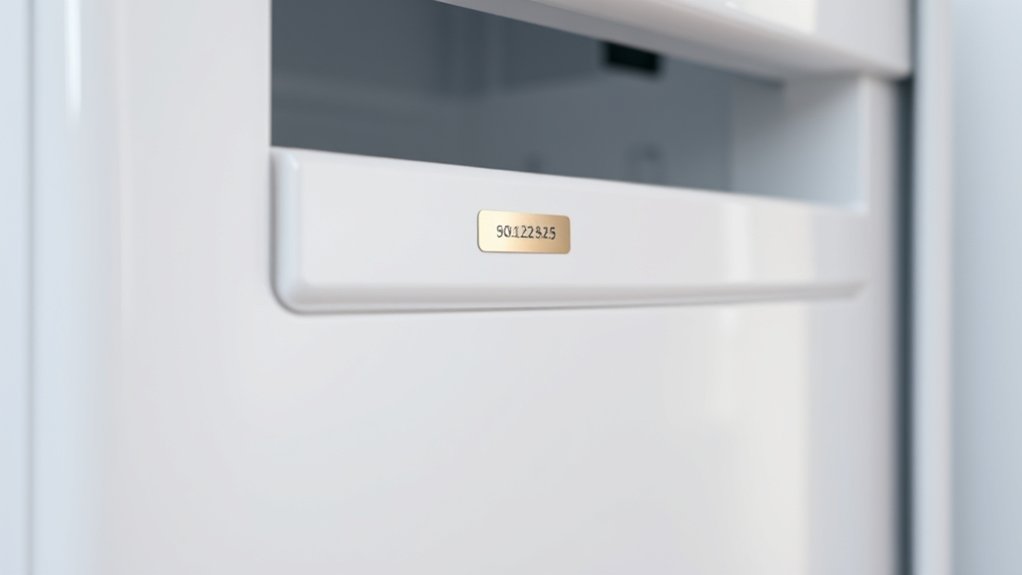
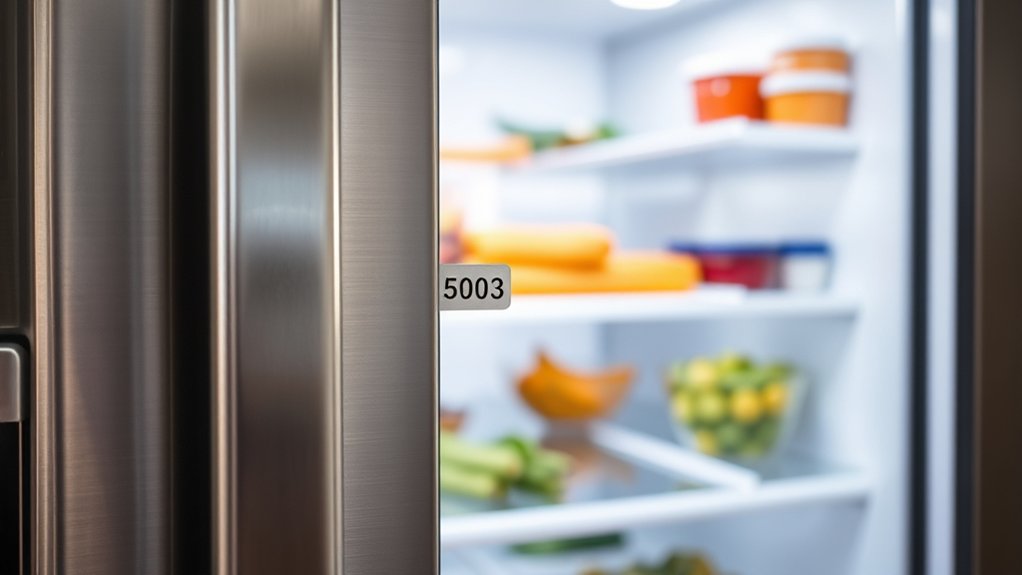
Start by opening the fridge door and inspecting the frame around the compartment. Focus on the vertical edges and the lower hinge-side area, where manufacturers often place a printed label, stamped plate, or small adhesive tag. You may need a flashlight to read faded text, but don’t remove trim or force the door seal.
Look for labels marked “Serial,” “S/N,” “Serial No.,” or “Model and Serial.” Write the number exactly as shown, including letters, hyphens, and leading zeros. Don’t confuse it with the model number, which identifies the product line rather than your specific appliance.
> Find the serial label, record every character exactly, and distinguish it from the refrigerator’s model number.
Famous fridge brands commonly position this label along the door frame, although the exact spot varies by model. Photograph the label before it fades or peels. The serial number becomes important when you request repairs, verify warranty coverage, order compatible parts, or register the refrigerator.
If you can’t find it, check the adjacent outer edges before moving elsewhere.
Look Inside the Refrigerator Compartment
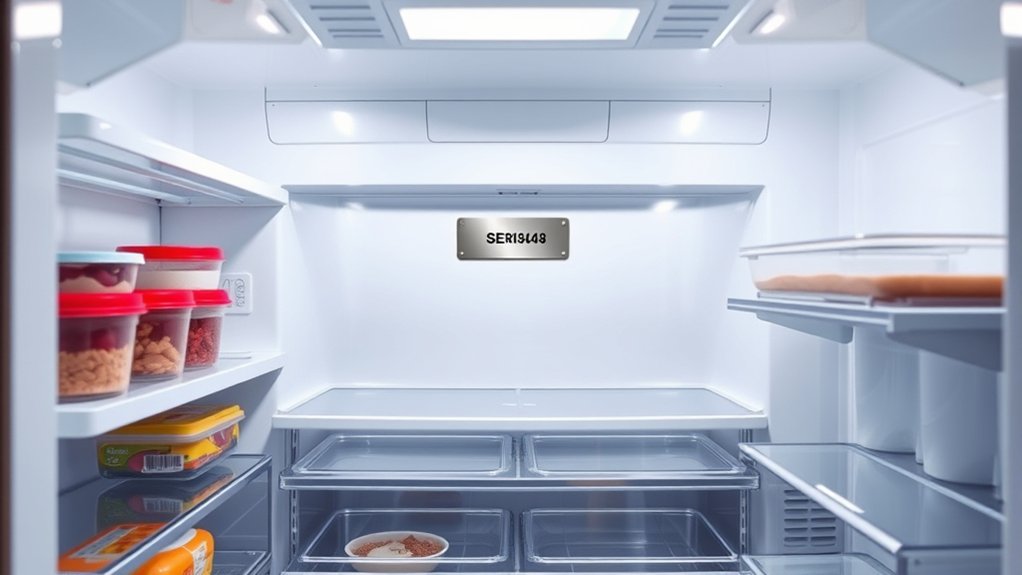
If you don’t find the serial number on the door frame, check the refrigerator’s side walls. You can also inspect the ceiling and look around the crisper drawers.
Check the Side Walls
Open the refrigerator compartment and inspect the inner side walls, especially near the crisper drawers or door hinges. Manufacturers often place the serial number location on a small white, silver, or black label. Use these steps:
- Remove nearby bins or shelves if they block your view, handling them carefully.
- Wipe away moisture, spills, or food residue so the label becomes readable.
- Search both side walls, since the tag may appear on either side of the compartment.
- Record every character exactly, including letters, numbers, and hyphens.
Use your phone’s flashlight to illuminate dim corners, but don’t scrape or peel the sticker. If you find multiple codes, look for labels marked “Serial,” “S/N,” or “Model.”
Recording this information supports appliance maintenance and helps you order parts or request service without moving the refrigerator. Keep the details in a safe place.
Inspect the Ceiling
Look at the ceiling inside the refrigerator compartment, where manufacturers may place the serial-number label near the front edge, light housing, or temperature controls. Open the door fully and remove items that block your view.
Use a flashlight to inspect the upper surface, especially around seams, corners, and the interior light cover. Don’t confuse the label with a ceiling fan model sticker or assume ceiling tiles are part of the refrigerator. These terms can help you distinguish unrelated markings if your appliance sits beneath them.
Read the label carefully, then record every letter, number, and hyphen exactly as shown. If the surface feels dusty, wipe it gently with a dry cloth first.
Avoid pulling off covers or using sharp tools, since you could damage wiring or the label.
Examine the Crisper Drawers
Next, check inside the refrigerator compartment around the crisper drawers. Manufacturers often place the serial-number label on a side wall, beneath a drawer, or behind the drawer’s frame. Remove each drawer carefully so you can inspect the hidden surfaces without damaging the tracks.
- Empty the drawer and set its contents aside.
- Pull it out fully, following the owner’s manual if it has release tabs.
- Use a flashlight to check the back wall, floor, and side rails for a printed label.
- Photograph the serial number before reinstalling the drawer.
Wipe away spills during your inspection. Good crisper maintenance keeps labels readable and prevents sticky tracks. If a drawer blocks access or won’t slide smoothly, don’t force it.
Check for a removable cover or consult the manufacturer’s drawer replacement guidance. Record every character exactly, including letters, numbers, and hyphens.
Check the Freezer Walls and Door
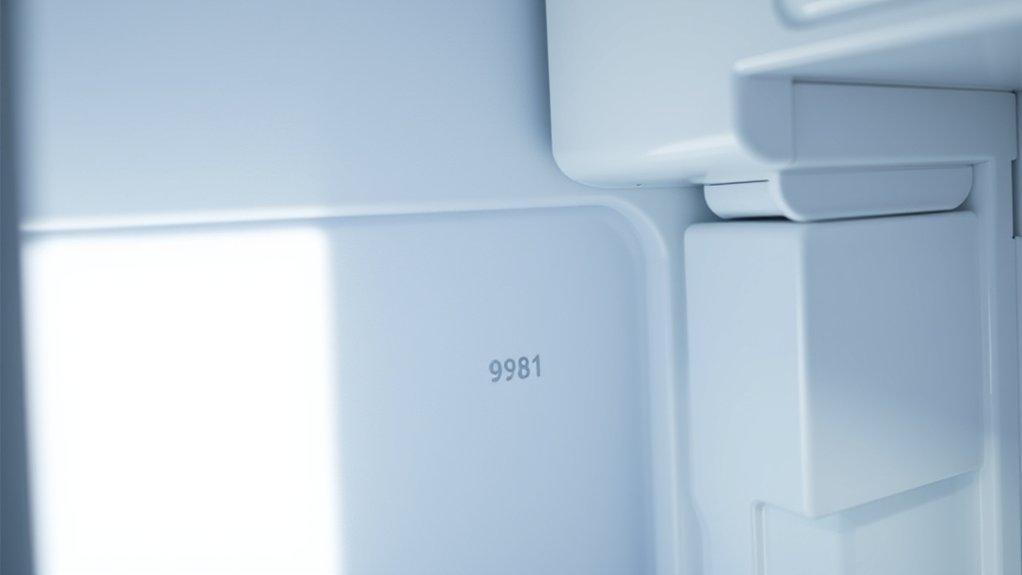
Check the freezer’s interior walls for a label or stamped serial number. Then inspect the door frame and look behind the door bins for another identification tag.
Inspect Interior Freezer Walls
If the serial number isn’t visible on the refrigerator’s exterior, open the freezer and inspect the interior walls and door frame. Focus on the freezer’s side walls, back panel, and areas near shelves or storage bins.
Manufacturers often place labels where frost, packaging, or food can hide them.
- Remove loose items so you can see each wall clearly.
- Check lower corners and edges for a small white, silver, or black sticker.
- Use your phone’s flashlight to read faint printing without scraping the surface.
- Photograph the label once you find it, including the model and serial numbers.
Serial number locations can vary by brand, so compare your label with the owner’s manual if necessary.
Record the information promptly. Accurate details support warranty claims, repairs, and inventory management.
Don’t peel off the label, since service technicians may need it later.
Check Freezer Door Frame
The freezer door frame is another common place to find the serial-number label. Open the freezer door fully, then inspect the inner frame around the opening. Check the upper corners, side edges, and lower frame, where manufacturers often place a small printed sticker or engraved plate.
Use a flashlight if the area looks dark, and wipe away frost, dust, or spills that could hide the text. Don’t confuse the serial number with the model number; both may appear on the same label, so read each line carefully.
This frame offers a practical serial number location when you can’t find the label on the freezer walls. Record the information exactly, including letters, numbers, and hyphens. You’ll need it for appliance identification, warranty service, repairs, or replacement parts.
Look Behind Door Bins
After removing the freezer door bins, inspect the wall behind each bin for a serial-number label. Use a flashlight to examine corners, seams, and recessed areas where labels can hide. Check the door’s inner panel, too, especially near hinges and the lower edge.
- Look for white, silver, or gray manufacturer stickers with barcodes, model information, and a serial-number field.
- Don’t overlook magnetic labels. They may sit over permanent markings or attach to the freezer wall.
- Wipe away frost and moisture gently so you can read faded characters without damaging the label.
- Record the number exactly, distinguishing letters from digits and noting any hyphens or spaces.
If you find several labels, choose the one marked “Serial,” “S/N,” or “Serial Number.” Take a clear photo for reference before replacing the bins. Confirm each bin clicks securely back into place afterward.
Search Behind the Crisper Drawers
Pull out the crisper drawers and inspect the back wall or floor of the refrigerator compartment for a printed label or stamped plate. Manufacturers often place the model and serial information in this less-visible area, where spills and food containers won’t cover it.
Use a flashlight to read faint lettering, and wipe away moisture or residue with a soft, dry cloth if necessary. Look for headings such as “Serial,” “S/N,” or “Service Number,” then compare the characters carefully.
Record the complete sequence, including letters, numbers, and any hyphens, because one missed character can prevent accurate support or registration. This spot may provide the serial number location when door labels aren’t present.
As you work through these fridge identification techniques, check both drawer openings and the exposed compartment floor. Don’t confuse the serial number with the model number, barcode, or manufacturing date.
If you find multiple labels, photograph each one for reference before replacing the drawers.
Check the Back Safely for the Serial Number
If you haven’t found the label inside the refrigerator, check the back of the appliance next. Before you move it, unplug the power cord and clear a safe path.
Ask someone to help you slide the fridge forward, especially on tile or uneven flooring. Don’t tip it or pull hard on the cord, water line, or ice-maker tubing.
Get help sliding the refrigerator forward, and avoid tipping it or straining connected cords, water lines, or tubing.
- Use a flashlight to inspect the upper rear panel, compressor area, and side edges.
- Look for a silver, white, or black sticker marked “Serial,” “S/N,” or “Model.”
- Read the label without touching exposed wiring, coils, or electrical components.
- Return the refrigerator gently, leaving space for ventilation and future Appliance maintenance.
Dust may hide the label, so wipe only the surrounding exterior with a dry cloth. Never remove a panel to search; a technician should handle internal access.
Understanding Serial number significance helps you locate the correct label. The model and serial numbers may appear together, but they identify different information.
Confirm and Save the Serial Number
Once you find the label, confirm the serial number by comparing each letter and digit with the appliance’s display, paperwork, or owner’s manual. Complete your serial number verification carefully, because similar characters, such as zero and the letter O, can cause errors.
Check the model number separately so you don’t record the wrong identifier.
Write the confirmed serial number exactly as shown, including hyphens, spaces, or additional letters. Add the refrigerator’s brand, model number, purchase date, and location to your serial number documentation.
You can record these details in a notes app, maintenance log, or appliance warranty file. Take a clear photo of the label and store it with your written record.
If you register the fridge or contact customer support later, you’ll have accurate information ready. Review your saved entry once more before closing the manual or putting away your records.
Keep the documentation somewhere secure and easy to access when arranging service, checking warranty coverage, or ordering compatible parts.
What If the Fridge Serial Number Is Missing?
When the serial number is missing or unreadable, check the owner’s manual, purchase receipt, warranty registration, or the manufacturer’s service records for a replacement reference. These sources may provide the exact number or enough details for the manufacturer to identify your refrigerator.
If you still can’t find it, follow these steps:
- Recheck the serial number location: Look behind the crisper drawers, along the interior wall, beneath the door seal, on the back panel, or near the compressor. Use a flashlight and clean dusty surfaces carefully.
- Record identifying details: Write down the brand, model number, color, size, and approximate purchase date. Take clear photos of the appliance and any remaining labels.
- Contact the manufacturer: Give customer support your model information and explain the missing serial number. They may confirm eligibility for repairs or parts.
- Ask an authorized technician: A service professional can inspect hidden labels and verify the appliance safely.
Don’t guess the number. Inaccurate information can delay warranty service, parts orders, or repair scheduling.
Frequently Asked Questions
Why Is the Fridge Serial Number Important?
Your fridge serial number identifies its exact model, production date, and manufacturing details. You’ll need it for warranty registration, service appointments, replacement parts, recalls, and troubleshooting.
It also helps confirm brand authenticity, protects you from counterfeit products, and lets technicians access accurate specifications. When you contact the manufacturer or retailer, providing this number speeds up support and reduces mistakes.
Keep a photo of the label and your purchase receipt together for convenient future reference.
Is the Serial Number the Same as the Model Number?
No, your serial number isn’t the same as your model number; think of them as your fridge’s fingerprint and family name. The serial number identifies your individual appliance, while the model number identifies its design or product line.
You’ll often find both together, but check the Serial number location carefully because labels vary. Model number differences matter when ordering parts, registering your fridge, or requesting service, so record each number exactly as printed.
Can I Find My Fridge’s Serial Number in the Owner’s Manual?
Yes, you can often find your fridge’s serial number in the owner’s manual, especially on the cover, warranty page, or product information section. Check for a label listing the model and serial numbers together.
If you don’t see it, inspect the refrigerator’s interior wall, door frame, or back panel. Keep the number handy for Appliance maintenance, repairs, and Warranty registration.
Don’t confuse the serial number with the model number; they’re different identifiers.
How Can I Identify a Fridge’s Serial Number Format?
You can identify a fridge’s serial number format by looking for a label marked “Serial,” “S/N,” or “Serial No.” It usually combines letters and numbers, often appearing beside the model number, though brands use different patterns.
Check the Serial number location inside the fresh-food compartment, on the door frame, behind the kickplate, or at the back. Don’t confuse color coding, barcodes, model numbers, or manufacturing dates with the serial number.
Who Should I Contact if the Serial Number Is Unreadable?
Contact the fridge manufacturer first if you can’t read the serial number; they’re your best source for identification help. You’ll find support through the company’s website, phone line, or authorized service center.
Mention the model number, purchase date, retailer, and any visible characters. This information can help verify your Manufacturers warranty and order Replacement parts.
If needed, ask an appliance technician or retailer to inspect the label. It’s detective work worthy of a thousand magnifying glasses!
Conclusion
Finding your fridge’s serial number doesn’t have to be frustrating. Start with the door frame, then check the refrigerator compartment, freezer, drawers, and back panel.
Once you locate it, photograph the label and save the number with your appliance records. For example, if your refrigerator stops cooling, you can give the technician the exact serial number and get the correct replacement part faster.
If the label’s missing or unreadable, contact the manufacturer with your model details for help. These steps make it easier to find the serial number on a fridge whenever you need it.