Discover the Best Sharpening Angle for Kitchen Knives Now!
Edge geometry, bevel angle, and blade apex all play critical roles in determining the cutting performance and durability of kitchen knives. Achieving the best sharpening angle for kitchen knives is a nuanced process that balances sharpness with edge retention, influenced by factors such as blade material, intended use, and knife design. Selecting an inappropriate angle can compromise the blade’s effectiveness, leading to premature dulling or even damage.
Selecting an inappropriate angle can compromise the blade’s effectiveness, leading to premature dulling or even damage. Precision in setting and maintaining the optimal sharpening angle ensures consistent cutting efficiency and enhances the knife’s lifespan. Understanding how these technical elements intertwine is essential for anyone aiming to maximize their kitchen tools’ potential.
Dive deeper to discover the complexities behind the best sharpening angle for kitchen knives and why it matters more than you might think.
Unlock the Secret to Perfectly Honed Blades with These Optimal Edge Tips
| Image | Product | Price |
|---|---|---|
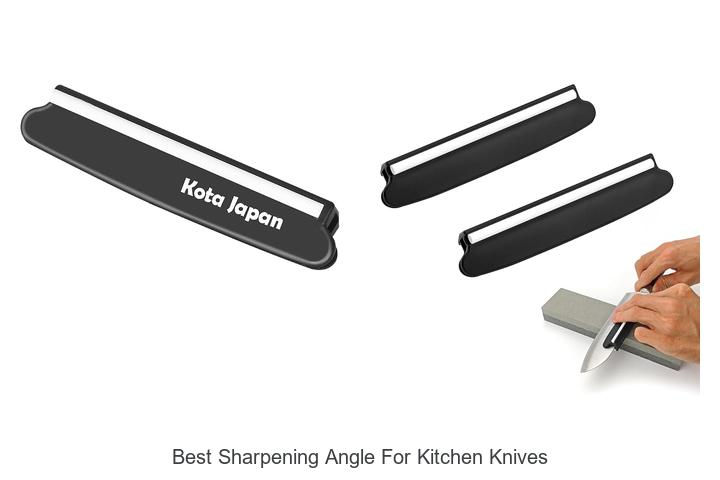
Pick 1  | Koja Fixed Angle Whetstone Sharpener Blade Guide | Check Price On Amazon |
Pick 2 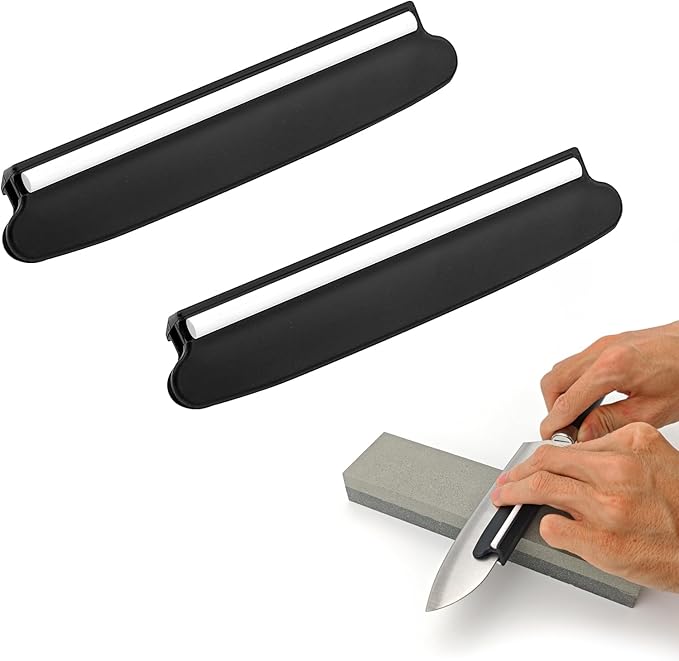 | Knife Sharpening Angle Guide 15° with Ceramic Glide, 2 Pack | Check Price On Amazon |
Pick 3 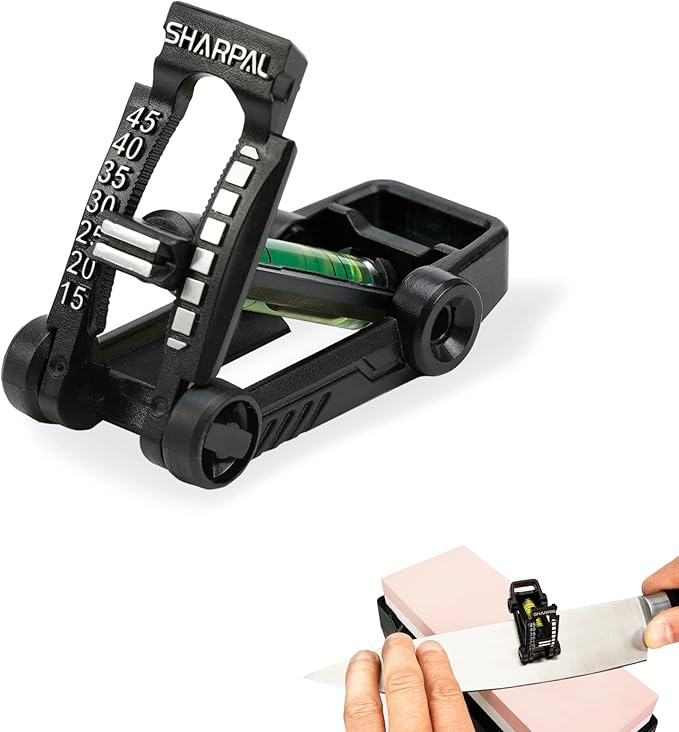 | SHARPAL 194H Whetstone Knife Sharpener | Check Price On Amazon |
1. Koja Fixed Angle Whetstone Sharpener Blade Guide
Achieve the perfect sharpening angle for your kitchen knives every time with the Koja Fixed Angle Whetstone Sharpener Blade Guide. Designed to remove guesswork, this tool ensures precise and consistent sharpening, helping both amateur cooks and professional chefs maintain razor-sharp edges effortlessly.
The Koja blade guide firmly attaches to a variety of kitchen knife blades, stabilizing them at a fixed angle during sharpening. Compatible with most standard knives, it eliminates uneven edges caused by freehand sharpening, and pairs perfectly with Koja’s whetstones to deliver professional-grade results at home.
Pros
- Maintains a consistent, repeatable sharpening angle for even edges.
- Universally fits most kitchen knives, increasing versatility.
- Works seamlessly with Koja whetstones for an all-around sharpening system.
Cons
- Limited adjustment options; mainly designed for standard blade sizes.
Offering a reliable, easy-to-use solution for maintaining the best sharpening angle for kitchen knives, the Koja Fixed Angle Whetstone Sharpener Blade Guide is an essential accessory for prolonging your blades’ lifespan and performance.
2. Knife Sharpening Angle Guide 15° with Ceramic Glide, 2 Pack
Achieve precision sharpening with the Knife Sharpening Angle Guide 15° featuring smooth ceramic glides. Perfect for both kitchen and chef knives, this 2-pack tool helps users maintain the best sharpening angle for kitchen knives, ensuring sharp, reliable edges every time.
Designed to clip securely onto knife spines, these angle guides provide a consistent 15° sharpening angle, ideal for common whetstones, diamond stones, and oil stones. The ceramic glide edges protect blades and stone surfaces, making them user-friendly tools for beginners looking to master knife maintenance at home.
Pros
- Maintains a steady 15° sharpening angle for optimal blade edge restoration
- Ceramic glide contact points reduce scraping and protect both blade and sharpening surface
- Includes two guides for simultaneous or backup use, suitable for most straight-edge kitchen knives
Cons
- Not recommended for very small pocket knives or blades with unusually thin spines
For home cooks and culinary enthusiasts seeking an effective, beginner-friendly sharpening aid, this angle guide set provides excellent value. Compared to other angle guides lacking ceramic edges, it offers smoother movement and better blade protection, making it a smart choice for maintaining kitchen knives efficiently.
3. SHARPAL 194H Whetstone Knife Sharpener
Achieve razor-sharp edges on your kitchen knives and woodworking tools with the SHARPAL 194H Whetstone Knife Sharpener. Designed for both beginners and professionals, it ensures consistent sharpening at the ideal angle, enhancing your blades’ performance and longevity with every use.
The SHARPAL 194H allows precise angle adjustment from 15° to 45°, making it versatile for a variety of blades including chisels and plane iron blades. Its magnetic base securely holds the guide in place during sharpening, enabling you to easily monitor progress.
Pros
- Adjustable angle range (15° to 45°) accommodates different blade types and sharpening preferences.
- Magnetic base provides stable positioning, allowing hands-free sharpening and accurate angle maintenance.
- Durable construction ensures dependable usage over time without losing precision.
Cons
- Some users may find the initial setup requires patience to achieve perfect angle calibration.
Whether upgrading your kitchen knives or maintaining woodworking tools, the SHARPAL 194H is an effective and affordable sharpening angle guide that combines versatility with ease of use. Compared to other angle guides, its magnetic base and broad angle range offer enhanced control and adaptability.
4. AGM Angle Wedges for Knife Sharpening

Achieve precision and consistency in your kitchen knife sharpening with the AGM Angle Wedges. Designed for home cooks and professionals alike, these guides help you maintain the best sharpening angle for kitchen knives, ensuring razor-sharp edges that last longer and perform better every time.
The Wedgek AGM Medium size angle wedges provide adjustable guides from 10 to 20 degrees, easily doubling to 39 degrees when combined. Crafted from durable plastic and accompanied by rubber bands, they securely fit your knives without slipping, promoting steady, accurate sharpening strokes for reliable blade maintenance.
Pros
- Adjustable angle range from 10° to 20°, extendable up to 39° by pairing wedges
- Lightweight and durable plastic construction with included rubber bands for secure fit
- Compact size (1-1/2″ length) perfect for most kitchen knives and easy storage
Cons
- Requires steady hands and attention as the guide does not move with the knife during sharpening
For anyone serious about maintaining their kitchen knives’ sharpness and optimal cutting performance, the AGM Angle Wedges offer precise angle control and user-friendly design that outperforms many standard sharpeners. Visit Wedgek’s tutorial for expert guidance and step up your sharpening game.
5. SHARPAL 196N Angle Pyramid Guide, 2-Pack

Achieve professional-level sharpness with the SHARPAL 196N Angle Pyramid Guide, designed to perfect every kitchen knife edge effortlessly. This dual-pack sharpening aid offers precision, versatility, and durability, making it an essential tool for anyone seeking the best sharpening angle for kitchen knives.
The set includes two uniquely designed angle guides—the orange version features a magnetic base for use with ferrous sharpening stones, while the black model has an anti-slip rubber pad suitable for ceramic whetstones and traditional stones. Both offer four universal angles—14°, 17°, 20°, and 25°—ensuring accurate sharpening regardless of blade size.
Pros
- Provides precise angle control for consistent, professional sharpening results
- Includes two bases—magnetic and anti-slip—compatible with various sharpening stones
- Versatile with four integrated angle options to fit a wide range of kitchen knives
Cons
- Designed primarily for non-commercial use, limiting heavy-duty or industrial application
Offering unmatched accuracy and adaptability, the SHARPAL 196N Angle Pyramid Guide stands out as a reliable sharpening companion. Whether maintaining your chef’s knife or restoring serrated blades, this tool ensures your knives perform at their sharpest with minimal effort.
6. Work Sharp Precision Adjust Knife Sharpener Kit
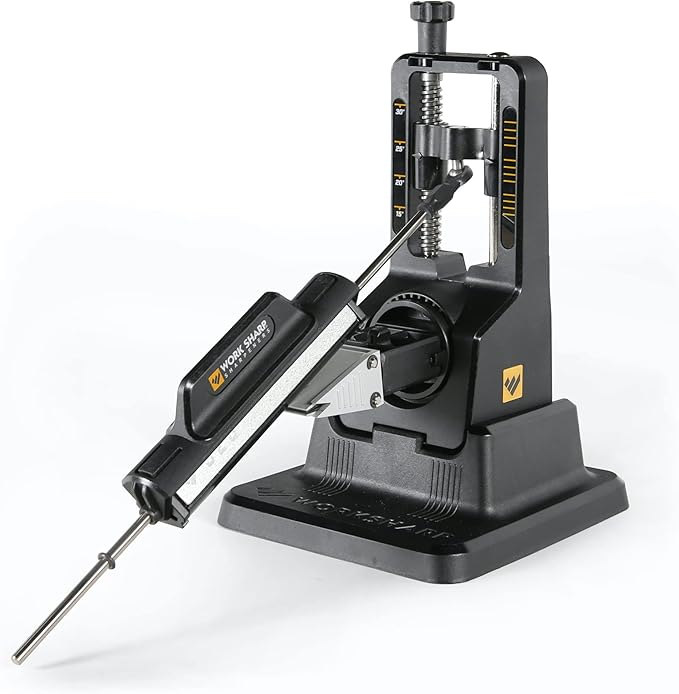
Achieve professional-level sharpness with the Work Sharp Precision Adjust Knife Sharpener Kit, designed for cooks and knife enthusiasts who demand precision. Its adjustable angle feature ensures the best sharpening angle for kitchen knives, delivering a razor-sharp edge every time with ease and consistency.
This sharpener provides a customizable experience with a 3-sided abrasive jig and clamp system, allowing angle adjustments from 15 to 30 degrees in 1-degree increments. Equipped with tri-brasive rods—coarse and fine diamond plus fine ceramic stones—it effortlessly restores and hones blades, including serrated edges, making it an indispensable tool in any kitchen.
Pros
- Precise angle adjustment from 15° to 30° for tailored sharpening
- Tri-brasive rods offer versatility with coarse and fine diamond, plus ceramic stones
- Stable v-block clamp secures knives for safety and consistent results
- Durable design engineered and calibrated in Oregon for high quality
- Includes a 3-year warranty, demonstrating confidence in product longevity
Cons
- May require practice to master angle adjustments and tool handling
For those seeking precision and reliability, the Work Sharp Precision Adjust Knife Sharpener Kit stands out by offering unmatched control and edge refinement. Compared to other sharpeners, its adjustable settings and tri-brasive stones provide professional results, making it a wise investment for maintaining kitchen knives perfectly sharpened.
7. Sharp Pebble Whetstone Knife Sharpener 1000/6000 Grit

Upgrade your kitchen knife maintenance with the Sharp Pebble Whetstone Knife Sharpener 1000/6000 Grit. Designed to make professional sharpening accessible to all, it combines precision angle guidance and superior materials to deliver razor-sharp edges effortlessly at home.
Featuring a dual-grit whetstone and an intuitive angle guide, this sharpening kit guarantees flawless results without prior experience. The durable sharpening surface resists warping and chipping, while the bamboo base ensures stability during use. Ideal for restoring and polishing almost any household blade.
Ideal for restoring and polishing almost any household blade.
Pros
- Automatic angle guide ensures consistent and accurate sharpening for beginners and experts alike.
- High-quality sharpening stone stays flat 3x longer than cheaper alternatives, providing quick cutting and durability.
- Complete kit includes non-slip bamboo base, instruction manual, and expert support, enabling a hassle-free experience.
Cons
- Requires soaking in water before use, which may add preparation time compared to some electric sharpeners.
Combining thoughtful design with professional-grade materials, the Sharp Pebble Whetstone Knife Sharpener offers lasting value by saving you time and money on knife maintenance. It outperforms many electric and inferior stones, making it the smart choice for home cooks seeking the best sharpening angle for kitchen knives at an affordable price.
8. SG01 Adjustable Knife Sharpening Angle Guide

Achieve professional-level edge precision with the SG01 Adjustable Knife Sharpening Angle Guide. Designed to help you maintain the best sharpening angle for kitchen knives, this tool ensures consistent bevels up to 30°, enhancing your blades’ sharpness and longevity with ease and accuracy.
Equipped with a micro-adjustable clamp and a smooth 304 stainless steel ball joint swivel, the SG01 allows effortless one-handed operation across sharpening stones. Compatible with various blade types and thicknesses, it includes protective accessories to safeguard your knives while sharpening and boasts durable construction for long-lasting use.
Pros
- Precise angle control with a micro-adjustable clamp up to 30° for optimal sharpening results
- Universal compatibility with stones 25-55mm thick and blades up to 7mm, suitable for kitchen and hunting knives
- Robust military-grade materials resist corrosion, ensuring durability in wet sharpening environments
Cons
- Does not include an angle gauge; requires separate purchase for digital angle measurements
For those seeking precision and ease in maintaining the perfect sharpening angle on kitchen knives, the SG01 guide offers unmatched durability and versatility. Its thoughtful design and included protection kit make it a strong contender among sharpening angle guides on the market.
9. Knife Sharpening Angle Guide Whetstone for Kitchen Knives

Achieve razor-sharp kitchen knives effortlessly with the Knife Sharpening Angle Guide Whetstone. Designed to ensure the perfect 15° sharpening angle every time, this dual-sided ceramic guide enhances precision and durability, making it a must-have tool for both professional chefs and home cooks seeking consistency in sharpening.
Featuring two compact and portable angle guides with a double-sided ceramic protective layer, the device offers excellent wear resistance and secure knife clamping. It fits most kitchen knives with up to 4mm spine thickness, allowing stable and labor-saving sharpening with no advanced skills required.
Pros
- Durable dual-sided ceramic design ensures long-lasting wear resistance.
- Fixed 15° angle guarantees consistent and precise sharpening results.
- Compact size (100mm x 20mm) makes it portable and easy to store.
- Compatible with most kitchen and chef knives for versatile use.
- Simple clamp design helps maintain the correct angle without professional skills.
Cons
- Not suitable for very small, ultra-short, or specially shaped knives.
Offering an excellent balance of durability and ease of use, the Knife Sharpening Angle Guide Whetstone stands out as a practical tool for maintaining your kitchen knives. Compared to other angle guides, its fixed 15° setting caters to the best sharpening angle for kitchen knives, delivering professional results without complexity.
10. Professional Knife Sharpening Angle Guide 2-Pack

Enhance your kitchen knife maintenance with the Professional Knife Sharpening Angle Guide 2-Pack, designed to help achieve the perfect sharpening angle effortlessly. Whether you are a novice or an experienced cook, these guides provide precision and durability for consistently sharp blades, ensuring your knives perform at their best.
Crafted with a unique ceramic protective layer, each guide offers accurate angle assistance, making it ideal to use alongside sharpening stones for fast and effective honing. Compact and stylish, the 10cm by 2cm size provides ease of use without sacrificing sturdiness, making these angle guides a reliable tool in any kitchen.
Pros
- Accurate angle guidance ensures optimal sharpening results for kitchen knives.
- Durable ceramic protective layer enhances longevity and protects blades during sharpening.
- Simple design requires no prior experience, making it perfect for beginners and professionals alike.
Cons
- May require pairing with a sharpening stone or system for best results, as it only provides angle guidance.
Offering precise angle control and durable construction, the Professional Knife Sharpening Angle Guide 2-Pack stands out as an essential accessory for maintaining your kitchen knives effectively. Compared to similar angle guides, its unique ceramic layer and easy-to-use design deliver excellent value for sharpening enthusiasts.
Find the Perfect Edge: Your Ultimate Guide to the Best Sharpening Angle for Kitchen Knives
Understanding sharpening angles
Sharpening angle refers to the specific angle at which a knife’s edge is ground to achieve optimal sharpness and performance. Most kitchen knives typically have sharpening angles ranging between 15 to 20 degrees per side, with Asian-style knives often leaning toward the lower end around 15 degrees, while Western-style knives usually feature angles closer to 20 degrees. This angle plays a crucial role in balancing sharpness and blade durability; a smaller angle generally delivers a finer, sharper edge but may require more frequent maintenance due to increased fragility.
This angle plays a crucial role in balancing sharpness and blade durability; a smaller angle generally delivers a finer, sharper edge but may require more frequent maintenance due to increased fragility. Conversely, a larger angle enhances the blade’s strength and longevity but might sacrifice some degree of sharpness.
Ensuring that the tool used for maintaining or adjusting this angle offers sufficient compatibility and adaptability with various knife types is vital. Devices or sharpening systems should easily accommodate different blade sizes and shapes, and the option to add attachments or modify settings can enhance usability across a range of knives.
Types of kitchen knives and their ideal angles
Different types of kitchen knives require specific blade angles to maintain their sharpness and performance effectively. Western-style knives, commonly known as European knives, typically feature a blade angle ranging from 20 to 22 degrees per side, which balances durability and sharpness, making them ideal for heavier tasks like chopping and slicing.
Specialty knives stand out with unique angle requirements tailored to their specific functions. For example, sashimi knives usually have an acute angle to allow for ultra-clean cuts of raw fish, whereas bread knives may have a less severe edge angle to maintain durability against tough crusts. Understanding the compatibility of these angles with sharpening tools and their adaptability over time ensures optimal maintenance and performance, making it essential to ensure that any sharpening device or method can accommodate these varying needs efficiently.
Understanding the compatibility of these angles with sharpening tools and their adaptability over time ensures optimal maintenance and performance, making it essential to ensure that any sharpening device or method can accommodate these varying needs efficiently.
Materials and their influence on sharpening angle
The type of steel used in a kitchen knife significantly impacts how the blade should be sharpened to maintain optimal performance. Harder steels, often composed of high carbon or stainless alloys, can hold a sharper edge for longer periods but typically require a finer sharpening angle to avoid chipping or damage.
In contrast, softer steels may tolerate a more obtuse angle, providing durability at the expense of edge retention. The relationship between the blade’s material and sharpening angle is crucial, as a sharper angle enhances precision cutting but can reduce the blade’s lifespan if not matched to the steel’s toughness.
Understanding blade material also guides sharpening techniques; certain compositions benefit from specific methods such as whetstone honing, stropping, or mechanical sharpening to preserve the steel’s integrity. For example, high-hardness blades often need steady, controlled strokes at precise angles, while softer blades might be more forgiving and quicker to refine. Ensuring compatibility between steel qualities and sharpening style ultimately supports both the knife’s effectiveness and its durability over time.
Choosing the right angle for your usage
Choosing the right angle for your usage involves more than just the sharpness of the knife’s edge. In everyday kitchen tasks, a versatile angle that provides a good balance between sharpness and durability is essential, as it allows for efficient cutting without the need for constant upkeep. For precision cutting, a finer angle can deliver exceptional sharpness, though it may require more frequent maintenance to keep the edge in top condition.
For precision cutting, a finer angle can deliver exceptional sharpness, though it may require more frequent maintenance to keep the edge in top condition. Additionally, personal skill level plays a key role—those comfortable with regular honing and sharpening can opt for a sharper angle, while beginners might benefit from a more forgiving edge that lasts longer between touch-ups.
| Aspect | Everyday Tasks | Precision Cutting |
|---|---|---|
| Edge Sharpness | Moderate sharpness for durability | High sharpness for fine cuts |
| Edge Longevity | Longer-lasting edge | Requires frequent retouching |
| Maintenance Frequency | Infrequent sharpening needed | Regular sharpening recommended |
| Skill Level | Suitable for all levels | Better for experienced users |
Different sharpening tools like whetstones, guided sharpeners, and rods offer varying levels of precision and control over the sharpening process. Whetstones require skill to maintain a consistent edge angle, while guided sharpeners and angle jigs provide built-in support to help keep the blade steady and ensure uniform sharpening.
Angle guides and jigs play a vital role by providing physical references that help users hold their knives at the optimal angle throughout sharpening. Tools with adjustable features allow users to customize the angle according to the specific type or preference of cut, making it easier to achieve professional results consistently.
The ability to fine-tune and hold angles steadily reduces the risk of uneven edges or damage to the blade, which can occur with freehand sharpening methods. Devices that incorporate simple mechanisms for angle adjustment and stabilization tend to enhance user confidence and efficiency, ensuring the knife’s edge is carefully honed with minimal effort.
Additional considerations before purchasing sharpening equipment
Ensuring compatibility with the types and sizes of kitchen knives you own is crucial, as some sharpeners are designed specifically for certain blade shapes or materials. The durability and build quality of the device play a significant role in long-term performance, with sturdy construction often translating to consistent results and safer use. Additionally, evaluating the price in relation to warranty coverage and brand reputation can provide peace of mind and better value, as reputable brands tend to offer reliable support and refine their products based on user feedback.
Additionally, evaluating the price in relation to warranty coverage and brand reputation can provide peace of mind and better value, as reputable brands tend to offer reliable support and refine their products based on user feedback.
FAQ’s
What Is The Ideal Sharpening Angle For Most Kitchen Knives?The ideal sharpening angle for most kitchen knives is typically between 15 to 20 degrees per side. This range provides a good balance between sharpness and durability for everyday use.
How Does The Sharpening Angle Affect The Sharpness And Durability Of Kitchen Knives?A smaller sharpening angle creates a sharper edge for precise cutting but reduces durability, making the blade more prone to dulling and chipping. Conversely, a larger angle produces a more durable edge that lasts longer but with slightly less sharpness.
Should Different Types Of Kitchen Knives Have Different Sharpening Angles?Yes, different types of kitchen knives should have different sharpening angles because the blade’s purpose and material determine the optimal edge for performance and durability. For example, Japanese knives often have a sharper, more acute angle around 15 degrees, while Western knives typically use a wider angle of about 20 degrees for increased toughness.
What Sharpening Angle Is Recommended For Japanese Kitchen Knives Compared To Western Knives?Japanese kitchen knives typically have a sharpening angle of about 10 to 15 degrees per side, which is sharper and more acute than Western knives that usually have an angle of 20 to 22 degrees per side. This narrower angle allows Japanese knives to achieve a finer, more precise edge.
How Can I Measure And Maintain The Correct Sharpening Angle At Home?You can measure and maintain the correct sharpening angle at home by using an angle guide tool or a simple protractor to set and check the blade’s angle. Additionally, practicing consistent hand positioning and using a sharpening stone or rod with marked angle indicators helps ensure accuracy.
Conclusion
Choosing the best sharpening angle for kitchen knives typically ranges between 15 to 20 degrees per side. A 15-degree angle offers a sharper, more precise edge ideal for delicate tasks, while 20 degrees provides greater durability for heavier cutting. Understanding the right angle ensures optimal performance and longevity, making your kitchen knives both efficient and long-lasting.
Understanding the right angle ensures optimal performance and longevity, making your kitchen knives both efficient and long-lasting.