Discover the Best Angle to Sharpen Kitchen Knives Fast!
Achieving the optimal edge geometry is paramount when it comes to maintaining sharp, efficient kitchen knives. The bevel angle, often measured in degrees, plays a critical role in the blade’s cutting performance, durability, and ease of sharpening.
Whether aiming for a razor-sharp chef’s knife or a more robust utility blade, the precise sharpening angle can significantly impact culinary precision and safety. Delving deeper into these technical considerations reveals why a one-size-fits-all approach falls short and how mastering the best angle to sharpen kitchen knives can elevate your kitchen craftsmanship to the next level.
Discover the Perfect Edge for Effortless Cutting Precision
| Image | Product | Price |
|---|---|---|
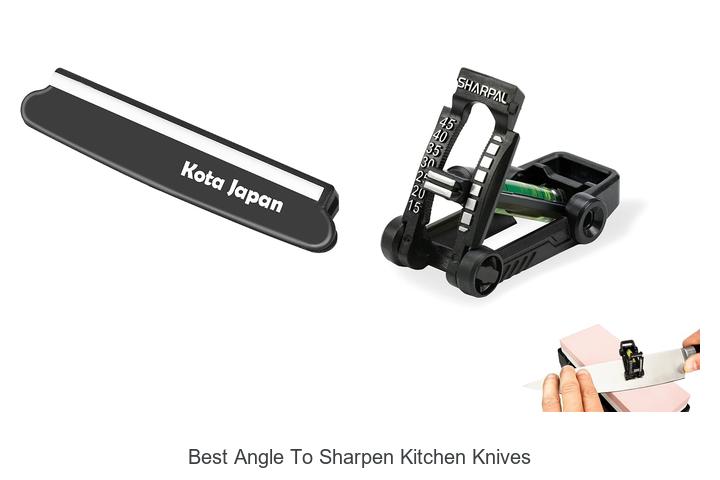
Pick 1  | Koja Fixed Angle Whetstone Blade Guide | Check Price On Amazon |
Pick 2 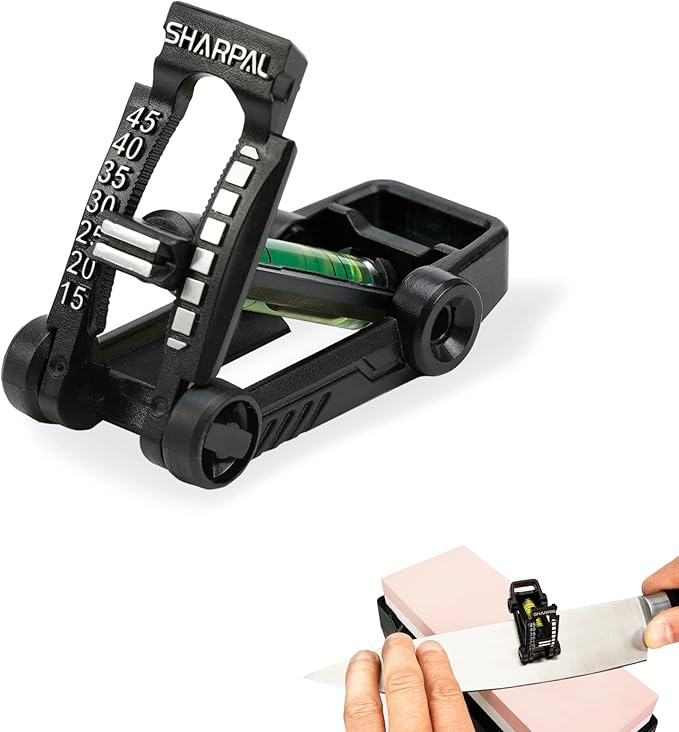 | SHARPAL 194H Whetstone Knife Sharpener with Angle Guide | Check Price On Amazon |
Pick 3 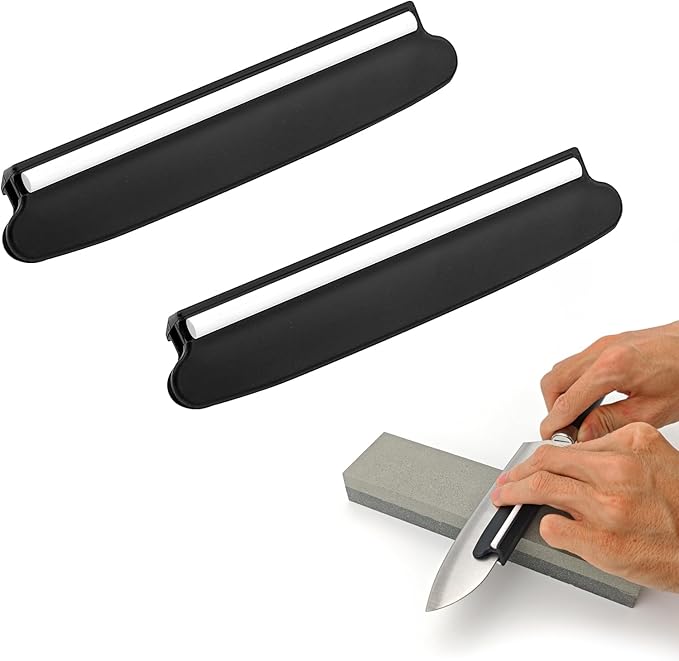 | Knife Sharpening Angle Guide 15° with Ceramic Glide, 2 Pack | Check Price On Amazon |
1. Koja Fixed Angle Whetstone Blade Guide
Achieve razor-sharp precision with the Koja Fixed Angle Whetstone Blade Guide, expertly designed to maintain the best angle to sharpen kitchen knives effortlessly. This essential tool ensures a consistent sharpening angle, delivering professional-quality edges at home without guesswork or uneven results.
The blade guide securely attaches to most kitchen knives, providing a steady, repeatable angle against any whetstone. Known also as a sharpening jig, it pairs perfectly with Koja’s whetstones, making your knife maintenance routine reliable and efficient.
Say goodbye to irregular edges caused by freehand sharpening.
Pros
- Ensures a consistent, optimal sharpening angle for precise edges.
- Compatible with a wide variety of standard kitchen knives.
- Works seamlessly with Koja whetstones for a comprehensive sharpening system.
Cons
- Limited to standard kitchen knife blade sizes; may not fit specialty knives.
For cooks and chefs seeking consistent sharpness with minimal effort, the Koja Fixed Angle Whetstone Blade Guide delivers unmatched control and accuracy. Its thoughtful design elevates your sharpening experience compared to freehand techniques or less stable guides.
2. SHARPAL 194H Whetstone Knife Sharpener with Angle Guide
Achieve precision sharpening with the SHARPAL 194H Whetstone Knife Sharpener with Angle Guide. Engineered to deliver razor-sharp edges consistently, it ensures your knives and blades are sharpened at the ideal angle for lasting sharpness and professional results every time.
Designed for both beginners and experts, the SHARPAL 194H allows customizable angle settings from 15° to 45°, accommodating various blade types and sizes. Its magnetic base provides stability during use, while the durable construction guarantees long-term reliability for all your sharpening needs.
Pros
- Adjustable angle guide from 15° to 45° for versatile sharpening applications.
- Magnetic base secures the guide in place, ensuring steady and accurate sharpening.
- Robust build quality made to endure frequent sharpening sessions.
Cons
- Some users may find the angle adjustment mechanism less intuitive initially.
For those seeking precision and ease in maintaining their kitchen knives or woodworking blades, the SHARPAL 194H stands out as a reliable and affordable tool. Compared to other angle guides, it offers greater flexibility and secure handling, making it an excellent choice for sharpening enthusiasts.
3. Knife Sharpening Angle Guide 15° with Ceramic Glide, 2 Pack
Achieve perfectly sharpened kitchen knives every time with the Knife Sharpening Angle Guide 15° with Ceramic Glide. Designed for both beginners and experienced cooks, this tool ensures consistent precision while sharpening, delivering professional-quality edges on your kitchen and chef knives.
Crafted to clip securely onto your knife spine, the 15° angle guide works seamlessly with whetstones, diamond stones, and oil stones. Its smooth ceramic glide edge protects both the blade and sharpening surface, enabling easy, repeatable sharpening strokes for straighter, sharper edges on most straight-edge blades.
Pros
- Maintains a consistent 15° sharpening angle to enhance blade sharpness and longevity
- Ceramic glide contact points minimize friction and protect both blade and sharpening stone
- Includes two guides per pack, perfect for multiple knives or sharing with a fellow home cook
Cons
- Not suitable for very small pocket knives or blades with unusually thin spines
Offering an affordable and beginner-friendly solution, these angle guides simplify the sharpening process, outperforming generic angle markers that lack glide protection. For cooks seeking better control while sharpening at the best angle to sharpen kitchen knives, this 2-pack is a practical addition to any kitchen toolkit.
4. Work Sharp Precision Adjust Knife Sharpener Kit
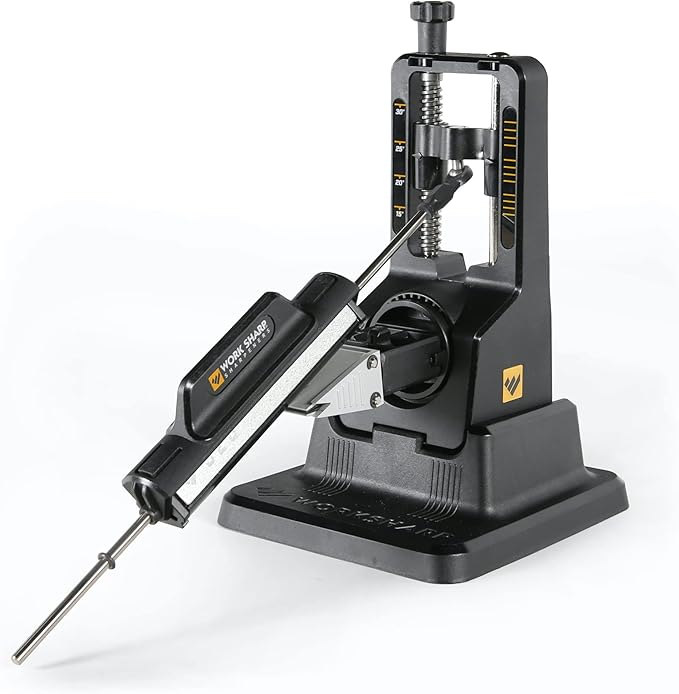
Achieve razor-sharp precision with the Work Sharp Precision Adjust Knife Sharpener Kit, designed to deliver consistent, professional-quality results right in your kitchen. Its adjustable sharpening angles and tri-rod abrasive system make honing every blade, from straight to serrated, simpler and more effective than ever before.
Equipped with a 3-sided abrasive jig-and-clamp, this kit ensures fast and precise sharpening with customizable angles ranging from 15° to 30° in 1-degree increments. The tri-brasive rods include coarse and fine diamond plus fine ceramic stones, while a secure v-block clamp stabilizes knives for safe, repeatable sharpening.
Pros
- Adjustable angles from 15° to 30° for optimal edge customization on all blade types.
- Tri-brasive rod system (diamond coarse/fine and fine ceramic) accelerates sharpening and polishing.
- Includes a sturdy v-block clamp and benchtop base for safe, consistent use every time.
Cons
- Price point higher than basic sharpeners, reflecting advanced features but may deter budget-conscious buyers.
For those seeking the best angle to sharpen kitchen knives, the Work Sharp Precision Adjust Knife Sharpener Kit offers unmatched versatility and precision. Its thoughtful design and reliable performance put it ahead of many conventional sharpeners, making it an excellent investment for both home cooks and professionals.
5. AGM Angle Wedges for Knife Sharpening

Sharpen your kitchen knives with precision and confidence using the AGM Angle Wedges for Knife Sharpening. Designed to help maintain the best angle to sharpen kitchen knives, these wedges ensure consistent results while prolonging your blade’s sharpness and performance.
The AGM Angle Wedges feature adjustable guides ranging from 10 to 20 degrees, expandable up to 39 degrees by pairing two wedges. Crafted from durable plastic and equipped with rubber bands, they secure the wedges firmly to your knife, allowing you to set the perfect sharpening angle before each stroke for optimal control.
Pros
- Adjustable angle guides from 10° to 20°, or up to 39° with combined wedges for versatile sharpening needs.
- Lightweight and durable plastic design with rubber bands for secure attachment and stability.
- Helps achieve consistent, precise sharpening angles, improving knife longevity and cutting performance.
Cons
- Requires steady hands and attention to maintain the set angle throughout sharpening strokes.
A reliable tool for both amateur and seasoned cooks aiming for professional knife maintenance, the AGM Angle Wedges offer precise angle control not commonly found in similar products at this price point. Enhance your sharpening routine and enjoy sharper knives with greater ease and accuracy.
6. Whetstone Knife Sharpening Angle Guide by Knife Sharpening

Sharpen your kitchen knives with precision and ease using the Whetstone Knife Sharpening Angle Guide by Knife Sharpening. Designed to help both beginners and professionals find the best angle to sharpen kitchen knives, this guide ensures a consistently sharp edge for improved cutting performance every time.
Featuring four universal angles—15°, 20°, 25°, and 30°—this angle guide caters to a variety of knives from delicate Japanese blades to heavy-duty survival tools. Its simple design fits most standard sharpening stones and whetstones, allowing users to maintain the perfect edge without guesswork or prior sharpening experience.
Pros
- Precise angle control for different knife types including Japanese and Western chef knives
- User-friendly for beginners while delivering professional-grade results
- Durable plastic construction reusable thousands of times, compatible with most sharpening stones
Cons
- Minor imperfections in 3D printing may affect aesthetics but not functionality
Offering a straightforward, reliable sharpening experience, this angle guide is a valuable tool for anyone wanting to extend the life of their knives and improve kitchen efficiency. Compared to freehand sharpening or less specialized guides, it provides greater accuracy and confidence.
7. Mercer Culinary Knife Sharpening Angle Guide

Achieve razor-sharp kitchen knives effortlessly with the Mercer Culinary Knife Sharpening Angle Guide, designed to help you master the best angle to sharpen kitchen knives with precision. Whether you’re a professional chef or a passionate home cook, this tool ensures your blades perform at their peak, enhancing your culinary experience.
Crafted from durable ceramic inserts, this sharpening guide trains users to maintain the ideal sharpening angle, restoring knives to optimal sharpness quickly and accurately. Compatible with 6 chef’s knives and larger, it provides consistent results, making it a reliable companion in any kitchen.
Pros
- Durable ceramic inserts offer long-lasting performance and resistance to wear.
- Simple design ensures consistent, precise sharpening angles every time.
- Perfectly suited for chef’s knives 6 inches and longer, covering most kitchen knives.
Cons
- Not ideal for smaller knives or specialized blade shapes.
The Mercer Culinary Knife Sharpening Angle Guide stands out by offering ease of use and accuracy superior to many basic sharpeners on the market. For cooks seeking a simple yet effective tool to maintain their kitchen knives, this guide delivers excellent value and performance at an affordable price.
8. AccuSharp Gourmet Series 15 Degree Knife Sharpener

Enhance your kitchen precision with the AccuSharp Gourmet Series 15 Degree Knife Sharpener, expertly designed to sharpen your knives at the ideal angle for optimal sharpness. Whether refining serrated or straight-edged blades, this sharpener offers a professional-level edge performance, boosting your culinary confidence effortlessly.
Equipped with reversible diamond-honed tungsten carbide blades, the sharpener provides durable, long-lasting sharpening at the perfect 15-degree angle favored by gourmet knives. Its ergonomic handle, secure grip, and full-length finger guard ensure safe, comfortable use in both home and commercial kitchens, maintaining your knives’ sharpness with ease.
Pros
- Precision 15º angle sharpening tailored for gourmet kitchen knives
- Durable diamond-honed tungsten carbide blades with reversible design to double lifespan
- Ergonomic, safety-focused design featuring a secure grip and full finger guard
Cons
- Limited to sharpening knives requiring a 15-degree angle; less versatile for other blade angles
For anyone prioritizing the best angle to sharpen kitchen knives, the AccuSharp Gourmet Series delivers reliable, easy-to-use sharpening at 15 degrees, ensuring your knives stay razor-sharp longer. Compared to other sharpeners with fixed or less precise angles, it offers a perfect balance of performance and safety at an exceptional value.
9. Rolling Knife Sharpener Kit with Leather Strop and Angle Guide

Achieve razor-sharp kitchen knives effortlessly with the Rolling Knife Sharpener Kit, featuring a magnetic precision angle guide and genuine leather strop. Designed for consistent, professional-quality sharpening at optimal angles, this kit simplifies maintenance and keeps your blades performing at their best for all your culinary needs.
The magnetic angle guide ensures exact positioning at 15° or 20°, catering to both delicate and durable edges, while the rolling sharpening cylinder delivers smooth, controlled manual sharpening without the learning curve of traditional whetstones. Follow up with the included leather strop to refine and polish each blade for a flawless finish every time.
Pros
- Magnetic angle guide maintains the best angle to sharpen kitchen knives for consistent results
- Manual rolling mechanism offers controlled sharpening, removing minimal metal and preventing blade damage
- Includes a genuine leather strop to professionalize the knife edge with a polished, burr-free finish
Cons
- Primarily designed for steel kitchen knives; not suitable for ceramic or specialty blades
For home chefs seeking an easy, effective sharpening solution that rivals more complex whetstones and aggressive pull-through devices, this kit strikes the perfect balance of precision and simplicity. It’s ideal for maintaining knives regularly, ensuring long-lasting sharpness without professional skills or extra effort.
10. SHARPAL 196N Angle Pyramid Guide, 2-Pack

Achieve professional-grade sharpness with the SHARPAL 196N Angle Pyramid Guide, a precision tool designed to help you find the best angle to sharpen kitchen knives effortlessly. Its unique design ensures consistent sharpening for blades of all sizes, boosting your cutting performance every time.
This 2-pack sharpening guide features four universal angles—14°, 17°, 20°, and 25°—to cover a wide range of blade types. The orange guide includes a magnetic base that securely attaches to ferrous metal sharpening stones, while the black guide comes with an anti-slip rubber pad for use on ceramic whetstones or traditional stones, offering versatility for any sharpening setup.
Pros
- Ensures precise sharpening angles for consistent, professional-quality edges
- Two different base designs provide compatibility with various sharpening stones
- Durable construction backed by a 3-year warranty for reliable long-term use
Cons
- May require initial practice to master angle placement for best results
Offering an affordable and versatile sharpening solution, the SHARPAL 196N Angle Pyramid Guide stands out as a smart choice for home cooks seeking precision and ease. Its dual-base design and multiple angle options make it superior to many single-angle guides on the market, delivering better control and sharper blades.
Master the Perfect Cut: How to Find the Best Angle to Sharpen Kitchen Knives Like a Pro
Understanding knife sharpening angles
Different kitchen knives perform best at specific sharpening angles, typically ranging between 15 to 20 degrees per side. This range ensures an optimal balance between sharpness and edge durability, allowing blades to slice efficiently without dulling too quickly.
Sharpening at a narrower angle, closer to 15 degrees, results in a finer, sharper edge ideal for delicate tasks but may require more frequent maintenance. Conversely, angles near 20 degrees create a sturdier edge that withstands heavy use but might sacrifice some precision. Understanding the angle preferences of your knives helps enhance their performance and longevity, ensuring each blade delivers consistent results in the kitchen.
Types of kitchen knives and their ideal sharpening angles
Many sharpening tools offer features that allow integration with smart devices or accessory attachments, enhancing usability and precision. Such options can make maintenance easier by providing guided assistance or customizable settings.
Understanding how these factors affect compatibility and future upgrades can ensure the tool adapts to evolving needs, making it a valuable long-term addition to the kitchen arsenal.
Choosing the right sharpening tools
Different sharpening tools offer unique advantages that directly impact how effectively and conveniently kitchen knives can be maintained. Manual sharpeners typically require physical effort and provide a hands-on approach, allowing for greater control over the sharpening process.
Electric sharpeners, on the other hand, offer speed and ease of use, often featuring built-in guides to maintain a consistent angle automatically.
Sharpening stones paired with angle guides cater to users who prefer a traditional method, granting flexibility in achieving the perfect edge by adjusting pressure and angle manually. Tools equipped with adjustable angle settings stand out for their precision, enabling users to customize the sharpening angle to suit various knife types and their specific cutting styles. This adaptability not only enhances the blade’s sharpness but also extends the knife’s lifespan.
| Type | Pros | Cons |
|---|---|---|
| Manual Sharpeners | Greater control, affordable, portable | Requires skill and effort, slower process |
| Electric Sharpeners | Fast, easy to use, consistent angle | More expensive, less control over pressure |
| Sharpening Stones + Angle Guides | Precision, customizable, traditional technique | Requires practice, time-consuming |
| Adjustable Angle Tools | Versatile, precise angle settings, prolongs blade life | Typically more expensive |
Assessing the options in terms of compatibility with different knives and ease of modifying sharpening angles helps ensure the tool meets both performance and user needs. This consideration is key to achieving sharp, durable edges that enhance kitchen efficiency and safety.
Factors to consider before purchasing a sharpening tool
Many sharpening tools offer the ability to work with various knife styles and blade angles, making versatility an essential aspect. Ensuring the tool accommodates different angles helps maintain consistent sharpness across a range of blades, from delicate paring knives to heavy-duty cleavers.
Durability and material quality also play a critical role in long-term performance. High-quality construction, often involving sturdy metals and abrasion-resistant surfaces, ensures the sharpener remains effective even after frequent use.
Investing in a tool built with strong materials not only prolongs its lifespan but also maintains the sharpening accuracy needed for optimal knife upkeep.
| Feature | Benefit |
|---|---|
| Angle Compatibility | Supports sharpening various blade types for consistent edge quality |
| Ease of Use | Guides and adjustability help maintain precise angles effortlessly |
| Material Durability | Resists wear and extends the tool’s usable life |
User skill level and maintenance needs
Understanding how a knife sharpener interfaces with other tools and its potential for upgrades can significantly impact its overall performance and user experience. For beginners, devices that offer straightforward attachments or guidance systems help maintain consistent angles, making the sharpening process less intimidating and more effective. Advanced users often benefit from models that support additional components or customization, allowing for precise adjustments aligned with professional techniques.
Considering whether the sharpener can integrate with various accessories or accommodate future enhancements ensures it remains a versatile part of the kitchen arsenal over time.
Budget and value for money
Devices that offer multiple ways to interface with tools or accessories often provide greater flexibility and ease of use, enhancing the overall sharpening experience. Products designed with the ability to accommodate attachments or upgrades tend to extend their useful life, ensuring a better return on investment over time. This adaptability can also simplify maintenance, as users can replace or add components without needing to buy a completely new system.
This adaptability can also simplify maintenance, as users can replace or add components without needing to buy a completely new system.
- How well the device fits into your existing kitchen setup, allowing for seamless operation without extra hassle.
- The availability of replacement parts, which directly affects durability and long-term costs.
- The presence of extra functions—such as angle guides or adjustable sharpening settings—that may initially increase the price but boost convenience and precision.
| Aspect | Impact on Cost | Effect on Usability |
|---|---|---|
| Interfacing capabilities | May raise initial price due to complex design | Provides versatile usage and better handling |
| Availability of parts | Reduces long-term costs through easy maintenance | Ensures consistent performance over time |
| Additional features | Increases upfront investment | Enhances precision and user control |
Balancing these elements leads to an optimal blend of quality and affordability, making sure the device remains a reliable and efficient tool for years to come.
FAQ’s
What Is The Ideal Sharpening Angle For Kitchen Knives?The ideal sharpening angle for kitchen knives is typically between 15 to 20 degrees per side. This range provides a good balance between sharpness and blade durability for most kitchen tasks.
How Does The Sharpening Angle Affect The Sharpness And Durability Of Kitchen Knives?A smaller sharpening angle produces a sharper edge ideal for precision cutting but tends to wear out more quickly, while a larger angle creates a more durable edge that is less sharp but better suited for heavy-duty tasks. Balancing the angle depends on the knife’s intended use and desired longevity.
Should Different Types Of Kitchen Knives Have Different Sharpening Angles?Yes, different types of kitchen knives should have different sharpening angles to optimize their cutting performance and durability. For example, thinner blades like Japanese knives typically require sharper angles (around 15 degrees), while sturdier Western knives often use wider angles (around 20 degrees) for added strength.
How Can I Measure And Maintain The Correct Sharpening Angle At Home?You can measure and maintain the correct sharpening angle at home by using an angle guide tool or a sharpening jig to keep your knife steady at a consistent angle. Additionally, practicing with a protractor or smartphone apps designed for angle measurement can help ensure precision while sharpening.
What Tools Are Best For Sharpening Kitchen Knives At The Optimal Angle?The best tools for sharpening kitchen knives at the optimal angle are a whetstone or a guided sharpening system. These tools allow precise control over the sharpening angle, ensuring a sharp and consistent edge.
Conclusion
Finding the best angle to sharpen kitchen knives is crucial for maintaining their performance and durability. Typically, sharpening between 15 to 20 degrees per side offers an ideal balance of sharpness and edge strength. A sharper angle suits delicate tasks, while a slightly wider angle ensures longer-lasting edges.
Proper technique and consistent angles help keep your knives efficient and safe in the kitchen.