What Is the Ideal Temperature Inside the Freezer?
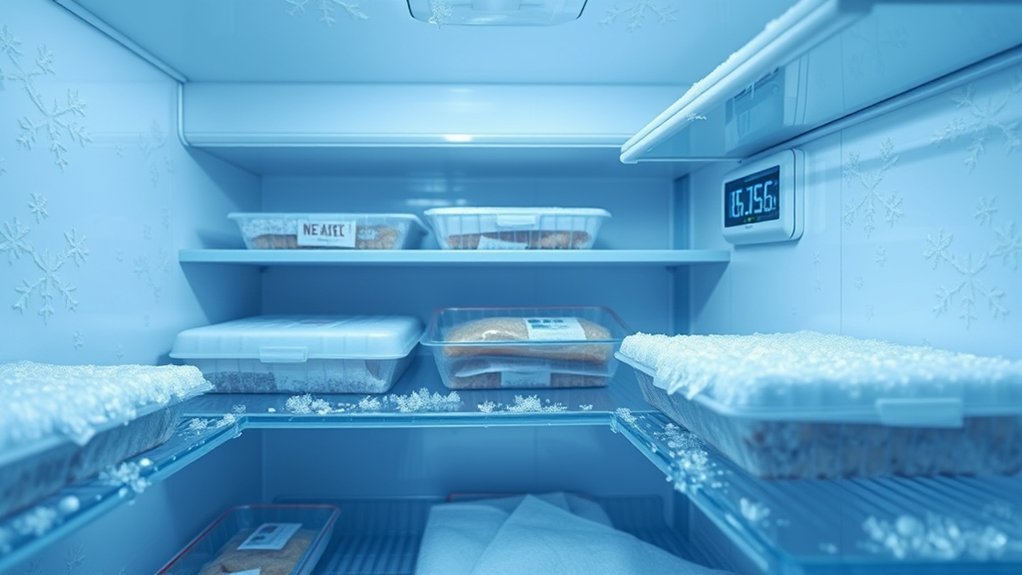
Many people struggle to keep their freezer at the right setting. If food develops freezer burn, loses its texture, or starts thawing unexpectedly, you’re not alone. Finding the ideal temperature inside the freezer can help protect your food and reduce waste.
Set your freezer to 0°F (-18°C) or lower to keep food safe and preserve its flavor, texture, and nutrients. Use an appliance thermometer on the center shelf because the display may show only the setting, not the actual temperature.
Keep vents clear, avoid overloading, and limit door openings to prevent temperature fluctuations. If food begins thawing, check its safety before refreezing or discarding it.
The following sections explain how to measure, adjust, and maintain the ideal temperature.
Key Takeaways
- Set your freezer to 0°F (-18°C) or lower for safe, high-quality food storage.
- For extended storage, temperatures between 0°F and -10°F (-18°C to -23°C) are suitable.
- Use an appliance thermometer to verify the actual temperature, since built-in displays may show only settings.
- Place the thermometer on the center shelf, away from vents, and check it regularly.
- Keep the door closed, avoid overloading, and maintain clear vents for consistent freezing temperatures.
What Is the Ideal Freezer Temperature?
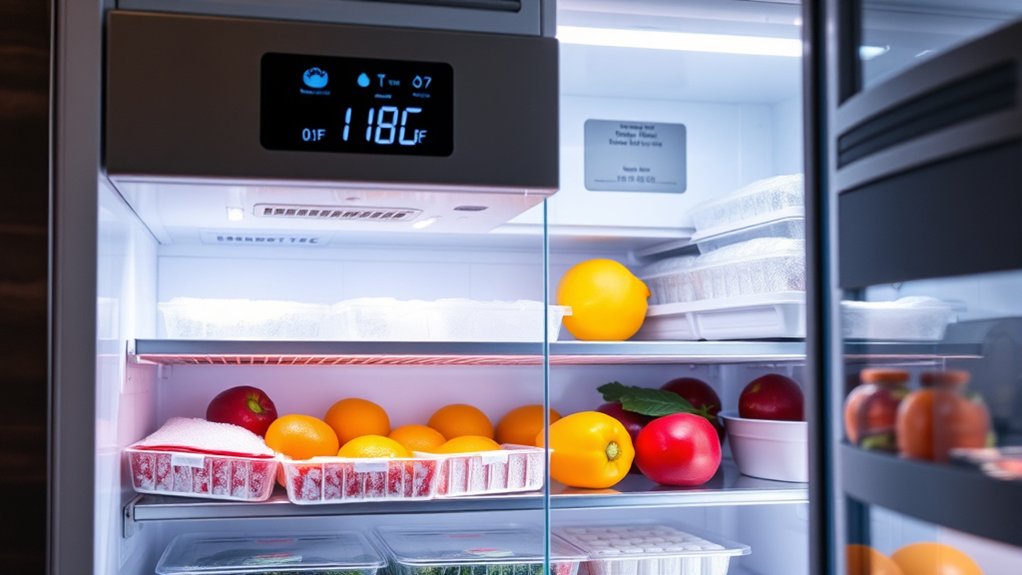
The ideal freezer temperature is 0°F (-18°C) or lower, which keeps food safely frozen while preserving its quality. Use your freezer’s control panel or dial to set this target, then check the actual temperature with a separate appliance thermometer. Built-in displays can be inaccurate, especially after loading groceries or opening the door frequently.
For reliable temperature control, leave space around packages so cold air can circulate. Practice effective Freezer organization by grouping similar items, labeling containers, and keeping older food near the front.
Don’t pack shelves so tightly that vents become blocked, and make sure the door gasket seals firmly. If you notice frost buildup, unusual warmth, or frequent temperature swings, inspect the seal and clean the vents.
Energy efficiency improves when you limit door openings, allow hot food to cool before freezing, and keep the freezer reasonably full. Place it away from ovens, direct sunlight, and other heat sources to reduce cooling demands.
Why 0°F Keeps Food Safe and Fresh
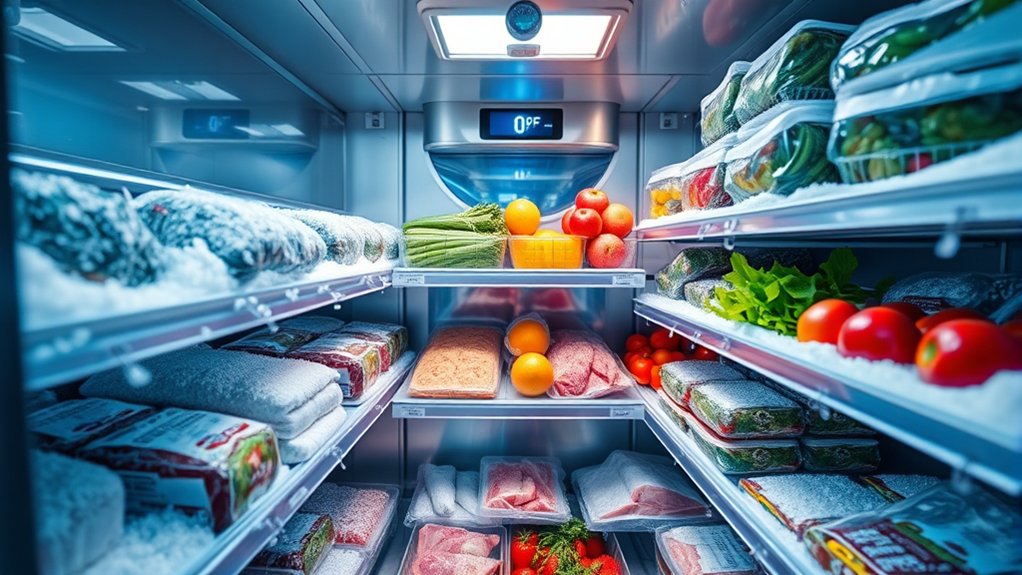
At 0°F (-18°C), freezing slows microbial growth and nearly stops the chemical reactions that cause food to spoil. When you keep your freezer at this temperature, you protect flavor, texture, and nutrients while extending storage life.
Consistent cold also limits ice crystal formation, helping meats, vegetables, and frozen desserts stay closer to their original quality. You’ll waste less food and feel confident serving meals your household has stored.
| Benefit | What you preserve | Why it matters |
|---|---|---|
| Safety | Slower microbial growth | Greater peace of mind |
| Flavor | Natural taste | More satisfying meals |
| Texture | Food structure | Better bites |
| Value | Stored groceries | Less waste |
A stable 0°F setting supports dependable results, especially when you avoid frequent door openings and organize packages for quick access.
Labeling items with dates helps you use older food first, so your careful storage supports both your budget and your family’s well-being.
That simple setting quietly protects today’s groceries and tomorrow’s meals, giving you reassurance whenever you open the door.
How Cold Is Too Cold for Food?
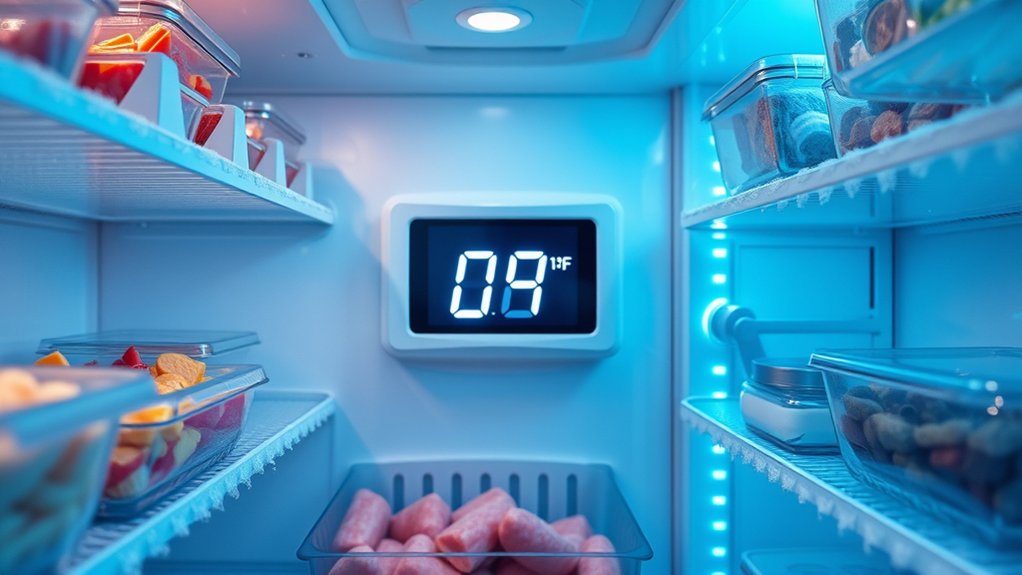
Set your freezer to 0°F to keep food as safe and fresh as possible. If the temperature drops much lower, watch for signs of freezer burn, like dry or discolored patches. Freezer-burned food usually isn’t unsafe to eat, but improper storage can still lead to food safety risks.
Ideal Freezer Temperature
For most home freezers, 0°F (-18°C) is the ideal temperature because it keeps food safely frozen while preserving its quality. You can set the appliance between 0°F and -10°F (-18°C and -23°C) when storing food for extended periods.
Colder settings usually won’t improve safety, but they may increase energy use and strain the compressor. Check the temperature with an appliance thermometer, since the built-in dial may not show actual conditions.
Good Freezer organization also helps cold air circulate and prevents warm spots.
| Setting | Practical result |
|---|---|
| 0°F (-18°C) | Recommended balance |
| -10°F (-23°C) | Longer-term storage |
| Below -10°F | Little added benefit |
Energy efficiency improves when you keep the door closed, maintain proper seals, and avoid overpacking. Follow your food labels and appliance manual for specific storage guidance.
Signs of Freezer Burn
Even at the recommended 0°F (-18°C), food can develop freezer burn when packaging lets moisture escape. You’ll notice pale, grayish-brown patches, dry edges, or ice crystals on the food’s surface.
Meat may look leathery, while vegetables can appear shriveled or discolored. These changes often signal moisture loss rather than a freezer that’s too cold.
Check whether wrapping has tears, loose seals, or trapped air, and repackage items tightly in moisture-resistant materials. Freezer insulation also matters: weak insulation can create warmer spots and temperature swings that encourage ice formation.
Power fluctuations may repeatedly warm and refreeze food, increasing surface damage. Although freezer-burned food may taste dry or stale, you can often trim affected areas and adjust your packaging and storage habits to limit further quality loss.
Track your freezer’s temperature with a separate thermometer.
Food Safety Risks
A freezer generally can’t be too cold to make properly stored food unsafe; temperatures below 0°F (-18°C) mainly affect quality by causing extra ice formation and texture changes. Ice crystal formation can dry food, but it doesn’t usually create harmful bacteria.
Your bigger safety risk comes from temperatures that rise above 0°F, especially during outages, frequent door opening, or equipment failure. In that range, food can partially thaw, allowing microbes to multiply before refreezing.
You shouldn’t rely on appearance or smell alone to judge safety. Use an appliance thermometer to monitor the freezer, and keep the door closed during a power interruption.
Check your freezer insulation and door seal, since damage can let warm air enter. If perishable food stays above 40°F for over two hours, discard it rather than taking chances.
Is Your Freezer Cold Enough to Keep Food Safe?
Your freezer should stay at 0°F (-18°C) or colder to keep food safe. If your food feels soft, has excessive ice buildup, or appears to have thawed and refrozen, the freezer may not be cold enough. Check the temperature with an appliance thermometer, then adjust the settings as needed.
Recommended Freezer Temperature
- Keep air flowing: Don’t pack shelves so tightly that cold air can’t circulate.
- Choose suitable packaging: Use airtight Storage containers or freezer-safe bags to reduce moisture loss and protect flavor.
- Organize by priority: Place newer packages behind older ones, and label each item with its name and freezing date.
Keep the door closed as much as possible to preserve a steady temperature. Frozen desserts also stay firmer and taste better when you maintain the recommended setting.
Adjust the control gradually, allowing several hours for the freezer to stabilize.
Signs Food Isn’t Frozen Safely
If your freezer stays warmer than 0°F (-18°C), food may soften, develop large ice crystals, or show signs of freezer burn. Ice crystals inside packaging often signal temperature fluctuations, especially when they appear unusually large or the food feels partly thawed.
You might also notice changes in texture, color, odor, or excessive liquid after thawing. Frost buildup on packages or freezer walls can indicate warm air entering through a damaged gasket, frequent door opening, or an overloaded compartment.
Check your appliance thermometer and confirm it reads 0°F (-18°C) or lower. Move questionable food to a working freezer, but don’t taste it to test safety.
Discard perishable items that have stayed above 40°F (4°C) for over two hours, or one hour in hot conditions.
Measure Your Freezer Temperature
To measure your freezer temperature accurately, place an appliance thermometer in the center, away from the walls and vents. Close the door and wait several hours, preferably overnight, before checking the reading.
Your freezer should maintain 0°F (-18°C) or colder to keep food safely frozen.
- Check the reading when you open the door briefly, then record it.
- Repeat the test on another day to spot temperature swings.
- Compare results after loading, defrosting, or adjusting the control.
If the temperature rises above 0°F, lower the setting slightly and allow the freezer time to stabilize. Don’t rely solely on the dial, because its numbers may not match the actual internal temperature.
Accurate Temperature calibration helps you confirm safe storage and supports Energy efficiency by preventing unnecessary overcooling.
Replace the thermometer if it gives inconsistent readings or shows visible damage. During testing, keep the door closed as much as possible, since warm air can temporarily distort results.
Regular checks help you catch mechanical problems before they spoil food, increase energy use, or create unsafe storage conditions.
Where Should a Freezer Thermometer Go?
Place your freezer thermometer on the center shelf to get the most representative reading. Keep it away from vents, since direct airflow can affect the temperature. When checking it, view the display at eye level so you can read it accurately.
Center Shelf Placement
Put the freezer thermometer on the center shelf, where it reflects the temperature of the main storage area rather than the warmer air near the door or the colder conditions beside the cooling vents. Keep it level and easy to read without moving nearby food. This position supports accurate checks and better freezer organization.
- Choose a visible spot: Place the thermometer toward the front of the center shelf, so you can check it quickly.
- Allow a stable reading: After loading groceries or adjusting the setting, wait several hours before judging the temperature.
- Check it regularly: Record readings to notice gradual changes before food quality suffers.
During a power outage, use the center-shelf reading to decide whether your frozen food remains safely solid. Keep the door closed, and compare later readings for recovery. Replace or reposition the thermometer if it becomes buried or blocked by packages.
Away From Vents
Keep the freezer thermometer away from vents, where direct cold air can produce a misleadingly low reading. Choose a spot on the center shelf, positioned away from the freezer’s air outlets and inlet openings.
The vents location matters because forced air may chill the thermometer faster than surrounding food, making the displayed temperature seem safer than it truly is. You’ll get a more representative reading when air circulates naturally around the device instead of blowing directly across it.
Don’t place the thermometer against a vent cover, rear wall, or side wall, where localized cooling can distort results. Avoid areas beside frequently opened baskets, which can also introduce temperature fluctuations.
Leave space around the thermometer, and keep it clear of packages that could block airflow or press against its sensor.
Check At Eye Level
Set the freezer thermometer at eye level so you can read it without opening the door for long or moving stored food. Choose a spot on the front shelf, away from vents, walls, and the door. This position reflects the temperature around your everyday frozen items and makes changes easy to notice.
- Keep the thermometer visible during regular checks.
- Leave space around it for accurate airflow.
- Record readings before adjusting the control.
Good freezer organization helps you maintain a clear line of sight and prevents packages from covering the display. Check the reading after the freezer runs normally for several hours, then compare it with the recommended setting.
Temperature calibration matters, so test the thermometer occasionally against a reliable model or ice-water method. If readings vary widely, reposition the thermometer and inspect the door seal before changing the temperature.
Set the Right Freezer Temperature
For safe storage and lasting food quality, your freezer should stay at 0°F (-18°C) or below. Set the temperature using the control panel or dial, then confirm the reading with an appliance thermometer.
Your freezer’s built-in display may show the selected setting rather than the actual air temperature, so an independent thermometer gives you greater confidence.
Keep the setting steady instead of adjusting it for different foods. This temperature preserves meat, vegetables, prepared meals, and frozen desserts while slowing quality loss.
It also limits ice crystal formation, which can dry food and damage its texture. Place the thermometer near the center of the compartment, away from the walls and door, and let it sit long enough to provide an accurate reading.
Check the temperature periodically and reset the control if it rises above 0°F. Arrange packages with space between them so cold air can circulate, and follow each food’s storage guidance for best results.
Why Your Freezer Temperature Keeps Rising
A rising freezer temperature often comes from a door that isn’t sealing, blocked air vents, frequent opening, or a failing component. Check each cause before your food softens or spoils.
A loose gasket lets warm air enter, while frost or misplaced packages can prevent the door from closing fully. Overloading also restricts circulation, making the appliance work harder.
- Inspect the seal: Clean the gasket and look for cracks, gaps, or flattened sections. Replace damaged rubber.
- Clear airflow: Keep packages away from interior vents, and remove heavy frost that blocks circulation.
- Watch performance: If the freezer runs constantly, makes unusual noises, or still warms after basic checks, call a qualified technician.
Good freezer maintenance includes cleaning coils, checking the door seal, and leaving space around the appliance for ventilation. These habits support energy efficiency and help prevent temperature swings.
Don’t repeatedly open the door while troubleshooting. Record symptoms and arrange service promptly if the problem continues. korral
Keep Your Freezer at 0°F
Keep your freezer at 0°F (-18°C) to preserve food quality and limit bacterial growth. This steady setting protects flavor, texture, and nutrients while slowing chemical changes that cause freezer burn.
Use an appliance thermometer to verify the actual temperature, since the control dial may not show degrees accurately.
| Food type | Why 0°F matters | Best practice |
|---|---|---|
| Frozen desserts | Preserves smooth texture | Store containers tightly sealed |
| Meat and poultry | Limits quality loss | Wrap portions securely |
| Vegetables and fruit | Reduces Ice crystal formation | Remove excess air |
Avoid packing shelves so tightly that cold air can’t circulate. Leave space around packages, and keep the door closed as much as possible.
Set your freezer to 0°F rather than lowering it unnecessarily. Colder settings can increase energy use without meaningfully improving storage.
Check the temperature after loading groceries, cleaning, or adjusting the thermostat. Organize older packages near the front so you’ll use them first, and label items with dates to maintain quality and reduce waste.
Frozen desserts especially benefit from consistent temperatures because repeated fluctuations can create coarse crystals and a grainy texture.
What to Do If Food Starts Thawing
If food starts thawing, move it to a refrigerator or cooler with ice packs and check its temperature before deciding whether it’s safe to keep. Food that still contains ice crystals or feels as cold as refrigerated food can usually be refrozen or cooked promptly, though quality may decline.
Move thawing food to a refrigerator or ice-filled cooler, and refreeze or cook promptly if it remains safely cold.
Discard perishable items that have stayed above 40°F for more than two hours, or one hour in temperatures above 90°F.
- Check each item: Use a food thermometer when possible, and don’t taste food to test safety.
- Cook or refreeze wisely: Cook thawed meat, poultry, or seafood immediately, or refreeze it if it remained safely cold.
- Prevent another thaw: Restore your freezer to 0°F, limit door openings, and improve Freezer organization so air circulates.
Use these Food preservation techniques during outages: keep the door closed, add ice, and record the time.
When in doubt, throw it out; saving food isn’t worth risking illness. Clean leaks and sanitize surfaces afterward to prevent cross-contamination.
Frequently Asked Questions
How Often Should I Defrost My Freezer?
Defrost your freezer whenever ice reaches about one-quarter inch thick, or at least once or twice yearly for manual-defrost models. Don’t wait for heavy buildup, which reduces storage space and makes your appliance work harder.
Regular defrosting improves Energy efficiency and helps prevent Temperature fluctuations. Before starting, move food to a cooler, unplug the freezer, let the ice melt, clean and dry the interior, then restore power before replacing food.
What Foods Should Never Be Stored in the Freezer?
You shouldn’t freeze foods with high water content, including lettuce, cucumbers, tomatoes, and raw potatoes, because they’ll become limp or grainy. Avoid freezing eggs in their shells, mayonnaise, cream-based sauces, and soft cheeses, which may separate.
Carbonated drinks can burst as they expand. For better Food safety, cool cooked dishes first and use airtight packaging. Good Freezer organization helps you label items, prevent spills, and avoid storing foods indefinitely.
How Long Can Frozen Food Remain Safely Stored?
You can safely store frozen food indefinitely at 0°F, although quality declines over time. Think of your freezer as a pause button: it stops bacterial growth, but it doesn’t preserve flavor forever.
For food safety, freeze leftovers within two hours and package them airtight. Recommended storage duration varies: cooked meat lasts two to six months, raw poultry up to nine months, and vegetables eight to twelve months.
Thaw food safely in your refrigerator.
Can I Freeze Food in Glass Containers?
Yes, you can freeze food in glass containers, but choose freezer-safe glass designed to handle temperature changes. For glass safety, avoid ordinary jars, leave space for expansion, and let hot food cool before freezing.
Don’t fill containers completely, and never place frozen glass directly on a hot surface. Check freezer compatibility on the manufacturer’s label, especially for jars.
Thaw food in the refrigerator to reduce thermal shock and cracking risks.
Why Does Freezer Burn Affect Frozen Food?
Freezer burn affects your frozen food when exposed surfaces lose moisture to the freezer’s dry air. Ice crystal formation on or beneath the surface draws water away, leaving food dehydrated, leathery, discolored, and sometimes bland.
Temperature fluctuations worsen the problem by repeatedly melting and refreezing surface moisture. You can reduce freezer burn by removing excess air, sealing packages tightly, maintaining a consistently cold freezer, and using frozen food within recommended storage times for best quality.
Conclusion
Keep your freezer at 0°F to preserve food quality and help prevent unsafe thawing. Use an appliance thermometer to check the temperature regularly, and avoid overloading the compartment or leaving the door open.
If food starts thawing, handle it promptly: refreeze items that still contain ice crystals, and discard anything that’s been above 40°F too long. Remember, an ounce of prevention is worth a pound of cure. Keeping the ideal temperature inside the freezer can protect your food, health, and budget.