What Temperature Should a Freezer Be?
Many people struggle to keep their freezer at the right temperature, especially when food develops freezer burn or starts to thaw. You’re not alone—finding the best setting can help protect your groceries and avoid waste.
What Temperature Should a Freezer Be?
Set your freezer to 0°F (-18°C) or colder to keep food safely frozen and preserve its texture, flavor, and nutrients. Use a freezer thermometer to confirm the actual temperature, placing it in the center away from walls and vents.
Limit door openings, avoid blocking airflow, and check seals regularly to prevent temperature swings.
Chest and upright freezers should use the same setting, though chest models retain cold better.
Keep exploring to learn how to handle thawed food safely and fix a warm freezer.
Key Takeaways
- Set your freezer to 0°F (-18°C) to preserve food safely and maintain quality.
- Use a freezer thermometer to verify the temperature, placing it near the center away from vents and walls.
- Keep the temperature consistently at or below 0°F to limit microbial growth, freezer burn, and quality loss.
- Avoid overpacking, blocked vents, and frequent door openings to maintain proper cold-air circulation.
- If temperatures rise above 0°F, check door seals, clean coils, and investigate possible equipment problems.
What Temperature Should a Freezer Be?
What temperature should a freezer be? Set your freezer to 0°F (-18°C) for reliable food preservation. This setting keeps meat, vegetables, prepared meals, and other perishables solid while helping you maintain quality over time.
Use the appliance’s control panel or a separate freezer thermometer to check its actual temperature. The displayed setting may not reflect conditions throughout the compartment.
Check your freezer’s actual temperature with a thermometer, since the displayed setting may not reflect conditions throughout the compartment.
Keep the door closed as much as possible, and avoid packing items so tightly that cold air can’t circulate. Label packages with their contents and dates, then arrange older foods near the front so you’ll use them first.
Frozen desserts, including ice cream and sorbet, usually taste best when you store them in tightly sealed containers. Prevent repeated thawing and refreezing.
Storage durations vary by food, so follow package guidance and trusted food-safety recommendations. If your freezer struggles to hold its setting, inspect the door seal, clear blocked vents, and arrange professional service when necessary.
Why Should a Freezer Stay at 0°F?
Keeping your freezer at 0°F (-18°C) slows microbial growth and preserves food quality without allowing most foods to thaw. This temperature protects texture, flavor, color, and nutritional value during extended storage. Colder conditions rarely improve food safety or quality, but they can make your appliance work harder.
At 0°F, water in food remains frozen, limiting chemical reactions that cause freezer burn, rancidity, and nutrient loss. Proper ice crystal formation also matters: slower freezing creates larger crystals, which can damage cells and leave food watery after thawing. Maintaining a consistently low temperature helps preserve food more effectively.
You’ll also support freezer energy efficiency by avoiding unnecessarily cold settings. Check your appliance with an independent thermometer because the displayed setting may not reflect the actual interior temperature. Keep the door closed, avoid placing hot food inside, and leave space for air to circulate. If the temperature rises above 0°F for long periods, quality declines faster, even when food remains frozen.
Do Chest and Upright Freezers Need Different Settings?
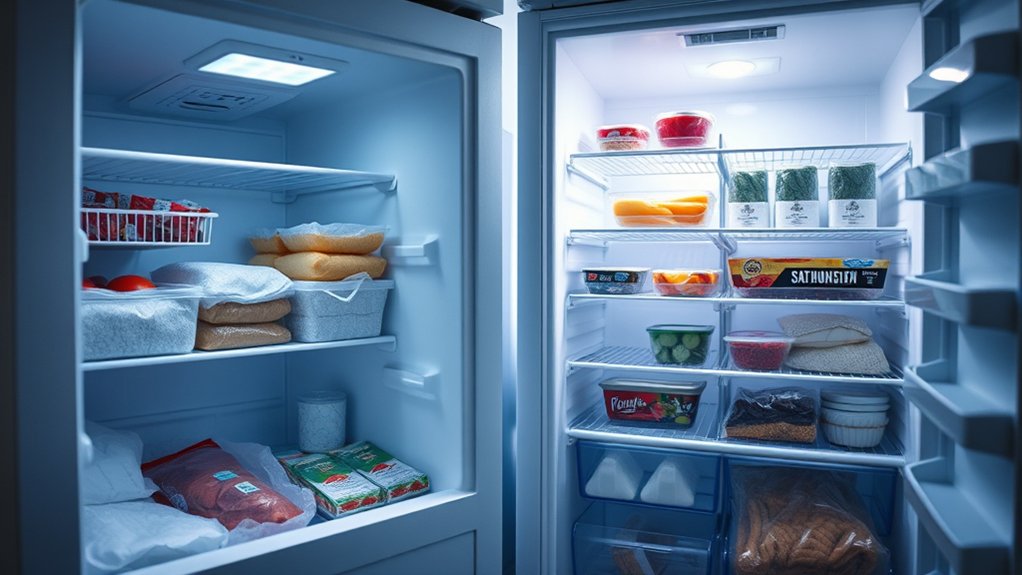
You can usually set both chest and upright freezers to 0°F for safe food storage. However, their designs affect how well they maintain that temperature. Chest freezers tend to keep temperatures steadier, while upright freezers make organization and access easier. Next, we’ll look at how each design affects temperature management.
Chest Freezer Settings
Chest and upright freezers should generally be set to 0°F (-18°C), even though their designs differ. For a chest freezer, use the manufacturer’s recommended setting and confirm the actual temperature with an appliance thermometer.
Because cold air stays inside when you open the lid briefly, your chest freezer may maintain its temperature efficiently. That design can reduce freezer energy use, but frequent opening, warm food, or a damaged seal can still raise the temperature.
For reliable temperature maintenance, keep the freezer reasonably full without blocking airflow around the walls or overloading the basket. Let hot foods cool in the refrigerator before freezing them, and avoid adjusting the control repeatedly.
Check the thermometer after loading groceries or during a power interruption. If temperatures remain above 0°F, inspect the gasket, vents, and cooling system.
Upright Freezer Settings
An upright freezer should generally be set to 0°F (-18°C), the same temperature recommended for a chest freezer. You don’t need different settings simply because your freezer stands upright.
However, upright models lose cold air more quickly when you open the door, so limit door openings and close it promptly. Keep a refrigerator thermometer inside to verify the actual temperature, since the control dial’s numbers may not match degrees.
Store food with space between packages to let cold air circulate, but don’t leave large empty areas if you can avoid it. Ice cream may become firm at 0°F, while frozen vegetables should remain solid and maintain quality.
If your freezer regularly rises above 0°F, check the door seal, reduce overloading, and inspect the temperature setting. Brief fluctuations are usually harmless, but persistent warming requires attention.
How Do You Check Freezer Temperature?
How can you tell whether your freezer is cold enough? Use a freezer thermometer to get an accurate reading instead of relying on how frozen food feels. Choose a model designed for freezer temperatures, then follow its instructions carefully.
Let the reading stabilize before you record it, since opening the door can briefly change the temperature.
Your freezer should generally stay at 0°F (-18°C) or below. Check the display or thermometer at different times, especially after loading groceries, defrosting, or adjusting the controls.
If the temperature rises above 0°F, inspect the door seal, reduce door openings, and check that air can circulate. Food that softens or develops large ice crystals may indicate temperature fluctuations.
Consistent monitoring protects food quality and supports safe frozen desserts. It also helps maintain proper ice cream storage, preventing excessive hardness, melting, or freezer burn.
Write down readings for several days so you can spot patterns and address problems promptly.
Where Should You Place a Freezer Thermometer?
Place the thermometer in the center of the freezer, away from the walls, door, vents, and direct contact with food. This location gives you a more representative reading of the compartment’s overall temperature. Set the thermometer on a shelf or place it in a small basket so it won’t shift when you move frozen items.
Keep it clear of Ice buildup, which can insulate the sensor and distort its reading. Don’t position it beside the evaporator outlet, where cold air enters, or near the door, where warmer air reaches it frequently. If your freezer has unusual Freezer noise, vibration may move a loose thermometer, so secure it without covering the display.
Close the door fully and leave the thermometer in place for several hours, preferably overnight, before checking it. Read it quickly, then return the thermometer to the same spot. Consistent placement helps you compare readings accurately during future checks.
What Happens When a Freezer Rises Above 0°F?
When a freezer rises above 0°F, frozen food may soften, develop larger ice crystals, and lose quality. You might notice freezer burn, changed textures, or packages sticking together.
A brief temperature increase often affects quality before you notice obvious changes, so check your thermometer and investigate the cause.
| Cause | What you’ll notice | Helpful action |
|---|---|---|
| Frequent door openings | Warmer air enters | Keep the door closed |
| Poor freezer insulation | Temperature fluctuates | Inspect seals and surrounding airflow |
| Frost buildup | Cooling becomes uneven | Use safe defrosting techniques |
Check whether the door gasket seals tightly, and avoid overloading shelves or blocking interior vents. Ensure the freezer has enough clearance for heat to escape.
If the temperature stays above 0°F, adjust the control gradually and monitor it with your thermometer. A persistent rise may indicate a failing fan, compressor, or thermostat, requiring professional service.
Keep the door closed while troubleshooting. Every opening adds warm air and forces the appliance to work harder.
When Is Thawed or Refrozen Food Unsafe?
To keep thawed food safe, thaw it in the refrigerator, in cold water, or in the microwave instead of leaving it at room temperature. You can refreeze it if it still has ice crystals or has remained at 40°F or below. However, if it has been above 40°F for more than two hours—or for more than one hour when temperatures exceed 90°F—throw it away.
Safe Thawing Guidelines
Safe thawing keeps food out of the temperature danger zone, where bacteria multiply quickly. Thaw meat, poultry, seafood, and prepared dishes in your refrigerator, keeping them at 40°F or below.
For faster results, use cold water, change it every 30 minutes, and cook the food immediately. You can also thaw food in the microwave, then cook it without delay.
Never thaw food on your counter, in warm water, or beside a freezer odor source.
| Method | What you should do |
|---|---|
| Refrigerator | Place food in a covered container and allow time. |
| Cold water | Seal it tightly and change water every 30 minutes. |
Ice crystal formation doesn’t prove food stayed safe. Check its temperature and handling history.
Discard perishable food that has remained above 40°F for over two hours, or one hour above 90°F.
When uncertain, don’t taste it. Throw it out.
Refreezing Food Risks
Proper thawing also determines whether you can safely refreeze food. If you thaw food in the refrigerator and keep it at 40°F or colder, you can usually refreeze it safely, although quality may decline.
You can also refreeze food thawed in cold water or a microwave if you cook it first. Don’t refreeze food left at room temperature for more than two hours, or one hour above 90°F.
Discard food that smells sour, feels slimy, or shows unusual discoloration. Ice crystal formation doesn’t automatically mean food is unsafe, but extensive crystals can indicate temperature fluctuations and poorer texture.
Maintain 0°F or lower, and use freezer compartment organization to prevent warm spots. Label packages, freeze smaller portions, and never taste questionable food to test safety.
When uncertain, throw it out.
How Do You Fix a Freezer That Runs Warm?
If your freezer runs warm, start by checking that the door seals tightly and the temperature setting is at 0°F (-18°C). Inspect the gasket for cracks, gaps, or food blocking contact. Clean the coils and remove dust, since restricted airflow can reduce cooling performance and Energy efficiency. Confirm that vents inside the freezer aren’t covered by packages.
Place an appliance thermometer inside and wait 24 hours before judging the result. If the display and thermometer disagree, perform Temperature calibration according to your owner’s manual.
Avoid packing food against the evaporator or overloading the compartment, which can block circulation. Check whether the condenser fan runs and listen for unusual compressor noises, but unplug the appliance before cleaning or inspecting accessible parts.
If the freezer still stays above 0°F, a faulty thermostat, fan, start relay, or sealed system may require professional service. Move perishable food to a working freezer while you arrange repairs, and don’t repeatedly adjust controls without diagnosing the cause.
How Can You Prevent Temperature Swings?
Prevent temperature swings by keeping the freezer at 0°F (-18°C), limiting how often you open the door, and closing it firmly each time. Arrange food evenly so cold air can circulate, but don’t pack shelves so tightly that vents become blocked. Leave space around the interior walls and avoid placing hot food inside, which can raise the temperature quickly.
Maintain a steady 0°F by minimizing door openings, allowing airflow, and avoiding hot food or overcrowded shelves.
- Group frequently used items near the front.
- Keep the door shelves organized and uncluttered.
- Check the gasket for cracks, gaps, or loose sections.
- Defrost manually when ice buildup restricts airflow.
- Use a freezer thermometer to monitor changes.
Practice energy efficiency by opening the door only when necessary and planning what you’ll remove before opening it. Check the temperature after restocking, cleaning, or a power interruption.
If readings seem inaccurate, follow your appliance manual for temperature calibration. Replace a damaged seal promptly, since escaping cold air encourages fluctuations.
Keep the freezer away from ovens, direct sunlight, and other heat sources. A stable location and consistent habits help protect food quality and maintain an even temperature.
Does a Colder Freezer Use More Energy?
Yes. A colder freezer can use more energy, especially when you set it well below 0°F (-18°C). Your freezer must run longer and more often to reach and maintain that lower temperature, increasing electricity consumption and potentially shortening its compressor’s life.
For the best energy efficiency, keep your freezer at 0°F (-18°C), the temperature recommended for safely storing frozen food. Lower settings rarely provide meaningful benefits unless your appliance struggles to maintain safe conditions or you need to freeze large amounts of fresh food quickly.
You’ll also save energy by checking the door seal, minimizing door openings, and leaving space around the appliance for proper airflow. Keep food organized so you can find items quickly, and let hot food cool before freezing it.
Good temperature stability matters, too. A reliable thermometer can confirm that your freezer maintains 0°F without unnecessary overcooling. If temperatures fluctuate, inspect the seal, vents, and thermostat before lowering the setting.
Frequently Asked Questions
Can a Freezer Be Too Cold for Certain Foods?
Yes, a freezer can be too cold for certain foods, although most frozen items remain safe. Extremely low temperatures may damage delicate produce, cause freezer burn, or alter textures in foods such as soft cheeses, cream-based dishes, and some baked goods.
You should follow package directions and maintain steady temperatures. Good freezer maintenance prevents fluctuations, while proper wrapping protects quality. For food safety, keep your freezer at 0°F (-18°C) or below.
How Often Should You Clean and Defrost Your Freezer?
You should clean your freezer every three to six months, or sooner if you notice spills, odors, or frost buildup. Defrost it when ice exceeds about one-quarter inch, because thick frost reduces storage space and energy efficiency.
For food safety, move frozen items to a cooler, unplug the appliance, remove the ice, and wash surfaces with mild soap. Dry everything thoroughly before restarting it, checking seals, and returning food once temperatures stabilize.
What Is the Ideal Freezer Temperature for Ice Cream?
Set your freezer to 0°F (-18°C) for ideal ice cream storage, keeping each scoop firm yet creamy instead of rock-hard or melty. At this freezer temperature, ice crystals stay small, preserving smooth texture and rich flavor.
Store the container toward the back, where conditions remain most stable, and seal it tightly to block icy air. You’ll enjoy better scoops if you let ice cream soften briefly before serving.
How Much Space Should You Leave Around Frozen Food?
Leave about ½ inch of space between frozen packages so cold air can circulate evenly. Don’t pack items tightly against vents, walls, or the door, because blocked airflow can create warm spots and reduce Freezer capacity.
Practice smart Food organization by grouping similar foods, keeping older packages accessible, and leaving a little room for new groceries. You’ll preserve consistent temperatures, prevent packages from freezing together, and make everything easier to find.
Can Power Outages Damage a Freezer or Its Contents?
Yes, power outages can damage your freezer or its contents. Without electricity, frozen food gradually warms, and repeated outages may strain the compressor when power returns.
Good freezer insulation slows temperature loss, giving you more time to respond. You’ll protect food better by keeping the door closed, using a thermometer, and moving items to another freezer if needed.
Power stability matters, so consider surge protection and a backup generator for longer disruptions.
Conclusion
Keep your freezer at 0°F (-18°C) to protect food quality and safety. Don’t assume setting it colder is always better: temperatures below zero can increase energy use without meaningfully extending storage life.
Check the temperature with an appliance thermometer, keep the door closed, and leave space for air to circulate. If food partially thaws, use safe temperature and time guidelines before refreezing.
With these simple habits, you’ll prevent temperature swings and keep frozen food reliable at the recommended freezer temperature.