Induction Vs Electric Range €“ Top 10 Key Differences
Choosing between an induction and electric range can feel confusing, especially when you want fast cooking, precise control, and a reliable appliance without overspending. You’re not alone—many home cooks struggle to decide which option best fits their kitchen, cookware, and budget.
Induction ranges heat compatible cookware directly with magnetic energy, while electric ranges use radiant or coil resistance.
You’ll typically boil water faster and adjust temperatures more precisely with induction, which also wastes less energy and leaves a cooler, easier-to-clean surface.
Electric ranges cost less upfront, accept nearly any cookware, and offer dependable everyday performance.
Both usually require a 240-volt circuit, though induction repairs may cost more.
Your cooking style, budget, and cookware will determine the better choice, with the key differences between induction and electric ranges explained below.
Key Takeaways
- Heating: Induction uses electromagnetic energy to heat cookware directly, while electric ranges use heated coils or radiant elements.
- Speed and control: Induction boils water faster and responds immediately to temperature changes. Electric ranges heat and cool more slowly.
- Cookware compatibility: Induction requires magnetic, flat-bottomed cookware, while electric ranges accommodate nearly all cookware materials.
- Safety and cleaning: Induction surfaces stay cooler and wipe clean easily. Electric elements retain heat and may require more cleanup.
- Cost and installation: Electric ranges typically cost less upfront. Induction may reduce energy use but can require compatible cookware and higher electrical capacity.
How Do Induction and Electric Ranges Heat?
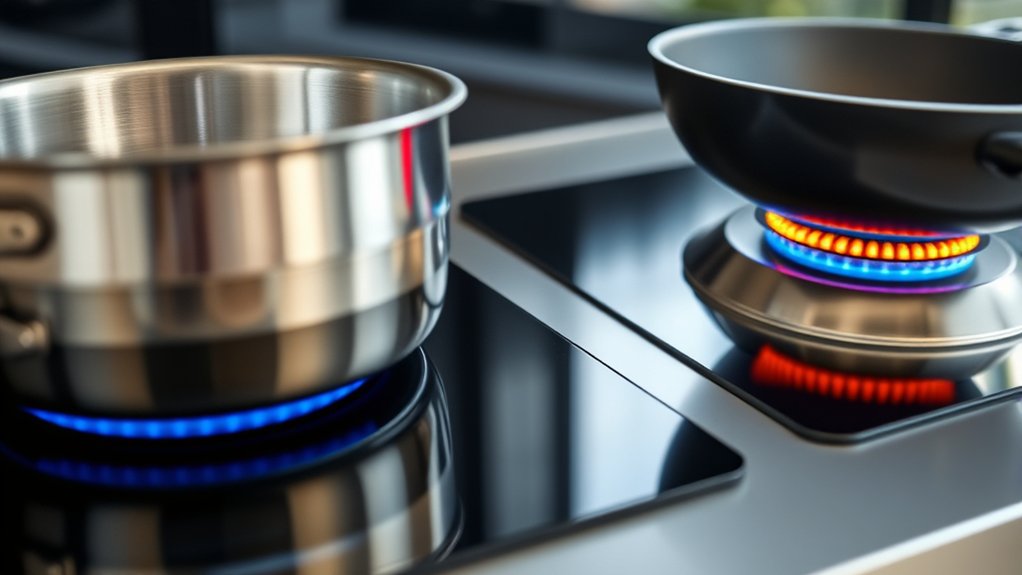
How Do Induction and Electric Ranges Heat?
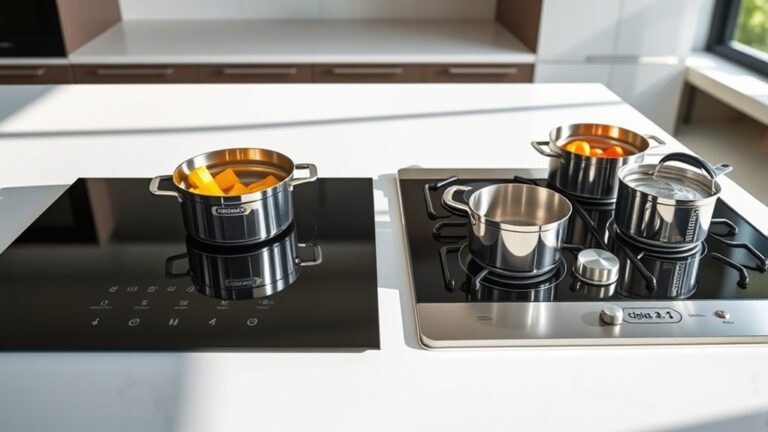
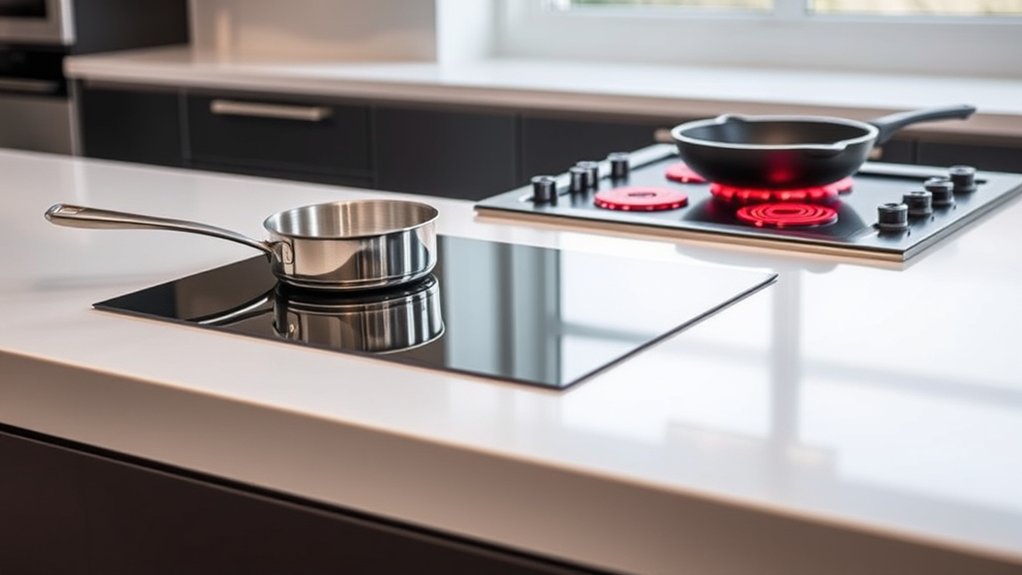
Induction and electric ranges heat cookware in fundamentally different ways. An induction range uses electromagnetic energy to create heat directly inside compatible cookware.
Induction and electric ranges differ in how they transfer energy, with induction heating compatible cookware directly through electromagnetic fields.
Beneath the cooking surface, a copper coil generates a magnetic field when you activate a burner. That field excites the metal in the pan, so the pan itself becomes the heating element.
The glass surface mainly transfers little heat from the cookware and remains relatively cooler.
An electric range relies on resistance heating. Electricity passes through a metal coil or radiant element, causing it to glow or heat up.
The element then transfers heat to the pan through direct contact, while the cooking surface absorbs and radiates some warmth. Your cookware must sit securely on the heated area for effective contact.
In both designs, electricity serves as the power source, but each range directs that energy differently. Induction energizes the cookware magnetically, whereas electric models heat a separate element before that heat reaches the pan.
Which Range Cooks Faster?
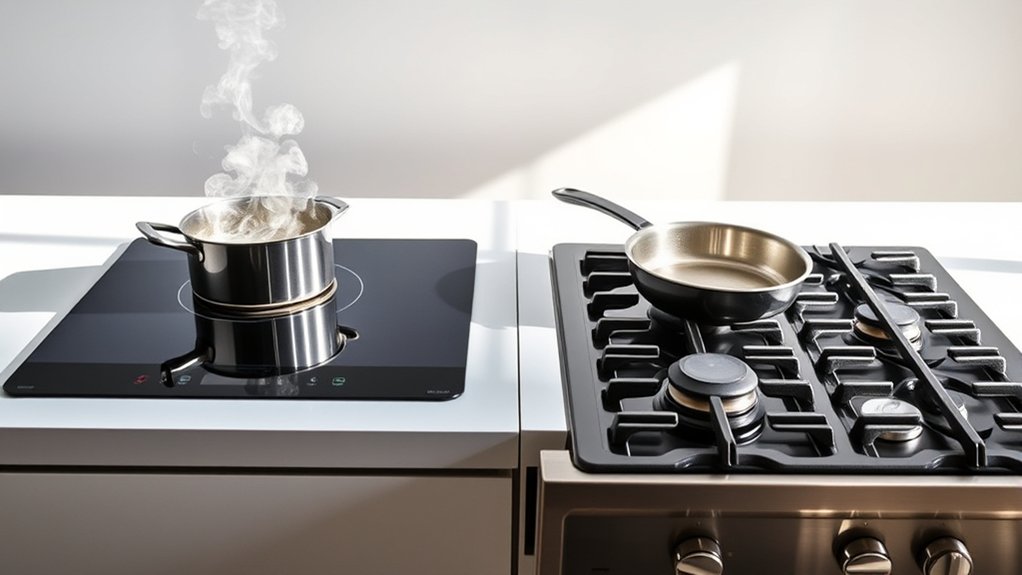
When speed matters, induction usually cooks faster because it transfers energy directly to the pan with minimal heat loss. You’ll often boil water in nearly half the time required by a traditional electric range.
Its responsive cooking surface heats compatible cookware immediately, while electric coils or radiant elements need time to warm up and pass heat through the glass.
| Task | Faster option |
|---|---|
| Boiling water | Induction |
| Heating a pan | Induction |
| Reaching steady heat | Induction |
An electric range can still perform well for everyday meals, especially when you’re replacing an older, inefficient model. However, its heating element cycles more slowly, so you’ll wait longer for pots and pans to reach cooking temperature.
Induction also wastes less energy as ambient heat, which can keep your kitchen more comfortable. Although appliance durability depends on build quality and maintenance, both types can last for years.
Choose induction when shorter preheating and boiling times matter most, and electric when lower upfront cost takes priority.
Which Range Offers Better Cooking Control?
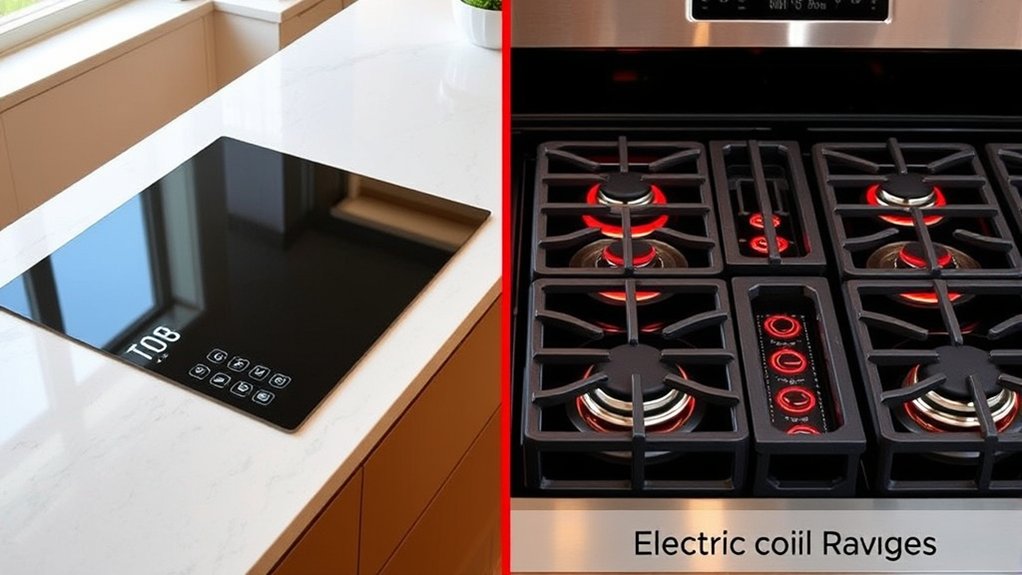
Speed isn’t the only advantage to contemplate; cooking control also affects everyday results. When you use an induction range, you get rapid, precise Temperature control because electromagnetic energy heats your cookware directly.
Adjust the setting, and the pan responds almost immediately, helping you maintain a gentle simmer or prevent delicate sauces from scorching. The glass surface also stays relatively cooler around the pan, so spills are less likely to bake onto it.
An electric range gives you dependable control, but its radiant elements respond more slowly. After you lower the setting, residual heat can continue cooking your food, so you may need to move the pan or anticipate adjustments.
That lingering warmth can benefit slow cooking, yet it requires closer attention during tasks that demand precision.
For your User experience, induction generally feels more responsive and predictable. Choose electric if you prefer gradual heating and familiar controls, but choose induction when quick, accurate adjustments matter most in daily cooking.
Which Range Uses Less Energy?
When comparing energy efficiency, induction ranges transfer more heat directly to your cookware than standard electric ranges. Electric models release more heat around the pan, while induction keeps energy focused where it’s needed. As a result, you’ll likely save more energy over time with an induction range.
Energy Efficiency Comparison
Induction ranges use less energy than electric radiant ranges because they transfer heat directly to compatible cookware instead of heating a burner and relying on radiant heat. You’ll typically cook more efficiently, so your power consumption can decrease over time.
Although exact savings depend on cooking habits, pan size, settings, and electricity rates, induction generally delivers more usable heat for each unit of electricity.
Consider these practical efficiency advantages:
- You’ll reach cooking temperatures faster, which can shorten operating time.
- You’ll use less electricity for many everyday boiling, simmering, and sautéing tasks.
- You can reduce your environmental impact when your household consumes less power.
Electric radiant ranges still offer dependable performance and may cost less initially. However, induction usually provides the stronger long-term efficiency choice if you use compatible, flat-bottomed cookware.
Check your utility rates and cooking patterns to estimate your potential savings before upgrading.
Heat Loss Differences
Because induction heats the cookware directly, it loses less energy to the surrounding surface and air than an electric radiant range. You’ll notice faster heating because electromagnetic energy reaches the pan without first warming a burner.
A radiant element must transfer heat through its surface, increasing losses before your cookware responds. Insulation effectiveness can reduce wasted heat, but it can’t eliminate the radiant cooktop’s exposed hot zone.
| Range type | Heat transfer | Heat loss |
|---|---|---|
| Induction | Directly into cookware | Low |
| Electric radiant | Through heated element | Higher |
During cooking, you’ll also feel less residual warmth around an induction pan. That means more of the electricity becomes useful cooking heat rather than warming the glass surface or kitchen air.
Your pan’s material, size, and contact still matter, so matching cookware to the cooking zone helps both ranges perform efficiently.
Long-Term Energy Savings
Lower heat loss can translate into lower electricity use over time, making induction the more energy-efficient choice for many households. You’ll typically use less power because induction transfers energy directly to compatible cookware, while an electric range first heats a burner and then the pan.
Your actual savings depend on cooking frequency, electricity rates, cookware quality, and standby features. Consider these advantages:
- Faster heating can shorten cooking times and reduce daily consumption.
- Precise temperature control helps you avoid wasting energy through overheating.
- Efficient performance may offset a higher purchase price over several years.
An induction range can also function as a Smart appliance, using sensors, timers, and energy-monitoring features to encourage efficient habits.
Although Kitchen aesthetics might influence your purchase, compare annual energy estimates before choosing. If you cook often, induction generally delivers greater long-term savings than conventional electric models.
Which Range Is Safer to Use?
When comparing safety, look at both the risk of surface burns and how each range manages heat. Induction cooktops heat the cookware directly, so the surface usually stays cooler. Electric ranges, on the other hand, retain heat after cooking. It’s also worth comparing features like automatic shutoff, child locks, and hot-surface indicators.
Surface Burn Risks
Induction ranges generally offer better surface-burn protection because they heat the cookware rather than producing heat directly from the cooking surface. When you remove a pan, the induction zone cools faster, so you face fewer lingering surface burn risks.
However, the glass can remain hot because the cookware transfers heat back to it. You’ll still need caution after cooking, especially around children or pets.
Electric ranges use radiant coils or smooth-top elements that stay hot long after you switch them off. Their residual heat makes accidental contact more likely, even when no pan remains.
- Induction surfaces usually reduce direct contact burns.
- Electric elements can glow and retain intense heat.
- Both types require care around hot cookware and spills.
Choose induction if reducing surface heat matters most, but don’t treat its cooktop as immediately cool. Always handle pans carefully and keep hands away from recently used zones.
Safety Features Compared
Modern induction ranges typically provide more built-in safety features than electric models, including pan detection, automatic shutoff, child locks, and controls that prevent heating without compatible cookware. This design supports stronger Child safety because the surface usually stays cooler after you remove a pan.
You’ll also appreciate residual-heat indicators, which warn you when a cooking zone remains warm. An electric range can offer similar protections, but its exposed coils or smooth glass surface may stay hot longer, increasing accidental-burn risks.
Look for a reliable Child lock if you have young children; it can prevent curious hands from activating controls. You should still supervise cooking, keep handles turned inward, and avoid touching either surface immediately after use.
What Cookware Works With Each Range?
Cookware compatibility is one of the clearest differences between induction and electric ranges. With an induction range, you’ll need pans containing magnetic iron or steel.
Test yours by holding a magnet against the base: if it sticks firmly, the pan should work. Flat bottoms also help maintain reliable contact and even heating.
Material requirements for induction cooking include cast iron, enameled cast iron, and many stainless-steel pans labeled induction-compatible.
Copper, glass, aluminum, and nonmagnetic stainless steel won’t heat unless they include a magnetic layer.
An electric range offers broader flexibility because its heating element transfers heat directly through the pan. You can typically use:
- Stainless steel and aluminum cookware
- Copper, glass, or ceramic oven-safe pans
- Cast iron and enameled cast iron
However, choose flat, stable bases for efficient heating and safer handling. Rough cast iron can scratch a glass cooktop, while warped pans may heat unevenly.
Always check the manufacturer’s guidance, especially when switching between cookware collections or buying replacement pans for your range.
Which Range Is Easier to Clean?
When it comes to cleanup, induction ranges are usually easier because their smooth, relatively cool surfaces don’t burn spilled food as quickly. You can wipe most splatters away after the cooktop cools, often without scrubbing.
This cleaning ease saves time during busy weeknights and helps your kitchen look polished.
Electric ranges also offer smooth glass tops, but their burners transfer more heat to the surface. Sugary sauces, grease, and crumbs can bake onto the glass, so you’ll need a scraper or specialized cleaner.
Coil burners require more effort because you must clean around and beneath removable elements.
| Range | Surface maintenance |
|---|---|
| Induction | Wipe spills promptly with a soft cloth |
| Electric | Scrub baked-on residue and clean coils |
For either option, avoid abrasive pads that can scratch the surface. Use manufacturer-approved cleaner, dry the cooktop fully, and lift cookware instead of sliding it.
If you value quick daily upkeep, induction generally gives you the simpler cleaning routine and fewer stubborn stains. Electric models still clean easily when you address spills before they harden.
What Installation Does Each Range Need?
Before choosing a range, check your kitchen’s electrical requirements to make sure they can handle the appliance. You’ll also need proper ventilation and enough clearance around the unit for safe operation.
Knowing what each range requires makes it easier to plan the installation and choose the right appliance for your kitchen.
Electrical Requirements
Both induction and electric ranges typically require a dedicated 240-volt circuit, but induction models may draw more power and need a higher-amperage breaker. Before purchasing, check your kitchen’s power supply and compare the manufacturer’s circuit requirements with your existing panel.
You’ll usually need a licensed electrician to verify wiring, receptacle type, grounding, and available capacity.
- Induction: Often needs a 40- or 50-amp circuit, depending on its wattage.
- Electric: Commonly uses a 40- or 50-amp circuit, though some models require less.
- Older homes: May need panel upgrades or new wiring to support either range safely.
Don’t rely on the range’s plug or your current outlet alone; specifications vary by model. Have an electrician install or confirm the circuit before delivery to avoid overloads, nuisance breaker trips, and costly changes after installation.
Ventilation And Clearance
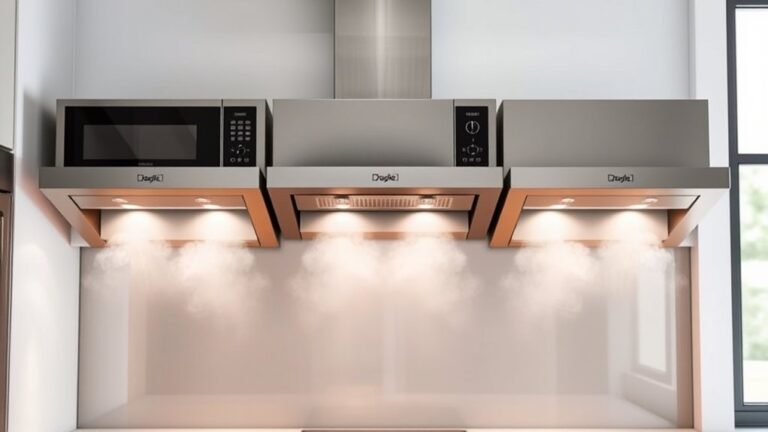
Ventilation and clearance requirements are generally similar for induction and electric ranges, but you should follow each model’s installation guide for exact distances. Both typically need space above the cooktop for a range hood or microwave, plus safe separation from cabinets, walls, and combustible materials.
You’ll usually need a properly rated hood or exhaust fan to remove heat, steam, smoke, and cooking odors. Although induction produces less ambient heat, you shouldn’t reduce required clearances or skip ventilation.
Electric coil and radiant models can heat surrounding surfaces, so adequate airflow remains essential. Check whether your hood’s width matches the range and whether local codes require ducted ventilation.
Consider kitchen aesthetics when planning the hood, and compare noise levels before choosing an exhaust fan you’ll use regularly.
What Does Each Range Cost to Own?
Ownership costs depend on more than the purchase price. Your cost comparison should include energy use, maintenance, repairs, and expected lifespan.
Induction ranges often cost more upfront, but they can heat efficiently and may lower electricity bills over time. Electric ranges typically have a lower initial price, yet their exposed heating elements can consume more energy and require replacement.
Your ownership expenses may include:
- Energy: Check your local electricity rate and the range’s efficiency. Daily cooking habits affect long-term savings.
- Maintenance: Induction models have smooth glass surfaces that clean easily, while electric coils and drip pans may need more upkeep.
- Repairs: Induction technology can involve costlier electronic components. Conventional electric ranges generally use simpler, more familiar parts.
You’ll also want to contemplate warranty coverage and the appliance’s expected service life. A longer warranty can reduce unexpected costs, while durable components may help you avoid early replacement.
Compare total ownership costs over several years rather than focusing only on the checkout price. Regular cleaning and correct cookware can further protect your investment.
Which Range Is Best for Your Cooking Style?
Your cooking style should guide the choice between induction and electric ranges. If you value speed, precision, and responsive temperature control, induction may suit you best.
Your cooking habits determine the ideal range: choose induction for speed and control, or electric for familiar versatility.
It heats compatible cookware quickly, adjusts almost instantly, and supports techniques such as searing, simmering, and melting. You’ll also appreciate its smooth surface, easy cleanup, and modern Aesthetic appeal.
Choose an electric range if you want broad Cooking versatility without replacing your existing pots and pans. Its radiant elements work with nearly any cookware, making it practical for family meals, baking, and everyday cooking.
Although electric burners respond more slowly, they provide steady heat and typically cost less upfront.
Consider your priorities, too. Induction rewards cooks who demand efficiency and control, while electric suits budget-conscious households and cooks who prefer familiar equipment.
If you frequently multitask, induction’s cooler surface and rapid heating can improve safety. For occasional cooking, an electric range may deliver everything you need without added compatibility concerns or expense.
Frequently Asked Questions
Can Induction and Electric Ranges Operate During a Power Outage?
No, you can’t operate either an induction or standard electric range during a power outage because both require household electricity to heat food. You’ll need an alternative for emergency cooking, such as a gas camping stove, propane burner, outdoor grill, or battery-powered appliance designed for safe use.
Never use charcoal grills, gasoline devices, or fuel-burning stoves indoors, since they can produce deadly carbon monoxide. Keep suitable supplies ready before outages happen.
How Noisy Are Induction Ranges Compared With Traditional Electric Ranges?
You’ll usually find induction ranges slightly noisier than traditional electric ranges. Their cooling fans may hum, and cookware can produce faint buzzing, clicking, or vibrating sounds as magnetic energy transfers heat.
Traditional electric ranges generally operate more quietly, although you might hear occasional relay clicks or element expansion. In this noise levels comparison, the cooking sound differences are minor, and you’ll likely adapt quickly, especially when using compatible, flat-bottomed cookware.
Do Induction Ranges Affect the Taste or Texture of Food?
Induction ranges don’t directly change your food’s taste or texture; your ingredients still sing the same flavorful song. You’ll notice better Flavor preservation because precise, responsive heat helps prevent scorching, overcooking, and uneven simmering.
Improved Cooking efficiency also lets you reach temperatures quickly and adjust them instantly, protecting delicate sauces and crisp textures. Your results may even improve, provided you use suitable cookware and maintain consistent heat throughout each recipe.
What Maintenance Do Induction and Electric Ranges Require Over Time?
You’ll maintain both ranges by wiping spills promptly, cleaning surfaces with nonabrasive products, and checking power connections periodically.
Induction cooktops need compatible pans, so test cookware compatibility with a magnet and inspect the glass for cracks.
Electric ranges require occasional replacement of heating elements, drip pans, or knobs.
Keep ventilation clear, avoid dragging cookware, and follow the manufacturer’s instructions. Energy efficiency improves when you clean components and match pan sizes correctly.
Are Induction and Electric Ranges Environmentally Friendly?
Induction and electric ranges can both reduce your environmental impact, especially when powered by renewable electricity. Induction is usually more energy-efficient because it transfers heat directly to your cookware, wastes less energy, and cooks faster.
Electric ranges can still perform responsibly, particularly with efficient heating elements and clean grid power. Your cooking habits matter, too: matching pan sizes, using lids, and turning burners off promptly can lower energy use and emissions.
Conclusion
Choosing between an induction and electric range comes down to how you cook, clean, and spend. If you want lightning-fast heating, precise control, lower energy use, and a cooler, safer surface, induction may be your best match.
If you prefer a simpler setup and lower upfront cost, an electric range still holds its ground. Think of induction as a sports car and electric as a dependable sedan: both get you there, but your priorities decide which ride fits your kitchen best.