7 Induction Range Pros and Cons You Should Know
Choosing the right cooktop can be frustrating, especially when you want faster cooking, easier cleanup, and better energy efficiency. You’re not alone—many home cooks struggle to decide whether an induction range is worth the higher upfront cost.
An induction range heats magnetic cookware quickly and precisely, stays cooler, saves energy, and wipes clean easily. You’ll enjoy responsive temperature control and less kitchen heat. However, you’ll need compatible cast iron or magnetic stainless-steel pans.
Expect possible humming or clicking sounds, shared power between burners, and potential electrical upgrades. Purchase and installation can cost more than traditional options.
Check your cookware, wiring, measurements, and cooking preferences before deciding whether an induction range fits your kitchen. Explore the key pros and cons below.
Key Takeaways
- Pro: Induction ranges heat quickly, offer precise temperature control, and respond immediately to adjustments.
- Pro: Direct heating improves energy efficiency, keeps kitchens cooler, and simplifies cleanup because spills are less likely to bake on.
- Con: Only magnetic cookware, such as cast iron or magnetic stainless steel, works without an adapter.
- Con: Purchase and installation costs can be high, especially when electrical upgrades, wiring, or countertop modifications are needed.
- Consideration: Fans, humming, clicking, cookware replacement, power sharing, and limited visible flame appeal may affect your experience.
What Is an Induction Range and How Does It Work
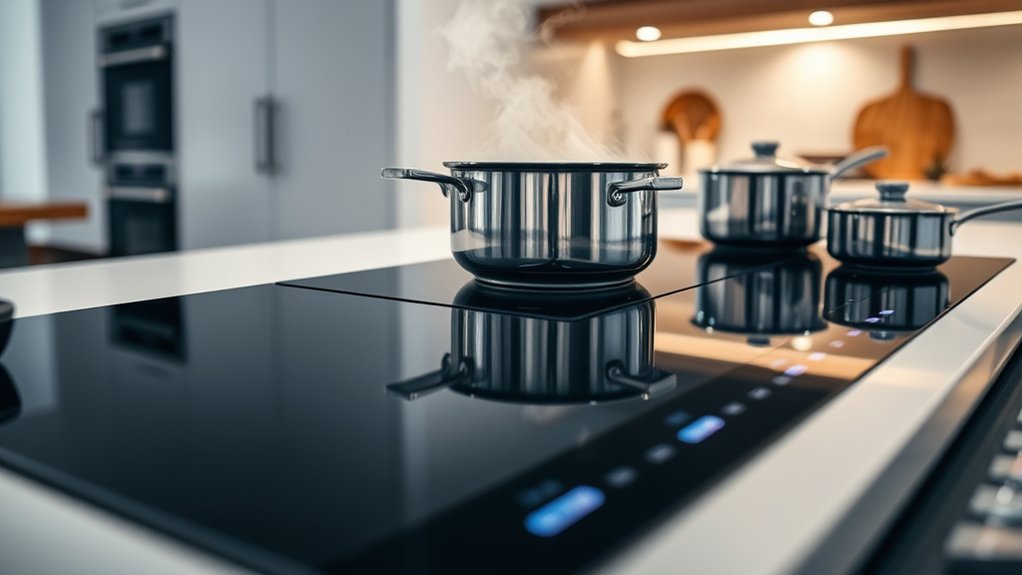
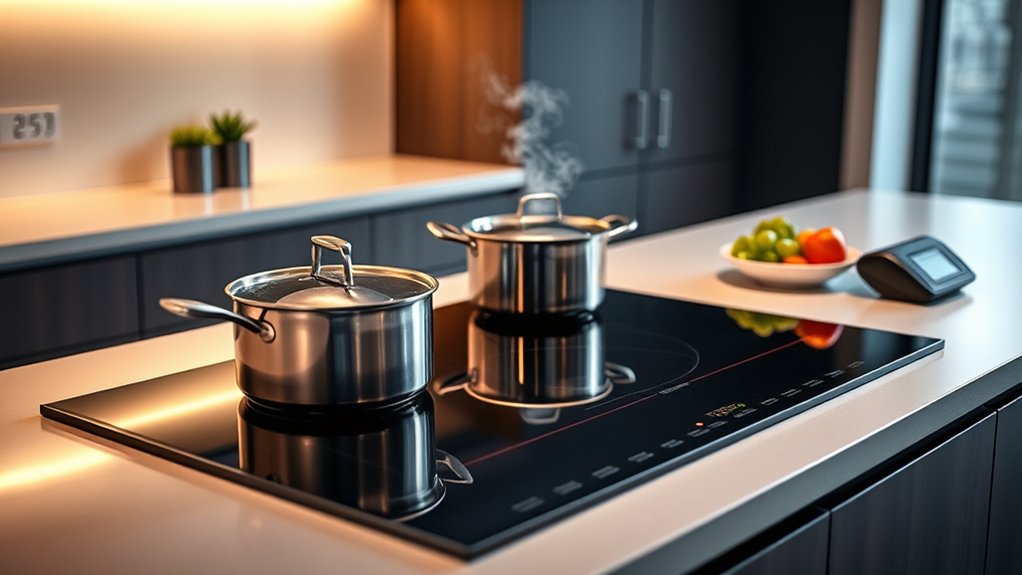
An induction range uses electromagnetic energy to heat compatible cookware directly instead of heating a burner first. Beneath the glass surface, copper coils create a magnetic field when you turn on a cooking zone. That field induces electrical currents in magnetic cookware, such as cast iron or magnetic stainless steel, which generates heat inside the pan.
Induction cooking uses copper coils and magnetic fields to generate heat directly inside compatible cookware.
You’ll need cookware that a magnet attracts. Aluminum, copper, and ordinary glass won’t activate the zone unless they include a magnetic base.
The glass surface itself stays relatively cooler because it doesn’t produce heat independently, though it can warm from contact with a hot pan. Cooking safety improves because removing the cookware usually stops energy transfer, and many models include pan detection, child locks, and automatic shutoff.
For maintenance tips, wipe spills after the surface cools, use nonabrasive cleaners, and lift cookware instead of sliding it. Keep the controls dry and avoid placing heavy objects on the glass.
Why Induction Cooking Is Fast and Precise
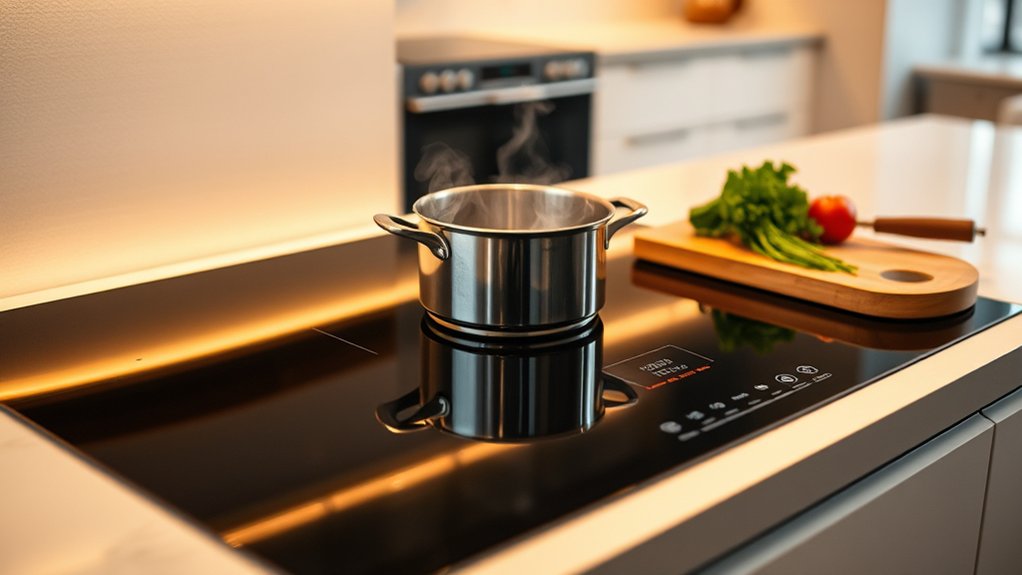
Induction cooking heats the pan directly, so you’ll reach cooking temperatures faster than with gas or conventional electric ranges. Because energy transfers straight into compatible cookware, you’ll spend less time waiting for water to boil or oil to heat. This faster cooking speed helps you prepare meals efficiently, especially when you’re juggling several ingredients or cooking for a crowd.
You’ll also gain precise temperature control while you cook. When you adjust the setting, the pan responds almost immediately, helping you maintain a steady simmer, gentle melt, or vigorous sear. You won’t need to compensate for prolonged heating or cooling cycles common with traditional electric burners.
That responsiveness gives you better control over delicate sauces, tender proteins, and foods that can scorch easily. Many induction ranges offer finely graduated power levels, so you can select the heat your recipe needs and change it quickly as cooking conditions shift. You’ll cook with greater consistency and confidence.
How Induction Ranges Save Energy and Simplify Cleanup
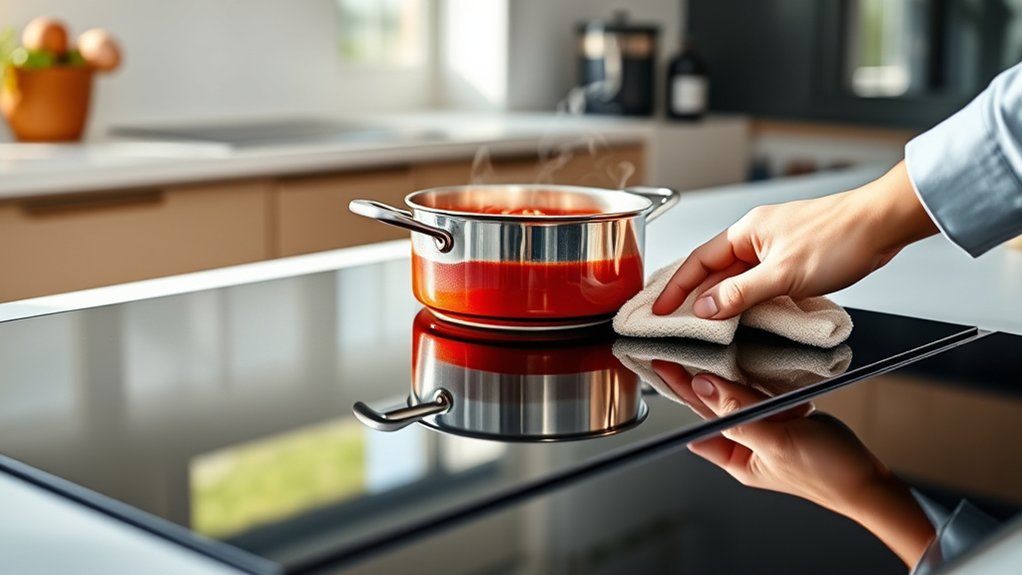
Because induction transfers heat directly to the cookware, less energy escapes into the surrounding air or cooking surface. You’ll notice this energy efficiency when water boils quickly and meals require less wasted heat.
The cooktop itself stays relatively cool because electromagnetic energy heats compatible pans rather than a glowing element. That can make your kitchen more comfortable and reduce heat released into the room.
You’ll also appreciate the cleaning convenience. Since spills don’t bake onto a hot burner as readily, you can usually wipe the smooth glass surface with a damp cloth after it cools.
Flat cookware and a level cooktop leave fewer crevices where crumbs and grease can hide. Still, you’ll need to clean sugary spills promptly and use a suitable cleaner to avoid marks or scratches.
Keep pan bottoms dry and lift, rather than slide, heavy cookware across the surface. These simple habits help preserve the finish while making daily cleanup faster.
What Do Induction Ranges Cost to Buy and Install
You’ll typically pay more upfront for an induction range, and prices vary based on the size, features, and brand. Installation can add to the total, especially if you need new wiring, electrical upgrades, or countertop modifications. Be sure to consider both the purchase price and installation costs before deciding whether an induction range fits your kitchen and budget.
Purchase Price Range
When budgeting for an induction range, expect to pay roughly $1,000 to $5,000 for the appliance, with premium models costing more. Entry-level units typically offer basic controls, fewer cooking zones, and simpler finishes, while midrange models add convection ovens, bridge elements, and improved temperature control.
High-end ranges may include larger capacities, smart features, premium materials, and more precise performance. Compare prices based on the features you’ll actually use rather than choosing by appearance alone.
Brand reputation can affect the purchase price, but established manufacturers may deliver better reliability, service, and parts availability. Also review warranty coverage before you buy; a longer or more extensive warranty can add value and reduce potential repair expenses.
Sales events, rebates, and discontinued models may help you secure a quality range at a lower price.
Installation Costs and Considerations
Installation typically adds $100 to $500 to the cost of an induction range, depending on your home’s electrical setup and whether the existing opening is suitable. You may pay more if you need a dedicated circuit, upgraded wiring, or a utility connection.
Countertop modifications can also increase labor costs when dimensions don’t match.
| Installation need | Typical cost | What you’ll consider |
|---|---|---|
| Existing circuit | $100–$200 | Basic hookup |
| New circuit | $300–$800 | Electrician required |
| Countertop changes | $200–$500 | Cutting or resizing |
| Cabinet adjustments | $100–$300 | Clearance and ventilation |
Before buying, measure the opening, verify voltage and amperage, and confirm adequate ventilation. Ask an electrician to inspect your panel, especially in an older home.
You’ll avoid surprises by requesting an itemized quote that covers delivery, installation, permits, disposal, and testing. A professional should level the range and demonstrate safe operation.
Will Your Cookware Work on Induction?
Check whether your cookware is magnetically compatible before using it on an induction range. An easy way to test it is to hold a magnet against the bottom of each piece. If the magnet sticks firmly, the cookware will likely work. For reliable results, choose induction-ready materials such as cast iron or magnetic stainless steel.
Check for Magnetic Compatibility
Before switching to induction, test your cookware with a magnet: if it sticks firmly to the bottom, the pan should work on the cooktop. This quick check helps you assess magnetic compatibility before replacing your kitchen collection.
Induction burners create heat through a magnetic field, so they need cookware with a ferromagnetic base. Cast iron and many stainless-steel pans usually qualify, while aluminum, copper, glass, and ceramic cookware typically won’t work unless they include a magnetic layer.
Check each pan’s manufacturer label or product description for induction compatibility, especially if the base looks different from the pan’s sides. A compatible pan should also have a flat bottom that contacts the cooking surface evenly.
Careful cookware testing can prevent uneven heating, wasted purchases, and frustration when you start using your new range.
Test Cookware With a Magnet
A simple magnet test can tell you whether your cookware will work on an induction range: hold a magnet against the pan’s bottom, and if it sticks firmly, the pan likely has the magnetic material induction requires. This quick cookware testing method works best when you test the actual cooking surface that contacts the range.
Move the magnet across several areas, since a weak or uneven response may indicate inconsistent magnetic compatibility. A strong, steady pull suggests the pan can interact with the induction cooktop, but it doesn’t guarantee perfect performance.
Also check that the bottom sits flat and covers the cooking zone adequately. If the magnet barely attracts or doesn’t stick, your pan probably won’t heat properly.
Test every piece you plan to use before switching ranges, so you’ll avoid frustrating surprises.
Choose Induction-Ready Materials
Choosing induction-ready materials starts with understanding which metals respond to the cooktop’s magnetic field. Stainless steel, cast iron, and carbon steel usually work, provided they contain enough magnetic material.
Check the manufacturer’s label for an induction-compatible symbol, especially when cookware uses layered construction.
For reliable material compatibility, choose pans with flat, magnetic bases that sit evenly on the cooking zone. A warped bottom can heat unevenly, while rough cast iron may scratch the glass surface.
Add a protective mat only if your range manufacturer approves it.
Copper, aluminum, glass, and ceramic cookware won’t heat on induction unless they include a magnetic layer. You can use an induction adapter plate, but it transfers heat less efficiently and slows cooking.
Consider cookware durability, weight, and handle quality before replacing your collection.
What Are the Noise and Power Limits?
Induction ranges can produce a soft hum or fan noise, especially at higher settings, but they’re usually quieter than gas burners. You might notice clicking as the cookware sensor cycles power, particularly at low temperatures or with lightweight pans.
These noise levels vary by model, pan material, and cooking setting, so listen in a showroom if quiet operation matters.
Power limits also affect how you cook. Each burner has a rated wattage, while the range has a total power capacity shared across elements.
When you use several burners or activate the oven, the range may reduce one burner’s output to prevent an overload. Check the electrical requirements and confirm your kitchen circuit can support them before installation.
A high-powered burner can boil water quickly, but it may not maintain maximum output when other zones demand electricity. Keep your cookware centered and use compatible pans to transfer heat efficiently, helping you achieve steady results without pushing the range beyond its limits.
Is an Induction Range Right for You?
Once you’ve considered noise, power sharing, and electrical requirements, think about how an induction range fits your cooking habits. If you want fast heating, precise temperature control, and an easier-to-clean surface, induction may suit you well.
You’ll also appreciate that the cooktop stays relatively cool, which can reduce burns and simplify daily cleanup.
However, you’ll need compatible cookware, typically magnetic stainless steel or cast iron. If your favorite pans don’t work, replacing them adds cost.
You should also review your electrical panel and installation needs before buying, especially during Kitchen remodeling. Professional installation helps you address Safety considerations, including proper wiring, ventilation, and clearance.
Induction makes sense if you value efficiency, responsive controls, and modern convenience. Gas may suit you better if you prefer visible flames, use specialty cookware, or face costly electrical upgrades.
Compare your budget, cooking style, kitchen layout, and long-term priorities before choosing. A showroom test can help you decide confidently.
Frequently Asked Questions
How Safe Are Induction Ranges for Children and Pets?
Induction ranges are generally very safe for children and pets because they heat cookware directly rather than exposing a hot open flame. For better child safety, use the control lock, choose rear burners, and keep handles turned inward.
For pet safety, prevent animals from jumping onto the cooktop and remove tempting objects nearby. The surface can still become warm from hot pans, so you shouldn’t touch or allow contact until everything cools.
How Long Do Induction Ranges Typically Last?
You can expect an induction range to last about 10–15 years with normal use and proper care. You’ll extend its lifespan by keeping controls dry, avoiding heavy impacts, and following the manufacturer’s maintenance guidance.
Cookware compatibility matters because unsuitable pans can reduce performance and strain cooking zones. Energy efficiency usually remains excellent throughout ownership, though electronic components may eventually need service.
A reputable warranty and professional repairs can help protect your investment.
Can Induction Ranges Affect Pacemakers or Other Medical Implants?
Can induction ranges affect your pacemaker or other medical implant? They can, because their electromagnetic fields may cause medical device interference, especially if you stand very close while the cooktop operates.
Most modern implants include shielding, and manufacturers generally consider normal use safe when you follow distance guidance. For electromagnetic safety, keep your device’s recommended distance from the cooking surface, avoid leaning over it, and ask your cardiologist or implant manufacturer for personalized advice.
What Maintenance Does an Induction Range Require?
You’ll need little maintenance for an induction range. Wipe the smooth cooktop after each use with a soft cloth and nonabrasive cleaner, removing spills before they harden.
Keep cookware bottoms clean and flat to preserve cooking speed and energy efficiency. Don’t drag heavy pans across the glass, and avoid harsh scrubbers.
Periodically clean control panels, inspect the power cord, and check ventilation openings. Follow your manufacturer’s instructions for deeper servicing.
Are Induction Ranges Available in Different Colors and Design Styles?
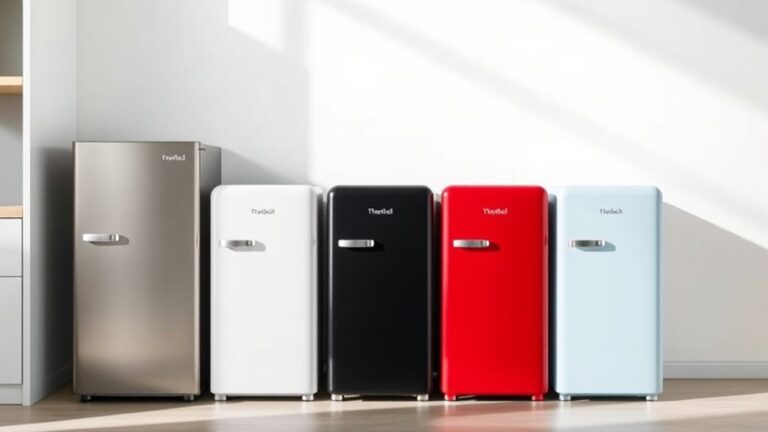
Yes, you’ll find induction ranges in several colors and styles, though selection varies by brand and model. Color options commonly include stainless steel, black, white, and fingerprint-resistant finishes; some luxury manufacturers offer custom hues.
Design variations range from sleek slide-in models to freestanding, professional-style ranges with bold knobs and trim. You’ll uncover a universe of choices, but verify dimensions, control layouts, and finish durability before you buy.
Conclusion
An induction range can make cooking faster, safer, and easier to clean while using energy efficiently. However, you’ll need compatible cookware, a suitable electrical setup, and tolerance for occasional fan noise.
Its higher purchase and installation costs may also affect your decision. Think of an induction range as a responsive bridge between convenience and control: if your budget, kitchen, and habits fit, you’ll enjoy more precise cooking.
If not, traditional electric or gas may serve you better. Weigh these induction range pros and cons before deciding which option best suits your home.