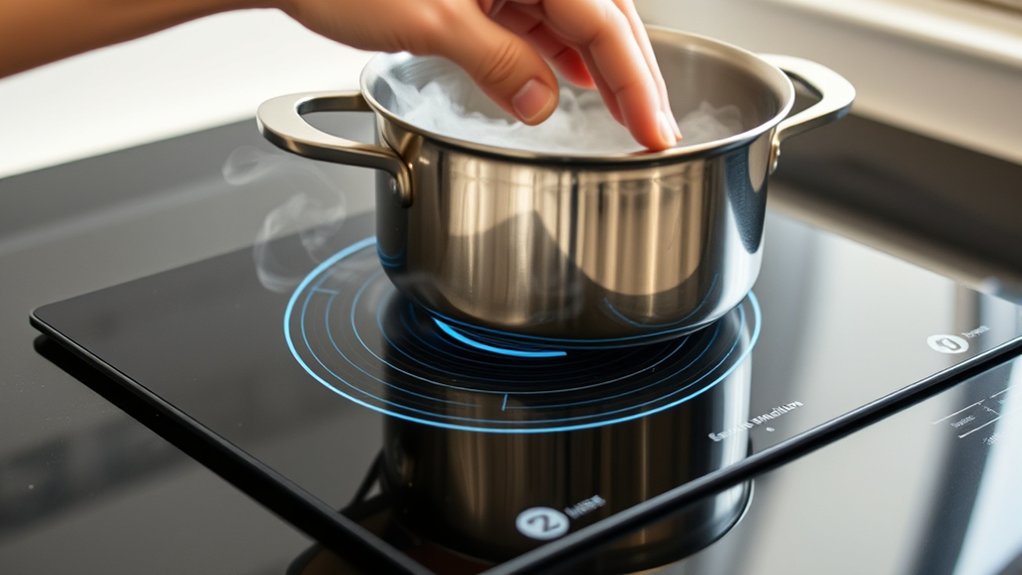
How Does an Induction Hot Plate Work Step by Step
Struggling to cook quickly without heating up the whole kitchen? You’re not alone—many people want precise, efficient cooking in a compact appliance. In this guide, we’ll explain how an induction hot plate works step by step so you can choose and use one with confidence.
When you turn on an induction hot plate, its electronics run safety checks and activate a copper coil beneath the glass. The coil creates a rapidly changing magnetic field that passes through compatible cookware.
This field produces eddy currents in the pan’s magnetic base, and resistance converts them into heat. You choose the power level to control cooking speed, while sensors monitor temperature and pan placement.
Center your pan, cook carefully, and keep exploring to learn how to use induction safely.
Key Takeaways
- Turn on the hot plate; its electronics perform self-checks and prepare the controls, sensors, and safety systems.
- Place a flat, magnetic pan centrally. Induction works with cookware that attracts a magnet, such as cast iron or magnetic stainless steel.
- Alternating current flows through a copper coil, creating a rapidly changing magnetic field beneath the glass surface.
- The field induces eddy currents in the pan’s metal base, and electrical resistance converts them directly into heat.
- Select the power level while sensors monitor the cookware and temperature. Turn off the plate afterward and let it cool before cleaning.
How Does an Induction Hot Plate Work?
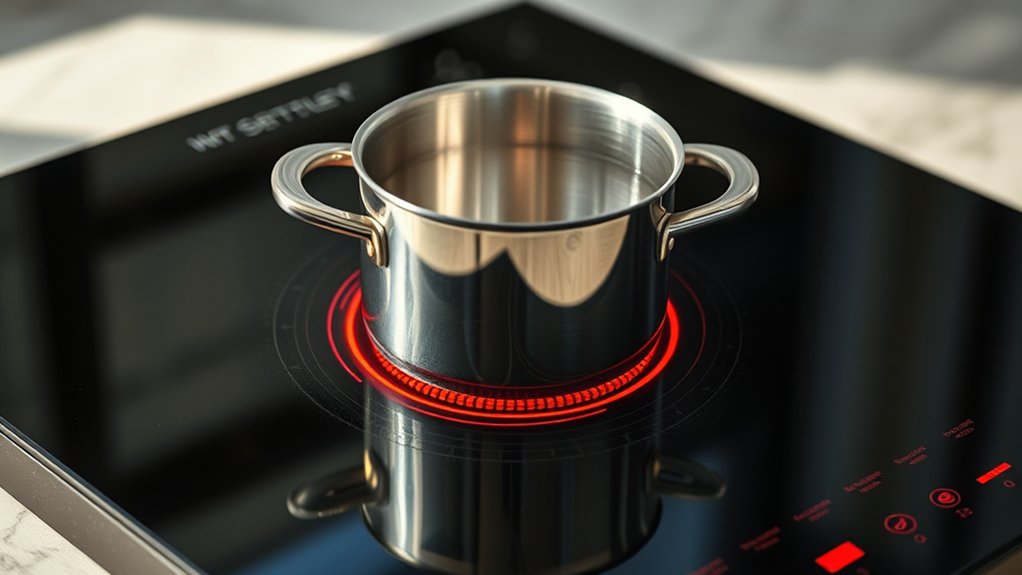
An induction hot plate uses electromagnetic energy to heat compatible cookware directly rather than heating a burner first. Inside the unit, a copper coil creates a rapidly changing magnetic field beneath the cooking surface.
When you place a magnetic pan, such as cast iron or magnetic stainless steel, over that field, it generates electrical currents within the pan’s base. The pan’s resistance converts those currents into heat, so your cookware becomes the heat source.
The glass surface mainly transfers little heat and remains cooler than a traditional burner, although residual warmth can remain after cooking. This design supports strong energy efficiency because it sends energy straight into the pan, reducing wasted heat around it.
Built-in safety features may include automatic shutoff, pan detection, overheat protection, and a child lock. You control heat by adjusting the power setting, while the appliance responds quickly to changes, giving you precise temperature control without an open flame or glowing coil.
What Happens When You Turn It On?
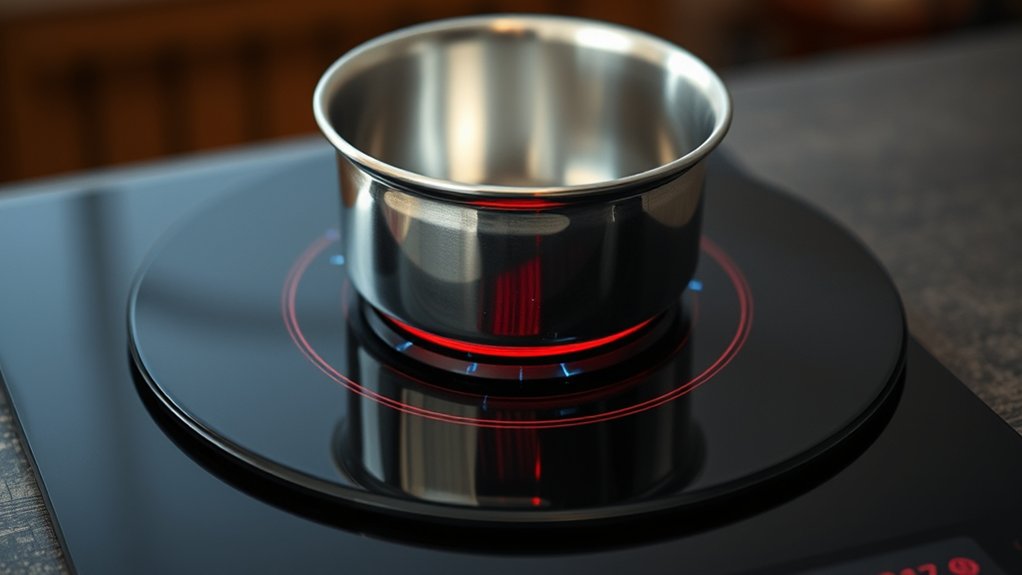
When you turn it on, power activates the hot plate’s internal electronics. These components then create a rapidly changing magnetic field beneath the cooking surface.
Once you place compatible cookware on top, the magnetic field generates heat directly in the pan.
Power Activates Electronics
Once you press the power button, the hot plate’s control board receives electricity and wakes up the system. It runs a quick self-check, confirms that essential circuits respond, and prepares the display, touch controls, sensors, and safety features.
You’ll see indicator lights or a screen appear as the unit waits for your instructions. When you select a setting, the board interprets your command and coordinates the power electronics accordingly.
It also monitors temperature readings, cookware detection signals, and operating limits to support safe, reliable performance. Built-in filtering helps reduce electromagnetic interference, preventing electronic noise from disrupting nearby devices.
Smart controls adjust electrical output as needed, improving energy efficiency during cooking. At this stage, the electronics are ready, but they haven’t created heat yet. That process begins when the induction system starts operating.
Magnetic Field Generates Heat
With the controls ready, the induction system sends electricity through a copper coil beneath the glass surface. As alternating current flows through the coil, it creates a rapidly changing magnetic field above the cooking zone.
When you place compatible cookware there, the field penetrates its metal base and drives swirling electrical currents inside it. The pan’s resistance converts those currents into heat, so the cookware becomes the heat source rather than the glass.
This magnetic pairing works only with ferromagnetic materials, such as cast iron or magnetic stainless steel. You won’t see flames or glowing coils; heat develops directly in the pan.
Heat transfer then moves from the hot base into your food, while the surrounding surface stays relatively cooler. As you adjust the setting, electronics change the field’s power and heating speed.
How the Coil Creates a Magnetic Field
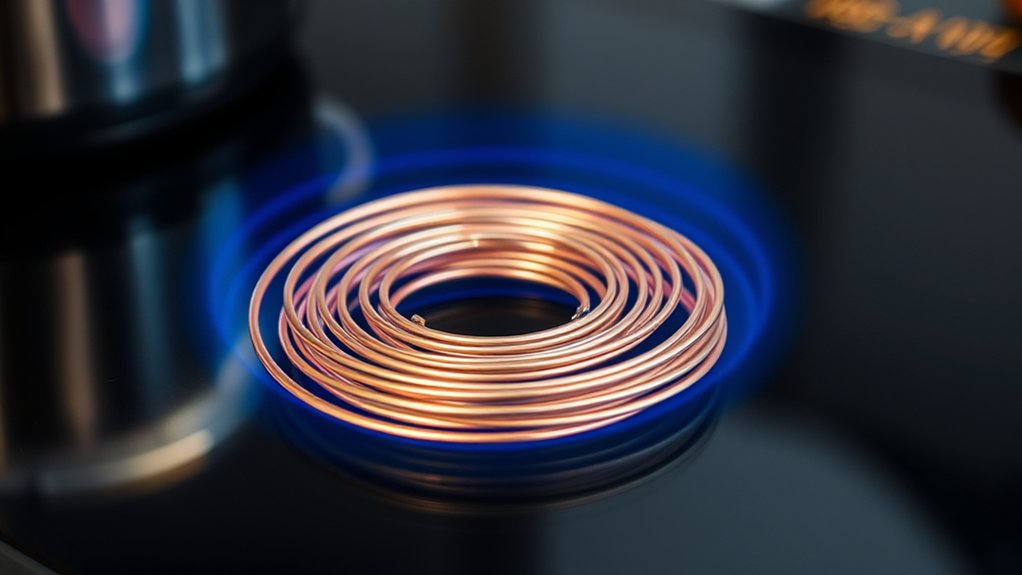
An induction hot plate sends alternating current through a copper coil beneath the glass surface, causing the coil to produce a rapidly changing magnetic field. As the current reverses direction many times per second, the field expands, collapses, and reverses with it.
You can picture the coil as an invisible energy transmitter positioned under the cooking zone. Its shape, spacing, and number of turns, called Coil design, control how evenly and strongly the field spreads.
| Coil feature | Effect |
|---|---|
| Alternating current | Reverses the field |
| Copper turns | Carry electrical energy |
| Coil spacing | Shapes field coverage |
The glass doesn’t create the field; it simply separates the coil from the surface. Engineers tune the electrical frequency and coil geometry for stable operation.
This process resembles Magnetic resonance because repeated electrical oscillations establish a coordinated, changing field. The coil’s insulation prevents neighboring turns from touching, while its mounting keeps it aligned beneath the cooking area.
You won’t see the field, but sensors and electronics regulate its output continuously.
Why Induction Needs Compatible Cookware
Because the magnetic field must induce electrical currents in the pan itself, induction works only with cookware made from magnetic materials, such as cast iron or magnetic stainless steel. When you choose a pan, check its cookware material before placing it on your hot plate.
A simple magnet test helps: if a magnet sticks firmly to the base, the pan usually has the magnetic compatibility induction requires. If it doesn’t stick, the hot plate may not recognize the pan, or it may remain cool.
Some stainless-steel pans contain enough iron to work, while others don’t, so the metal’s appearance alone can’t tell you. Cast iron performs reliably, although its rough surface can scratch glass, so lift it rather than sliding it.
Avoid aluminum, copper, glass, and ordinary ceramic pans unless they include a specially designed magnetic base. Matching your cookware to the appliance guarantees the hot plate can operate safely and efficiently without relying on extra adapters.
How Eddy Currents Heat the Pan
The hot plate’s magnetic field induces electrical currents in the pan. These currents flow in circular paths called eddy currents. As they move through the metal’s electrical resistance, they generate heat, warming the pan.
Magnetic Field Induction
When you turn on an induction hot plate, alternating current flows through its copper coil and creates a rapidly changing magnetic field. If you place a compatible steel pan above the coil, the field penetrates its base.
This changing magnetic flux transfers energy across the small gap without direct electrical contact. The pan’s magnetic material responds strongly, allowing the field to induce electrical activity within the metal.
As the field continually rises and falls, it drives resistance in the pan’s base, converting electrical energy into heat. You control this process by adjusting the plate’s power setting, which changes the coil’s current and field strength.
Proper shielding also limits electromagnetic interference, helping protect nearby electronics. The pan heats directly, while the glass surface remains relatively cooler and safer.
Circular Current Formation
Inside the pan’s conductive base, the changing magnetic field pushes electrons into closed-loop paths called eddy currents. This circular current formation occurs as the cooktop’s coil rapidly changes magnetic flux beneath you.
The moving electrons travel through many tiny loops, following paths within the metal instead of flowing from one terminal to another. As these loops circulate, they transfer energy from the alternating magnetic field into the pan’s base.
You’ll notice the heating begins directly where the magnetic field reaches the metal, allowing the pan to warm quickly without a glowing burner. The currents can spread across the base, creating a broad heating area.
Because the field keeps reversing direction, the loops continually reform and move, sustaining the energy transfer while your cooktop remains powered.
Pan Metal Resistance
As eddy currents move through the pan’s metal, the metal’s electrical resistance converts their energy into heat. You can think of each microscopic current as encountering friction while circulating through the cookware.
That resistance slows the current and releases energy, raising the pan’s temperature. The higher the metal resistance, the more readily the pan transforms electrical energy into usable heat, although excessive resistance can reduce efficiency.
Ferromagnetic materials, such as cast iron and magnetic stainless steel, respond especially well because they support strong eddy currents and magnetic losses.
Your cookware compatibility matters, so test the base with a magnet before using your induction hot plate. If the magnet sticks firmly, the pan should heat effectively.
Keep the pan centered to maintain even current flow and consistent cooking results.
How an Induction Hot Plate Heats Food
An induction hot plate heats food by creating a rapidly alternating magnetic field beneath the cookware. When you place a compatible pan on the surface, this field passes through its metal base and generates swirling electrical currents.
The pan’s resistance converts those currents into heat, so the cookware itself becomes the heating element. As the pan warms, heat moves directly into your ingredients through the bottom and, gradually, throughout the food.
You’ll notice excellent heat distribution because the pan receives energy across its magnetic cooking area rather than from a separate flame or glowing coil. This direct transfer also supports energy efficiency because little heat escapes into the surrounding air or the glass surface.
The cooktop remains relatively cooler, although the pan can transfer warmth back to it. Your food cooks inside the heated pan, while the induction unit responds through the cookware’s magnetic interaction, not by heating the air around it.
How Power Levels Control Cooking Speed
Power levels control cooking speed by adjusting how much electrical energy the induction unit sends to the pan. When you choose a higher setting, the magnetic field transfers energy faster, so your cookware heats quickly and water boils sooner.
A lower setting supplies less energy, helping you simmer, melt, or gently warm food without constant stirring.
Use each level intentionally:
- Choose high power to boil water or sear ingredients.
- Select medium power for sautéing, frying, and reducing sauces.
- Use low power for simmering, melting chocolate, or keeping food warm.
- Adjust gradually to prevent scorching, splattering, or overcooking.
Your pan, ingredient quantity, and cookware material also affect cooking speed. A heavy pan may take longer to respond, while a smaller portion heats faster.
Watch the food and make small adjustments instead of relying only on preset numbers. This approach supports Cooking safety and improves energy efficiency because you use only the power your recipe needs.
Once food reaches the desired temperature, reduce the setting to maintain gentle, steady cooking. This also helps avoid wasting electricity during longer preparation.
Why the Cooktop Stays Relatively Cool
After you lower the power for gentle cooking, you’ll notice that the glass surface stays relatively cool because induction heats the pan directly rather than the cooktop. Beneath the glass, a copper coil creates a rapidly changing magnetic field.
When you place compatible cookware above it, that field induces electrical currents inside the pan’s metal base. The pan converts those currents into heat, so the cookware warms while the surrounding surface receives little direct heat.
You may still feel warmth after cooking because heat transfers from the pan to the glass through contact. However, the surface generally remains cooler than a conventional electric or gas cooktop.
This design improves energy efficiency by sending more power into the pan and reducing wasted heat in your kitchen. It also supports flexible kitchen design, since you can wipe the smooth surface easily and use the area as additional counter space once it has cooled.
Induction keeps cooking focused, comfortable, and efficient.
How Sensors Improve Safety and Efficiency
Smart sensors monitor the cookware, temperature, and cooking time, then adjust the induction field to match your settings. You get steadier heat because the unit detects changes quickly instead of relying only on preset power levels.
Smart sensors adjust induction power in real time, delivering steadier heat and more consistent cooking than fixed power levels.
Sensor calibration helps readings stay accurate, supporting efficient energy use and consistent performance.
Safety sensors also watch for conditions that could damage the appliance or create hazards:
- They detect whether compatible cookware sits on the cooking zone.
- They reduce or stop power when you remove the pan.
- They identify overheating and lower output before components become stressed.
- They monitor unusually long operation and trigger automatic shutoff.
These controls help prevent wasted electricity, scorched food, and unnecessary wear. Temperature feedback also lets the hot plate respond when a pan heats rapidly or loses heat.
Because the sensors communicate continuously with the control system, you receive more reliable results with less energy. The appliance can protect itself while maintaining the selected cooking level, making its operation safer and more efficient.
How to Use an Induction Hot Plate Properly
To use your induction hot plate properly, start by choosing cookware with a magnetic base that’s compatible with induction cooking. Then, set the temperature according to your recipe.
As your food cooks, keep an eye on it and adjust the heat when needed. For safety, never leave the hot plate unattended.
Choose Compatible Cookware
Choose cookware with a magnetic base, such as cast iron or magnetic stainless steel, because an induction hot plate heats pans through electromagnetic energy. Test an unfamiliar pan by holding a magnet against its bottom; if it sticks firmly, the pan should work.
Select cookware with a flat, smooth base that sits completely on the cooking surface. Avoid glass, copper, aluminum, and nonmagnetic stainless steel unless the manufacturer adds a magnetic layer.
Check the pan’s diameter, too, so it matches the hot plate’s compatible size range.
- Use cast iron carefully to prevent scratches.
- Choose a base that isn’t warped or dented.
- Keep the pan’s underside clean and dry.
- Confirm compatibility in the cookware manual.
Compatible cookware supports Cooking safety and Energy efficiency by transferring energy directly and reliably. You’ll also prevent error messages and uneven contact during use.
Set the Right Temperature
Once your compatible pan is centered on the induction hot plate, set the temperature according to the food and cooking method. Choose a low setting for melting, simmering, or gently warming delicate ingredients.
Select medium heat for sautéing vegetables, cooking eggs, or reducing sauces. Use high heat for boiling water, searing meat, or bringing large quantities to temperature, unless your recipe specifies otherwise.
Adjust the setting through the user interface, using touch controls, a dial, or preset buttons. Check the manufacturer’s guide to understand each level, since power settings vary between models.
Temperature calibration helps your appliance deliver more consistent results, especially when you use a thermometer to verify actual pan heat. Start with the recommended setting, then make small adjustments based on your recipe’s instructions and the pan’s material.
Monitor Cooking Progress
Keep an eye on the food as it cooks, since induction heat can change the pan’s temperature quickly. Stir, turn, or check food regularly to prevent scorching, especially when you’re searing or simmering. Watch for bubbling, browning, and texture changes rather than relying only on the timer.
- Lift the lid briefly to release excess steam and check doneness without letting food overcook.
- Adjust power in small steps when the pan gets too hot; induction responds almost immediately.
- Use oven mitts and keep handles turned inward for better Cooking safety.
- Keep the display visible and the area uncluttered, supporting practical Kitchen design.
If food cooks unevenly, reposition the pan so it sits centered on the coil. Don’t leave the hot plate unattended, and switch it off when cooking ends. Remember, the surface may remain hot after removal.
Frequently Asked Questions
How Much Electricity Does an Induction Hot Plate Consume?
You’ll typically use 1,200–1,800 watts while an induction hot plate runs, though settings vary by model and cookware. At full power for one hour, you’d consume 1.2–1.8 kilowatt-hours (kWh).
Actual usage drops when you lower the heat or cycle the appliance. Induction’s energy efficiency transfers heat directly into your pan, reducing cooking time and wasted heat.
To estimate cost, multiply your power consumption in kWh by your local electricity rate.
Can Induction Hot Plates Damage Countertops or Nearby Appliances?
Induction hot plates generally won’t damage countertops or nearby appliances when you use them correctly. For countertop safety, place the unit on a stable, heat-resistant surface, keep ventilation openings clear, and avoid wet or uneven areas.
Its magnetic field remains close to the cooking surface, so it rarely affects nearby electronics. However, check appliance compatibility: keep magnetic objects, cards, and sensitive devices several inches away, and follow the manufacturer’s clearance recommendations.
How Do You Clean and Maintain an Induction Hot Plate?
You’ll keep your induction hot plate gleaming when you wipe its cooling surface, then notice the faintest smear hiding near the controls. Unplug it, let it cool completely, and use a soft, damp cloth with mild dish soap.
Avoid abrasive pads, harsh chemicals, and soaking. Follow a consistent Cleaning routine after every use.
Check Surface compatibility before placing cookware on top, and lift pans instead of sliding them to prevent scratches.
What Should You Do if an Induction Hot Plate Displays an Error Code?
Check your manual to identify the displayed code, then turn off and unplug the hot plate. Let it cool before inspecting the cookware, power connection, vents, and control panel.
For effective Error troubleshooting, remove incompatible or empty cookware and reset the unit. Follow Safety precautions by avoiding disassembly, water exposure, or damaged cords.
If the error returns, stop using the appliance and contact the manufacturer or a qualified technician for service.
How Long Do Induction Hot Plates Typically Last?
You can typically expect an induction hot plate to last 8–10 years with regular use, though high-quality models may serve you longer. You’ll extend its lifespan by keeping vents clear, wiping spills promptly, avoiding cookware impacts, and following the manufacturer’s instructions.
Prioritize cooking safety by checking cords and surfaces regularly. Energy efficiency may decline if components wear out, so replace the unit when heating becomes inconsistent, controls fail, or damage creates electrical risks.
Conclusion
An induction hot plate turns electricity into a controlled magnetic field, then transforms that energy into heat inside compatible cookware. As you adjust the power, sensors fine-tune the process, helping food cook quickly and efficiently while the surface stays relatively cool.
To get the best results, use flat, magnetic pans, center them on the cooking zone, and follow safety guidance. With the right technique, an induction hot plate becomes a fast, precise tool at your fingertips.