Induction Range Vs Gas €“ 7 Key Differences to Know
Choosing between an induction range and gas can feel overwhelming, especially when you want fast cooking, precise control, and an easy-to-clean surface. You’re not alone—many home cooks struggle to balance performance, safety, installation needs, and cost.
An induction range heats faster, uses about 85% of energy, and gives you precise, consistent temperature control, while gas typically reaches 40–55% efficiency but works with nearly any cookware.
Induction offers a cooler, safer, easier-to-clean surface, though it needs magnetic pans and suitable electrical capacity. Gas usually costs less upfront, but requires ventilation and more maintenance.
Your long-term choice depends on energy prices, installation needs, cooking habits, and budget, as the key differences below can help you decide.
Key Takeaways
- Heating speed: Induction heats cookware directly, boils water faster, and uses approximately 85% of energy, compared with gas’s typical 40–55% efficiency.
- Temperature control: Induction provides precise, rapid adjustments and consistent heating. Gas offers visible flame control but may produce uneven temperatures.
- Safety and cleaning: Induction surfaces stay relatively cooler and shut off when cookware is removed. Gas has open flames, residual heat, and more cleaning requirements.
- Cookware and installation: Induction requires magnetic, flat-bottomed cookware and suitable electrical capacity. Gas works with most cookware but needs gas connections and ventilation.
- Cost considerations: Gas usually costs less initially, while induction may reduce long-term energy expenses. However, induction can require costlier electronic repairs.
Induction Vs Gas Range: Which Is Faster?
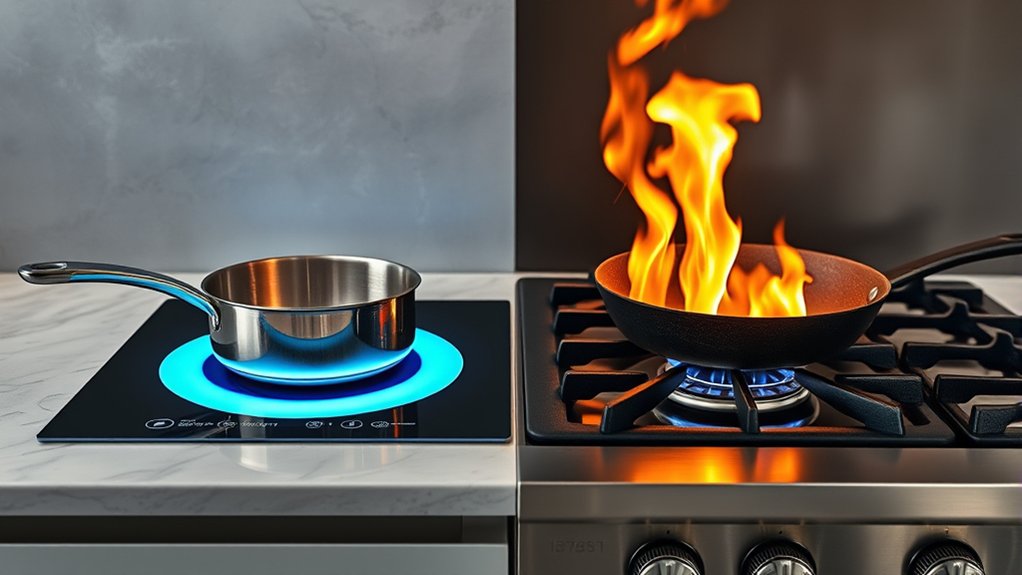
When comparing an induction range vs. gas, induction usually heats cookware faster. It transfers energy directly into compatible pots and pans, so you’ll often see water boil sooner and cooking tasks finish more quickly.
Gas sends heat around the cookware, which can waste energy and take longer to raise temperatures.
Your results depend on cookware size, material, and starting temperature. Flat-bottomed magnetic pans work best with induction, while gas accepts nearly any heat-safe cookware.
Check appliance compatibility before you buy, especially if you plan to replace your existing pots. Induction also responds efficiently when you turn it on, helping you get meals started without waiting for a burner to heat.
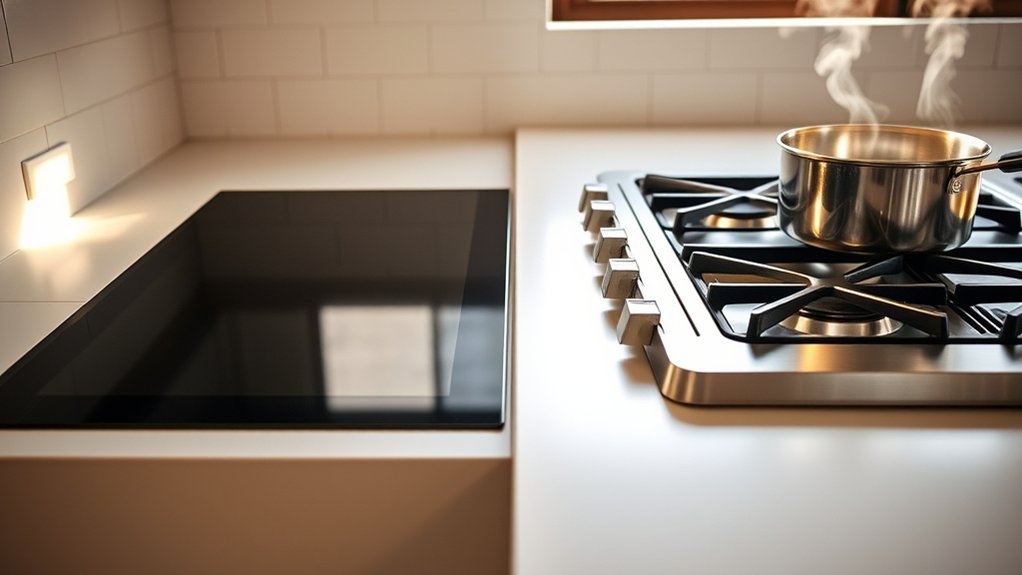
Cooking aesthetics may influence your choice, too. Induction offers a sleek, smooth surface with no visible flame, while gas gives you the familiar glow of an active burner.
For faster heating and efficient energy transfer, induction generally wins, provided your cookware works with it and you value its modern appearance.
Which Range Offers Better Cooking Control?
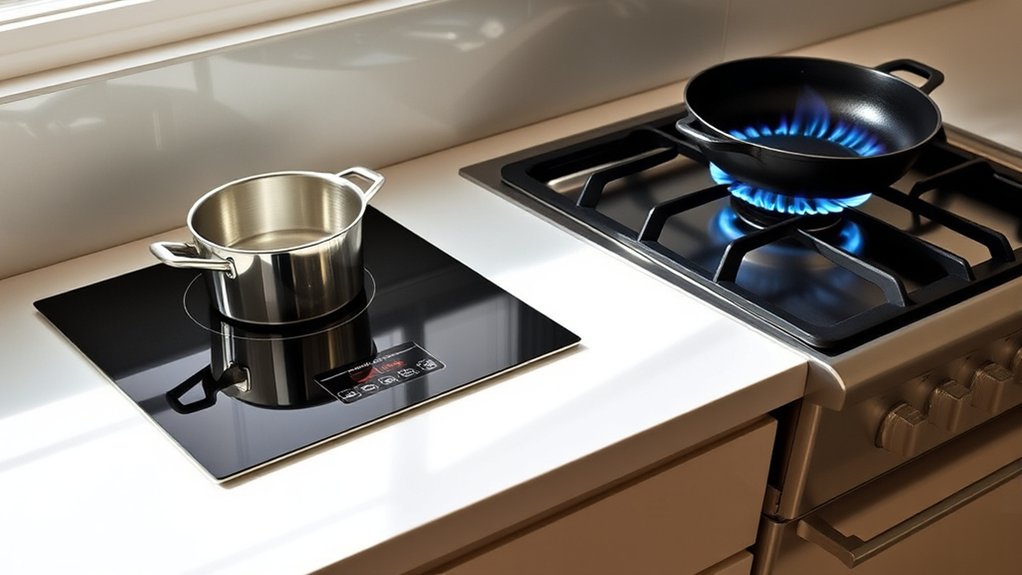
You’ll notice better control when you can make precise heat adjustments. Induction responds to temperature changes almost instantly, while gas lets you see the flame and adjust it visually. It’s also worth comparing how consistently each range maintains cooking temperatures.
Precise Heat Adjustments
Induction ranges generally offer more precise heat adjustments because their electromagnetic fields respond almost instantly to changes in the controls. You’ll notice steadier simmering, gentler warming, and finer control when recipes demand narrow temperature ranges.
Gas burners offer useful visual feedback, but flame size doesn’t always translate directly into pan temperature, especially with uneven cookware. Induction also provides accurate power modulation, helping you maintain consistent results without constant knob adjustments.
| Cooking need | Induction | Gas |
|---|---|---|
| Temperature accuracy | High | Moderate |
| Simmer control | Very precise | Variable |
| Power modulation | Fine increments | Flame-based |
| Feedback | Digital settings | Visible flame |
Choose induction if you value repeatable temperatures and delicate cooking control. Choose gas if you prefer manually judging heat through flame size and cookware response.
Your preferred cooking style ultimately determines which adjustment method feels more intuitive. Each option can perform well when you learn its controls and limitations.
Instant Temperature Changes
Beyond precise adjustments, the speed of each range’s response affects how easily you can correct cooking temperatures.
With induction, you’ll notice an almost immediate reaction when you raise or lower the setting. The cookware receives energy directly, so you can quickly stop vigorous boiling or increase heat for a fast sear.
Gas also responds quickly, but you must account for the flame and burner’s lingering heat after adjustment. Turning the knob down reduces the flame instantly, yet the pan may remain hotter for a moment.
This speed comparison gives induction an edge when you need precise, rapid corrections. However, gas offers visual feedback, letting you judge changes by watching the flame.
Your user experience may depend on whether you prefer induction’s direct response or gas’s familiar, visible control.
Consistent Cooking Temperatures
Consistent cooking temperatures depend on how evenly each range delivers and maintains heat, and induction usually gives you tighter control. Its cooking surface transfers energy directly to compatible cookware, minimizing hot spots and temperature swings.
You can maintain a gentle simmer, melt chocolate, or sear meat with precise adjustments.
Gas gives you responsive control, but heat distribution can vary across the pan and grate. Flames may create hotter areas, while the cooking surface remains affected by surrounding heat.
You’ll need to reposition cookware or adjust the flame more often.
- Induction: Even pan heating and accurate temperature settings
- Gas: Visible flames and quick manual adjustments
- Best control: Induction for repeatable results and steady simmering
If you value consistency, induction makes temperature management easier. Gas still suits you if you prefer visual feedback and hands-on control, particularly for techniques that benefit from changing flame intensity.
Which Range Uses Less Energy?
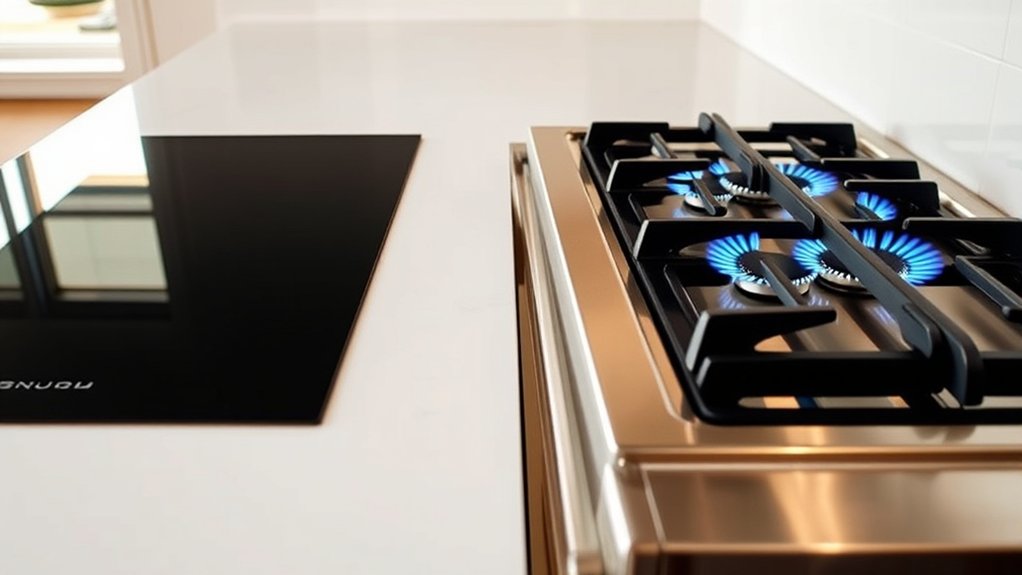
When it comes to energy use, induction ranges are generally more efficient than gas ranges because they transfer heat directly to your cookware. You’ll waste less energy heating the surrounding air, and your food may cook faster.
Induction technology typically converts about 85% of its energy into heat, while gas often delivers roughly 40% to 55% because flames lose heat around the pan.
Induction converts about 85% of its energy into heat, compared with roughly 40% to 55% for gas ranges.
Your actual savings depend on cooking habits, electricity rates, and your range’s efficiency. If you cook frequently, induction can reduce energy waste over time, particularly when you use correctly sized cookware and matching settings.
Gas may cost less to operate in areas with inexpensive natural gas, but it still releases heat into your kitchen.
When you compare energy-efficient appliances, consider both operating costs and environmental impact. Induction can support eco-friendly options when your electricity comes from renewable sources.
You’ll also use less household energy overall when you cover pans, avoid unnecessary preheating, and turn the range off promptly.
Which Range Is Safer for Your Kitchen?
Energy efficiency is only part of the decision; kitchen safety matters, too. For many households, an induction range offers the safer cooking surface.
It heats compatible cookware directly, while the surrounding glass stays relatively cool. You’ll reduce burn risks from accidental contact, especially when you’re managing child safety.
The surface still retains some heat, so you shouldn’t touch it immediately after cooking.
Gas ranges create an open flame and can expose you to heat, smoke, and gas leaks. Unattended pans may ignite nearby towels or cabinets, increasing fire hazards.
You’ll also need reliable ventilation and working carbon monoxide detectors. However, gas gives you an instantly visible flame, which helps you monitor active heat.
Consider these safety advantages:
- Induction limits open-flame exposure.
- Automatic shutoff can stop heating when you remove cookware.
- Gas requires careful flame and leak awareness.
Whichever range you choose, keep handles turned inward, maintain clear counter space, and supervise children. Your cooking habits and installation quality ultimately shape daily safety.
Which Range Is Easier to Clean?
Induction ranges are usually easier to clean because their flat glass surfaces have no grates or burner caps to remove. You can wipe spills quickly with a soft cloth and cooktop cleaner, especially after the surface cools.
Since food doesn’t commonly bake onto separate metal parts, you’ll spend less time scrubbing. This cleaning convenience makes induction a practical choice for busy kitchens.
| Range | Cleaning routine |
|---|---|
| Induction | Wipe the smooth cooktop; remove marks with cleaner |
| Gas | Wash grates, burner caps, and the surrounding surface |
Gas ranges require more effort. You’ll need to lift and wash heavy grates, clean burner caps, and reach into gaps around each burner.
Grease can also collect beneath removable parts. However, surface durability matters: induction glass can scratch or crack if you drop cookware or use abrasive tools, while gas components generally tolerate tougher scrubbing.
For either range, clean spills promptly, follow the manufacturer’s instructions, and avoid harsh products that could damage the finish.
What Cookware and Kitchen Setup Do They Need?
Cookware and kitchen setup can affect your choice because induction ranges require magnetic pots and pans, such as cast iron or many stainless-steel models, while gas ranges work with nearly any cookware. Check Cookware compatibility before choosing induction: hold a magnet to each pan’s base. If it sticks firmly, the pan should work.
Check cookware compatibility before choosing induction: magnetic, flat-bottomed pans work best, while gas accommodates nearly any cookware.
You may need to replace aluminum, copper, glass, or nonmagnetic stainless-steel cookware.
Your Kitchen layout considerations also differ. Induction ranges need a suitable electrical circuit and a flat, stable surface for precise pan contact. Gas ranges require a gas connection, proper ventilation, and clearance around open flames.
Think about where you’ll place cookware, utensils, and ventilation controls so cooking feels natural.
- Choose flat-bottomed pans for even induction heating.
- Confirm your electrical panel can support the range.
- Keep flammable items away from gas burners.
Measure your available space, verify connection requirements, and check cookware before installation. These steps help you avoid compatibility surprises and create a safer, more practical cooking area.
Which Range Costs Less Over Time?
To compare long-term costs, start by looking at each range’s upfront price. Then, factor in energy or fuel consumption, as well as any maintenance costs you may encounter over time.
Upfront Purchase Price
Gas ranges usually cost less upfront, while induction models often carry a higher purchase price because of their advanced heating technology. When you compare prices, don’t stop at the appliance sticker. Consider the entire setup and what you’ll need to buy before cooking.
- Range price: Gas models often offer more budget-friendly entry points, while induction prices vary by size, features, and brand.
- Installation requirements: You may need a gas connection, electrical upgrades, or compatible cookware, depending on your kitchen and current range.
- Warranty coverage: A longer or more extensive warranty can add value and reduce repair concerns, especially on a costlier induction model.
Your available budget, kitchen setup, and preferred features should guide the decision. Although gas typically wins on initial price, induction may justify its premium through convenience, precise control, and easier cleaning, without making fuel costs part of this comparison.
Energy And Fuel Costs
Over time, induction usually uses less energy because it transfers heat directly to the cookware, while gas loses more heat around the pan. That higher energy efficiency can lower your electric bill, especially if you cook frequently or prepare meals requiring long simmering.
However, your actual savings depend on local electricity and gas rates. Compare the cost per kilowatt-hour with the price of natural gas or propane in your area before choosing.
You’ll also notice that induction heats quickly, so you may spend less time running the range. Gas can cost less to operate where fuel prices remain low, but its fuel consumption is typically less efficient.
Track your monthly usage after switching, then compare total cooking costs across several billing cycles. This gives you a realistic long-term estimate.
Long-Term Maintenance Expenses
Energy rates aren’t the only factor affecting long-term costs; maintenance can also shape which range saves you money. Induction models usually have fewer mechanical components, so you may face a lower repair frequency.
Their smooth glass surfaces also wipe clean, reducing buildup that can damage controls. However, cracked cooktops and electronic failures can require costly replacement parts and specialized service.
Gas ranges typically use durable, familiar components, and many technicians can repair them affordably. Still, burners, igniters, grates, and valves may need attention as they age.
You’ll also spend more time cleaning food and grease from tight spaces.
- Induction: fewer routine repairs, but expensive electronics
- Gas: accessible parts and service, with more wear
- Both: regular cleaning helps prevent larger bills
Over time, induction often costs less to maintain if you protect its cooktop. Gas may win when local service and parts are inexpensive.
Frequently Asked Questions
How Noisy Are Induction Ranges During Everyday Cooking?
You’ll usually hear low noise levels from an induction range during everyday cooking. The cooktop may emit a soft hum, buzz, or faint clicking as it adjusts power, especially with high settings or certain cookware.
Cooling fans can also run after cooking ends. These cooking sounds generally stay quieter than gas flames and don’t interfere with conversation.
Smooth-bottomed, induction-compatible pans often minimize vibration, so you’ll notice less sound overall.
Can Induction Ranges Work During Power Outages?
Induction ranges can’t cook during a power outage because they need electricity to create the magnetic field that heats your cookware. You’ll also lose electronic controls, timers, and sometimes the oven, even if your home has gas service.
For reliable backup cooking, keep a portable gas burner or outdoor grill available, and follow Electric safety practices around generators. Although induction offers excellent Energy efficiency during normal operation, it won’t function without a steady electrical supply.
Do Gas Ranges Require Professional Installation?
Gas ranges typically require professional installation because you’re connecting a fuel line, checking for leaks, and ensuring proper ventilation.
Installation requirements may include a correctly sized gas shutoff valve, approved connector, electrical outlet, and compliance with local codes.
Safety considerations matter: you shouldn’t modify gas piping or skip leak testing. A licensed technician can level the range, verify burner operation, and confirm safe installation.
You’ll also preserve warranties and reduce hazards.
How Long Do Induction and Gas Ranges Typically Last?
You can typically expect an induction range to last 10–15 years, while a gas range often lasts 15–20 years. Your results depend on build quality, maintenance, and usage.
Induction models may offer better energy efficiency and simpler cleanup, but electronic components can require costly repairs. Gas ranges generally use durable mechanical parts, though burners and grates need regular care.
You’ll extend either appliance’s life by cleaning spills promptly, scheduling repairs, and using its safety features correctly.
Are Induction Ranges Available in Different Styles and Sizes?
Yes, you’ll find induction ranges in several styles and sizes, but the best choice may surprise you. Their induction design fits freestanding, slide-in, and built-in models, giving you flexibility for different kitchen layouts.
You’ll also find size options ranging from compact 24-inch units to spacious 36-inch ranges, with common 30-inch models in between. Before choosing, measure your opening, confirm electrical requirements, and consider burner layout, oven capacity, and control placement.
Conclusion
Choosing between an induction and gas range comes down to what matters most in your kitchen. Induction heats faster, offers precise control, saves energy, and cleans up easily, while gas provides familiar visual feedback and broad cookware compatibility.
Safety and long-term costs also deserve attention. So, which flame or magnetic field fits your cooking style?
Consider your budget, cookware, ventilation, and priorities before deciding. The right range won’t just cook your meals; it’ll transform your kitchen.
When comparing an induction range vs. gas, focus on the features that best match your cooking habits and lifestyle.