Discover the Best Angle for Kitchen Knives to Cut Like Pro!
Edge geometry and bevel angle play critical roles in the performance and longevity of kitchen knives. Understanding the best angle for kitchen knives involves delving into the relationship between cutting efficiency, blade durability, and ease of sharpening. A blade sharpened at a narrower angle may slice through ingredients with precision but can be prone to quicker wear, while a wider angle enhances sturdiness at the potential cost of sharpness.
Factors such as the type of steel, intended use, and culinary technique all influence the optimal sharpening angle. Exploring how these variables interact provides valuable insight into maximizing your knife’s potential.
Continue reading to uncover the nuances behind selecting the best angle for kitchen knives and how this knowledge can elevate your culinary experience.
Discover the Optimal Edge That Transforms Your Culinary Experience
| Image | Product | Price |
|---|---|---|
Pick 1 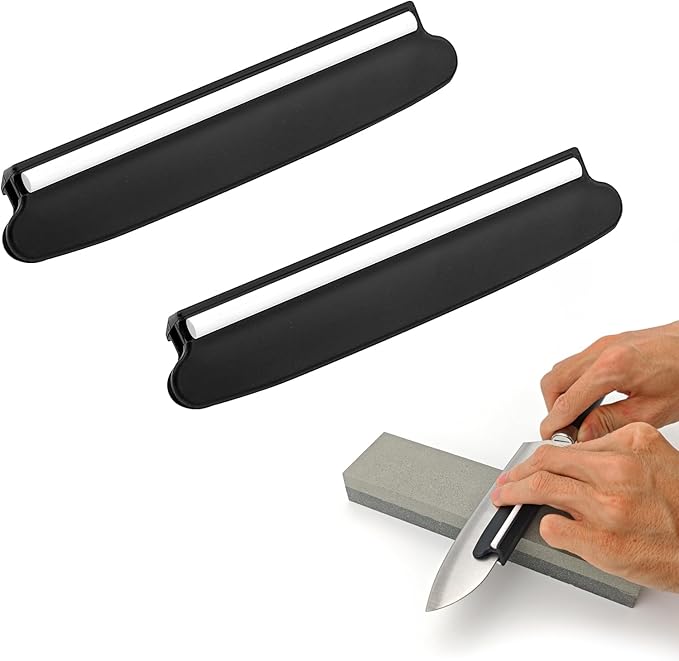 | Knife Sharpening Angle Guide 2-Pack with Ceramic Glide | Check Price On Amazon |
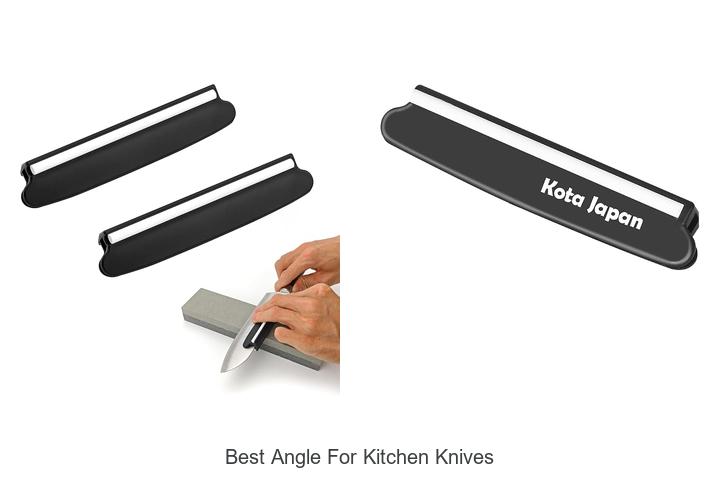
Pick 2  | Koja Fixed Angle Whetstone Sharpener Blade Guide | Check Price On Amazon |
Pick 3  | Knife Sharpening Angle Guide Whetstone for Kitchen Knives | Check Price On Amazon |
1. Knife Sharpening Angle Guide 2-Pack with Ceramic Glide
Achieving the perfect edge on your kitchen knives just got easier with the Knife Sharpening Angle Guide 2-Pack. Designed to maintain a consistent 15° sharpening angle, this practical tool is ideal for both beginners and seasoned cooks aiming to enhance their blade’s performance effortlessly.
Each guide clips securely onto the knife spine, providing a reliable reference point on whetstones, diamond stones, and oil stones. The ceramic glide edge ensures smooth movement across sharpening surfaces, protecting both the blade and stone from unnecessary wear.
Pros
- Maintains an optimal 15° angle for precise sharpening results
- Ceramic glide edge reduces blade and stone damage during use
- Works well with various sharpening stones including whetstones and diamond stones
Cons
- Not suitable for very small pocket knives or blades with unusually thin spines
Combining ease of use with effective angle control, the Knife Sharpening Angle Guide 2-Pack stands out as a valuable addition for anyone looking to maintain razor-sharp kitchen knives. Compared to other angle guides, its ceramic glide feature offers superior protection, making it a dependable choice for regular home sharpening routines.
2. Koja Fixed Angle Whetstone Sharpener Blade Guide
Achieve precision and consistency with the Koja Fixed Angle Whetstone Sharpener Blade Guide, designed to take the guesswork out of knife sharpening. Perfect for home cooks and professionals alike, it ensures your kitchen knives are sharpened to perfection every time.
By securely attaching to your blade, the sharpener maintains a steady, repeatable angle against your whetstone, preventing uneven edges common in freehand sharpening. Compatible with most kitchen knives, it functions as both an angle guide and sharpening jig, pairing seamlessly with Koja’s whetstone products for a reliable all-in-one sharpening system.
Pros
- Ensures a consistent, repeatable sharpening angle for professional results.
- Fits a wide variety of standard kitchen knife blades for versatile use.
- Designed to complement Koja’s whetstones, creating a complete sharpening setup.
Cons
- May require initial adjustment to fit certain knife types securely.
For anyone serious about maintaining sharp, reliable kitchen knives, the Koja Fixed Angle Whetstone Sharpener Blade Guide offers unmatched ease and precision. Compared to freehand methods or less adjustable guides, this tool provides consistent angles that protect blade edges and enhance sharpening effectiveness.
3. Knife Sharpening Angle Guide Whetstone for Kitchen Knives
Achieve precise and consistent sharpening with the Knife Sharpening Angle Guide Whetstone designed specifically for kitchen knives. Mastering the best angle for kitchen knives has never been easier, as this tool ensures every blade edge is honed uniformly for exceptional cutting performance.
Featuring a premium dual-sided ceramic design, this angle guide includes two pieces with a fixed 15° sharpening angle for optimal results. Compact and portable at just 100mm by 20mm, it grips knives securely during use, accommodating most kitchen knives with up to 4mm spine thickness, making sharpening effortless even for beginners.
Pros
- Durable dual-sided ceramic layer offers excellent wear resistance and long-lasting use
- Fixed 15° angle guide promotes consistent and professional-grade sharpening results
- Compact size and lightweight design support easy storage and portability for both kitchen and outdoor use
Cons
- Not compatible with tiny, ultra-short blade, or uniquely shaped knives
For home cooks and professionals alike, this angle guide delivers precise sharpening with minimal effort, making it an invaluable companion to your whetstone. Compared to generic guides, its fixed angle and secure clamping enhance ease of use and blade longevity, offering superior sharpening accuracy every time.
4. 15-120 Degree Stainless Steel Knife Angle Gauge

Achieve precision in kitchen knife sharpening with the 15-120 Degree Stainless Steel Knife Angle Gauge. Designed to help you find the best angle for kitchen knives, this durable tool ensures a perfect edge every time, enhancing your cutting performance and extending the life of your blades.
Crafted from high-quality stainless steel, the angle gauge offers excellent corrosion resistance and long-lasting durability. Its clear degree markings from 15 to 120 degrees make it easy to measure and maintain the optimal sharpening angle.
Pros
- High-quality stainless steel construction prevents rust and ensures longevity.
- Wide angle range (15-120 degrees) accommodates various knife types and sharpening preferences.
- Compact design with keychain hole enables easy portability and quick access.
Cons
- Small size may be challenging to handle for users with larger hands.
Offering accuracy, durability, and convenience, the 15-120 Degree Stainless Steel Knife Angle Gauge is an excellent tool to maintain your knives’ sharpness. Compared to bulkier or plastic models, it provides superior reliability and corrosion resistance, making it a smart choice for both kitchen enthusiasts and professional chefs.
5. AccuSharp Gourmet Series Knife Sharpener

Achieve professional-level sharpness with the AccuSharp Gourmet Series Knife Sharpener, designed specifically for maintaining the optimal 15º angle crucial to kitchen knives. Its precision-engineered blades cater to both serrated and straight edges, transforming dull knives into razor-sharp tools with ease and efficiency.
Equipped with reversible diamond-honed tungsten carbide blades, this sharpener offers durability and long-lasting performance. The ergonomic handle and full-length finger guard ensure safety and comfort during use. Ideal for home chefs and industrial kitchens alike, it promises reliable sharpening that preserves the best angle for kitchen knives consistently.
Pros
- Precise 15º sharpening angle tailored for gourmet knives, enhancing cutting performance.
- Durable, reversible diamond-honed tungsten carbide blades double the sharpener’s lifespan.
- Ergonomic handle with full-length finger guard provides safe, comfortable use.
- Suitable for both serrated and straight-edged knives, offering versatile sharpening.
- Compact, easy-to-use design ideal for both home and professional kitchen environments.
Cons
- Limited to sharpening knives with a 15º angle, which may not suit all blade types.
The AccuSharp Gourmet Series Knife Sharpener is a standout choice for those seeking dependable, precise sharpening that respects the ideal angle for kitchen knives. Compared to generic sharpeners, it offers enhanced blade longevity and safety features, making it an invaluable addition to any culinary toolkit at an affordable price point.
6. RazorSharp Knife and Scissor Sharpener

Elevate your kitchen efficiency with the RazorSharp Knife and Scissor Sharpener, expertly crafted for precise and effortless sharpening. Whether you’re a home cook or a professional chef, this tool ensures your knives stay razor-sharp through customizable angles and durable materials.
Featuring an adjustable knob that allows sharpening between 14 to 24 degrees, it caters to various knives from kitchen cutlery to professional blades. Diamond-coated ceramic stones deliver exceptional sharpening longevity, while a sturdy, non-slip handle guarantees safe, stable use every time.
Pros
- Adjustable sharpening angle from 14° to 24° optimizes blade edges for diverse kitchen knives.
- Diamond-coated ceramic stones provide long-lasting, efficient sharpening performance.
- Ergonomic ABS plastic frame with non-slip rubber offers excellent grip and enhances safety.
Cons
- Sharpening time may be longer compared to electric sharpeners for very dull blades.
For precision and safety at an affordable price, the RazorSharp sharpener ranks among the best manual options available, outperforming many basic models with its adjustable angles and superior whetstone quality. It’s an ideal choice for maintaining the finest edge on your kitchen or professional knives.
7. 4 Pcs Knife Sharpening Angle Guides 15 Degree Black

Achieve the perfect edge every time with the 4 Pcs Knife Sharpening Angle Guides, designed to maintain the ideal sharpening angle of approximately 15 degrees. Whether you’re a professional chef or a home cook, these guides simplify the sharpening process, ensuring precision and safety for all your kitchen and outdoor knives.
Constructed from durable plastic and ceramic materials, each angle guide measures 93 inches in length and 78 inches in width, offering a comfortable grip and sturdy support. Compatible with various sharpening stones, these guides help keep blades aligned for optimal sharpening results while protecting your hands from blade damage during grinding.
Pros
- Maintains a consistent 15-degree sharpening angle for the best edge quality
- Durable plastic and ceramic construction ensures long-lasting use
- Versatile compatibility with all sizes of diamond and oil stones as well as most kitchen and outdoor knives
Cons
- Fixed angle may not suit knives requiring alternate sharpening angles
For those seeking the best angle for kitchen knives sharpening, these angle guides provide a reliable, affordable, and user-friendly aid, outperforming many generic sharpeners without angle support. Invest in precision and safety with this 4-piece set, enhancing your blade maintenance routine effortlessly.
8. Grinder Whetstone Knife Sharpening Angle Guide

Sharpen your kitchen knives with precision and ease using the Grinder Whetstone Knife Sharpening Angle Guide. Designed to maintain the perfect 15-degree angle, this tool ensures your blades stay sharp and efficient, whether at home or in a professional restaurant setting.
Crafted with a dual-sided ceramic protective layer, this angle guide clamps knives securely up to 4mm thick, providing safety and durability during sharpening. Ideal for users who sharpen occasionally, it offers reliable assistance to achieve consistent razor-sharp edges every time.
Pros
- Ensures a precise 15-degree sharpening angle for optimal blade performance
- Secure clamp holds knife firmly, suitable for blades with a spine thickness up to 4mm
- Durable ceramic layers protect both blade and guide during sharpening
Cons
- Not compatible with small or short blade knives
Offering a blend of safety, durability, and precision, the Grinder Whetstone Knife Sharpening Angle Guide stands out as an essential kitchen tool for maintaining sharp knives effortlessly. Compared to other angle guides, it combines user-friendly design with robust construction, making it a smart choice for both culinary enthusiasts and professionals.
9. AGM Angle Wedges for Knife Sharpening

Achieving the best angle for kitchen knives is essential for precision sharpening, and AGM Angle Wedges for Knife Sharpening are expertly designed to help you maintain consistent angles with ease. These wedges provide reliable guidance to extend the life and performance of your blades.
Crafted from durable plastic, the Wedgek AGM Medium size wedges offer angle guides ranging from 10 to 20 degrees, with the option to combine two wedges to reach up to 39 degrees. Measuring 1-1/2 in length and including two rubber bands, they ensure the guide stays secure for each sharpening stroke without slipping.
Pros
- Adjustable angle range from 10 to 20 degrees for versatile sharpening needs
- Stable design prevents guide movement, promoting precision during each stroke
- Compact size and included rubber bands make setup quick and secure
Cons
- Requires steady hands and practice to maintain consistent sharpening angle
For those seeking an effective and affordable sharpening aid, AGM Angle Wedges deliver dependable results and flexibility that rival many other guides on the market. Backed by positive customer reviews, they’re an excellent choice for keeping your kitchen knives in peak condition.
10. Mercer Culinary Knife Sharpening Angle Guide

Achieve perfect edge retention and superior sharpness with the Mercer Culinary Knife Sharpening Angle Guide. Crafted to assist both professionals and home cooks, this tool ensures the best angle for kitchen knives, simplifying the sharpening process and enhancing your culinary experience.
Constructed with durable ceramic inserts, this sharpening guide trains users to maintain the ideal sharpening angle, specifically designed for 6 chef’s knives and larger. Its precise angle guidance restores blades efficiently, guaranteeing consistent peak performance and long-lasting sharpness.
Pros
- Durable ceramic inserts provide longevity and resistance to wear.
- Accurately teaches the optimal knife sharpening angle for enhanced blade life.
- Compatible with various larger chef’s knives, ideal for both professional and home use.
Cons
- Limited to knives 6 inches and larger, not suitable for smaller blades.
For anyone serious about maintaining razor-sharp knives, Mercer Culinary’s sharpening guide offers a reliable, easy-to-use solution. Its precision and durable design make it a smart choice compared to more generic angle guides, ensuring superior results with every sharpening session.
Understanding knife edge angles
Knife edges typically fall within a range of 15 to 22 degrees per side, and this angle profoundly impacts both sharpness and longevity. A narrower angle, around 15 degrees, offers a razor-sharp edge ideal for precision tasks but may blunt faster due to thinner bevels.
Western knives often feature wider edges, usually around 20 degrees, enhancing toughness and ease of maintenance, while Japanese knives tend to have slimmer angles near 15 degrees, delivering exceptional sharpness but requiring more careful upkeep.
Types of kitchen knives and their ideal angles
Understanding how different knives interact with various sharpening tools can greatly affect their performance and longevity. For instance, chef’s knives usually have a wider edge angle, often ranging between 20 to 22 degrees per side, which provides a balance between sharpness and durability. These knives benefit from tools that can accommodate their larger blade size and maintain consistent angles throughout the sharpening process. On the other hand, paring knives require much finer attention to detail, as their typical edge angles fall between 15 to 18 degrees per side.
Precision sharpening devices or attachments that allow for meticulous adjustment ensure these smaller, delicate blades are honed properly without damage.
Additionally, specialty knives like serrated or cleaving knives often demand customized edge angles tailored to their unique cutting tasks. Equipment or systems that offer adjustable features can handle these variations effectively, enabling users to set the appropriate angle for each blade type. This adaptability not only improves cutting efficiency but also extends the knives’ usable life by preventing uneven wear.
This adaptability not only improves cutting efficiency but also extends the knives’ usable life by preventing uneven wear.
| Knife Type | Typical Edge Angle (per side) | Sharpening Requirements |
|---|---|---|
| Chef’s Knife | 20° – 22° | Wide blade coverage, consistent angle maintenance |
| Paring Knife | 15° – 18° | Precision adjustments, gentle handling |
| Specialty Knives | Varied, customized | Adjustable settings for different angles |
Having a tool that supports these variations and can evolve with your collection ensures each knife performs at its best. This versatility also simplifies future upgrades or additions to your sharpener setup, making maintenance more efficient and tailored.
Material and steel type influence on angle
The ability of a device to connect seamlessly with various tools and its potential for adding future enhancements play a crucial role in maximizing its functionality and lifespan. Ensuring compatibility with different sharpening attachments or electronic guides can simplify the process and improve precision.
Additionally, having options to upgrade features or integrate accessories allows for a more tailored experience that can adapt to evolving needs. This flexibility not only saves money over time but also enhances the overall efficiency and versatility of the sharpening setup.
- Check the types of interfaces or mounts available to ensure it works well with a range of sharpening stones or jigs.
- Look into whether additional modules or attachments can be easily added for different blade sizes or angles.
- Consider future-proofing by choosing a system that supports updates or expansions, so it remains useful as your collection or sharpening skills grow.
Maintaining a precise edge angle requires tools that can adapt to various sharpening needs. Suitable sharpening stones come in different grits and materials, each designed to handle specific angles effectively; for example, finer stones are ideal for honing sharper, more delicate edges, while coarser stones work well for resetting dull blades at wider angles. Using angle guides ensures consistency throughout the sharpening process, helping to maintain uniformity along the blade and preventing accidental over-grinding.
Using angle guides ensures consistency throughout the sharpening process, helping to maintain uniformity along the blade and preventing accidental over-grinding. Additionally, the choice between manual and electric sharpeners affects the final edge: manual sharpening offers greater control over the angle but demands more skill, whereas electric devices often preset the angle, which can be convenient but less customizable. Understanding these factors makes a significant difference in achieving a sharp, long-lasting blade suited to various kitchen tasks.
Usage and maintenance considerations
The precision of the edge angle plays a crucial role in adapting knives for various cutting tasks, such as slicing vegetables or deboning meat, which demand different sharpness and durability levels. A sharper, narrower angle offers enhanced cutting performance but may require more frequent upkeep to maintain its keen edge, while a wider angle typically provides greater resilience and longer intervals between sharpening sessions. Properly storing knives in a way that protects the blade, such as using magnetic strips or blade guards, helps preserve the crafted angle by preventing dulling or chipping.
Additionally, mindful handling during everyday use and cleaning extends the lifespan of the blade’s edge, ensuring consistent performance over time.
Personal preference and skill level
Personal preference and skill level play a crucial role in finding the perfect sharpening setting. Effortlessly connecting the device to various tools or accessories ensures it can adapt to your specific usage, whether you favor a precise, delicate cut or a more robust, heavy-duty approach. Options for expanding functionality allow the angle to be adjusted according to different cutting styles and how often the knives are used, making it easier to maintain optimal sharpness over time.
Beginners benefit from user-friendly settings that provide stable angles, reducing the learning curve and minimizing the risk of damage. In contrast, professionals may prefer more customizable options that accommodate their unique techniques and preferences. Testing multiple angles helps fine-tune performance, ensuring that each blade achieves the desired balance of sharpness and durability.
FAQ’s
What Is The Ideal Angle For Sharpening Kitchen Knives?The ideal angle for sharpening kitchen knives is typically between 15 to 20 degrees per side. This range provides a good balance between sharpness and blade durability for most kitchen tasks.
How Does The Knife Edge Angle Affect Cutting Performance?The knife edge angle affects cutting performance by determining the sharpness and durability of the blade; a smaller angle creates a sharper edge for precise cuts but may dull faster, while a larger angle provides greater strength and longevity but can reduce cutting efficiency. Therefore, the optimal angle balances sharpness and toughness based on the intended use.
Should Different Types Of Kitchen Knives Have Different Sharpening Angles?Yes, different types of kitchen knives should have different sharpening angles to optimize their performance based on their intended use. For example, thinner blades like Japanese knives typically require sharper angles (around 15 degrees), while sturdier knives like Western-style ones benefit from angles closer to 20 degrees for durability.
What Is The Difference Between A 15-Degree And A 20-Degree Knife Edge?A 15-degree knife edge is sharper and provides finer, more precise cutting, ideal for delicate tasks, while a 20-degree edge is more durable and better suited for general-purpose use and tougher materials. The smaller angle of 15 degrees sacrifices some strength for increased sharpness compared to the sturdier 20-degree edge.
How Can I Measure And Maintain The Correct Sharpening Angle For My Kitchen Knives?You can measure the sharpening angle by using an angle guide or a sharpening jig to ensure consistency. To maintain the correct angle, practice steady hand positioning and regularly check your progress against the guide while sharpening.
Conclusion
When choosing the best angle for kitchen knives, aiming for a sharpening angle between 15 to 20 degrees per side is ideal. This range offers a perfect balance of sharpness and durability, making cutting tasks easier and more efficient.