
5 Benefits of Electric Stove Top Vs Induction Cooktops
Choosing between an electric stovetop and an induction cooktop can be frustrating, especially when you want reliable performance without overspending. You’re not alone—many home cooks struggle to balance cost, cookware compatibility, heating speed, and easy cleanup.
5 Benefits of Electric Stove Top Vs Induction Cooktops
Electric stovetops offer five key benefits over induction cooktops: lower upfront costs, simpler installation, compatibility with nearly all flat-bottomed cookware, familiar controls, and easier replacement.
You won’t need magnetic pots or pans, and you can use aluminum, glass, ceramic, or stainless steel cookware.
Electric models suit basic cooking needs and tight budgets, though they heat and cool more slowly than induction.
If you’re weighing speed, precision, efficiency, and cleanup too, the following comparison will help you choose confidently.
Key Takeaways
- Electric stovetops generally cost less upfront than induction cooktops.
- Electric stovetops work with most flat-bottomed cookware, while induction requires magnetic-compatible pans.
- Electric models are easier and less expensive to install when suitable wiring already exists.
- Induction cooktops heat faster, respond more precisely, and use energy more efficiently than traditional electric stovetops.
- Electric cooktops provide a practical choice for budget-conscious cooks with basic heating needs.
How Do Electric and Induction Cooktops Work?

Electric cooktops heat food through electrical resistance: current passes through a heating element, which glows hot and transfers heat to the cookware. When you turn the control, electricity warms a coil or smooth radiant surface.
Electric cooktops use heated coils or radiant surfaces to transfer electrical resistance heat into cookware and food.
You place a compatible pan on top, and heat moves from the surface into the pan and then your food. The element may cycle on and off to maintain your selected temperature, so you’ll notice occasional changes in brightness.
Induction cooktops work differently. An electronic circuit sends alternating current through a copper coil beneath the glass, creating a rapidly changing magnetic field.
When you set a magnetic pan on the surface, the field generates electrical currents inside the pan itself, causing the pan to heat directly. The glass receives less residual heat, though it can still become warm from the cookware.
You’ll find energy efficiency advantages with induction because it transfers heat directly. Safety features include automatic shutoff and pan detection.
Electric vs. Induction Cooktop Costs

Upfront costs usually favor traditional electric cooktops, while induction models often cost more because of their advanced components. If you’re replacing a basic range on a tight budget, electric generally offers the lower purchase price and a wider selection of affordable options.
You may also find installation simpler if your existing wiring already supports an electric unit.
However, don’t judge value by the sticker price alone. Induction’s energy efficiency can reduce electricity use over time, potentially offsetting its higher initial cost.
Your savings depend on cooking frequency, utility rates, and the model’s efficiency. Induction units may also include useful safety features, such as automatic shutoff, pan detection, and cooler surrounding surfaces, which can add practical value.
Remember to budget for compatible cookware if your current pots and pans aren’t magnetic. Compare warranties, controls, installation requirements, and expected lifespan before choosing.
A slightly higher upfront investment may make sense if long-term operating costs matter most to you.
Which Cooktop Heats Faster and More Precisely?
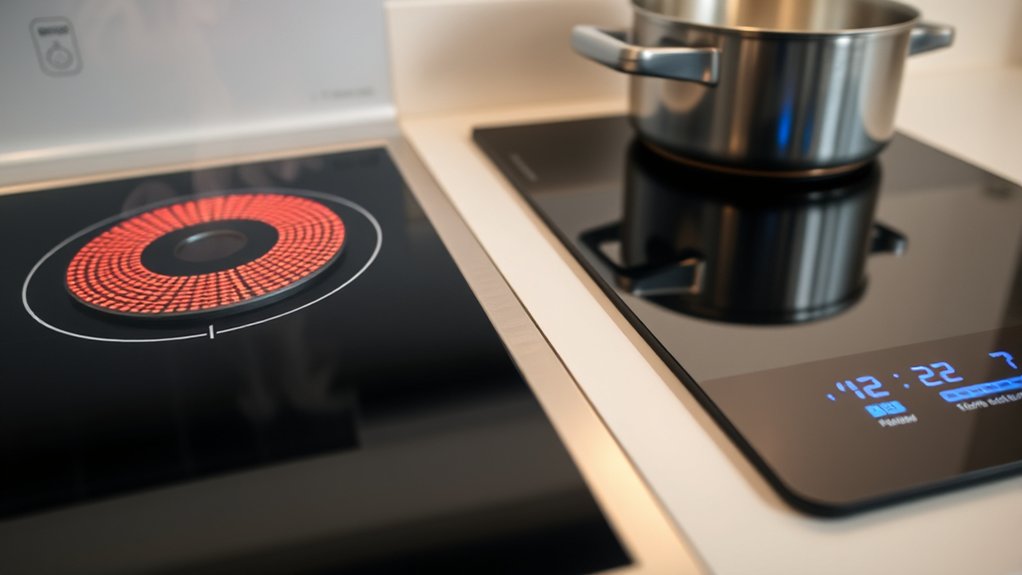
When speed and precision matter, induction cooktops usually have the edge. They transfer energy directly to compatible cookware, so you’ll often boil water and start cooking faster than you would on a traditional electric stove top.
Because the surface itself doesn’t generate the primary heat, induction responds quickly when you raise or lower the setting. You’ll notice less waiting during adjustments and more consistent results while simmering delicate sauces or maintaining a steady sauté.
Electric stove tops can still deliver dependable performance, but their heating elements typically take longer to warm and cool. Residual heat may continue affecting your food after you reduce the setting, making fine adjustments less immediate.
With induction, precise Temperature control helps you manage cooking stages more confidently. It also improves Energy efficiency by directing more power into the pan instead of losing heat around it.
If responsive cooking and lower wasted energy matter most, induction offers the stronger advantage.
What Cookware and Cleanup Should You Expect?
Your cookware and cleanup routine will differ between these two surfaces. With a traditional electric stove top, you’ll generally use pots and pans with flat, stable bases, including aluminum, stainless steel, glass, and ceramic.
Check each piece for manufacturer guidance, since uneven bottoms can heat inconsistently or scratch a smooth surface. Electric burners may leave spills baked onto the hot area, so wipe them after the surface cools and use a cooktop-safe cleaner for stubborn residue.
Induction requires different cookware compatibility. Your pans must contain magnetic material, such as cast iron or magnetic stainless steel. Test a pan with a magnet; if it sticks firmly to the base, it should work.
Avoid dragging cast iron, which can scratch the glass, and lift cookware instead. Induction surfaces stay cooler around the pan, so spills typically don’t burn as quickly.
For cleanup and maintenance, wait until the surface is safe, then use a soft cloth and nonabrasive cleaner.
Which Cooktop Fits Your Budget and Cooking Style?
Budget and cooking habits should guide your choice between an electric stove top and an induction cooktop. If you’re watching upfront costs, an electric stove top usually fits your budget better. It’s widely available, simple to install, and works with nearly any cookware. You’ll also find familiar controls and steady performance for everyday meals.
Choose induction if you’re willing to invest more for speed, precision, and lower operating costs. Its Energy efficiency can reduce wasted heat, while rapid temperature changes suit you if you cook often or value control. However, you’ll need magnetic cookware, such as cast iron or compatible stainless steel, which may add expense.
Your cooking style matters, too. If you simmer, bake, and prepare basic dinners, electric may meet your needs. If you sear frequently, multitask, or want responsive heating, induction offers advantages.
Safety features, including cooler surfaces and automatic shutoff, make induction especially appealing for busy households. Compare installation, cookware, and long-term energy costs before deciding.
Frequently Asked Questions
Can Electric or Induction Cooktops Be Installed in Any Kitchen?
Yes, you can install electric or induction cooktops in many kitchens, but you’ll need to confirm installation compatibility first. Check your cabinet dimensions, countertop cutout, ventilation, and electrical supply.
Electric models typically require a suitable high-voltage circuit, while induction units need compatible cookware and precise electrical capacity. You should also consider kitchen aesthetics, including surface style, controls, and placement.
Consult a qualified installer to verify measurements, wiring, safety requirements, and local building codes before purchasing.
How Much Electricity Does Each Cooktop Consume During Typical Use?
Your cooktop can make your electric meter race like it’s running a marathon. During typical use, a conventional electric cooktop draws roughly 1,500–2,500 watts per active burner, while induction commonly uses 1,300–2,000 watts.
Actual energy use depends on cooking time, heat level, and the number of burners. Induction generally offers better Energy efficiency, transferring more heat directly to cookware, whereas electric models lose more heat. Your total Power consumption varies accordingly.
Are Electric or Induction Cooktops Safe Around Children and Pets?
Both electric and induction cooktops can be safe around children and pets, but you’ll need supervision and safeguards. For child safety, use rear burners, lock controls, cover knobs, and teach children to stay back. Induction surfaces remain cooler, reducing burn risks, though pans still get hot.
For pet safety, prevent animals from jumping onto counters, secure dangling cords, and keep cookware handles turned inward. Always switch appliances off after cooking and install sturdy barriers when possible.
What Happens During a Power Outage With Each Cooktop Type?
During a power outage, you can’t use either an electric or induction cooktop because both require electricity. Your electric cooktop’s heating elements stop producing heat, while your induction unit’s magnetic field shuts off immediately.
You’ll need alternative cooking methods, such as a gas stove, outdoor grill, camping stove, or prepared food. Backup options include a generator or battery power station, but only use them safely with proper ventilation and manufacturer-approved connections.
Do Electric and Induction Cooktops Require Special Ventilation Systems?
No, you usually don’t need a special ventilation system for either cooktop, but what rises above your pan still matters. Both electric and induction models produce little indoor combustion pollution, unlike gas.
You should install a range hood or use effective ventilation to remove steam, smoke, grease, and odors. Ventilation requirements generally match local codes and your kitchen layout.
For safety, keep filters clean, vent outdoors when possible, and follow the manufacturer’s clearance recommendations carefully.
Conclusion
Ultimately, choosing between an electric stove top and an induction cooktop depends on how you cook, what you’ll spend, and which features matter most.
Electric stove tops offer familiar operation and lower upfront costs, while induction cooktops provide faster heating, precise control, and easier cleanup.
Imagine rushing to prepare dinner: induction can boil water in minutes and cool immediately afterward, while electric cooking may take longer but works with nearly any pan.
Compare your cookware, budget, and habits before deciding which electric stove top or induction cooktop is right for you.