5 Tips for Installing Washer and Dryer in Kitchen
Fitting laundry appliances into a kitchen can feel like a frustrating space-saving puzzle. You’re not alone—many people struggle to balance limited room, plumbing requirements, ventilation, and everyday convenience. The right washer and dryer can make the setup much easier.
To install a washer and dryer in your kitchen, first measure appliance dimensions, door swings, clearances, and service access. Next, verify water lines, drainage, grounded circuits, voltage, and breaker capacity. Choose compact, stackable, or ventless models that suit your space and laundry needs.
Vent dryers outdoors through short, rigid metal ducting, and control moisture with kitchen ventilation. Finally, level the units, manage noise, keep shutoffs accessible, and follow manufacturer clearances. The tips below will help you plan confidently.
Key Takeaways
- Measure appliances, door swings, cabinet clearances, walkways, and vertical space before choosing compact, stackable, or ventless models.
- Verify water supplies, drain capacity, shutoff valves, ventilation, and dedicated grounded electrical circuits before installation.
- Route dryers through short, straight rigid-metal ducts terminating outdoors; never vent into cabinets, walls, attics, or kitchens.
- Leave accessible space around filters, connections, controls, and doors for safe operation, maintenance, servicing, and appliance removal.
- Level appliances, use anti-vibration pads, manage condensation, and test a complete cycle before installing surrounding cabinetry.
Confirm Your Kitchen Can Handle a Washer and Dryer
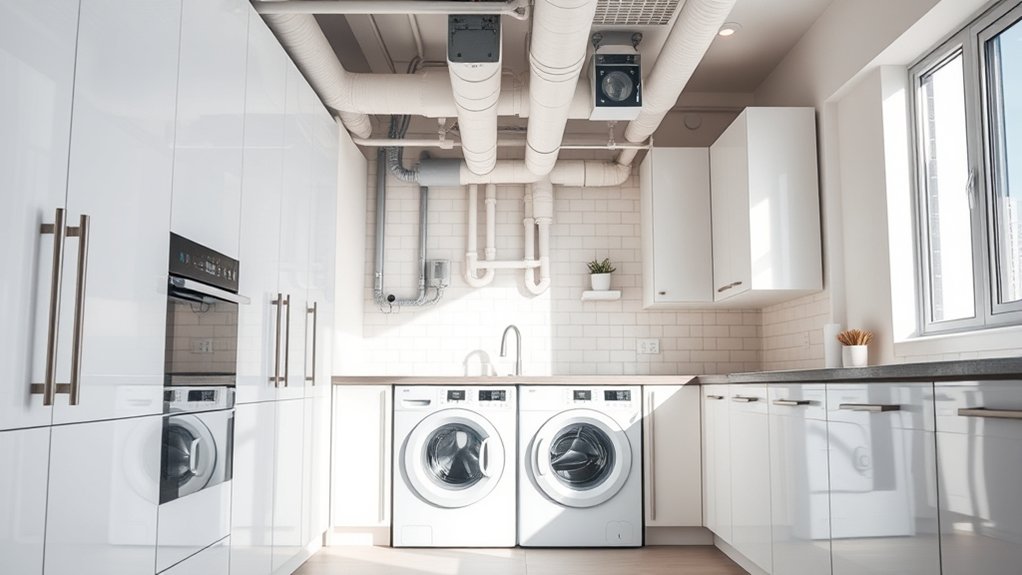
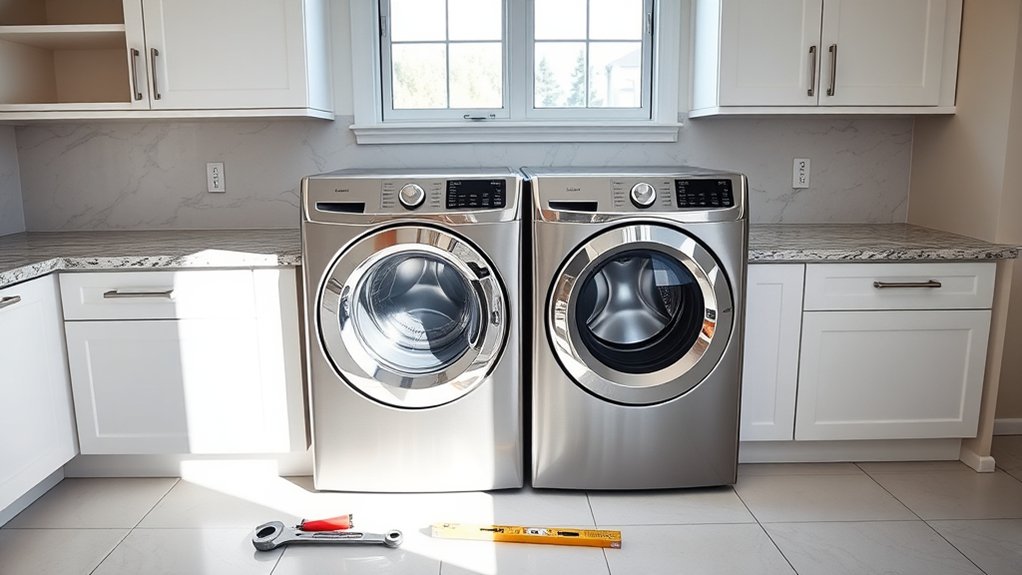
Before installing a washer and dryer, confirm your kitchen has enough space, proper electrical capacity, water connections, drainage, and ventilation. Measure the machines, door swing, and surrounding clearance, then compare those dimensions with your cabinets, counters, and walkways.
Confirm space, electrical capacity, water, drainage, and ventilation before installing kitchen laundry appliances.
You’ll need enough room to load laundry comfortably without blocking drawers, appliances, or exits. Evaluate appliance placement carefully: a compact unit might fit beneath a counter, while a stacked pair could use vertical space in a pantry or tall cabinet area.
Check whether the floor can support the machines and remain level during operation. Also consider heat, noise, vibration, and access for future servicing.
Plan how you’ll conceal hoses, cords, and gaps without restricting airflow or creating hazards. Aim for aesthetic integration by matching appliance finishes with your cabinetry and maintaining a deliberate, orderly layout.
If the space feels cramped or disruptive, reconsider the location before you commit to installation.
Check Plumbing, Drainage, and Electrical Capacity
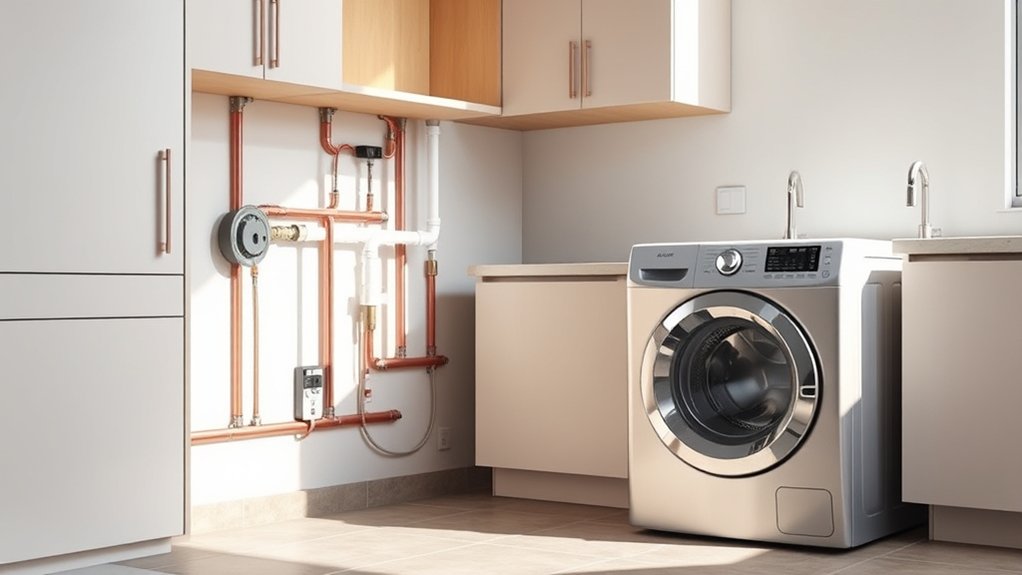
Once the layout works, verify that your kitchen can support the washer and dryer’s plumbing and power needs. Check nearby supply lines for leaks, corrosion, and smoothly operating shutoff valves.
Measure water pressure at the connection. Inadequate pressure can prevent the washer from filling correctly, while excessive pressure may damage components.
Have a plumber install properly sized hoses and secure connections if the existing lines seem questionable.
Inspect the drain carefully. The standpipe or sink connection must handle the washer’s discharge without backing up. Confirm that the drain trap and vent meet local code.
Don’t push the drain hose too far into the standpipe, or you could cause siphoning.
For electrical capacity, identify dedicated, grounded circuits for both appliances. Confirm the voltage, amperage, breaker ratings, outlet condition, and grounding before installation.
Your appliance placement shouldn’t require extension cords. Ask a licensed electrician to upgrade the wiring or add protection when necessary.
Choose Stackable, Compact, or Ventless Appliances
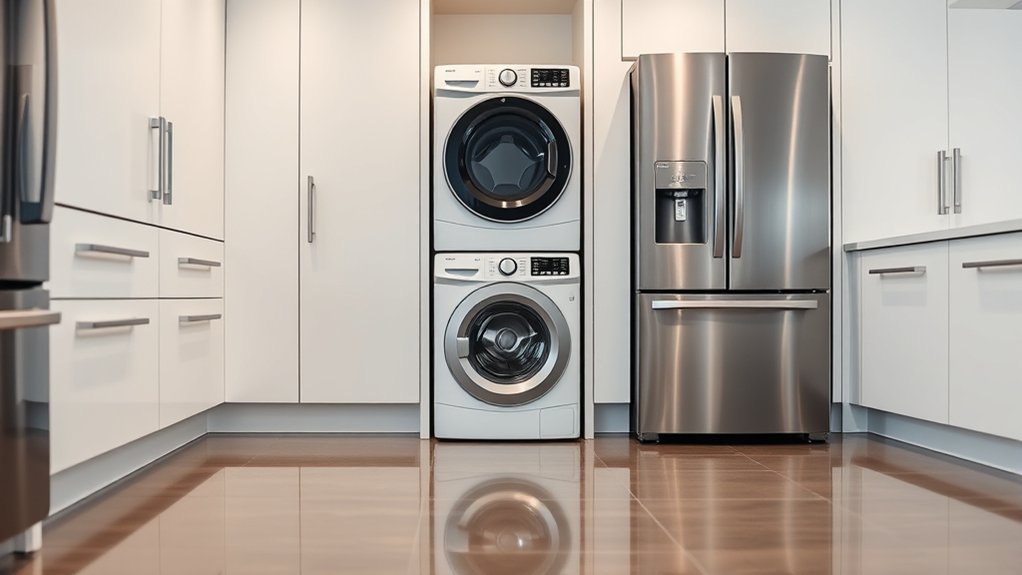
Choose appliances that fit your kitchen’s dimensions, workflow, and utility connections. Measure available width, depth, height, door clearance, and counter space before you shop.
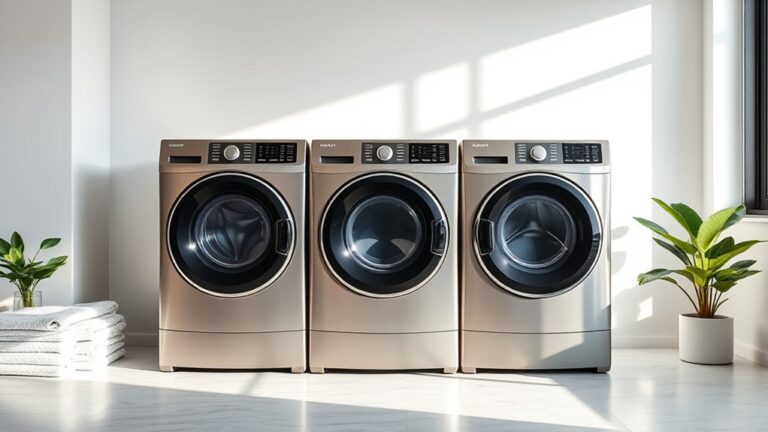
A stackable washer and dryer saves floor area, while compact side-by-side units suit lower counters and easier access. A ventless heat-pump dryer can work where conventional dryer options aren’t practical, but it may cost more initially and run longer cycles.
| Option | Best fit |
|---|---|
| Stackable | Tall, narrow kitchens |
| Compact | Limited overall space |
| Ventless | Flexible installation needs |
Check each model’s capacity against your household’s laundry volume. You’ll reduce bending by placing controls within reach and preserve cabinet access by confirming door swing direction.
Compare energy efficiency ratings, cycle times, noise levels, and warranty coverage rather than choosing by price alone.
Plan appliance maintenance before installation. Leave enough room to clean filters, inspect hoses, and remove the machines for service.
Choose matching dimensions and compatible connections to simplify installation and future replacement.
Plan Dryer Ventilation and Moisture Control
Plan the dryer’s ventilation and moisture control before installation so heat, lint, and humidity don’t damage your kitchen. If you’re choosing a vented model, route a short, straight duct to an exterior wall. Use rigid metal ducting instead of flexible plastic or foil, which can trap lint and restrict airflow.
Seal joints with foil tape, and never terminate the duct inside a cabinet, attic, crawl space, or wall cavity.
For effective airflow optimization, confirm the exterior vent cap opens freely and includes a backdraft damper. Keep the duct’s length and bends within the manufacturer’s limits, then test the dryer for strong exhaust after installation.
Clean the lint filter before every load and inspect the duct regularly for buildup.
For moisture management, provide adequate kitchen ventilation with a range hood or exhaust fan, especially if you’ll use a ventless dryer. Follow the appliance’s clearance and drainage requirements, empty its water reservoir promptly, and watch for condensation on nearby walls, cabinets, and floors.
Leave Room for Safe Access, Repairs, and Noise Control
Leave enough space around the washer and dryer to open doors, remove filters, and reach water shutoffs, electrical connections, and vent or drain lines without moving the appliances. Check manufacturer clearances, then measure the kitchen path to confirm you can pull each unit out for service.
Plan appliance placement with workflow and safety in mind. Keep controls accessible, avoid blocking cabinets or walkways, and leave room to carry laundry comfortably.
Use these practical checks:
- Allow door swing clearance, especially for front-loading models.
- Leave a service gap behind or beside each appliance.
- Install shutoff valves where you can reach them quickly.
- Keep heat-producing dryers away from combustible materials.
To reduce vibration, set both machines level and tighten their feet. Add sturdy anti-vibration pads, but don’t trap the units tightly against walls.
For extra comfort, consider soundproofing techniques such as resilient wall panels, acoustic mats, or closed doors. Test a cycle before finishing cabinets or trim, and correct movement, rattling, or unusual noise immediately.
Frequently Asked Questions
Can I Install a Washer and Dryer Under a Kitchen Countertop?
Yes, you can install a washer and dryer under a kitchen countertop if you choose compact, front-loading models and provide proper ventilation. For effective appliance placement, measure the opening, allow door clearance, and confirm the countertop height matches the machines.
Space optimization works best with a ventless dryer, though you’ll still need water, drainage, electricity, and manufacturer-required gaps. Protect nearby cabinets from moisture, and have a qualified professional verify connections before use.
What Permits Might I Need for Installing Laundry Appliances in My Kitchen?
You might need electrical, plumbing, building, or mechanical permits, depending on your local rules and project scope. Contact your city or county building department before starting.
Ask whether adding electrical wiring, plumbing connections, drainage, ventilation, or a new gas line requires approval. You may also need inspections after installation.
Your utility provider or homeowners’ association could impose additional requirements. Don’t rely on appliance instructions alone; verify every requirement locally before work begins.
How Can I Protect Kitchen Cabinets From Washer Vibrations?
Use Vibration isolation pads beneath the washer to absorb movement and reduce cabinet rattling. Level the appliance carefully, then tighten its adjustable feet so it won’t rock during spin cycles.
For Cabinet reinforcement, secure adjacent cabinets to wall studs and add support cleats or a sturdy panel where needed. Maintain clearance around the machine, and don’t let countertops rest directly on it.
You’ll also reduce noise by keeping loads balanced.
Should I Match the Appliances’ Appearance With My Kitchen Design?
Yes, match your washer and dryer’s appearance with your kitchen design when possible. You’ll create appliance color coordination that makes the machines feel intentional rather than intrusive.
Notably, the moment your new appliances arrive may coincide with a cabinet refresh, giving you a perfect chance to align finishes. Choose complementary colors, handles, and textures instead of demanding an identical match.
This style harmony keeps your kitchen cohesive while letting practical appliances blend naturally.
Yes, you can place a washer and dryer near a kitchen island if you plan carefully. For effective Appliance placement, leave enough clearance to open doors, load machines, and move comfortably around the island.
Keep plumbing and electrical connections accessible, and avoid blocking cabinets or walkways. Address Ventilation considerations, especially for a vented dryer, by providing a short, properly routed exhaust duct.
Choose compact models if space feels tight.
Conclusion
With careful planning, you can make a washer and dryer feel at home in your kitchen. Confirm the space, strengthen the connections, choose appliances that fit, control moisture, and preserve clear access.
Think about smooth doors, quiet cycles, dry cabinets, and dependable repairs—not crowded corners or surprise leaks. When you balance function, ventilation, safety, and style, installing a washer and dryer in the kitchen can create an efficient, intentional setup that keeps your kitchen comfortable every day.