Discover the Best Angle for Sharpening Kitchen Knives Now!
Achieving the optimal bevel angle is a crucial factor in maintaining a razor-sharp edge on kitchen knives. The interplay between edge geometry, grind type, and honing angle significantly influences cutting performance and blade longevity. Understanding the best angle for sharpening kitchen knives involves delving into the specifics of edge retention and resistance to dulling under various culinary tasks.
Understanding the best angle for sharpening kitchen knives involves delving into the specifics of edge retention and resistance to dulling under various culinary tasks. Different blade steels and knife styles demand precision in angle selection to balance sharpness with durability. Exploring these technical aspects reveals why a one-size-fits-all approach to knife sharpening can compromise efficiency and safety.
Dive deeper into the intricacies of sharpening angles to discover how subtle adjustments can transform your kitchen cutting experience.
Unlock the Secret to a Razor-Sharp Edge Every Time
| Image | Product | Price |
|---|---|---|
Pick 1  | Koja Fixed Angle Whetstone Sharpener Blade Guide | Check Price On Amazon |
Pick 2 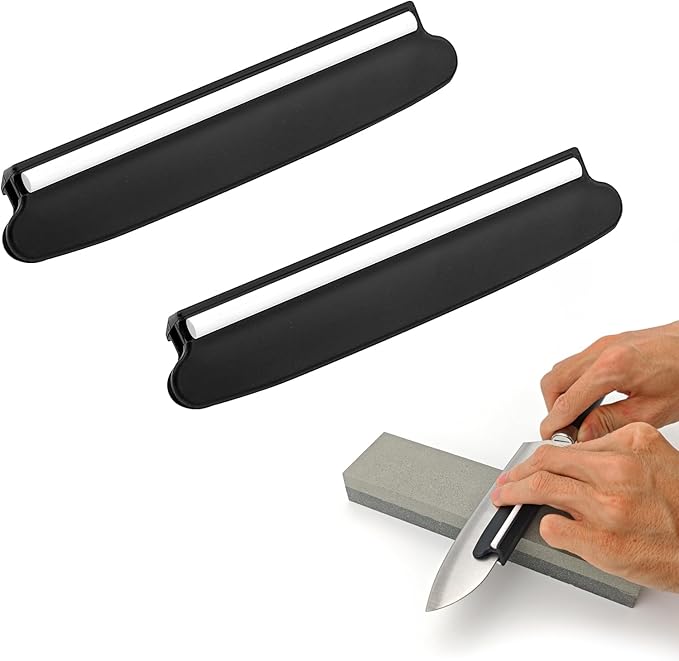 | Knife Sharpening Angle Guide 15° with Ceramic Glide, 2 Pack | Check Price On Amazon |
Pick 3 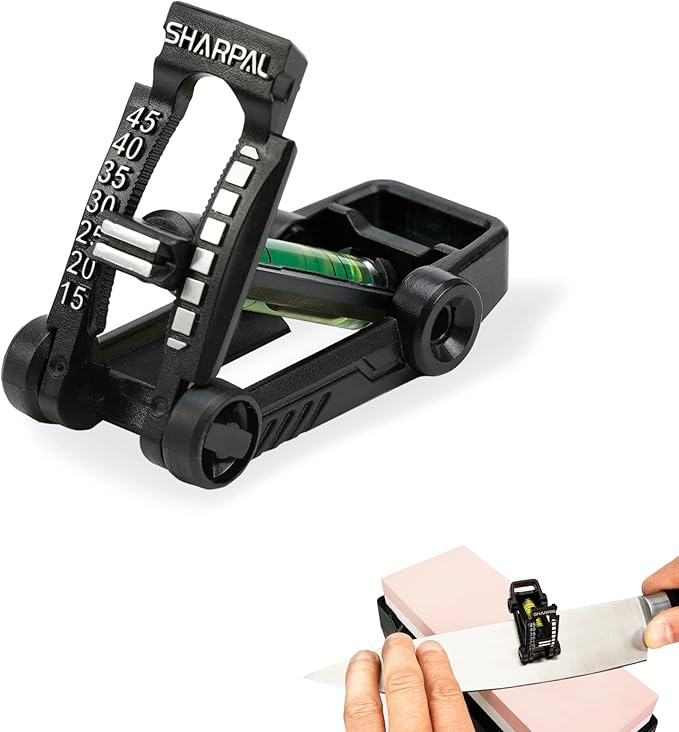 | SHARPAL 194H Whetstone Knife Sharpener | Check Price On Amazon |
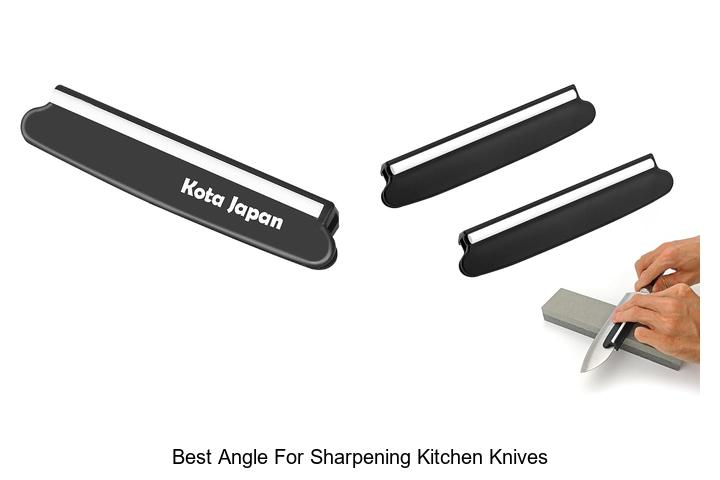
1. Koja Fixed Angle Whetstone Sharpener Blade Guide
Achieve precision and consistency when sharpening your kitchen knives with the Koja Fixed Angle Whetstone Sharpener Blade Guide. Engineered to maintain the optimal sharpening angle effortlessly, this tool ensures your blades stay razor-sharp without guesswork or uneven edges, making it ideal for home chefs seeking professional results.
The Koja blade guide securely attaches to most standard kitchen knife blades, providing stable, repeatable angles for sharpening on whetstones. Also known as a sharpening jig or angle guide, it helps eliminate common freehand sharpening errors. This accessory pairs seamlessly with Koja whetstones, creating a complete, easy-to-use system for maintaining your knives.
Pros
- Ensures a consistent, fixed sharpening angle for even blade edges
- Compatible with a wide variety of kitchen knife blades for versatile use
- Works perfectly with Koja whetstones, enhancing sharpening efficiency
Cons
- May require adjustment to fit very specialized or non-standard blade shapes
For anyone serious about achieving the best angle for sharpening kitchen knives, the Koja Fixed Angle Whetstone Sharpener Blade Guide offers reliable precision and ease of use. It stands out among sharpening jigs by delivering consistent, professional-quality results, making it a valuable addition to your culinary toolkit.
2. Knife Sharpening Angle Guide 15° with Ceramic Glide, 2 Pack
Achieve professional results with the Knife Sharpening Angle Guide 15° with Ceramic Glide, a must-have tool for anyone seeking precision when sharpening kitchen knives. Perfect for beginners, it ensures a consistent and ideal sharpening angle, enhancing blade performance and longevity.
This dual-pack angle guide clips securely onto the knife spine, providing a reliable 15° reference point compatible with whetstones, diamond stones, and oil stones. Its ceramic glide edges protect both blade and sharpening surface, allowing smooth, controlled strokes for kitchen and chef knives alike.
Pros
- Guarantees a steady 15° sharpening angle, ideal for most kitchen knives and chefs’ blades.
- Ceramic glide edges reduce friction and prevent damage to both blade and stone surfaces.
- Includes two guides, allowing simultaneous use or backup for extended sharpening sessions.
Cons
- Not suitable for sharpening very small pocket knives or blades with extremely thin spines.
Combining ease of use with durability and precision, this angle guide stands out in the sharpening tool market. Compared to other guides lacking glide features, its ceramic edges minimize wear, helping users consistently achieve the best angle for sharpening kitchen knives.
3. SHARPAL 194H Whetstone Knife Sharpener
Sharpen your kitchen knives and blades with precision using the SHARPAL 194H Whetstone Knife Sharpener. Designed to deliver razor-sharp edges consistently, this versatile angle guide ensures your tools perform at their best, whether you’re a beginner or an experienced user aiming for professional results.
Featuring an adjustable angle range from 15° to 45°, the SHARPAL 194H accommodates a variety of blade types including knives, chisels, and plane irons. Its magnetic base secures the guide during sharpening for reliable accuracy and easy monitoring, while durable construction promises long-lasting performance.
Pros
- Adjustable sharpening angles from 15° to 45°, allowing perfect customization for different blades.
- Magnetic base holds the sharpener securely in place, ensuring consistent and precise sharpening.
- Durable materials support repeated use and maintain reliable functionality over time.
Cons
- May require some practice to master optimal angle settings for varied blade types.
For those seeking the best angle for sharpening kitchen knives and other blades, the SHARPAL 194H Whetstone Knife Sharpener provides unmatched control and precision. Its adjustable and sturdy design outperforms many similar sharpeners in its price range, making it a smart addition to any kitchen or workshop.
4. AGM Angle Wedges for Knife Sharpening

Achieve razor-sharp kitchen knives effortlessly with AGM Angle Wedges for Knife Sharpening. Designed to provide precise angle guidance, these wedges ensure consistent sharpening results, making blade maintenance simpler and more accurate for every cooking enthusiast.
Crafted from durable plastic, the medium-sized AGM wedge offers adjustable guides from 10° to 20°, with the option to combine two wedges for angles up to 39°. Measuring 1-1/2 long and 7/8 wide, it includes two rubber bands and holds securely in place during sharpening. Ideal for those seeking control over the perfect angle, complete with access to online tutorials and an angle calculator for optimal results.
Ideal for those seeking control over the perfect angle, complete with access to online tutorials and an angle calculator for optimal results.
Pros
- Provides precise angle guidance from 10° to 20°, extendable up to 39° for versatile sharpening needs.
- Stable design prevents movement with the knife, promoting consistent edge refinement.
- Includes rubber bands and access to an online tutorial, helping users achieve the best angle for sharpening kitchen knives easily.
Cons
- Requires steady hands and some practice to maintain the set angle perfectly throughout the sharpening process.
For those looking to master knife sharpening with accuracy and control, AGM Angle Wedges deliver excellent value. Compared to other angle guides, these wedges balance affordability, durability, and instructional support, making them a smart choice for both beginners and seasoned sharpeners.
5. SHARPAL 196N Angle Pyramid Guide, 2-Pack

Achieve professional-level sharpness for your kitchen knives with the SHARPAL 196N Angle Pyramid Guide, a practical and precise tool designed to help you master the best angle for sharpening kitchen knives. Its innovative design ensures consistent edge angles, boosting your blade’s performance and longevity.
Featuring two pyramid guides with four universal sharpening angles (14°, 17°, 20°, and 25°), this set adapts to any blade size with exceptional accuracy. The orange guide’s magnetic base secures firmly to ferrous sharpening stones, while the black guide’s anti-slip rubber pad offers stability on ceramic whetstones and other surfaces, making it versatile for all sharpening setups.
Pros
- Four precise angle settings tailored for a variety of blade types and sharpening needs.
- Dual base designs — magnetic and anti-slip rubber — for compatibility with different sharpening stones.
- Durable construction ensuring long-lasting performance with a reliable 3-year warranty.
Cons
- Not intended for industrial or commercial use, limiting suitability for heavy-duty knife sharpening.
SHARPAL 196N Angle Pyramid Guide combines ease of use with expert precision, making it an excellent choice for home cooks and knife enthusiasts seeking the best angle for sharpening kitchen knives. Compared to similar angle guides, it offers versatile mounting options and dependable accuracy at a great price point.
6. Work Sharp Precision Adjust Knife Sharpener Kit
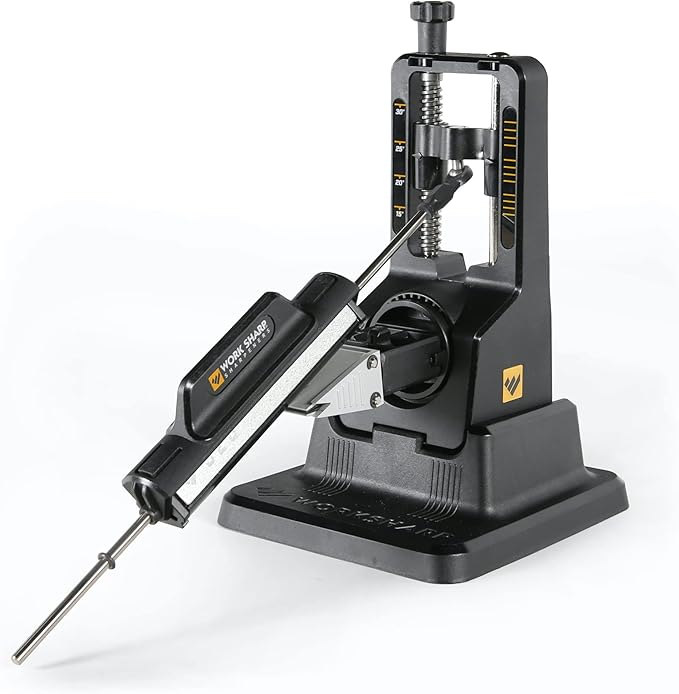
Achieve razor-sharp kitchen knives with unparalleled precision using the Work Sharp Precision Adjust Knife Sharpener Kit. Designed for home chefs and professionals alike, it offers customizable angles and easy operation to maintain and restore your blades to perfection quickly and safely.
Featuring an adjustable angle range from 15 to 30 degrees in 1-degree increments, this sharpener ensures you find the best angle for sharpening kitchen knives tailored to your blade type. The tri-abrasive rods—coarse and fine diamond along with fine ceramic—allow for efficient re-profiling and polishing.
Pros
- Angle-guided 3-sided abrasive jig enables precise sharpening for a perfect edge every time.
- Adjustable from 15° to 30° in 1-degree increments, ideal for various blade styles including serrated knives.
- Tri-brasive stones (coarse and fine diamond plus fine ceramic) for customizable sharpening levels and finishes.
- Robust v-block clamp ensures safe and steady knife positioning during sharpening.
- Backed by a comprehensive 3-year warranty, reflecting quality and durability.
- Designed, engineered, and calibrated in Oregon, guaranteeing high manufacturing standards.
Cons
- Priced higher than basic sharpeners, but the advanced features justify the investment.
For culinary enthusiasts seeking a dependable and precise knife sharpener, the Work Sharp Precision Adjust Kit offers excellent value. Its adjustable angle settings and multi-stage sharpening system outshine many conventional sharpeners, making it a smart choice for maintaining kitchen blade excellence.
7. SG01 Adjustable Knife Sharpening Angle Guide

Achieve professional sharpening results at home with the SG01 Adjustable Knife Sharpening Angle Guide by LAVODA. Designed for precision and ease, it guarantees you lock in the ideal bevel angle up to 30°, making it an essential tool for maintaining razor-sharp edges on your kitchen knives and more.
Featuring a micro-adjustable clamp and a smooth 304 stainless steel ball joint swivel, this sharpening guide glides effortlessly over stones, reducing hand fatigue during extended use. Compatible with a wide range of blades and stone thicknesses, it also includes a blade protection kit to prevent scratches and aid precise edge tracking.
Pros
- Adjustable angle lock up to 30° for precise bevel control.
- Effortless one-handed swivel operation with corrosion-resistant stainless steel ball joint.
- Universal compatibility with stones (25-55mm thick) and blades up to 7mm wide.
- Includes blade protection accessories like nylon clamp screws and painter’s tape.
- Durable construction using military-grade 304 stainless steel and 6061 aluminum.
Cons
- Does not include a digital angle gauge; requires separate purchase for angle measurement.
Combining precision engineering with durable materials, the LAVODA SG01 stands out for those seeking the best angle for sharpening kitchen knives. Its thoughtful design and included blade protection accessories make it a reliable, user-friendly choice compared to standard fixed-angle sharpeners on the market.
8. Knife Sharpening Angle Guide Whetstone for Kitchen Knives

Achieve precision every time you sharpen your kitchen knives with the Knife Sharpening Angle Guide Whetstone. Designed to ensure the best angle for sharpening kitchen knives, this handy tool guarantees consistent edge maintenance, perfect for both amateur cooks and seasoned chefs seeking professional results.
Featuring a premium dual-sided ceramic construction, the angle guide clamps firmly onto knife spines up to 4mm thick, maintaining a stable 15° angle. Its compact size of 100mm by 20mm makes it portable and ideal for kitchen or outdoor sharpening, simplifying the process without the need for expert skills.
Pros
- Durable dual-sided ceramic layer provides excellent wear resistance for long-lasting use.
- Fixed 15° angle ensures precise and consistent sharpening, enhancing blade performance.
- Compact and portable design fits most straight-edged knives, perfect for home and outdoor use.
Cons
- Not suitable for tiny, ultra-short blade, or specially shaped cutlery.
For those focused on achieving the best angle for sharpening kitchen knives, this angle guide offers practical, effective support. Compared to similar guides, its ceramic durability and ease of use stand out, making it an invaluable companion for maintaining razor-sharp edges effortlessly.
9. Sharp Pebble Whetstone Knife Sharpening Angle Guide

Achieve precision every time with the Sharp Pebble Whetstone Knife Sharpening Angle Guide. Designed to take the guesswork out of sharpening, it ensures the best angle for sharpening kitchen knives effortlessly, protecting both your tools and wrists from strain during each sharpening session.
This innovative angle guide offers a fixed sharpening angle ranging from 15 to 20 degrees, suitable for all knife sizes and types. Crafted from premium, durable plastic combined with a protective ceramic layer, it safeguards your whetstone while delivering consistent sharpening results with minimal effort.
Pros
- Maintains the optimal sharpening angle to enhance blade performance and longevity
- Universal fit for all knives, accommodating various blade sizes and styles
- Ergonomic design reduces wrist fatigue, making sharpening quicker and more comfortable
- Durable construction with a protective ceramic layer that extends the life of your sharpening stone
- Thoroughly inspected and quality tested to ensure reliable performance
Cons
- Plastic body may not appeal to users seeking metal or premium materials for tool guides
For those looking for a practical and affordable way to sharpen kitchen knives with professional accuracy, the Sharp Pebble Angle Guide stands out from generic sharpeners. It offers consistent angle maintenance, reducing strain and improving sharpening results – a smart choice to enhance your kitchen prep routine.
10. SHARPAL 195H Digital Angle Guide

Achieve precision in your kitchen knife sharpening with the SHARPAL 195H Digital Angle Guide. Designed to provide accurate, real-time feedback, it ensures you maintain the optimal sharpening angle for superior blade performance and longevity, making it an essential tool for home cooks and professionals alike.
Featuring a sophisticated motion-filtering algorithm, the SHARPAL 195H delivers stable 1° angle readouts within a broad 0–80° range. Its strong magnetic base and compact design offer seamless portability and secure blade attachment, while the IP54-rated housing and removable silicone pad protect both the device and your knives during use.
Pros
- Provides precise, real-time angle measurements with a clear digital display to maintain consistent sharpening.
- Wide compatibility with various blades, from kitchen knives to axes and chisels, thanks to its 0–80° range.
- Durable and user-friendly design featuring a magnetic base, motion-filtering technology, and IP54 dust and splash resistance.
Cons
- May require a brief learning curve to fully utilize the digital feedback during freehand sharpening.
For those seeking an accurate and reliable digital angle guide, the SHARPAL 195H stands out with its advanced technology and robust build. Compared to static angle tools, it offers dynamic stability and enhanced precision, enabling better sharpening results and optimized knife performance.
Master the Perfect Slice: How to Find the Best Angle for Sharpening Kitchen Knives
Understanding knife sharpening angles
Sharpness and durability of a kitchen knife largely depend on the precise angle at which it is sharpened. Typically, kitchen knives are sharpened within an angle range of 15 to 20 degrees per side, balancing keen edge retention with resilience. A narrower angle around 15 degrees creates a sharper edge, ideal for delicate slicing, but may require more frequent maintenance due to faster wear.
Conversely, a wider angle near 20 degrees offers greater durability, making the blade better suited for tougher tasks without dulling as quickly.
Adjusting the sharpening angle affects not only cutting performance but also how long the edge holds up under regular kitchen use. Understanding these variations helps ensure the knife matches both the cooking style and frequency of use, ultimately enhancing efficiency in the kitchen.
Types of kitchen knives and their ideal sharpening angles
The ability to connect with various tools or attachments greatly influences the versatility and long-term use of a knife sharpener. Models that offer multiple ports or interfaces allow users to integrate additional features such as guided angle adjustments or different grit sharpening stones, enhancing the sharpening process. Furthermore, some units are designed to accommodate future upgrades or attachments, providing room to enhance functionality without replacing the entire device.
Furthermore, some units are designed to accommodate future upgrades or attachments, providing room to enhance functionality without replacing the entire device.
For example, a sharpener compatible with both coarse and fine honing guides supports a range of knives, from Western styles like chef’s and paring knives, which typically require angles between 20 to 22 degrees, to Japanese styles such as Santoku and Gyuto, which often need a sharper edge around 15 degrees. Specialty knives, including serrated or cleaver types, may demand even more customized setups, making expandable features especially valuable for maintaining precise edges over time.
| Knife Type | Typical Edge Angle | Sharpening Needs | Compatibility Benefits |
|---|---|---|---|
| Western (Chef’s, Paring) | 20° – 22° | Durable edge, thicker blade | Attachments for angle guides and varied grit stones |
| Japanese (Santoku, Gyuto) | 12° – 15° | Sharper, thinner edge | Fine-tuning angle settings and fine polishing tools |
| Specialty (Serrated, Cleavers) | Variable | Customized blades with unique angles | Expandable setup for custom guides and accessories |
In summary, systems that can link easily with different accessories and offer room for additional tools make it simpler to maintain a wide range of knife styles at their recommended angles, ensuring sharpness and blade longevity. This adaptability prevents the need for multiple separate sharpeners and accommodates evolving kitchen needs efficiently.
Factors to consider before choosing a sharpening angle
Understanding the knife’s material and hardness plays a crucial role in determining which sharpening setup will work best. Harder steels often require finer angles and more precise adjustments to maintain the blade’s integrity, while softer materials may allow for more flexible sharpening options. Additionally, the tasks you plan to perform with your knives influence this choice significantly. For instance, delicate slicing might need a sharper, more acute angle, whereas heavy-duty chopping demands a sturdier edge with a wider angle.
For instance, delicate slicing might need a sharper, more acute angle, whereas heavy-duty chopping demands a sturdier edge with a wider angle.
How often you sharpen and maintain your knives also affects the ideal setup. Frequent touch-ups benefit from tools that allow quick, accurate adjustments and possibly expandable features to accommodate different blade types. On the other hand, less frequent sharpening may require more robust equipment capable of restoring a severely dulled edge efficiently.
Balancing these factors ensures a sharpening solution that matches both your knives’ specific requirements and your personal routine.
Sharpening tools vary significantly in how they manage blade angles and adapt to user needs. Manual sharpening stones require users to maintain a consistent hand angle, making familiarity with the correct angle crucial for effective sharpening. In contrast, electric sharpeners often come with preset angle guides, simplifying the process but sometimes limiting flexibility for different knife types.
Understanding how each tool handles angle settings and the ability to connect or expand with accessories or additional guides can greatly enhance overall sharpening performance and user experience.
| Tool Type | Angle Control | Adaptability | Additional Features |
|---|---|---|---|
| Manual Sharpening Stones | User-dependent, requires skill | Highly flexible, any angle possible | Variety of grits available |
| Electric Sharpeners | Preset angle guides | Limited adjustment, fixed settings | Fast and convenient |
| Guided Sharpening Systems | Adjustable, precise control | Customizable for different knives | Often compatible with add-ons |
Tips for maintaining the right sharpening angle
Maintaining a consistent sharpening angle is easier when the tool offers compatibility with various angle guides and accessories that aid precision. These attachments help create a stable framework, ensuring each stroke replicates the desired angle accurately without guesswork.
Additionally, devices that accommodate visual markers or tactile feedback tools make it simpler to align the blade properly, reducing the reliance on trial and error. Utilizing such features helps develop muscle memory and improves sharpening results over time.
- Inconsistent pressure leading to uneven edges.
- Ignoring angle markers and relying solely on hand estimation.
- Not securing the knife properly, causing slips and safety risks.
- Over-sharpening one side, which can weaken the blade structure.
Ensuring the sharpening setup supports these guides and techniques not only enhances accuracy but also increases the versatility of the tool, allowing adaptation for different blade types and angles. This flexibility proves invaluable for achieving professional-quality edges safely and efficiently.
Balancing sharpness and longevity
The angle applied to a knife’s edge directly impacts both its sharpness and durability. Sharpening at an acute angle, such as 15 degrees, creates a finer, sharper edge but tends to wear down faster, requiring more frequent maintenance.
Understanding how these angles correspond with your maintenance routine is essential. If you sharpen your knives regularly, a sharper, more delicate edge can enhance precision tasks. However, if sharpening is only occasional, a more robust angle helps maintain performance between sessions.
Balancing these factors ensures your knives stay both effective and long-lasting, tailored to your specific kitchen habits.
FAQ’s
What Is The Ideal Sharpening Angle For Kitchen Knives To Achieve A Sharp And Durable Edge?The ideal sharpening angle for kitchen knives is typically between 15 to 20 degrees per side, balancing sharpness and durability. A smaller angle around 15 degrees provides a sharper edge, while closer to 20 degrees enhances edge strength and longevity.
How Does The Sharpening Angle Affect The Performance And Longevity Of Kitchen Knives?A smaller sharpening angle creates a sharper edge for precise cutting but may wear down faster, while a larger angle offers greater durability and resistance to chipping but can be less sharp. Balancing the angle depends on the knife’s intended use and desired performance.
Are There Different Recommended Angles For Sharpening Various Types Of Kitchen Knives (E.G., Chef’S Knife, Paring Knife)?Yes, different types of kitchen knives have recommended sharpening angles: chef’s knives typically use a 15-20 degree angle per side for a balance of sharpness and durability, while paring knives often have a slightly steeper angle around 20 degrees for precision and edge retention. Adjusting the angle ensures optimal performance based on the knife’s intended use.
What Tools Or Devices Can Help Maintain The Best Sharpening Angle For Kitchen Knives?Sharpening guides and angle guides are helpful tools that maintain a consistent sharpening angle for kitchen knives. Additionally, electric sharpeners often have built-in angle guides to ensure precision.
How Can Beginners Determine And Maintain The Correct Sharpening Angle When Honing Kitchen Knives At Home?Beginners can determine the correct sharpening angle by using a sharpening guide or angle guide tool, typically set between 15 to 20 degrees for kitchen knives. To maintain this angle while honing, they should practice steady hand positioning and consistent pressure, or use guided sharpeners that hold the blade at the proper angle.
Conclusion
Finding the best angle for sharpening kitchen knives is essential for maintaining sharpness and durability. Typically, a 15 to 20-degree angle works well for most kitchen knives, balancing sharpness and edge strength.
Consistently sharpening at this angle ensures efficient cutting and longer-lasting blades, making meal preparation smoother and safer for everyday cooking tasks.