Induction Cooker Vs Electric Stove €“ 5 Key Differences
Choosing between an induction cooker and an electric stove can be frustrating, especially when you want faster cooking, better temperature control, and lower energy bills. You’re not alone—many people struggle to decide which option fits their kitchen and cooking habits.
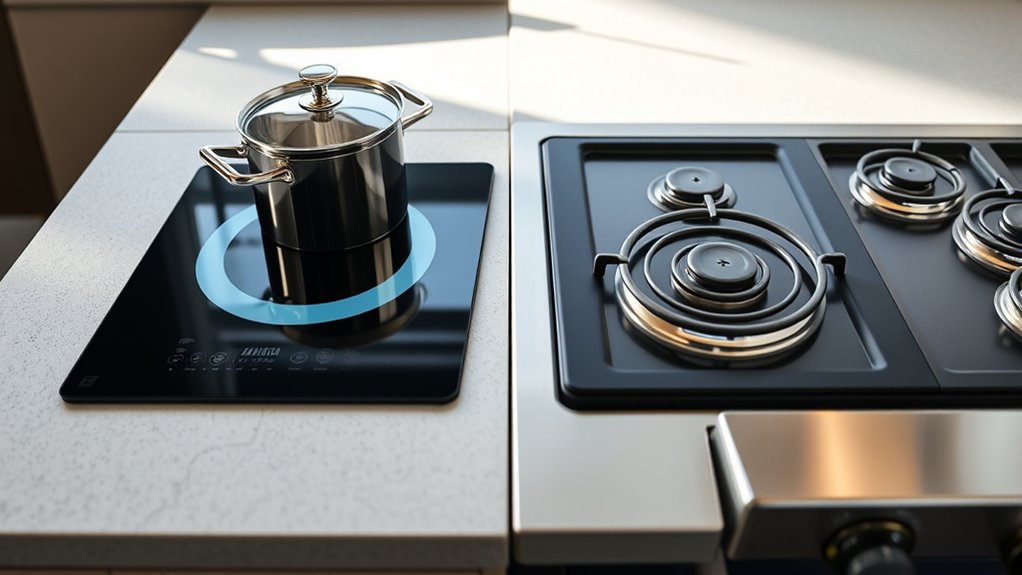
An induction cooker heats magnetic cookware directly, while an electric stove transfers heat from a coil or radiant element. You’ll usually boil water faster and adjust temperatures more precisely with induction.
It also uses about 10%–20% less electricity and leaves a cooler surface. However, you’ll need compatible cookware and pay more upfront.
Electric stoves accept most pans and cost less initially, but they stay hot longer and may cost more to operate. The sections below explain each difference in detail.
Key Takeaways
- Heating method: Induction uses magnetic fields to heat cookware directly, while electric stoves transfer heat from coils or radiant elements.
- Speed and control: Induction heats faster and adjusts temperature instantly; electric stoves warm and cool more slowly.
- Energy efficiency: Induction typically uses 10–20% less electricity by minimizing heat loss during cooking.
- Cookware and safety: Induction requires magnetic cookware and stays cooler, while electric stoves accommodate more cookware but retain heat longer.
- Cost and maintenance: Electric stoves usually cost less initially, whereas induction may provide better long-term savings through efficiency.
Induction Cooker vs Electric Stove: How They Heat
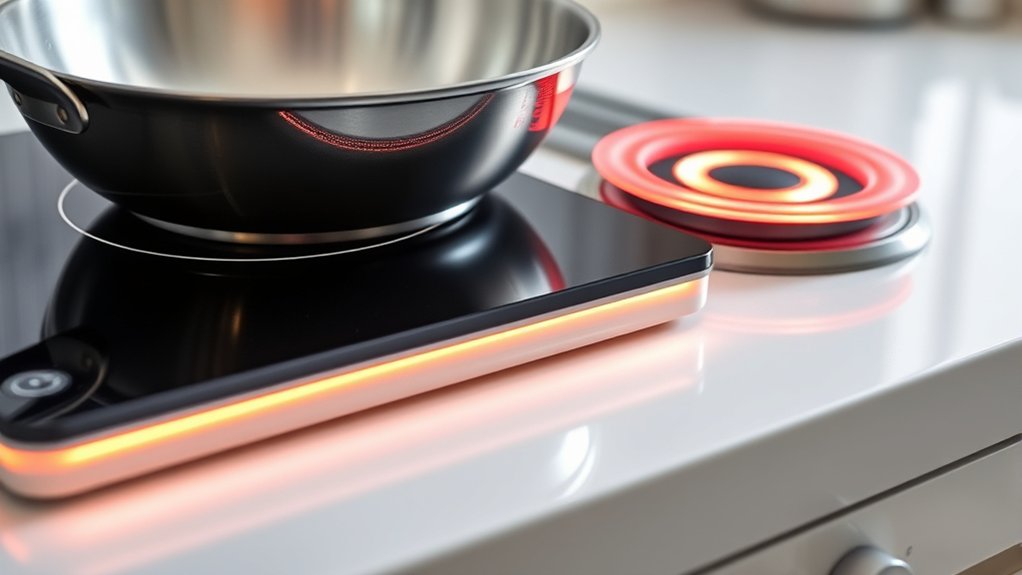
Induction cookers heat your cookware directly by creating a magnetic field that generates heat inside compatible pots and pans. The glass surface remains relatively cool because the pan itself becomes the heating element.
Induction cookers heat compatible cookware directly, keeping the surrounding glass surface relatively cool.
You’ll need magnetic cookware, such as cast iron or many stainless-steel pans, so cookware compatibility matters before you switch. If a magnet sticks firmly to the base, the pan will usually work.
An electric stove uses a different method. Electricity passes through a metal coil or radiant heating element, turning it red-hot or otherwise producing heat.
That element transfers heat to the cookware, then the cookware transfers it to your food. The burner and surrounding surface can stay hot after you remove the pan.
These heating methods affect cooking efficiency in distinct ways. Induction sends energy straight into the pan, while an electric stove heats an element first.
You’ll notice the design difference whenever you compare cookware requirements, surface heat, and energy transfer.
Which One Cooks Faster and Controls Heat Better?
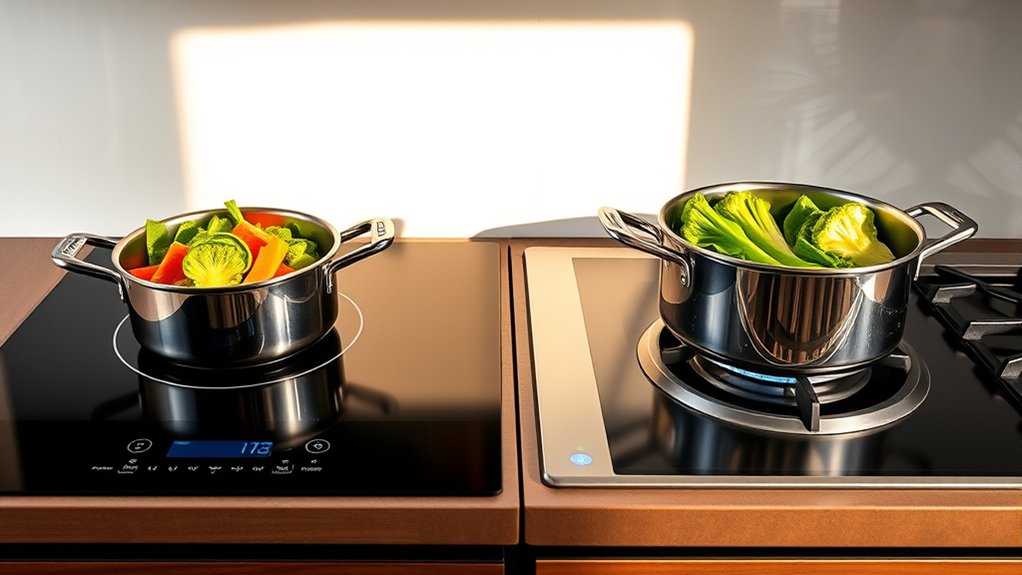
Because induction transfers heat directly into the pan, it usually boils water and heats food faster than an electric stove. You’ll notice the difference when you’re searing, boiling, or bringing sauces to a simmer.
Induction responds almost instantly when you raise or lower the setting, giving you excellent cooking precision. When you reduce the heat, the pan cools more quickly because the cooktop stops producing the magnetic field.
An electric stove can still cook effectively, but its heating element takes longer to warm and cool. Even after you lower the dial, residual heat may continue cooking your food, so you’ll need to adjust settings early or move the pan to another burner.
Induction also offers consistent temperature control across many settings, helping you avoid scorching delicate dishes. If you choose a portable induction unit, you’ll gain portability convenience without sacrificing speed or control.
For responsive cooking and quick adjustments, induction generally gives you the better experience.
Which Uses Less Energy: Induction or Electric?
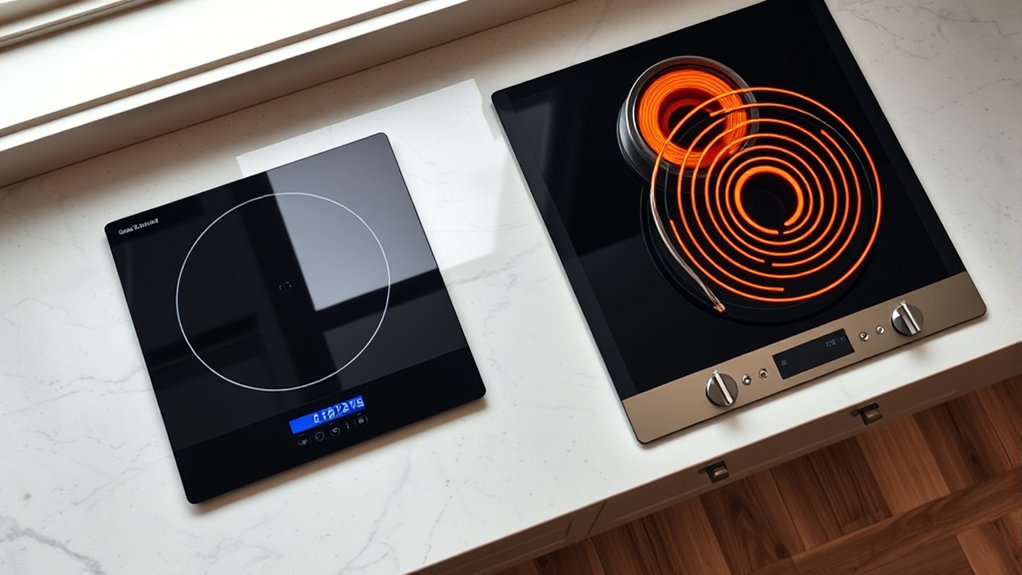
The speed and precise control of induction also help it use energy more efficiently than an electric stove. Induction transfers electricity directly into your cookware through a magnetic field, so less energy escapes as surrounding heat.
An electric stove first heats a coil or radiant element, then transfers that heat to the pan, creating greater energy loss along the way.
You’ll typically use about 10% to 20% less electricity with induction, depending on your cooking habits and the appliance models you compare.
Because induction heats food faster and responds immediately when you lower the setting, you can also shorten cooking times and avoid wasting power after cooking ends.
That improved energy efficiency can reduce your household electricity costs over time. It can also lower your environmental impact, especially if your electricity comes from fossil fuels.
However, your results depend on pan size, cooking duration, temperature settings, and how often you use each appliance. Compare wattage and measured consumption for the clearest answer.
What Cookware, Safety, and Cleaning Differ?
Your cookware, safety routine, and cleaning needs differ noticeably between induction and electric stoves. For induction cooking, you need magnetic cookware, such as cast iron or stainless steel labeled induction-compatible. Test a pan with a magnet; if it sticks firmly, the pan should work.
Induction stoves require magnetic cookware; test your pans with a magnet to confirm compatibility.
Electric stoves accept most flat-bottomed cookware, including aluminum, copper, glass, and ceramic, although matching pan sizes improves contact.
Safety precautions also vary. Induction heats the pan directly, so the cooking surface stays relatively cooler, reducing burn risks and preventing many spills from scorching immediately. However, the pan and food still become hot, so you’ll need oven mitts and careful handling.
Electric coils and glass tops remain hot after you switch them off, requiring extra caution.
For cleaning, wipe induction glass with a soft cloth after it cools, removing splatters promptly. Clean electric coils separately and lift drip pans when needed.
Avoid abrasive cleaners and dragging pans across either surface to prevent damage.
Which One Costs Less to Own?
Once you’ve compared cookware, safety, and cleaning, consider the long-term cost of each option. Your cost comparison should include purchase price, energy use, repairs, and replacement parts.
Induction cookers often cost more initially, but they heat faster and waste less energy, which can reduce monthly bills. Electric stoves usually cost less upfront, though their slower, less precise heating may consume more electricity.
| Expense | Typical advantage |
|---|---|
| Purchase price | Electric stove |
| Energy use | Induction cooker |
| Cookware | Electric stove |
| Repairs | Electric stove |
| Long-term value | Induction cooker |
Your cooking habits will determine the winner. If you cook frequently, induction’s efficiency can gradually offset its higher price.
If you cook occasionally, an electric stove may deliver better immediate value. Consider maintenance requirements, too.
Both options need cleaning, but induction’s smooth surface has fewer parts exposed to spills and heat damage. Electric coils and glass tops may eventually need replacement.
Check local electricity rates and warranty coverage before deciding. For many households, induction costs less to own over several years, while electric wins on initial affordability.
Frequently Asked Questions
Can Induction Cookers Be Used During Power Outages?
No, you can’t use an induction cooker during a power outage because it requires electricity to create heat. Power outage compatibility depends on having a backup source, such as a portable power station or generator with sufficient wattage.
Check the appliance’s power rating before connecting it. Safety considerations include proper ventilation, avoiding overloaded circuits, and keeping fuel-powered generators outdoors.
Never use a generator indoors, and don’t connect appliances through unsafe extension setups.
Do Induction Cookers Make Noticeable Noise While Operating?
Yes, you’ll usually hear a faint hum, buzz, or soft fan noise while an induction cooker operates. The sound may become more noticeable at high power, with certain cookware, or when the cooling fan runs.
It shouldn’t be loud or distracting, though. Cooking speed and energy efficiency remain major benefits, and you’ll often appreciate how quickly the unit heats food without producing the constant glowing-element noise associated with traditional electric stoves.
Are Induction Cookers Suitable for People With Medical Implants?
When it comes to medical implants, you shouldn’t jump into hot water: induction cookers may be suitable, but you need medical guidance. Their magnetic fields can potentially affect pacemakers, defibrillators, insulin pumps, or other electronic devices, especially at close range.
For proper Medical compatibility and Implant safety, check your implant manufacturer’s instructions and ask your clinician. Keep the device and its manual’s recommended distance from the cooktop, and stop immediately if symptoms occur.
How Portable Are Induction Cookers Compared With Electric Stoves?
You’ll find induction cookers generally more portable than electric stoves. Their compact, lightweight designs let you move and store them easily, making them useful for small kitchens, travel, or temporary cooking spaces.
In a portability comparison, electric stoves usually remain fixed because they’re heavier, larger, and often require dedicated installation. Design variations matter, though: some induction models include multiple burners and weigh more, while single-burner units offer maximum convenience and flexibility.
Can Induction Cookers Be Installed in Outdoor Kitchens?
Yes, you can install induction cookers in outdoor kitchens, but don’t assume every model will handle exposure. Outdoor installation requires a unit specifically rated for exterior use, plus weather resistance against moisture, heat, and temperature changes.
You’ll need a protected, ventilated location, proper electrical wiring, and a weatherproof cover. Avoid using indoor cooktops outdoors; condensation and rain can damage electronics, create shock hazards, and void warranties.
Check local codes and manufacturer instructions first.
Conclusion
Choosing between an induction cooker and an electric stove comes down to your priorities. If you want speedy heating, precise control, lower energy use, and easier cleanup, induction may be your best match.
If you prefer broader cookware compatibility and a gentler upfront cost, an electric stove still gets the job done. Either way, you’ll enjoy dependable cooking, though one option may give your kitchen’s old routines a graceful retirement sooner than the other.