Induction Range Vs Electric Range €“ 7 Key Differences
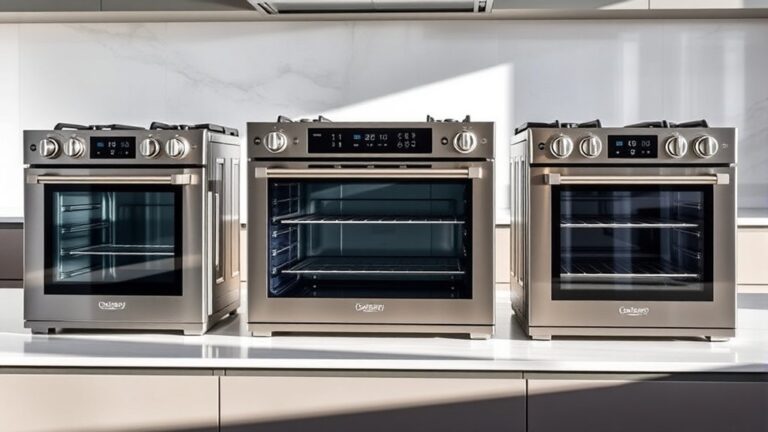
Choosing between an induction range and an electric range can be challenging, especially when you want fast cooking, easy cleanup, and a price that fits your budget. You’re not alone—many people struggle to know which option best suits their kitchen, cookware, and cooking habits.
Induction ranges heat cookware faster, offer more precise control, use less energy, and keep their glass surfaces cooler than electric ranges.
Electric ranges cost less upfront, accept nearly any cookware, and usually install more easily.
You’ll find induction easier to clean because spills are less likely to bake on, while electric elements retain heat and may need more scrubbing.
Consider your cookware, budget, wiring, cooking habits, and long-term energy costs, then investigate the key differences to choose confidently.
Key Takeaways
- Induction ranges heat cookware directly, making them faster and more responsive than electric ranges.
- Induction cooktops stay relatively cooler and clean more easily because spills are less likely to burn onto the surface.
- Electric ranges accept nearly any cookware, while induction requires magnetic, flat-bottomed pans.
- Induction uses energy more efficiently, but electric ranges usually cost less to purchase and install.
- Choose induction for speed, precision, safety, and efficiency. Choose electric for affordability and simpler compatibility.
Induction vs Electric Range: What’s the Difference?
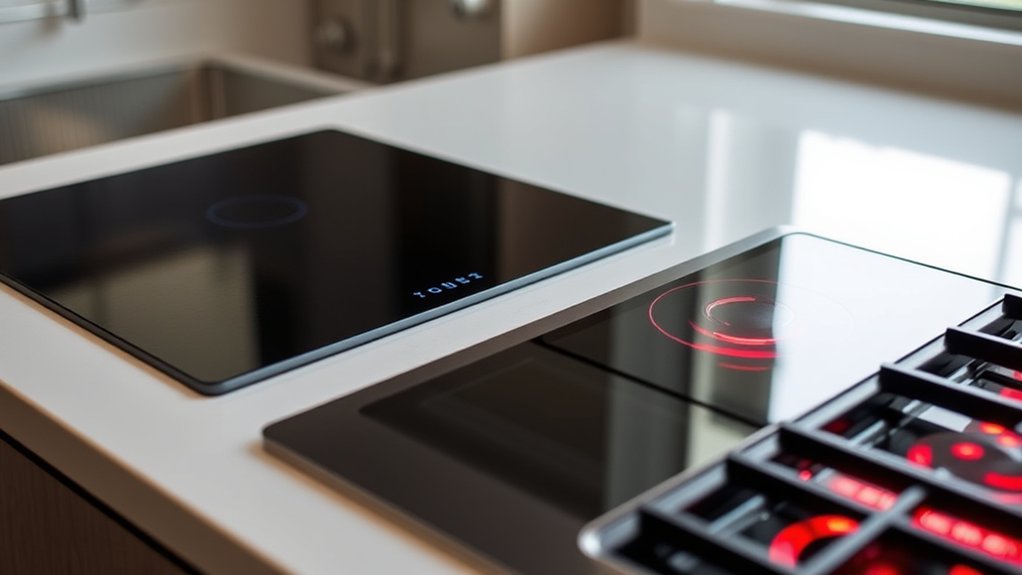
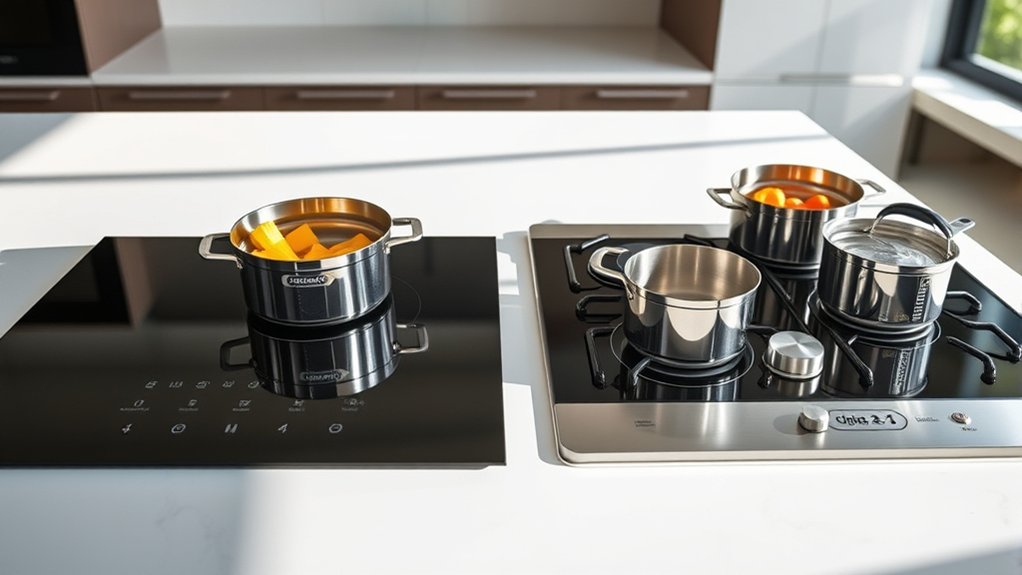
Induction and electric ranges both use electricity, but they heat cookware in different ways. An induction range creates a magnetic field that excites compatible metal cookware, producing heat directly in the pan.
Induction ranges heat compatible cookware directly through a magnetic field, offering efficient cooking with a cooler glass surface.
The glass surface usually stays cooler because it doesn’t generate heat on its own. You’ll need cookware compatible with induction, such as cast iron or magnetic stainless steel; a magnet can help you check.
An electric range sends electricity through heating elements beneath or above the cooking surface. Those elements heat up first, then transfer heat to your pots and pans.
You can use many materials, including aluminum, copper, stainless steel, and glass, depending on the element design.
Safety features also differ. Induction burners typically stop heating when you remove the pan, while electric elements can remain hot after you switch them off.
You’ll need to watch residual heat and avoid touching either surface until it cools completely.
Which Range Cooks Faster and More Precisely?
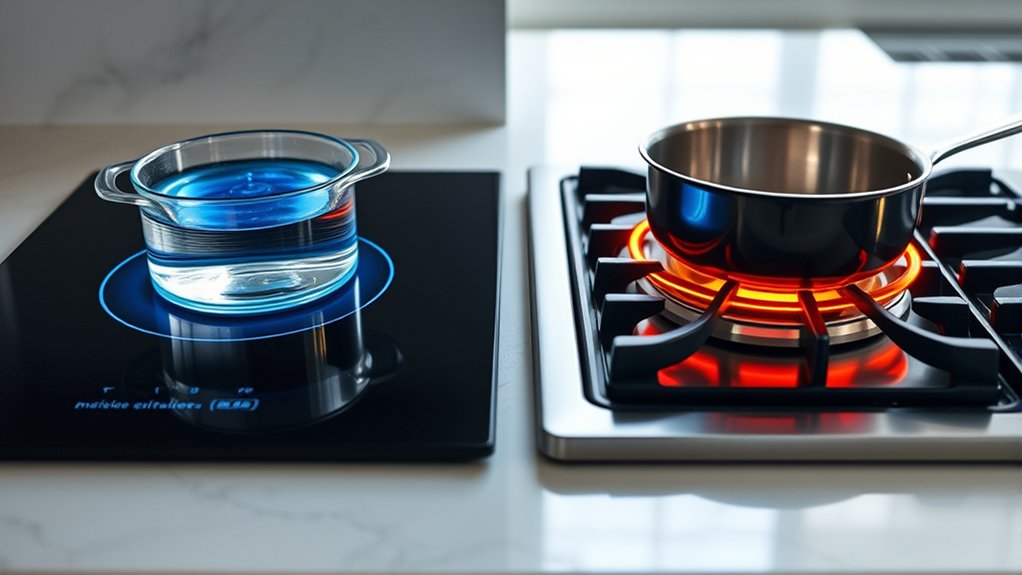
If you want faster heating, induction is likely the better choice because it transfers energy directly to your cookware. It also provides more precise temperature control, making it easier to simmer, sear, and adjust the heat quickly. Electric ranges respond more slowly, so they may require extra time and attention to deliver consistent results.
Faster Heating
When speed and precision matter, induction ranges usually outperform traditional electric ranges. You’ll notice induction boils water faster because electromagnetic energy heats the pan directly, rather than warming a burner first.
That direct transfer improves heat efficiency and reduces wasted energy around the cookware. Traditional electric ranges can still deliver dependable cooking speed, but their radiant elements need more time to glow and transfer heat through the pan.
You’ll also wait longer for the surface to cool after switching it off, which can slow your routine and require extra caution. Use this quick comparison:
| Feature | Induction |
|---|---|
| Boiling speed | Faster |
| Energy transfer | More efficient |
For busy mornings, induction helps you bring water to a boil, sear ingredients, and finish meals sooner. Electric works well when upfront affordability matters more than rapid heating.
Precise Temperature Control
Precise temperature control gives induction ranges an edge because they adjust heat almost instantly, while electric elements take longer to respond. When you lower an induction setting, the cookware cools quickly, helping you prevent scorching, boiling over, or delicate sauces from breaking.
Electric ranges continue releasing residual heat after you reduce the setting, so you’ll need to move the pan or wait for the element to cool.
Induction also provides excellent temperature stability because it transfers energy directly into compatible cookware. That steady output helps you maintain a simmer, melt chocolate smoothly, and sear meat consistently.
You’ll gain better cooking accuracy when recipes require narrow temperature changes or precise timing. Electric ranges can still cook reliably, but their slower adjustments make fine control more challenging, especially during multi-step recipes or heat-sensitive cooking tasks.
Which Range Uses Less Energy?
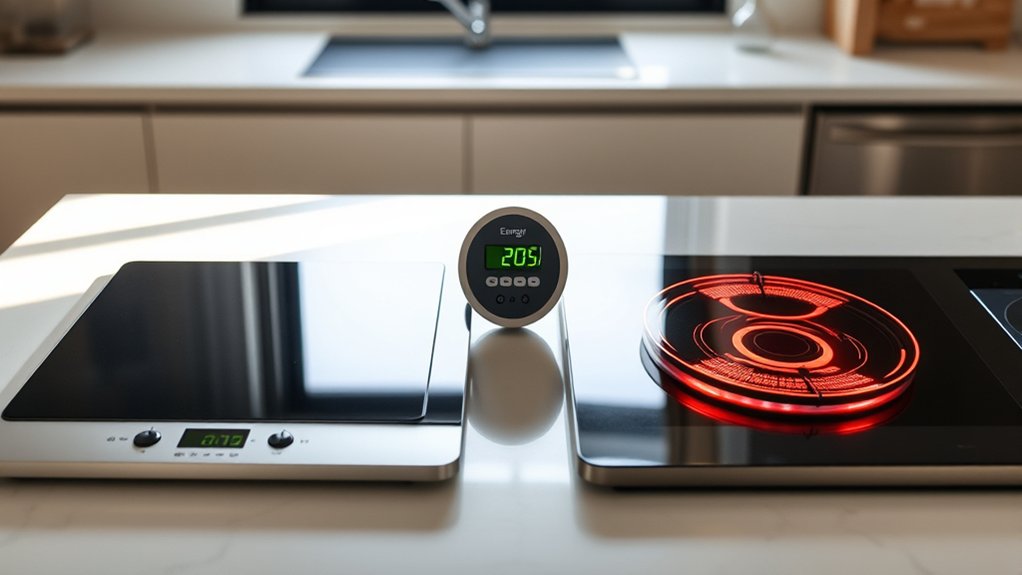
Induction ranges generally use less energy than conventional electric ranges because they transfer heat directly to the cookware instead of heating a burner first. This direct process reduces wasted heat and helps you cook food faster, so your appliance may run for less time.
Conventional electric ranges heat a radiant element, which then transfers energy through the cookware. Some heat escapes into the room, increasing overall power consumption.
You’ll typically see better Energy efficiency with induction cooking, especially when you prepare meals frequently or use high heat. Although induction models can cost more initially, their lower energy use may reduce your utility bills over time.
Your savings will depend on cooking habits, electricity rates, pan size, and the food you prepare. Features such as automatic shutoff can also prevent unnecessary energy use.
To compare operating costs, track your cooking time and electricity consumption for each range over several weeks. This practical approach shows how each appliance performs in your kitchen.
Will Your Cookware Work on an Induction Range?
Lower energy use won’t matter if your cookware isn’t compatible with the range. Induction cooking requires cookware with magnetic properties because the range creates heat through an electromagnetic field rather than transferring heat directly from a glowing element.
Check each pan with a magnet. If the magnet sticks firmly to the bottom, the pan will usually work.
Cast iron and many stainless-steel pans offer reliable cookware compatibility. Aluminum, copper, glass, and ceramic cookware generally won’t work unless they include a magnetic base.
Some manufacturers label compatible products with an induction symbol, so check the packaging or pan markings before buying.
Your cookware also needs a flat, smooth bottom that sits fully on the cooking zone. Warped pans may heat unevenly or fail to trigger the sensor.
Match the pan’s diameter to the burner area for better results. Keep in mind that an induction-ready label doesn’t guarantee every pan will perform just as well on your range.
Which Cooktop Is Easier to Clean?
If easy cleanup matters to you, an induction cooktop usually has the advantage because its smooth glass surface has no raised burners or grates. You can wipe spills away once the surface cools, and food usually doesn’t bake onto the cooktop because induction heats the pan rather than the glass directly.
This cleaning convenience helps you finish kitchen chores faster.
An electric cooktop can also feature smooth glass, so you won’t always face a major difference. However, its heating elements transfer substantial heat to the surface, allowing splatters and boil-overs to harden.
You may need a cooktop scraper and specialized cleaner to remove stubborn residue. Coil-style electric ranges require more effort because food can collect around and beneath the raised elements.
Surface durability also matters. Induction glass can scratch if you drag heavy cookware across it, while electric glass faces similar risks plus thermal staining.
Use flat-bottomed pans, lift cookware instead of sliding it, and wipe both surfaces promptly for easier maintenance.
What Will Installation and Ownership Cost?
You’ll usually pay more upfront for an induction range than for an electric model. Before you choose one, check whether your kitchen needs electrical upgrades or other installation work.
It’s also worth comparing long-term operating costs, including energy use and maintenance. This will give you a clearer picture of the range’s total cost of ownership.
Purchase Price Differences
Purchase prices vary widely, but induction ranges typically cost more upfront than standard electric models. You’ll often pay extra for advanced controls, premium finishes, and faster, more precise cooking.
Electric ranges usually offer a lower entry price, making them attractive when you’re managing a tight budget.
| Range type | Typical purchase price |
|---|---|
| Standard electric | $500–$1,500 |
| Induction | $1,000–$3,000 |
Use Brand comparisons to identify models with similar features before judging value. You should also review Warranty coverage, since a longer or more detailed policy can protect your investment and reduce potential repair expenses.
Consider your cooking habits, desired features, and expected ownership period. Although induction costs more initially, its efficiency and responsive performance may justify the premium over time.
Electric models remain a practical choice when purchase price matters most. Sales, rebates, and seasonal promotions can narrow the difference.
Installation Requirements
Installation costs depend on your kitchen’s existing electrical setup, not just the range price. Before choosing induction or electric, have an electrician confirm your power supply, circuit capacity, outlet location, and grounding.
Both ranges typically need a dedicated 240-volt circuit, though your home may require panel upgrades, new wiring, or conduit.
- Check the circuit: Verify amperage and compatibility with the manufacturer’s specifications.
- Measure the opening: Confirm width, depth, clearance, and countertop fit before delivery.
- Plan ventilation: Review ventilation requirements, including hood placement, airflow, and exterior venting.
- Budget labor: Include electrical work, delivery, old-range removal, leveling, and final testing.
Induction models may need more precise electrical installation because their power demands can be substantial. Electric ranges generally fit existing setups more easily, but neither option should use an extension cord.
Get a written installation estimate so unexpected upgrades don’t inflate your upfront ownership cost.
Long-Term Operating Costs
Once the electrical work is accounted for, compare the costs you’ll pay throughout the range’s life. An induction range typically costs more upfront than a standard electric model, and installation may require upgraded wiring or a dedicated circuit.
However, induction delivers greater energy efficiency because it transfers heat directly to compatible cookware, reducing wasted energy and potentially lowering utility bills. Electric ranges usually cost less to purchase and install, but their radiant elements lose more heat and may take longer to cook.
Consider maintenance costs, too. Induction tops have no exposed coils, so spills wipe away easily, though cracked glass can be expensive to replace. Electric models use simpler, familiar components, but burners and heating elements may eventually need replacement.
Compare local electricity rates, warranties, cookware needs, and expected ownership length before choosing.
Which Range Offers the Best Overall Value?
An induction range usually offers the best overall value if you prioritize fast cooking, precise temperature control, and lower energy use. You’ll often pay more upfront, but efficient operation and responsive performance can offset that premium over time.
An electric range may cost less initially and suit your budget when you want straightforward cooking without specialized cookware.
- Performance: You’ll boil water faster and adjust heat more accurately with induction.
- Operating costs: Induction transfers more energy to your cookware, potentially reducing electricity waste.
- Safety features: Its cooler surface and automatic pan detection can help protect your household, though residual heat remains.
- Design and flexibility: You’ll get sleek aesthetic appeal with induction, while electric models offer broad cookware compatibility and simpler replacement options.
Choose induction if daily efficiency, safety, and cooking control matter most. Choose electric if purchase price, familiar operation, and flexible cookware outweigh long-term savings.
Your kitchen setup, budget, and cooking habits ultimately determine the better value.
Frequently Asked Questions
Can Induction Ranges Affect Pacemakers or Other Implanted Medical Devices?
Yes, induction ranges can affect pacemakers or other implanted medical devices, but modern devices usually include shielding. For pacemaker safety, keep the appliance’s active cooking zone at least two feet from your implant, and don’t lean over it while operating.
Medical device interference remains possible, especially with older or specialized implants. Follow your device manufacturer’s guidance, ask your cardiologist for personalized advice, and stop using the range if you notice dizziness, palpitations, or unusual symptoms.
How Noisy Are Induction Ranges During Everyday Cooking?
You’ll usually hear a gentle hum, fan, or occasional click, rather than loud operation. Noise levels typically remain around normal conversation volume, roughly 40–50 decibels, though cookware and power settings can change that.
Cooking sounds include faint buzzing from magnetic vibration, especially with lightweight or uneven pans. You might also notice the cooling fan after cooking.
Choose flat, heavy-bottomed cookware to reduce vibration and keep everyday meals comfortably quiet.
Do Induction Ranges Continue Cooking During Power Outages?
No, induction ranges don’t continue cooking during power outages because they need electricity to generate heat and operate their controls. The power outage impact includes an immediate cooking interruption, even if cookware remains hot briefly.
You can finish a dish on residual heat, but the cooktop won’t maintain temperature. Keep a gas burner, outdoor grill, or battery-powered cooking appliance available for backup, and avoid opening your refrigerator unnecessarily to preserve food safety during outages.
What Safety Features Do Induction and Electric Ranges Typically Include?
You’ll typically find several safety features on both range types, including child locks, hot-surface indicators, automatic shutoff, overheating protection, and sturdy controls. Induction models add pan-detection sensors, which stop heating when you remove compatible cookware, improving cooking efficiency and reducing energy consumption.
Their surfaces also cool faster, lowering burn risks. Electric ranges commonly include residual-heat lights and control-lock functions, though exposed elements or glass tops can remain hot long after cooking ends.
How Long Do Induction and Electric Ranges Usually Last?
You can typically expect an induction range to last about 10–15 years, while an electric range often lasts 13–15 years with proper care. Your actual lifespan depends on usage, maintenance, component quality, and repair availability.
Induction models may offer excellent Energy efficiency and Cooking speed, but their electronic controls can cost more to replace. You’ll extend either range’s life by cleaning spills promptly, avoiding harsh abrasives, and scheduling repairs before small problems worsen.
Conclusion
Choosing between induction and electric ranges comes down to your cooking style, cookware, budget, and priorities. Induction delivers faster, more precise heating, greater energy efficiency, and easier cleanup, while electric models usually cost less upfront and work with any cookware.
If you value performance and don’t mind checking compatibility, induction may be your best fit. If affordability and simplicity matter most, electric remains a dependable choice.
Ultimately, the best induction range vs electric range option is the one that fits your kitchen, cookware, and cooking habits like a glove.