
3 Types of Electric Ranges You Should Know
Choosing the right electric range can feel overwhelming, especially when you’re comparing features, prices, and cookware requirements. You’re not alone—many people struggle to find a model that fits their kitchen, budget, and cooking style.
You’ll find three main types of electric ranges: coil-top, smooth-top, and induction. Coil-top models usually cost less and offer widely available replacement parts, but they can heat unevenly and take longer to clean.
Smooth-top ranges give your kitchen a sleek appearance and wipe clean easily, though you’ll need to prevent scratches.
Induction models deliver fast, precise, energy-efficient heating and cooler surfaces, but they require magnetic cookware. Keep exploring to find the best fit for your budget, cookware, and cooking style.
Key Takeaways
- Coil-top ranges use exposed heating coils, offering affordable prices, replaceable parts, and straightforward repairs.
- Smooth-top ranges conceal heating elements beneath glass-ceramic surfaces, creating a sleek design that is easy to wipe clean.
- Induction ranges heat magnetic cookware directly, delivering fast, precise, and energy-efficient cooking with cooler surfaces.
- Induction cooking requires flat-bottomed, magnetic cookware, unlike coil-top and smooth-top electric ranges.
- Choose based on priorities: coil tops suit budgets, smooth tops simplify cleaning, and induction maximizes performance and safety.
The Three Main Types of Electric Ranges

Electric ranges come in three main types: coil-top, smooth-top, and induction. Each option heats cookware differently, so you’ll want to compare performance, controls, maintenance, and cost before choosing one for your kitchen.
Coil-top ranges use exposed metal coils that glow as they heat. You’ll typically pay less upfront, and replacement coils remain widely available. However, heat distribution can vary, and spills may require extra cleanup around the burners.
Coil-top ranges offer affordability and readily available replacement parts, though uneven heating and spill cleanup may require extra effort.
Smooth-top ranges place heating elements beneath a flat glass-ceramic surface. You’ll get a streamlined cooking area with fewer raised parts, but you’ll need compatible cookware and careful handling to prevent scratches or cracks.
Induction ranges create heat directly in magnetic cookware through electromagnetic energy. You’ll usually gain excellent responsiveness, precise temperature control, and strong energy efficiency.
Many models also include useful safety features, such as automatic shutoff and cool cooking surfaces. Consider your cookware, budget, cooking habits, and electrical setup before deciding which type fits you best.
Smooth-Top Ranges: Easy Cleaning and Modern Design
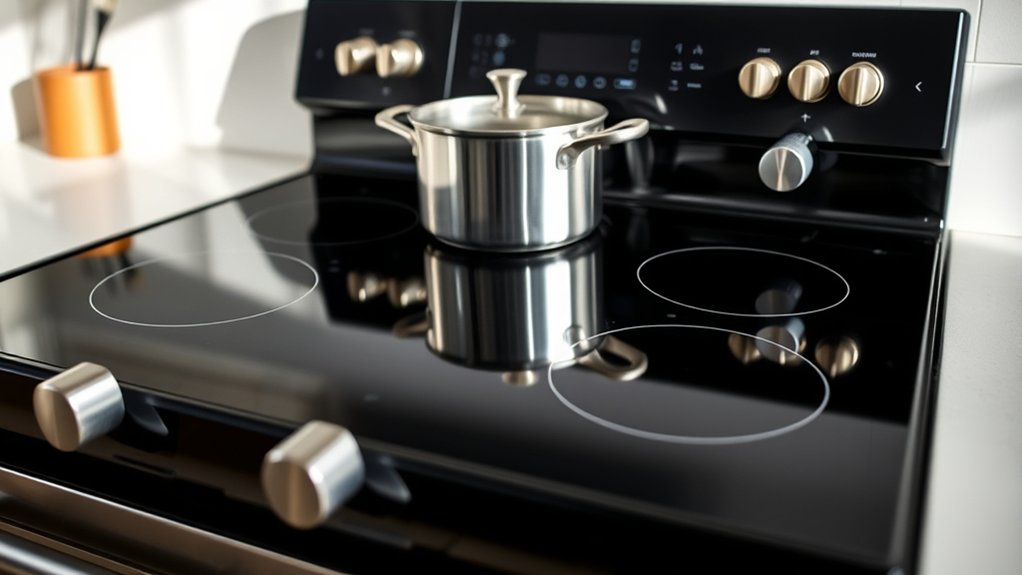
Smooth-top ranges hide their heating elements beneath a flat glass-ceramic surface, giving your kitchen a sleek, modern look. You’ll enjoy a seamless cooking area without raised burners that trap crumbs or spills.
The smooth finish also supports easy cleaning: once the surface cools, wipe it with a cooktop cleaner and soft cloth. Avoid abrasive pads, harsh powders, and dragging heavy cookware, which can scratch the glass.
| Feature | Benefit | Care tip |
|---|---|---|
| Flat surface | Fewer crumbs | Wipe spills promptly |
| Glass-ceramic finish | Contemporary aesthetics | Use approved cleaner |
| Hidden elements | Streamlined appearance | Let the surface cool |
| Minimal seams | Easier wiping | Lift cookware carefully |
You’ll also appreciate the uncluttered design, especially in an open kitchen where the range remains visible. Keep sugary spills from hardening, and remove stuck residue with a scraper designed for glass cooktops.
With consistent care, your range can maintain its polished appearance and make everyday cleanup feel quick rather than burdensome. Its low-profile surface also creates extra visual continuity across your counters and cabinets.
Coil, Induction, or Smooth-Top: Which Fits Your Kitchen?

Choosing among coil, induction, and smooth-top ranges depends on how you cook, clean, and manage your budget. Coil ranges suit you if you want a low upfront price and simple, dependable heating. However, exposed coils take longer to cool and can make spills harder to remove.
Smooth-top models give your kitchen a sleek appearance and provide a flat surface that you can wipe clean quickly. You’ll need compatible, flat-bottomed cookware and care to prevent scratches or cracks.
Induction ranges offer the fastest, most precise heating and excellent energy efficiency because they heat the pan directly. They also keep the surrounding surface cooler, improving safety and cleanup. However, you’ll pay more initially and need magnetic cookware.
Compare cooktop materials, burner responsiveness, maintenance, and available features before deciding. If affordability matters most, choose coils. For modern style and easy cleaning, select smooth-top. If performance and efficiency top your list, induction may fit your kitchen best.
Frequently Asked Questions
How Much Electricity Does an Electric Range Typically Consume?
You’ll typically use 1,000 to 3,000 watts while an electric range operates, depending on the burner, oven setting, and appliance size. If you cook for one hour, your range may consume roughly 1 to 3 kilowatt-hours (kWh).
Actual Power consumption varies because heating elements cycle on and off. You can improve Energy efficiency by matching pan sizes to burners, using lids, and turning the oven off shortly after cooking finishes.
What Safety Features Should I Look for in an Electric Range?
Look for an electric range with Child safety features, including control locks that prevent accidental activation and indicators that warn you when surfaces remain hot. Overheat protection should automatically shut off burners or the oven if temperatures become dangerously high.
You’ll also want sturdy knobs, cool-touch oven doors, and automatic shutoff timers. Choose models with smooth, sealed surfaces, because they’re easier to clean and reduce spill-related hazards during everyday cooking.
How Do I Maintain and Clean Electric Range Controls?
You don’t need special tools or hours of scrubbing to maintain electric range controls. Start by switching off and unplugging the range, then wipe the control panel with a barely damp microfiber cloth and mild dish soap.
Never spray liquid directly onto buttons or displays. For knob maintenance, pull removable knobs straight off, wash them gently, dry completely, and reinstall them.
Avoid abrasive cleaners, soaking, and harsh chemicals that can damage markings or electronics.
Can I Install an Electric Range Without Professional Assistance?
Yes, you can install an electric range yourself if you have the right outlet, tools, and experience. DIY installation usually involves positioning the appliance, securing the anti-tip bracket, and connecting the power cord.
However, you shouldn’t handle new electrical wiring unless you understand local codes and safety procedures. Turn off power first, follow the manufacturer’s instructions, and test the range carefully.
If anything seems unclear, hire a licensed electrician to finish safely.
What Cookware Is Compatible With Different Electric Range Types?
Match your cookware to the heating surface. For smooth-top radiant ranges, choose flat-bottomed stainless steel, cast iron, carbon steel, or aluminum pans, but lift cast iron to prevent scratches.
Induction ranges require magnetic cookware, such as cast iron or magnetic stainless steel; test it with a magnet. Coil ranges accept most sturdy, flat-bottomed pans.
Your cookware materials and compatibility considerations include size, weight, warping, and manufacturer recommendations for safe, efficient cooking.
Conclusion
Choosing an electric range isn’t just about cooking; it’s about how you want your kitchen to feel. Coil ranges offer familiar, reliable heat, while smooth-top models bring sleek simplicity.
Induction ranges create remarkable speed and control, yet may require new cookware. You’ll trade rugged practicality for modern elegance, or convenience for precision.
Consider your habits, budget, and design goals. When you choose the right electric range for your life, everyday meals can feel less like chores and more like opportunities.