3 Best Washer and Dryer Without Hookups for Small Spaces
Laundry can be a challenge when you’re living in a small space without permanent hookups. You’re not alone—many people struggle to find a washer and dryer that fits their home, apartment, RV, or lifestyle. These best washer and dryer without hookups options can make laundry more convenient.
You can manage laundry without permanent hookups by choosing a portable washer with a spin-dry basket, a ventless washer-dryer combo, or an RV-friendly compact washer-dryer. A portable model connects to your faucet and stores easily, while a ventless combo washes and dries in one appliance.
RV models conserve water, power, and space. Before buying, check dimensions, wattage, drainage, and outlet requirements. Use smaller, balanced loads and clean lint filters regularly.
The following options can help you choose confidently.
Key Takeaways
- Portable washer-spin dryers connect to standard sink faucets, making them practical for apartments without permanent hookups.
- Ventless washer-dryer combos require no exterior ductwork and complete washing and drying in one compact appliance.
- RV-friendly compact combos conserve water and electricity while fitting limited storage areas, but confirm dimensions and wattage first.
- Choose models with balanced tubs, adjustable feet, rubber feet, and quiet-spin settings to reduce vibration and noise.
- Smaller, evenly distributed loads and regular lint-filter cleaning improve drying performance, efficiency, and appliance longevity.
Best Portable Washer With Spin-Dry Function
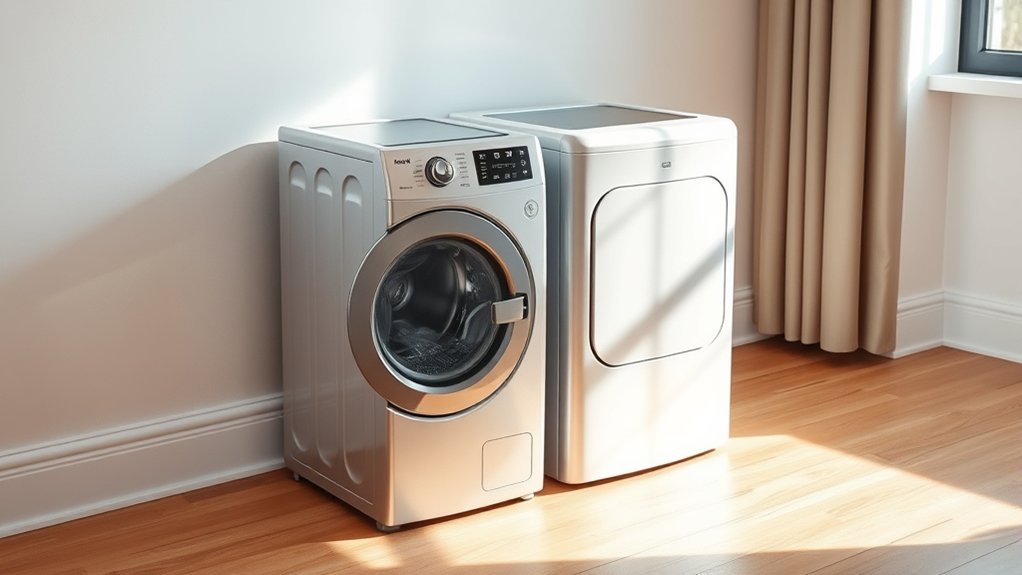
A portable washer with a spin-dry function is an excellent choice when you need clean clothes without permanent hookups. You can connect it to a sink faucet, load a modest amount of laundry, and move it into storage when you’re finished.
Look for a compact model with separate wash and spin tubs, simple cycle controls, and a sturdy drain hose. The spin-dry basket removes much of the water, so your clothes won’t take as long to air-dry.
Energy efficiency matters in a small home, so choose a washer that uses limited water and electricity per load. Check noise levels, especially if you live in an apartment or share walls with neighbors. Balanced tubs and rubber feet help reduce vibration.
Before buying, confirm the machine’s dimensions, faucet adapter compatibility, and weight. You’ll get the best results by washing smaller loads, distributing garments evenly, and cleaning the lint filter regularly for consistent performance.
Best Ventless Washer-Dryer Combo for Apartments
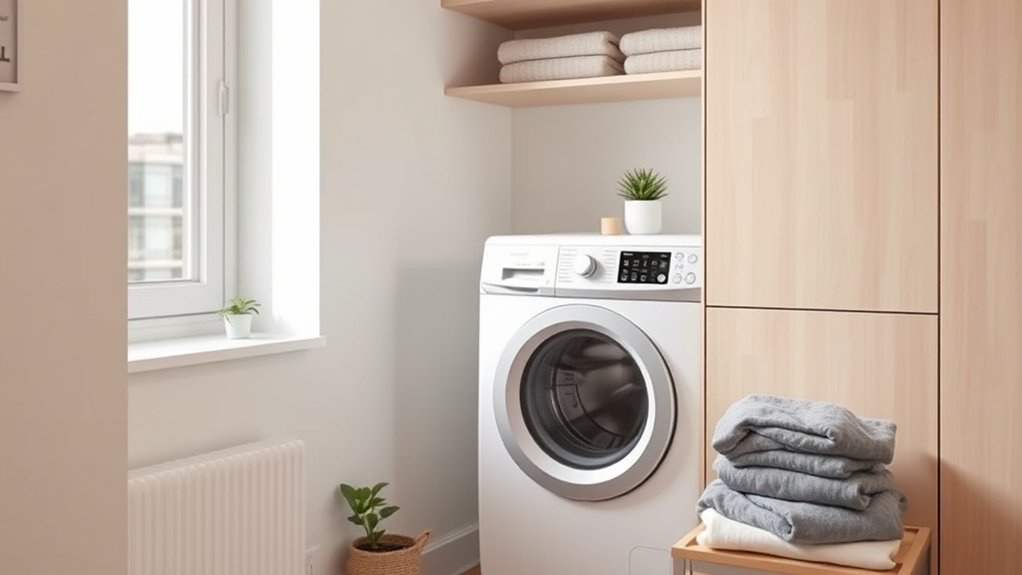
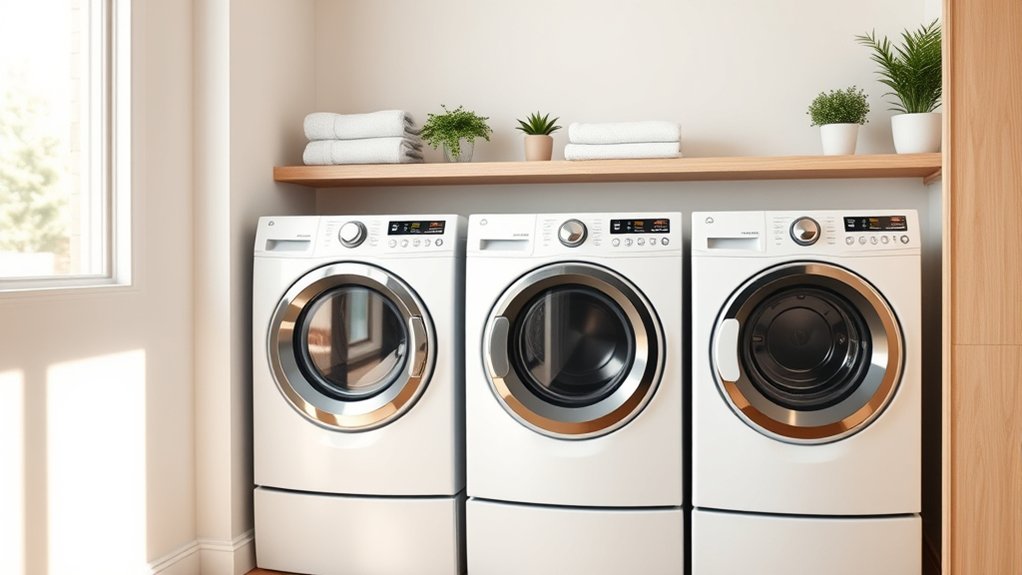
If you need one appliance for washing and drying, a ventless washer-dryer combo can fit neatly into an apartment without exterior ductwork or permanent dryer ventilation. You’ll load clothes through one door, select a cycle, and let the machine wash, rinse, spin, and dry without transferring laundry.
Look for a heat-pump model if energy efficiency matters. It recycles warm air instead of venting heated air outdoors, which can reduce electricity use and keep your apartment cooler.
Heat-pump models recycle warm air, reducing energy use while helping keep your apartment cooler.
However, drying usually takes longer than it does with a conventional vented dryer, so you’ll want to avoid overloading the drum.
Check noise levels before buying, especially if you live above neighbors or place the unit near a bedroom. Features such as adjustable feet, vibration control, and a quiet spin setting can make a noticeable difference.
Measure your doorway, closet, and available clearance carefully. Also, confirm you have the required water supply, drain, and grounded electrical outlet before installation.
Best RV-Friendly Compact Washer-Dryer
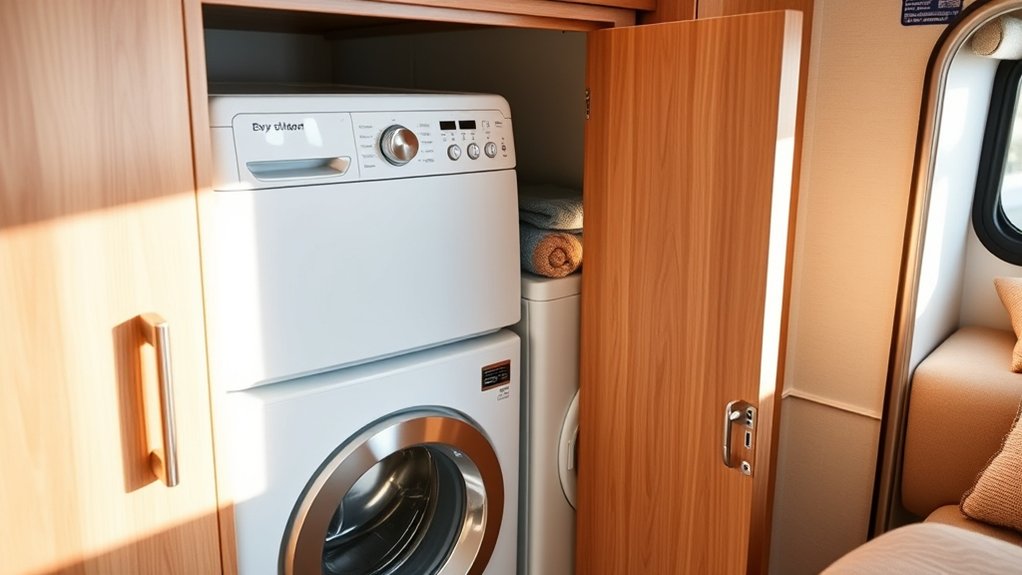
For RV living, a compact washer-dryer with low water use, modest power demands, and a ventless design can make laundry easier without taking up valuable space. Choose a model that fits your RV’s storage area and electrical capacity, then confirm its dimensions before buying.
A portable ventless combo lets you wash and dry clothes in one appliance, so you won’t need campground facilities or separate machines.
Prioritize a short cycle, adjustable load sizes, and a simple drain setup. These features improve laundry efficiency while conserving your fresh-water tank and reducing gray-water output.
Look for a space-saving design with wheels, handles, or a stackable profile, especially if you’ll store the unit between trips. Keep loads small to prevent vibration and help clothes dry evenly.
Because RV power systems vary, check wattage and avoid running the appliance alongside heavy-draw devices. With careful installation and realistic load sizes, you can handle everyday laundry comfortably, even in a compact motorhome.
Frequently Asked Questions
How Much Electricity Do Hookup-Free Washers and Dryers Typically Consume?
You’ll typically use 0.1–0.3 kWh per load with a portable washer, while a ventless electric dryer may consume 1.5–3 kWh per drying cycle. Your total depends on load size, cycle length, moisture level, and model.
For better energy efficiency, choose high-spin washers and heat-pump dryers. Check each appliance’s label for power consumption, then estimate costs by multiplying kilowatt-hours by your local electricity rate.
Running smaller loads can increase energy use per garment.
Are These Appliances Safe to Use With Standard Household Electrical Outlets?
Yes, you can generally use these appliances with standard household outlets, provided you follow the manufacturer’s instructions. Check the voltage and amperage requirements, and plug each unit directly into a grounded outlet rather than using an extension cord or power strip.
For safety considerations, inspect cords, prevent water from reaching electrical connections, and maintain ventilation. Choose models with energy efficiency ratings to reduce circuit demand, heat, and operating costs during regular use.
What Detergent Types Work Best in Compact, Hookup-Free Washing Machines?
Imagine loading a portable washer with a week’s laundry in your apartment; you’ll get the best results with low-sudsing, high-efficiency liquid detergent. Check detergent compatibility in your machine’s manual, then measure carefully because compact tubs need less soap.
Concentrated formulas rinse efficiently and prevent residue. You can also choose eco-friendly options, such as plant-based, biodegradable liquids.
Avoid regular high-sudsing detergents, powders that clump, and fabric softener overuse to protect performance.
How Noisy Are Portable Washers and Dryers During Operation?
Noise levels vary by model, but you’ll usually hear a portable washer’s hum, water movement, and spin cycle at moderate volume. Compact dryers often produce steady fan noise and occasional tumbling sounds.
You’ll notice greater volume during high-speed spins, especially on hard floors. To reduce vibration concerns, you should level the machine, avoid overloading it, use anti-vibration pads, and keep doors closed.
You’ll likely find operation manageable during daytime, but disruptive overnight.
Can Renters Install These Appliances Without Landlord Approval?
You usually can’t install these appliances without checking first, like slipping a new fixture into someone else’s house.
Review your lease and ask about landlord approval before starting any appliance installation. Portable, ventless, or countertop models may avoid permanent plumbing changes, but they can still affect floors, outlets, drainage, or building rules.
Get written permission, confirm electrical requirements, and use approved connections. Otherwise, you could face fees, damage claims, or lease violations.
Conclusion
You don’t need hookups—or a laundry room—to keep clothes fresh. A portable washer with spin-dry function saves space, while a ventless combo handles washing and drying in one apartment-friendly machine.
For life on the road, an RV-ready compact washer-dryer keeps your wardrobe manageable wherever you park. Ironically, the smallest appliances can deliver the biggest relief: less plumbing, less clutter, and fewer trips to the laundromat.
Choose the setup that fits your space, and let laundry shrink to size. The best washer and dryer without hookups can make small-space laundry simpler and more convenient.