
What Is a Convection Microwave and How to Use It
Busy kitchens often leave you choosing between microwave speed and oven-quality results. You’re not alone—many people struggle to reheat, bake, roast, and crisp food without using multiple appliances. A convection microwave can help solve that problem by combining both functions in one convenient machine.
A convection microwave combines microwave speed with a heating element and fan, letting you reheat, bake, roast, crisp, and brown food in one appliance. Choose microwave mode for quick heating, convection mode for baking or roasting, or combination mode for faster cooking with browning.
Use approved microwave- and oven-safe cookware, set the recommended time and temperature, and check food early. Stir or rotate when needed, handle steam carefully, and keep the appliance clean. You’ll uncover more ways to use it effectively below.
Key Takeaways
- A convection microwave combines microwave speed with a heating element and fan for baking, roasting, browning, and reheating.
- Microwave mode quickly reheats food, convection mode bakes or roasts, and combination mode cooks faster while adding browning.
- Select the cooking mode first, then set the recommended temperature, power level, and cooking time.
- Use microwave-safe, oven-safe cookware. Avoid unapproved metal, metallic decorations, and non-rated plastics.
- Check food early, stir or rotate when needed, handle steam carefully, and keep the appliance clean and ventilated.
What Is a Convection Microwave?
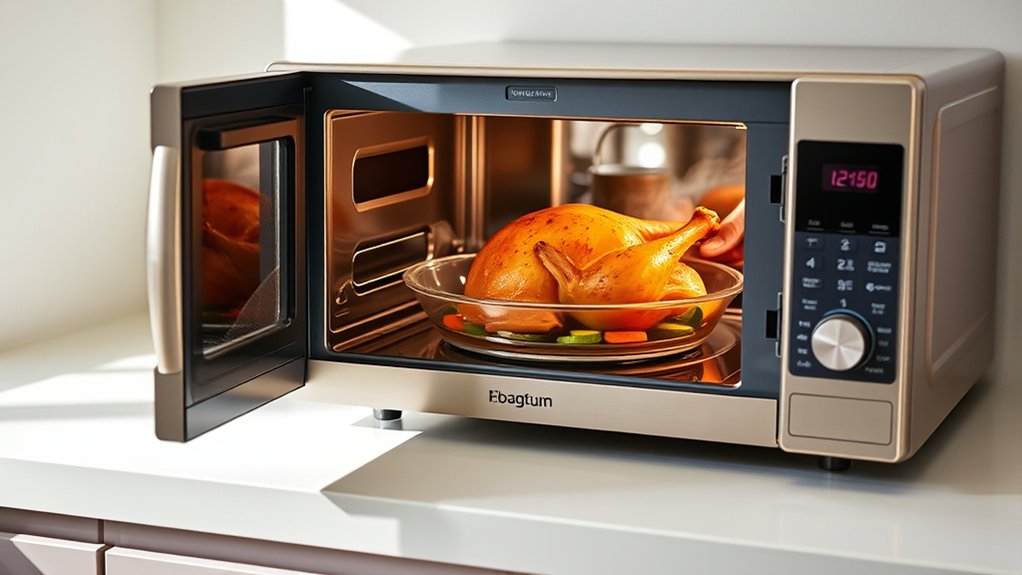
A convection microwave combines microwave energy with a heating element and fan to cook food quickly while browning and crisping it like a traditional oven. When you choose one, you get a versatile countertop appliance that can replace several cooking tools.
A convection microwave combines speedy microwave cooking with oven-style browning, crisping, and versatile everyday convenience.
You can reheat leftovers, bake pastries, roast vegetables, grill meat, and crisp frozen foods in a single unit.
Its compact design suits smaller kitchens, apartments, offices, and busy households. You’ll also save time because you can combine speed with oven-style results instead of waiting for a large oven to preheat.
Models vary in capacity, power, controls, and automatic programs, so compare your cooking habits before buying.
The Historical evolution of this appliance began with basic microwave ovens and expanded as manufacturers added convection features for better browning.
Future innovations may bring smarter sensors, improved energy efficiency, quieter fans, and more precise automatic cooking.
You’ll benefit most when you understand the appliance’s settings and select cookware designed for microwave and convection use.
How Does a Convection Microwave Work?
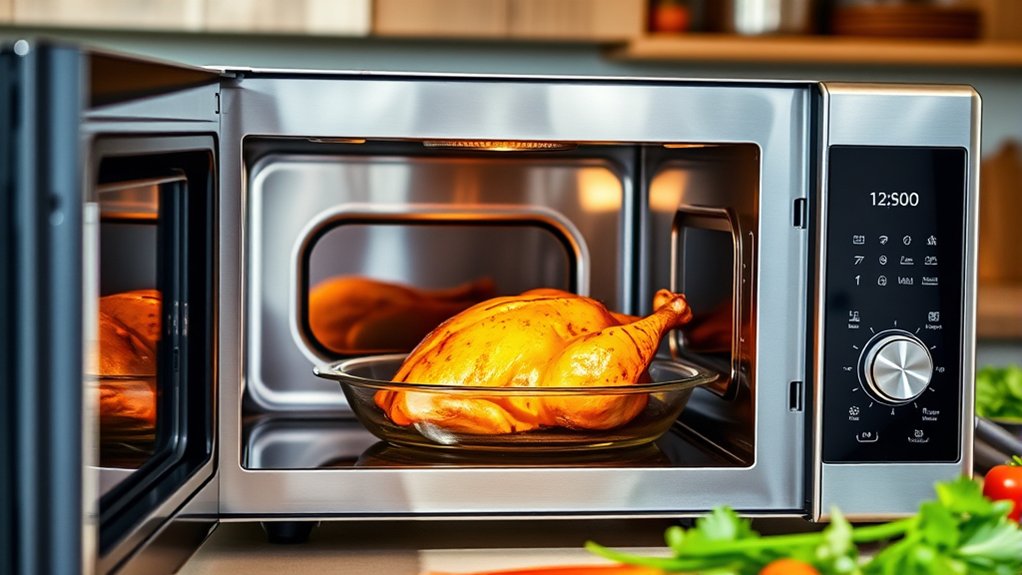
When you use a convection microwave, microwave energy excites water molecules in your food, heating it quickly. At the same time, a fan circulates hot air around the cooking cavity, helping food brown and crisp more evenly. You can also use both cooking modes together to speed up cooking while improving the texture.
Microwave Energy Explained
Microwave energy heats food by making water molecules vibrate rapidly, creating friction that produces heat.
When you start a convection microwave, its magnetron generates microwave energy and directs it into the cooking cavity. The waves penetrate food and excite water, fat, and sugar molecules, so heat develops throughout the food rather than only on its surface.
You’ll notice that foods with more moisture generally cook faster, while dense or dry areas may heat unevenly. Stirring, rotating, or allowing standing time helps heat transfer continue after cooking stops.
The microwave doesn’t make food radioactive. It produces nonionizing energy that ends when you open the door or cancel the cycle.
Convection Heat Circulation
While microwave energy heats food from within, convection cooking uses a fan to circulate hot air around it. A heating element warms the air, and the fan moves it steadily through the oven cavity.
This motion improves airflow efficiency, helping heat reach exposed surfaces more evenly than still-air cooking. As hot air flows around your dish, it supports consistent heat distribution and encourages browning, crisp edges, and thorough cooking.
- The element generates hot air.
- The fan circulates that air around your food.
- The vents guide airflow to maintain an even temperature.
You can place food on a suitable rack so air reaches more sides. Keep space around the dish instead of blocking vents or crowding the cavity.
Because circulating air transfers heat efficiently, you’ll often need a lower temperature or shorter cooking time than a conventional oven. Follow your recipe’s guidance and check doneness before serving.
Combined Cooking Modes
A convection microwave combines microwave energy with circulating hot air, so you can cook food quickly while still achieving browned, crisp surfaces.
Combined cooking modes let you use both functions simultaneously or separately, depending on your recipe. Microwave energy heats moisture inside food, while convection heat cooks the exterior and promotes even browning.
You can bake a casserole, roast vegetables, or crisp chicken faster than with a conventional oven alone. Choose a combination setting when you want speed plus texture.
Select convection only for baking and browning, or microwave only for reheating. You can also control results by adjusting each mode’s time and temperature.
This flexibility supports flavor infusion as juices circulate and surfaces caramelize. It can improve energy efficiency because you’ll often need less time and preheating than with a full-size oven.
Choose a Convection Microwave Cooking Mode

Choose the mode that fits your goal—microwave, bake, roast, or a combination of cooking methods. Then set the time and temperature according to the food and recipe. For the best results, follow the manufacturer’s guidance and check on your dish while it cooks.
Select the Right Mode
Select the mode based on how you want to cook: use microwave mode for quick reheating, convection mode for browning and baking, or a combination mode when you need speed with an oven-like finish. Choosing correctly helps you protect texture, flavor, and your appliance’s Energy efficiency.
- Choose microwave mode for soup, leftovers, vegetables, and beverages. It heats food quickly without warming the entire cavity.
- Select convection mode for cookies, roasted vegetables, casseroles, and foods that need crisp, even browning.
- Pick combination mode for items such as chicken, baked pasta, or frozen meals when you want faster cooking and a browned surface.
Consider your Kitchen aesthetics, too. A clean, uncluttered control panel makes mode selection easier.
Check your recipe’s recommended mode, then place food in microwave-safe cookware approved for that setting. You’ll cook more confidently and avoid disappointing results.
Adjust Time and Temperature
Once you’ve chosen a cooking mode, adjust the time and temperature to match the food and recipe. Use the Digital display to enter the recommended settings.
Then check whether your model requires separate inputs for microwave power and convection heat. Select lower Power settings for delicate foods or longer cooking times to prevent drying and uneven heating.
For roasting or baking, set the convection temperature according to the recipe, but reduce it slightly if your manual recommends doing so. Choose a shorter initial cooking time than you normally would; you can add time if needed.
Stir, rotate, or turn food during cooking when the instructions call for it. Use an oven thermometer or food thermometer to verify results, especially for meat, poultry, and baked dishes.
Always follow your microwave’s safety guidelines.
Set the Controls the Right Way
Set the controls according to the cooking task: use microwave mode for quick reheating, convection mode for browning and baking, or a combination setting when you want both speed and crispness.
Read the control labels first, then select the function before entering the time or temperature. Convection technology circulates hot air, so choose it when you need an evenly browned surface.
- Select microwave, convection, or combination mode.
- Enter the recommended power level, temperature, and cooking time.
- Press Start, then check progress before adding more time.
Use lower microwave power for delicate foods and shorter intervals for reheating. In convection mode, allow the oven to preheat when the recipe calls for it.
Combination mode may use reduced microwave power with circulating heat, so follow the appliance’s guidance. Don’t change settings mid-cycle unless you pause the oven first.
For Microwave safety, keep the door closed during operation, stay nearby, and stop the cycle if you notice unusual sounds, smoke, or sparking. Always let the display finish before opening.
Choose Safe Microwave Convection Cookware
Choose cookware labeled microwave-safe for regular microwave heating. If you plan to use the convection setting, make sure it’s also made from oven-safe materials and designed to withstand high temperatures. Then, confirm that the cookware is approved for use in both modes.
Microwave-Safe Materials
When choosing cookware for a convection microwave, look for containers labeled microwave-safe and rated for the oven’s temperature range. Microwave-safe materials should tolerate microwave energy without melting, cracking, or releasing harmful chemicals.
For reliable convection microwave safety, choose:
- Heat-resistant glass, such as borosilicate glass, for cooking and reheating.
- Microwave-safe ceramic or stoneware without metallic paint, trim, or decorations.
- Approved silicone cookware labeled for microwave and high-temperature use.
Avoid metal, aluminum foil, crystal, non-microwave-safe plastic, and containers with metallic details during microwave operation. Some plastics can warp or leach chemicals, even if they appear sturdy.
Check the manufacturer’s instructions, and replace containers that show cracks, chips, clouding, or warping. Never use sealed jars or tightly covered containers because steam pressure can build rapidly.
Use vented lids or leave openings for steam to escape, protecting both you and your appliance. Never heat empty cookware inside the oven.
Oven-Safe Cookware Designs
Beyond the material itself, cookware design affects how safely and evenly food cooks in a convection microwave. Choose oven safe cookware with low, straight sides so hot air can circulate around your food. A shallow dish also promotes even browning and reduces cooking time.
Avoid containers with metallic trim, handles, or decorative coatings unless the manufacturer specifically approves them for microwave use. Check that lids vent steam and fit loosely; sealed containers can build dangerous pressure.
For roasting, select a rack or pan designed for convection cooking, and leave space between the pan and oven walls. Design considerations also include size: cookware should turn freely on the microwave plate without touching the interior.
Always follow your appliance manual and the cookware’s temperature rating, especially when switching between microwave and convection modes.
Adjust Time and Temperature for Better Results
Adjusting the time and temperature lets you control how quickly food cooks and how evenly it browns. Because convection air circulates continuously, your food may finish sooner than it would in a standard microwave or oven.
- Start with the package’s recommended settings, then reduce the temperature by 25°F when switching from a conventional oven to convection.
- Check progress early, especially during the first few uses. If the surface browns too quickly, lower the temperature; if the center remains undercooked, add short intervals rather than raising the heat sharply.
- Let food rest briefly after cooking so residual heat can finish the process.
Use the appliance’s rack and turntable as directed, and keep containers spaced apart for airflow. Don’t rely on Cooking myths, such as assuming every microwave cooks at the same rate.
An appliance comparison can help, but your model’s manual remains the best guide. Record successful settings for consistent results, and clean the interior to maintain even performance.
What Can You Cook in a Convection Microwave?
A convection microwave lets you cook far more than reheated leftovers, including roasted vegetables, baked casseroles, crisp pizzas, browned chicken, cookies, and other foods that benefit from circulating hot air. You can roast potatoes, carrots, Brussels sprouts, or fish until the surfaces turn golden while the centers stay tender.
Use the microwave setting first to speed up cooking, then convection heat to create a browned finish. You can also prepare pasta bakes, stuffed peppers, quesadillas, and homemade pizza with crisp edges.
Combine microwave speed with convection browning to make pasta bakes, stuffed peppers, quesadillas, and crisp homemade pizza.
For breakfast, try egg dishes, toasted sandwiches, or baked oatmeal. Healthy snacks such as roasted chickpeas, kale chips, and seasoned nuts cook quickly with little oil.
Baking desserts works well, too: make muffins, brownies, biscuits, fruit crisps, or small cakes in an oven-safe dish. Choose recipes suited to your microwave’s capacity, and arrange food in a single layer when you want even browning.
With practice, you’ll uncover convenient meals for nearly every craving.
Follow Convection Microwave Safety Rules
Because a convection microwave combines microwave energy with intense heat and moving air, you must follow its safety instructions carefully. Read the manufacturer’s guide before using any setting, and keep children away while the appliance operates. Protect your hands with oven mitts because cookware, racks, and food can become extremely hot.
- Use only microwave-safe cookware approved for combination cooking. Never use metal unless your manual specifically permits a supplied rack or accessory.
- Leave ventilation openings clear, and don’t operate the appliance if its door, seal, or latch looks damaged.
- Let steam escape carefully when opening covered dishes, and use heat-safe utensils to remove them.
Ignore convection microwave myths that claim every container or recipe works safely. Choose the correct mode, temperature, and time for your food, then stay nearby during cooking.
Following these rules supports cooking efficiency while reducing burns, fires, and equipment damage. Unplug the unit before cleaning, and allow it to cool completely.
Avoid Common Convection Microwave Mistakes
Avoid common convection microwave mistakes by choosing the correct cooking mode and using the recommended time and temperature. Use microwave mode for reheating and defrosting, convection mode for baking or roasting, and combination mode only when your recipe calls for both.
Don’t assume microwave cooking times transfer directly to convection settings. Reduce the temperature or time as your manual recommends, then check food early.
Choose microwave-safe, oven-safe containers suited to the selected mode. Never use plastic, metal, or Kitchen accessories that aren’t specifically approved for the chosen setting.
Leave space between items so hot air and microwaves can circulate, and arrange food evenly to prevent cold centers and overcooked edges. Avoid filling containers too deeply, since heat may not reach the middle.
For better Energy efficiency, cook multiple portions together when possible, but don’t overcrowd the cavity. Use the turntable correctly, keep vents unobstructed, and let food stand briefly after cooking so residual heat finishes the job.
Clean and Maintain Your Convection Microwave
Keep your convection microwave clean and well maintained to support even cooking, prevent odors, and extend its service life. Wipe spills promptly with a soft, damp cloth, and use mild dish soap for greasy residue. Don’t use abrasive pads, harsh chemicals, or metal scrapers, which can damage interior surfaces.
Regular cleaning promotes even cooking, prevents odors, and extends your convection microwave’s service life without damaging its surfaces.
- Remove the turntable, rack, and roller ring, then wash them in warm, soapy water. Dry everything before reinstalling it.
- Heat a microwave-safe bowl of water with lemon for several minutes. Let the steam loosen stuck-on food, then wipe the walls, ceiling, and door.
- Clean the door seal, control panel, vents, and exterior regularly. Keep moisture away from openings, and never spray cleaner directly onto controls.
Check the manufacturer’s instructions before using self-cleaning features or accessories. Inspect the cord and plug for damage, and arrange your appliance storage area to keep vents unobstructed.
Good Kitchen organization also prevents clutter from blocking airflow or causing accidental damage. Schedule a quick weekly wipe and a deeper monthly cleaning.
Frequently Asked Questions
How Much Does a Convection Microwave Typically Cost?
A convection microwave typically costs $150 to $600, depending on its size, features, and brand. You’ll find basic countertop models near $150, while larger units with sensors, stainless-steel interiors, or advanced cooking versatility often cost $300 to $600.
If you choose a premium built-in model, you might spend $700 to $1,500. Compare warranties, power ratings, and energy efficiency before buying, since efficient operation can reduce your long-term electricity expenses over time.
Does a Convection Microwave Require Professional Installation?
Usually, you don’t need professional installation for a countertop convection microwave. You can plug it into a properly grounded outlet and follow the manufacturer’s installation requirements.
However, you’ll need professional setup for an over-the-range or built-in model, especially when mounting, ventilation, electrical connections, or cabinetry modifications are involved.
If you’re unsure about wiring, clearances, or mounting, hire a qualified technician to guarantee safe, compliant installation and protect your warranty.
How Long Do Convection Microwaves Usually Last?
You can usually expect a convection microwave to last 7–10 years, though heavy use, poor ventilation, and neglected cleaning may shorten its life.
Picture a simple timeline: year 0, purchase; years 7–10, typical replacement; beyond 10, possible but less certain.
Cooking versatility and energy efficiency make these appliances valuable, yet neither guarantees longevity.
You’ll extend its service life by following the manual, avoiding empty operation, cleaning spills, and addressing unusual noises promptly.
Which Brands Make the Most Reliable Convection Microwaves?
Panasonic, Toshiba, Breville, and GE consistently rank among the most reliable convection microwave brands. You’ll generally get strong performance from Panasonic’s inverter models, Toshiba’s well-reviewed countertop units, Breville’s premium designs, and GE’s dependable over-the-range options.
Consider brand reputation, warranty coverage, customer-service quality, and product features before buying. You shouldn’t rely on name recognition alone; compare independent reviews, interior capacity, controls, replacement-part availability, and expected service life to find the best fit.
Can a Convection Microwave Replace a Traditional Oven Completely?
Yes, but don’t fire your oven just yet. A convection microwave can replace it for many everyday tasks, including roasting, baking, reheating, and crisping, while improving kitchen space efficiency.
However, its smaller capacity and uneven results with large dishes limit it for holiday meals, multiple trays, or specialized baking. You’ll still need alternative cooking methods, such as a traditional oven, stovetop, or air fryer, for complete flexibility and dependable results.
Conclusion
A convection microwave gives you the speed of microwave cooking and the browning power of an oven in one appliance. Choose the right mode, use microwave-safe cookware, and follow the manufacturer’s instructions every time.
With a little practice, you can roast, bake, reheat, and crisp meals confidently. Remember, “practice makes perfect”: start with simple dishes, watch cooking times closely, and clean the appliance regularly.
Soon, you’ll understand what a convection microwave is and how to use it, turning everyday ingredients into golden, satisfying meals with ease.