What Temp Should a Freezer Be Set At?
Many people struggle with keeping their freezer at the right temperature. You’re not alone—food can spoil, frost can build up, and energy bills can rise when settings are off.
In this guide, we’ll explain what temperature a freezer should be set at and highlight helpful products for keeping your food safely frozen.
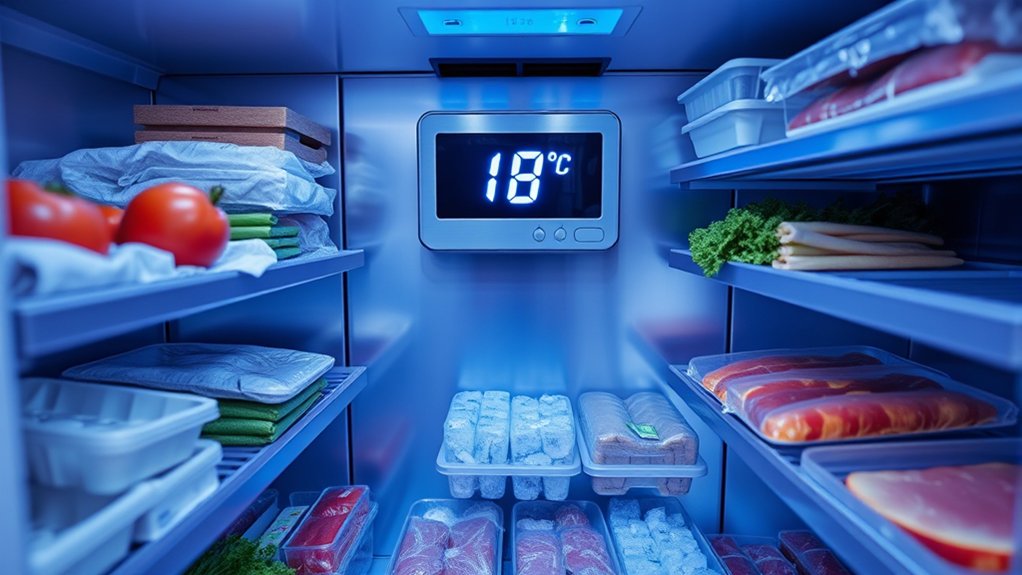
Set your freezer to 0°F (-18°C) to keep food safely frozen, preserve quality, and reduce unnecessary energy use.
Check the temperature with an appliance thermometer, placing it in the center of the compartment and leaving it undisturbed for at least 24 hours.
Keep vents clear, allow space around packages, and inspect the door seal.
If food thaws, refreeze it only if ice crystals remain or it stayed at 40°F or below.
More guidance follows on thawed food and freezer problems.
Key Takeaways
- Set your freezer to 0°F (-18°C) to keep food safely frozen and preserve quality.
- Verify the temperature with an independent appliance thermometer, since built-in displays may be inaccurate.
- Place the thermometer in the center, away from walls, vents, and the door, and check it after 24 hours.
- Maintain airflow by avoiding overcrowding and keeping packages away from vents and interior walls.
- Adjust gradually and recheck after adding groceries, defrosting, or experiencing seasonal temperature changes.
What Temperature Should a Freezer Be?
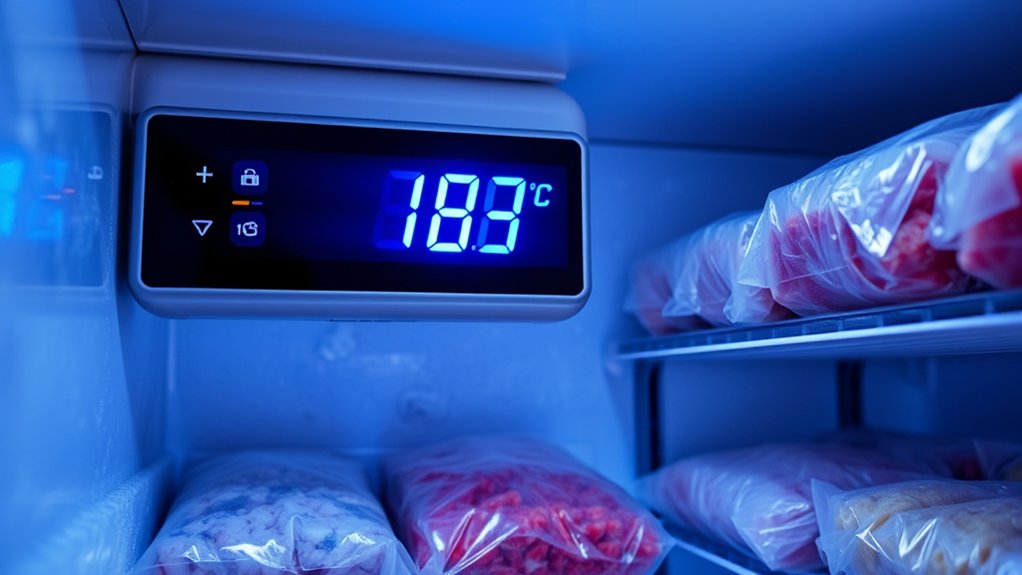
What temperature should a freezer be? Set yours to 0°F (-18°C) for reliable storage and consistent performance. Use the appliance’s control panel or dial to make adjustments, then verify the internal temperature with a freezer thermometer. Built-in displays can be inaccurate, so an independent reading gives you greater confidence.
Keep the door closed as much as possible, and avoid placing hot food inside. Leave enough space around packages for cold air to circulate, but don’t overfill the compartments. These habits support Energy efficiency and help your freezer recover quickly after you open it.
Keep the door closed, avoid hot food, and allow space for air circulation to support energy efficiency and steady cooling.
For practical Maintenance tips, check the door gasket for gaps, remove frost when buildup affects storage, and vacuum dust from the condenser area if your model permits it. Position the freezer away from ovens, direct sunlight, and heat-producing appliances.
If temperatures fluctuate despite proper settings, inspect the seal, clean the vents, and consult your owner’s manual or a qualified technician.
Why Should a Freezer Stay at 0°F?
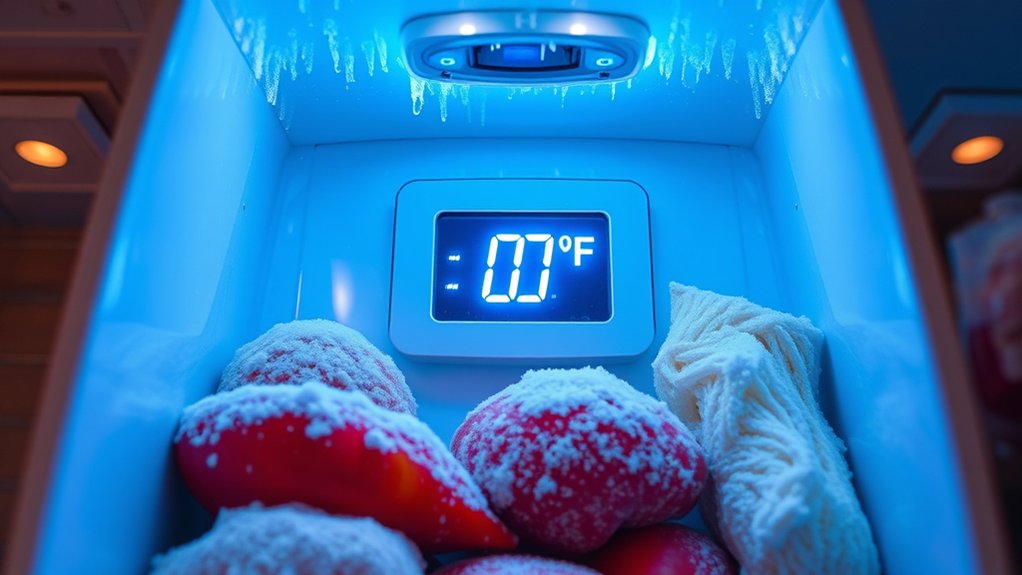
Keeping your freezer at 0°F (-18°C) protects food quality and keeps it safely frozen. At this temperature, harmful bacteria can’t grow, and frozen foods retain their texture, flavor, and nutrients longer.
You’ll also reduce the risk of partial thawing that causes freezer burn, damages packaging, and shortens storage life.
A steady 0°F setting supports Energy efficiency, too. Your appliance can maintain a consistent environment without repeatedly working harder to recover from warmer conditions.
Avoid setting the temperature unnecessarily low, since extra cooling uses more electricity without improving food safety.
Good freezer maintenance helps preserve that stable performance. Keep the door closed as much as possible, replace worn seals, and leave enough space for air to circulate.
Defrost the freezer when heavy ice buildup restricts storage or airflow. Organize food so you can find items quickly and prevent prolonged door openings.
How to Check Your Freezer Temperature
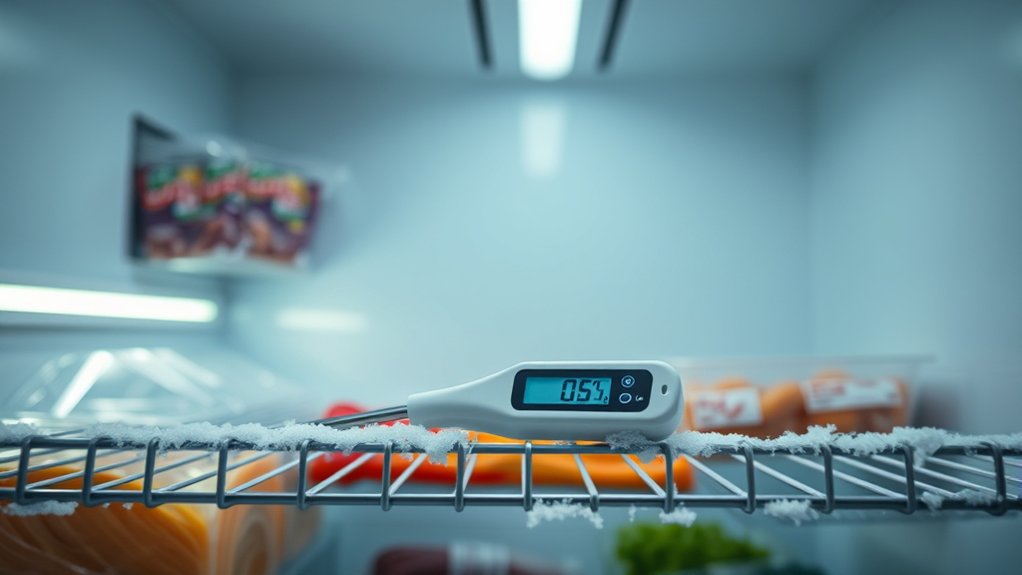
How can you tell whether your freezer is truly at 0°F? Use an appliance thermometer to verify the internal temperature instead of relying on the control dial or frost appearance.
Check it after the freezer has operated for several hours, ideally following an overnight test with minimal door openings. Then record the reading and adjust the setting gradually if necessary.
- Prepare: Keep the door closed for several hours before testing.
- Read: Check the thermometer and note the temperature.
- Adjust: Change the control slightly if the reading differs from 0°F.
- Confirm: Test again after the freezer stabilizes.
Repeat this check after adding groceries, defrosting, or noticing soft food. A consistent 0°F reading supports food quality and energy efficiency.
Storage organization also helps: Group similar items, avoid blocking vents, and leave space for cold air to circulate.
Don’t judge performance by ice buildup alone. Measure it instead. Clean, readable thermometer markings make routine checks faster and more reliable.
Record dates and readings so you’ll notice gradual changes early.
Where Should You Place a Freezer Thermometer?
Place your freezer thermometer in the center, away from the walls and vents, for the most accurate reading. Avoid storing it in the door, where frequent opening can cause temperature swings.
Proper placement helps you monitor your freezer’s true temperature.
Ideal Thermometer Placement
For the most accurate reading, place the freezer thermometer in the center of the main compartment, away from the walls, door, vents, and ice maker. This location shows the temperature surrounding your food rather than a warm or cold spot.
Choose a model designed for freezer use, and position it where you can read it easily without moving stored items.
- Let the thermometer sit for at least 24 hours before checking it.
- Read it at the same time each day to track patterns.
- Compare its display with your freezer’s built-in setting.
- Adjust the control gradually if the reading exceeds 0°F (-18°C).
A stable reading helps protect frozen desserts and limits ice crystal formation. If temperatures fluctuate, check the thermometer’s battery and placement before assuming the appliance needs service.
Avoid Door Storage
Keep the thermometer out of the freezer door, where frequent opening and warmer air can produce readings that don’t represent the main compartment. Place it on a middle shelf, toward the front, with space around it for air to circulate.
This location gives you a practical reading of the temperature affecting most of your food.
Avoid pressing the thermometer against a wall, package, or cooling vent, since direct contact can distort its result. Leave it in position for several hours before checking it, especially after loading groceries or adjusting the control.
A steady reading helps you protect Frozen desserts and reduce Ice crystal formation, which may signal temperature fluctuations or freezer burn. Check the display regularly, and move items if they block airflow around the thermometer or crowd the shelf.
Do Different Freezers Need Different Settings?
Different freezer types may require slightly different settings, but you should generally aim for 0°F (-18°C) to keep food safely frozen. Your model’s design, location, and condition can affect how consistently it maintains that temperature. Check the manufacturer’s guidance before changing the control.
- Upright freezers: Set the control near 0°F, then adjust slightly if readings remain too warm or cold.
- Chest freezers: They often hold temperatures steadily, but you should still verify the setting with an appliance thermometer.
- Refrigerator-freezer units: Their freezer sections may fluctuate more during cooling cycles, so monitor them regularly.
- Garage freezers: Seasonal heat or cold can affect performance. Choose a model rated for your garage’s conditions.
Temperature calibration matters because the dial’s numbers may not match the actual interior temperature. Place a reliable thermometer inside and wait 24 hours before judging the results.
You’ll improve freezer efficiency by keeping door seals clean, correcting temperature problems promptly, and avoiding unnecessarily cold settings. If food softens or ice builds up, inspect the seal, vents, and thermostat.
How Full Should Your Freezer Be?
Keep your freezer about 70–85% full to maintain efficient, consistent cooling. Just be sure to leave some space between items so cold air can circulate. Good airflow helps keep temperatures stable and can reduce energy use.
Ideal Freezer Fill Level
Aim to keep your freezer about 70–85% full for the best balance of efficient cooling and usable storage. This level gives you enough food to retain cold temperatures without cramming shelves or blocking safe access.
For better Energy efficiency, organize items so you can find them quickly and limit door-open time. Follow these practical guidelines:
- Leave enough room to add groceries without compressing packages.
- Keep containers stable, with labels and dates facing outward.
- Fill empty spaces with sealed, freezer-safe containers of water if needed.
- Remove expired food regularly to preserve useful capacity.
Your freezer shouldn’t sit nearly empty because it’ll work harder to maintain a steady temperature. It also shouldn’t be packed tightly.
As part of your Maintenance tips, check storage space whenever you clean and adjust your inventory before shopping. This approach supports consistent performance and easier daily use.
Benefits Of Proper Airflow
Leaving space between packages helps cold air circulate evenly throughout the freezer. You’ll maintain a more consistent temperature when vents and pathways remain unobstructed.
Don’t pack food tightly against the back wall or block the fan, because restricted airflow creates warm spots and makes your freezer work harder.
A well-organized load also supports Energy efficiency: the appliance can recover temperature faster after you open the door, reducing compressor run time and electricity use.
Proper spacing may even improve Noise levels, since the compressor won’t need to run as frequently or as intensely.
Keep your freezer reasonably full, but leave gaps around packages and ventilation areas. Use baskets or containers to group items while preserving air channels.
Check that nothing interferes with the door seal or internal vents.
Why Is Your Freezer Getting Too Warm?
A freezer can get too warm when its temperature setting is too high, the door seal is damaged, or blocked vents restrict cold-air circulation. You may also notice problems after loading too many groceries at once, placing hot food inside, or opening the door frequently.
These issues can compromise frozen desserts and shorten safe Ice cream storage.
Check these warning signs:
- Frost buildup can signal poor airflow or a door that doesn’t close fully.
- Soft packages may indicate temperature fluctuations rather than a constant fault.
- Water or melting ice near the bottom can point to excess warmth.
- An unusual hum, silence, or repeated cycling may suggest a mechanical problem.
Your freezer should hold 0°F (-18°C) for reliable food quality. A faulty thermometer can mislead you, so compare its reading with the freezer’s display.
If temperatures remain inconsistent, spoiled food may become unsafe, especially meat, seafood, and prepared meals. Understanding the cause helps you recognize when the appliance needs attention.
How to Fix a Warm Freezer
To fix a warm freezer, start by checking that the temperature is set correctly. Next, clear any blocked air vents and inspect the door seals for gaps or damage.
Check Temperature Settings
Check the freezer’s temperature setting first, because an accidentally raised control can make food thaw even when the appliance runs normally. Set it to 0°F (-18°C), the recommended target for safe Food storage and reliable Energy efficiency. If your model uses a numbered dial, consult the manual; higher numbers often mean colder temperatures, but not always.
- Turn the control toward a colder setting by one increment.
- Wait 24 hours for the freezer to stabilize.
- Place an appliance thermometer inside to verify the actual temperature.
- Adjust again gradually if it remains above 0°F.
Don’t judge the temperature immediately after changing the setting, especially after adding groceries. Keep the door closed during the waiting period, and check whether the control has slipped or been bumped.
If the freezer still stays warm after proper adjustment, arrange professional service.
Clear Air Vents
Blocked air vents can prevent cold air from circulating, leaving some areas of the freezer warm even when the setting is correct. Check the vents inside your freezer, especially along the back wall and near storage shelves.
Move boxes, bags, and containers away from these openings so air can flow freely. Don’t pack food tightly against the walls, because crowded storage can restrict air circulation and create warm spots.
Keep items organized with space between packages, allowing chilled air to reach every section. If frost has built up around a vent, unplug the freezer and let it thaw according to the manufacturer’s instructions.
Then wipe the area dry before restoring power. After rearranging the contents, wait several hours and check whether temperature consistency improves throughout the freezer.
Inspect Door Seals
If the freezer remains warm after you clear the air vents, inspect the door seal for gaps or damage. A loose gasket lets cold air escape, forcing the compressor to work harder and raising the temperature.
- Close the door on a sheet of paper.
- Pull gently; replace the gasket if the paper slips out easily.
- Wash the seal with warm, soapy water, then dry it completely.
- Check for warping, cracks, or debris along the entire frame.
You can soften a slightly misshapen gasket with a hair dryer on low heat, then press it firmly into place. Don’t use sharp tools, which could puncture the seal.
Afterward, confirm that packages or shelves aren’t blocking closure. A tight seal improves Energy efficiency, stabilizes freezing, and may reduce compressor Noise levels.
Wait several hours, then recheck the freezer temperature.
How Long Is Food Safe After It Thaws?
Food that has thawed in the refrigerator is generally safe for one to two days before cooking, while perishable food left at room temperature for more than two hours should be discarded. Keep your refrigerator at 40°F or below so thawed food stays cold while you plan meals.
Thawed food remains safe for one to two days when refrigerated at 40°F or below; discard perishables left out over two hours.
If you thaw meat, poultry, seafood, or casseroles in the refrigerator, cook them within the recommended time frame. You can also refreeze them safely if they still contain ice crystals or stayed at 40°F or below, though quality may decline.
For safer Food storage, place thawing items in a leakproof container on the lowest refrigerator shelf. This prevents drips from contaminating ready-to-eat foods.
Don’t rely on appearance or smell to determine how long food has remained safe. Track when you moved each package from the freezer, and use labels to guide meal planning.
Good freezer organization helps you find older packages quickly, reducing the time food spends thawing during preparation.
When Should You Discard Thawed Food?
Discard thawed food when it has been above 40°F for more than two hours, or for more than one hour if the temperature exceeds 90°F. Don’t taste food to judge safety; harmful bacteria may not change its smell, flavor, or appearance.
Use this quick checklist:
- Discard meat, poultry, seafood, eggs, casseroles, and leftovers that stayed too warm beyond those limits.
- Refreeze food that still contains ice crystals or feels as cold as refrigerated food, though quality may decline.
- Keep frozen desserts, including ice cream, out of the freezer if they’ve melted completely. Refreezing can’t reliably restore safety or texture.
- Check your freezer organization after a power outage, and place questionable packages in a cooler with ice while you decide.
When in doubt, throw it out. Clean leaks promptly, wash your hands, and sanitize surfaces touched by raw juices. Label packages with dates so you can track thawing time and avoid guesswork. A freezer thermometer helps you confirm temperatures and protect your household.
Frequently Asked Questions
Can Freezer Temperature Settings Affect Energy Consumption?
Yes, freezer temperature settings can affect energy consumption. When you set the freezer colder than necessary, you make the compressor run longer, increasing electricity use.
For better Energy efficiency, choose a safe, consistent setting and avoid frequent adjustments. Proper temperature calibration helps your appliance maintain that setting without wasting power.
You’ll also save energy by keeping the door closed, checking the gasket, and allowing hot food to cool before freezing.
How Often Should You Clean and Defrost Your Freezer?
Clean your freezer every three to six months, or sooner if spills, odors, or heavy Ice buildup appear. Defrost it whenever frost exceeds about one-quarter inch, because excess ice reduces storage space and efficiency.
Turn it off, remove food, and let ice melt safely; don’t chip it with sharp tools. Wipe surfaces with warm, soapy water, dry everything thoroughly, and restore good Freezer organization before returning frozen items.
What Foods Should Never Be Stored in the Freezer?
You shouldn’t freeze eggs in their shells, fresh potatoes, lettuce, cucumbers, or creamy sauces; they can crack, turn watery, or separate. Think of your freezer as a pause button, not a time machine: leftover salad once emerged like a wilted map.
For Dairy storage, avoid soft cheeses, yogurt, and milk unless you accept texture changes. Frozen vegetables usually freeze well, but canned foods and carbonated drinks can burst. Thaw carefully and label everything.
Can Freezing Food Change Its Texture or Nutritional Value?
Yes, freezing can change food texture and slightly affect nutritional value, but you’ll usually preserve most nutrients.
Water expands as it freezes, breaking plant cell walls and making produce softer after thawing. You’ll notice this most with berries, leafy greens, and watery vegetables.
Food texture remains better when you freeze items quickly and package them tightly. For nutritional preservation, blanch vegetables first, limit storage time, and thaw food in the refrigerator.
How Can You Prevent Freezer Burn on Stored Foods?
Prevent freezer burn by using proper wrapping and airtight containers that limit food’s contact with air. Wrap items tightly in plastic wrap, foil, or freezer paper, then place them in sealed bags or containers.
Press out excess air before closing each package, and leave minimal empty space. Label and date everything, keep your freezer consistently cold, and use older foods first.
Don’t refreeze thawed food unless you cook it first.
Conclusion
Keep your freezer at 0°F (-18°C) to preserve food safely and maintain its quality. Check the temperature with a reliable appliance thermometer, and give your freezer room to circulate cold air.
If it starts running warm, address the issue promptly and inspect thawed food carefully. When in doubt, let questionable items take their final journey to the trash rather than risk your health.
With these simple habits, you’ll keep your freezer safely chilled and your frozen foods ready to enjoy.