What Is a Built Fridge Cabinet?
Many homeowners want a polished kitchen but struggle with a bulky refrigerator disrupting the room’s design. You’re not alone—many people find it difficult to blend an appliance into their cabinetry without sacrificing access or function. A built fridge cabinet can help create the seamless look you want.
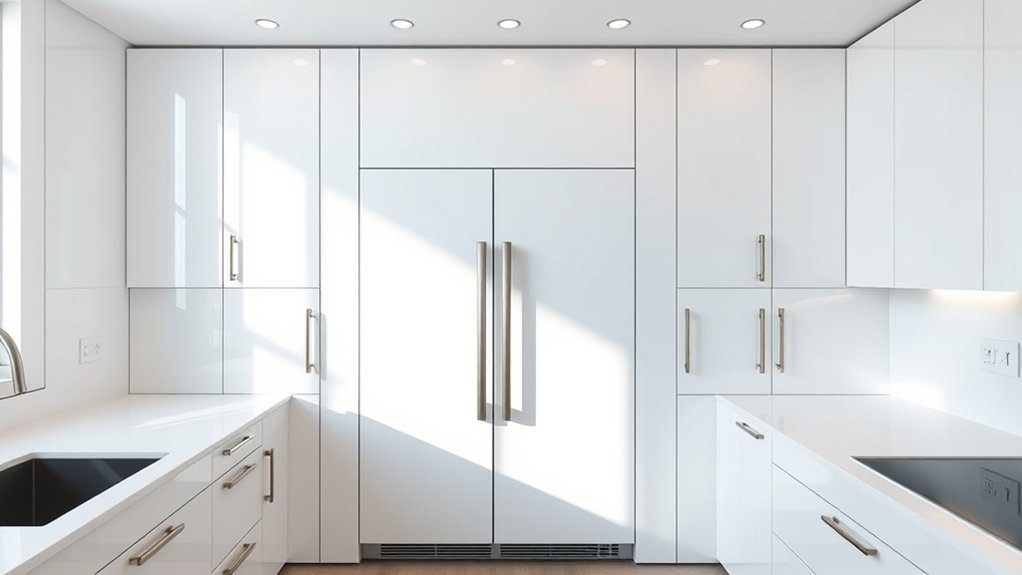
A built fridge cabinet encloses your refrigerator in custom cabinetry, creating a seamless, coordinated kitchen look. You can choose its materials, finish, hardware, and dimensions to match surrounding cabinets while keeping the appliance accessible.
Proper planning preserves ventilation, door-swing clearance, electrical or water connections, and service access. This setup works best with counter-depth, column, or panel-ready refrigerators rated for built-in installation.
Before choosing one, you’ll want to understand compatible styles, costs, measurements, and installation requirements.
Key Takeaways
- A built fridge cabinet is a custom enclosure designed to house and integrate a refrigerator with surrounding kitchen cabinetry.
- It conceals appliance sides and gaps, creating a cohesive, polished, built-in appearance.
- The cabinet is sized around the refrigerator while allowing space for door movement, ventilation, leveling, and servicing.
- Built fridge cabinets commonly accommodate counter-depth, column, and panel-ready refrigerators.
- Proper planning and installation are essential because restricted airflow or insufficient clearances can affect performance and longevity.
What Is a Built Fridge Cabinet?
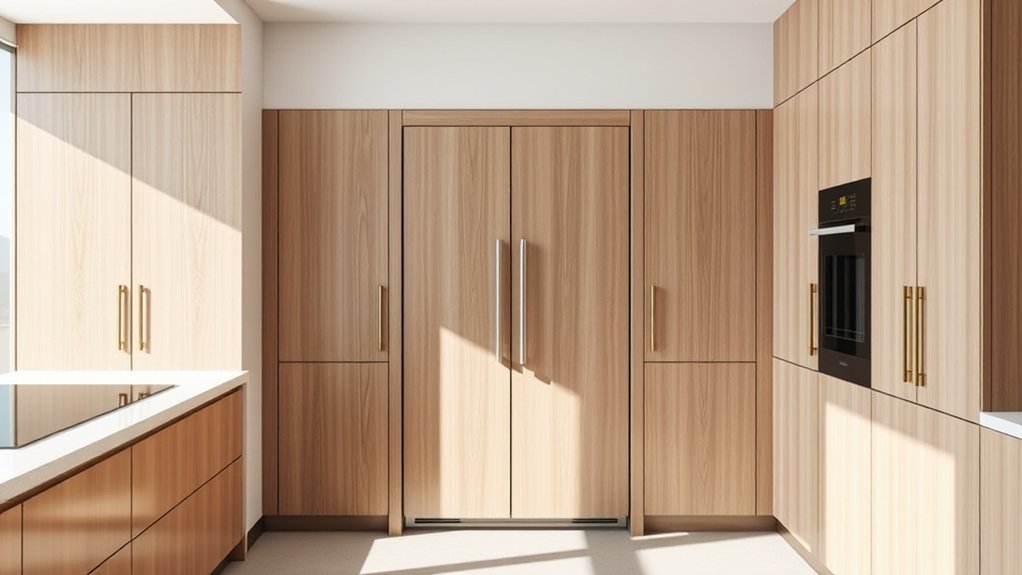
A built fridge cabinet is a custom enclosure designed to house your refrigerator and integrate it with the surrounding cabinetry. You can choose its dimensions, materials, finish, and hardware to create a cohesive kitchen appearance. Unlike a freestanding refrigerator, this approach lets you conceal gaps, align doors, and coordinate the appliance with your design plan.
A built fridge cabinet creates a cohesive kitchen by concealing gaps, aligning doors, and coordinating your refrigerator with surrounding cabinetry.
You’ll typically select a cabinet that matches your existing cupboards or establishes a new visual style. Proper planning considers ventilation clearances, door swing, surrounding storage, and the refrigerator’s dimensions without changing the appliance’s internal operation. You can also add panels, trim, or handles for a tailored look.
A built fridge cabinet may support energy efficiency by helping you plan appropriate clearances and avoid obstructing airflow. However, you should confirm the manufacturer’s specifications before installation.
Consider maintenance requirements, too. You’ll need accessible panels, adequate space for cleaning, and room to service or replace the refrigerator. With thoughtful design, you gain a polished, practical kitchen feature.
How Does a Built-In Fridge Cabinet Work?
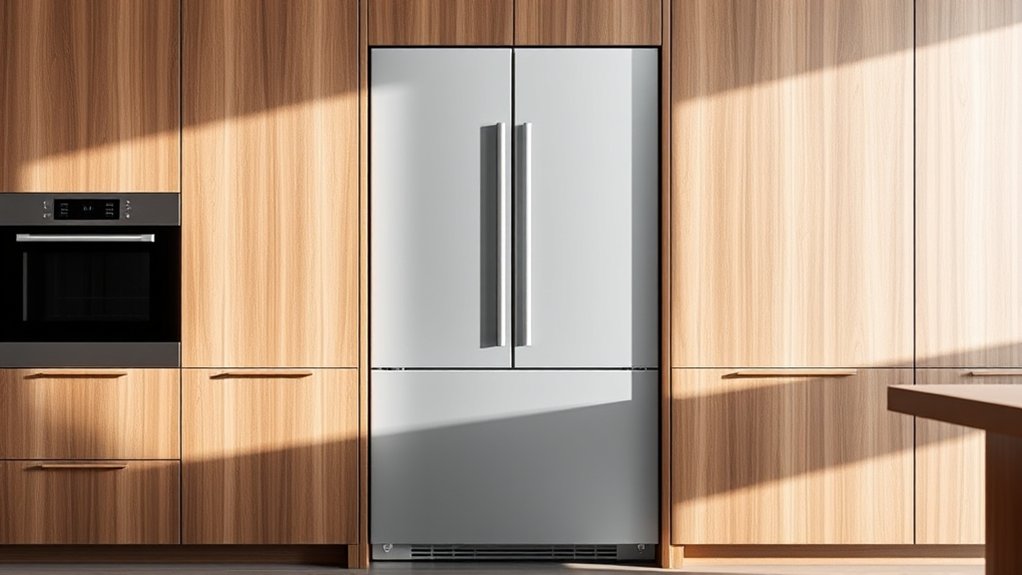
When you install a built-in fridge cabinet, the enclosure frames the refrigerator while leaving the required ventilation and service clearances. You position the cabinet around the appliance, secure it to adjacent structures, and align the doors or panels for a finished appearance.
The refrigerator still draws air through its designed intake and releases heat through its vents, so you mustn’t block those pathways. Proper airflow helps the compressor operate efficiently, supporting energy efficiency and stable food temperatures.
Your cabinet’s dimensions should match the refrigerator’s specifications, including depth, height, hinge movement, and rear clearance. You’ll also need access to the power connection and water line if your model has an ice maker or dispenser.
During installation, you should anchor the cabinet, level the appliance, and verify that doors open freely. Plan for maintenance requirements by keeping removable panels accessible and allowing technicians to reach filters, controls, and components without dismantling the enclosure.
Regularly clean vents and inspect seals to maintain performance and safety.
Built-In Cabinets vs. Freestanding Setups
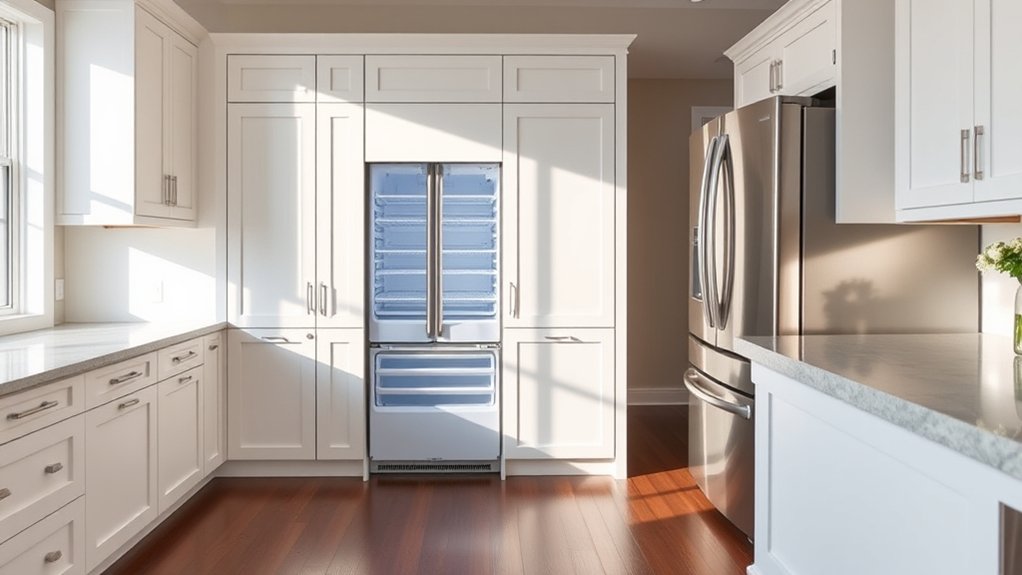
Built-in cabinets give your refrigerator a streamlined, integrated appearance, while freestanding setups offer easier installation, relocation, and access.
When you opt for built-in cabinetry, you create a polished kitchen layout with concealed sides and coordinated finishes. You’ll also gain storage around the appliance, though installation usually costs more and requires careful planning.
A freestanding setup gives you greater flexibility. You can change the appliance’s position, replace it with less disruption, or take it with you when you move.
It also typically costs less to install and makes servicing easier. However, exposed sides and visible gaps may create a less tailored look.
Your priorities should guide the decision. Built-in cabinets suit you if design continuity and a permanent arrangement matter most.
Freestanding setups work better if you value adaptability and lower upfront costs. Consider how Vintage appliances fit your style, and keep in mind that energy efficiency depends primarily on the refrigerator’s design, not the cabinet arrangement.
Which Refrigerators Fit a Built-In Cabinet?
Counter-depth, column, and panel-ready refrigerators fit built-in cabinets best because they align with standard cabinet depths and allow a cleaner, more integrated finish. You’ll also find built-in models with finished sides, front ventilation, and trim options designed for cabinetry.
Choose the style that matches your kitchen’s layout, appearance, storage needs, and budget.
| Refrigerator type | Best cabinet pairing | Key advantage |
|---|---|---|
| Counter-depth | Standard cabinetry | Streamlined appearance |
| Column | Custom cabinetry | Flexible configuration |
| Panel-ready | Matching cabinet fronts | Concealed appliance look |
| Built-in bottom-freezer | Coordinated cabinetry | Convenient organization |
Before buying, compare energy efficiency ratings, interior capacity, door swing, controls, warranty coverage, and maintenance requirements.
You’ll want a model your cabinet system can visually accommodate without creating an awkward fit. Panel-ready units offer the most seamless design, while counter-depth models usually provide simpler installation and replacement.
Column refrigerators work especially well when you prefer separate refrigerator and freezer sections. Always follow the manufacturer’s installation instructions, and confirm that the selected model is specifically rated for built-in use.
What Dimensions and Clearances Are Required?
Measure the refrigerator opening, cabinet depth, ceiling height, and nearby walls before you order a unit. Check the manufacturer’s installation guide for exact width, height, and depth, because hinges, handles, doors, and leveling feet can change the required space.
Leave enough room to slide the refrigerator in, open both doors fully, and remove drawers for cleaning or repairs.
- Provide ventilation: Follow the specified top, rear, and side gaps so heat can escape and the compressor can work efficiently. Proper airflow supports energy efficiency.
- Plan the cabinet depth: Match the enclosure to the refrigerator’s body, not its door or handle depth. This helps the front align cleanly without restricting movement.
- Allow service access: Keep nearby panels removable or leave a practical route to the water line, outlet, filters, and controls. These clearances simplify maintenance.
Confirm floor strength, outlet placement, and door swing direction before installation. Don’t assume standard cabinet dimensions will fit every model.
What Are the Benefits and Trade-Offs?
A built-in fridge cabinet gives your kitchen a polished, cohesive look. However, you’ll trade some usable space and flexibility for that improved appearance. You’ll also need to consider the installation requirements, overall cost, and future access before choosing this design.
Enhanced Kitchen Aesthetics
A built fridge cabinet can give your kitchen a polished, custom-built appearance by creating clean lines and a seamless shift between the refrigerator and surrounding cabinetry. You’ll notice how the cabinet frames the appliance, reducing visual clutter and strengthening your kitchen’s design.
- Color coordination: Match cabinet finishes, hardware, and refrigerator panels to create a unified palette that feels intentional.
- Appliance integration: Blend the refrigerator with surrounding doors and drawers, so it supports your style instead of dominating the room.
- Visual balance: Use consistent lines and proportions to make the kitchen feel calmer and more refined.
The main trade-off involves design commitment. A built-in look may limit spontaneous style changes, especially when your cabinetry uses distinctive materials or finishes. Still, you’ll gain a cohesive appearance that can make everyday cooking feel more enjoyable and your kitchen seem thoughtfully designed.
Space and Installation Trade-Offs
When planning a built fridge cabinet, consider how much room the enclosure will require and how it may affect installation. You’ll gain a streamlined look and can use surrounding space for storage, but the cabinet must provide proper clearance for doors, ventilation, and service access.
Measure your refrigerator, including hinges, handles, and required airflow gaps, before ordering materials. A tight fit may improve energy efficiency by limiting warm-air circulation, yet inadequate ventilation can make the appliance work harder and shorten its life.
You’ll also face higher installation costs, especially if you need electrical changes, custom panels, or floor leveling. Consider maintenance, too: removable panels and accessible connections will make repairs easier.
Plan carefully, and you’ll balance appearance, capacity, performance, and long-term convenience without sacrificing usable kitchen space.
Which Cabinet Styles Suit a Built-In Refrigerator?
Shaker-style refrigerator cabinets are a timeless choice that work well with many kitchen designs. If you prefer a cleaner look, flat-panel cabinets offer a sleek, streamlined finish. Consider your kitchen’s overall style to choose the option that fits best.
Shaker-Style Refrigerator Cabinets
Shaker-style refrigerator cabinets give a built-in refrigerator a clean, timeless look with their flat center panels, square rails, and understated detailing.
You can match the doors to surrounding cabinetry, helping the appliance feel intentionally integrated rather than added later.
Choose durable wood or quality veneer, then finish it to complement your kitchen’s character.
Consider these practical design benefits:
- Flexible color: Paint can brighten a small kitchen, while stain highlights natural grain.
- Vintage finishes: Distressed paint, muted hardware, or lightly worn edges can create welcoming period charm.
- Energy efficiency: Proper ventilation, accurate installation, and an appropriately sized refrigerator help you reduce wasted energy.
Keep the Shaker profile consistent across nearby drawers and doors for visual balance.
You’ll also appreciate its easy maintenance. The simple frame has fewer decorative grooves to collect dust, so routine cleaning stays quick and manageable.
Modern Flat-Panel Cabinets
Modern flat-panel cabinets suit built-in refrigerators with their clean lines, seamless surfaces, and minimalist appeal. You’ll get a streamlined wall when cabinet doors align with the refrigerator panels, creating a sleek, furniture-like finish.
Choose slab doors in matte laminate, lacquer, wood veneer, or bold colors to match your kitchen’s personality. Hidden hardware keeps the look uncluttered, while durable surfaces simplify cleaning.
| Feature | Benefit | Best choice |
|---|---|---|
| Slab doors | Seamless appearance | Contemporary kitchens |
| Full-height panels | Visual continuity | Open layouts |
| Integrated handles | Minimal detail | Small spaces |
You can still introduce warmth through wood tones or carefully selected Vintage finishes without losing the modern profile.
Pair precise installation with an efficient refrigerator to support energy efficiency and reduce visual gaps around the appliance. Flat-panel cabinetry works especially well when you want your built-in refrigerator to disappear into a cohesive, polished design.
How Much Does a Built-In Fridge Cabinet Cost?
A built-in fridge cabinet typically costs $1,500 to $5,000, including cabinetry, trim, ventilation, and installation, while custom hardwood designs can exceed $10,000. Your final price depends on materials, refrigerator dimensions, finish, and labor rates in your area. Matching existing doors or adding panels usually raises the budget.
- Cabinet materials: Laminate and stock components cost less than plywood, hardwood, or fully custom joinery.
- Design details: Decorative trim, integrated handles, lighting, and specialized storage increase the total.
- Long-term value: Energy efficiency can reduce operating costs, helping offset a higher purchase price.
Before approving a quote, ask whether delivery, electrical work, finishing, and cleanup are included. Request an itemized estimate so you can compare contractors fairly and identify optional upgrades.
You’ll also want to reserve funds for future maintenance, such as replacing worn seals, cleaning ventilation areas, and adjusting doors. A realistic budget should cover both the cabinet project and routine care without stretching your renovation finances.
Prices vary by region, so obtain at least two detailed quotes before deciding.
Which Installation Mistakes Should You Avoid?
Avoid installation mistakes that restrict airflow, ignore the manufacturer’s clearances, or leave the cabinet unable to support the refrigerator’s weight. Measure the appliance and opening twice before you cut, allowing room for ventilation, doors, hinges, and leveling adjustments.
Don’t push the cabinet tightly against walls or block its top, rear, or bottom vents. Poor airflow can reduce Energy efficiency and shorten component life.
Secure the cabinet to wall studs or an approved support structure, especially when you install an integrated model with heavy panels. Level the cabinet and refrigerator carefully so doors seal properly and drawers operate smoothly.
Don’t rely on uneven flooring or temporary shims that can shift. Follow the manufacturer’s instructions for electrical connections, water lines, and required clearances.
Avoid pinching cords or tubing behind the appliance. Before finishing, test cooling, door movement, drainage, and panel alignment.
Keep access points reachable, making future maintenance tips easier to follow and repairs less disruptive.
Is a Built-In Fridge Cabinet Right for You?
Once installation requirements are clear, consider whether a built-in fridge cabinet fits your kitchen, budget, and daily routine. This choice suits you if you value a seamless appearance, added storage, and a coordinated design.
It can improve Kitchen organization by placing food storage within an intentional layout, while appliance integration helps the refrigerator blend with surrounding cabinetry.
Consider these factors before deciding:
- Space: Measure the opening, door swing, ventilation needs, and nearby walkways. You’ll need precise dimensions and enough clearance for service.
- Budget: Include the refrigerator, cabinet construction, panels, hardware, installation, and possible electrical or plumbing changes. Custom work costs more than a freestanding setup.
- Lifestyle: Choose this option if you plan to stay put and appreciate a polished kitchen. If you move often, remodel frequently, or prioritize flexibility, a freestanding refrigerator may serve you better.
Review your measurements and priorities with a kitchen professional. You’ll make a confident decision when appearance, performance, maintenance, and long-term value align.
Frequently Asked Questions
Can a Built-In Fridge Cabinet Be Relocated After Installation?
Yes, you can relocate a built-in fridge cabinet after installation, but you’ll need careful planning. You’ll typically disconnect the refrigerator, remove surrounding trim, and detach the cabinet from walls, flooring, or adjacent units.
Custom cabinetry may require modification to fit the new location, while appliance integration demands updated electrical, ventilation, and water connections. Hire a qualified installer to prevent damage, guarantee proper leveling, and confirm the refrigerator meets manufacturer clearance requirements.
How Do You Clean and Maintain a Built-In Fridge Cabinet?
You’ll keep a built-in fridge cabinet looking fresh by wiping its exterior with a soft, damp cloth and mild soap, then drying it thoroughly. For effective cleaning techniques, vacuum ventilation grilles, clean spills immediately, and avoid abrasive products or excess water near seals.
Follow these maintenance tips: check door alignment, inspect hinges, tighten loose hardware, and guarantee airflow around the unit. Schedule professional servicing when unusual noises, leaks, or cooling problems appear.
Can Cabinet Doors Be Replaced Without Changing the Refrigerator?
Yes, you can replace cabinet doors without changing the refrigerator, provided the new doors match the cabinet’s hinges, dimensions, and mounting system.
You’ll gain design flexibility by choosing updated colors, materials, or styles while maintaining the existing appliance. Careful measuring ensures proper alignment and clearance.
For aesthetic integration, match the surrounding cabinetry and handle placement. If damage extends to the cabinet frame, you may need professional repairs before installing replacement doors.
Are Built-In Fridge Cabinets Safe During Power Outages?
Yes, built-in fridge cabinets are generally safe during power outages when you plan ahead. A quiet pause, a brief interruption, and your cabinet remains harmless if it doesn’t contain exposed wiring or block ventilation.
For Electrical safety, keep the refrigerator plugged into a properly grounded outlet, avoid generators indoors, and don’t use damaged cords.
For Emergency preparedness, keep doors closed, use a thermometer, and follow food-safety guidance before restoring power.
How Long Does a Built-In Fridge Cabinet Typically Last?
A built-in fridge cabinet typically lasts 10–15 years, though you can extend its lifespan with regular cleaning, proper ventilation, and timely repairs. Higher-quality appliances may reach 20 years.
You’ll also want to take into account energy efficiency, since efficient models can reduce operating costs over time. Factor in installation costs when replacing the unit, especially if cabinetry modifications, electrical work, or professional fitting become necessary during installation or renovation.
Conclusion
A built-in fridge cabinet gives your kitchen a polished, integrated look while keeping food storage practical. Before you commit, measure your refrigerator, allow proper ventilation, and confirm the cabinet can support the appliance.
For example, if you’re remodeling a narrow galley kitchen, surrounding a counter-depth refrigerator with matching panels can create a seamless appearance without sacrificing walking space. Choose this setup when you value design and permanence; choose freestanding when flexibility, simpler installation, and lower cost matter more.
A built-in fridge cabinet is a smart choice when you want a seamless kitchen design with practical, long-term storage.