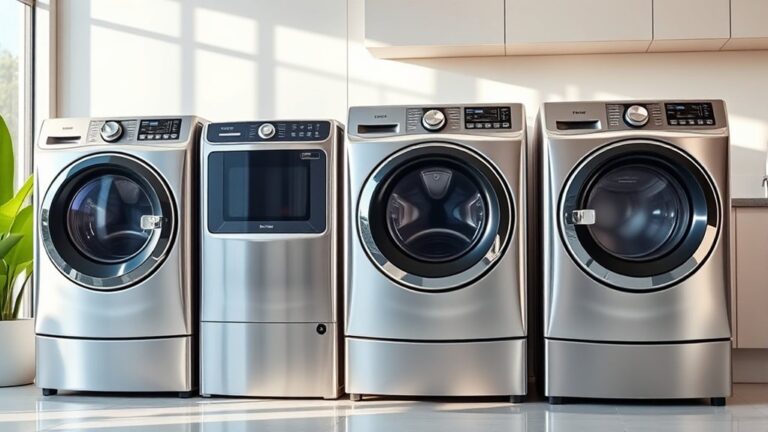

Top 10 Under Counter Washer and Dryer Units for 2027
Small laundry spaces can make it tough to find a washer and dryer that fit comfortably without sacrificing performance. You’re not alone—many people struggle to balance compact dimensions, useful capacity, quiet operation, and easy installation.
This guide to the top 10 under-counter washer and dryer units for 2027 compares compact dimensions, capacity, quiet operation, energy efficiency, installation needs, warranty coverage, and user reviews. You’ll find options for apartments, stackable layouts, high-capacity loads, budget-conscious shoppers, and premium custom remodels.
Prioritize front-load designs, sensor cycles, heat-pump drying, vibration control, and smart alerts when useful. Check cabinet clearance, door swing, hoses, ventilation, and service access before buying.
The full guide helps you match each category to your space and budget.
Key Takeaways
- Compare compact dimensions, capacity, venting, door clearance, and installation requirements to ensure each unit fits under standard counters.
- Prioritize Energy Star efficiency, load sensing, sensor drying, and high-spin performance to reduce water, electricity, and drying times.
- Choose quiet models with brushless motors, insulated cabinets, balanced drums, and vibration control for kitchens and open-plan living spaces.
- Evaluate essential features including steam refresh, automatic detergent dispensing, app alerts, reversible doors, and fabric-specific cycles.
- Verify warranty coverage, service availability, replacement-part costs, maintenance needs, and long-term reliability before purchasing.
How We Chose These Under-Counter Units

We chose these under-counter washer and dryer units based on dimensions, capacity, performance, noise levels, energy efficiency, installation requirements, and user reviews.
You’ll see that each evaluation criterion reflects real concerns in compact laundry spaces. We compared cabinet measurements with standard under-counter clearances, then checked whether stated capacities matched practical household needs.
We reviewed cycle options, drying results, temperature control, and fabric-care settings without favoring any particular brand. Noise testing helped us identify models suitable for kitchens, bedrooms, and open-plan apartments.
We also examined water and electricity use, required ventilation, drainage, outlet placement, and access for servicing. User reviews helped reveal recurring strengths, complaints, and long-term reliability concerns.
We noted innovative features only when they offered useful benefits rather than adding complexity. Finally, we assessed displays, labeling, and user friendly controls, asking whether you could select, monitor, and adjust cycles easily.
This method keeps our comparisons consistent, practical, and focused on everyday installation and operation.
Best Overall Under-Counter Washer Dryer
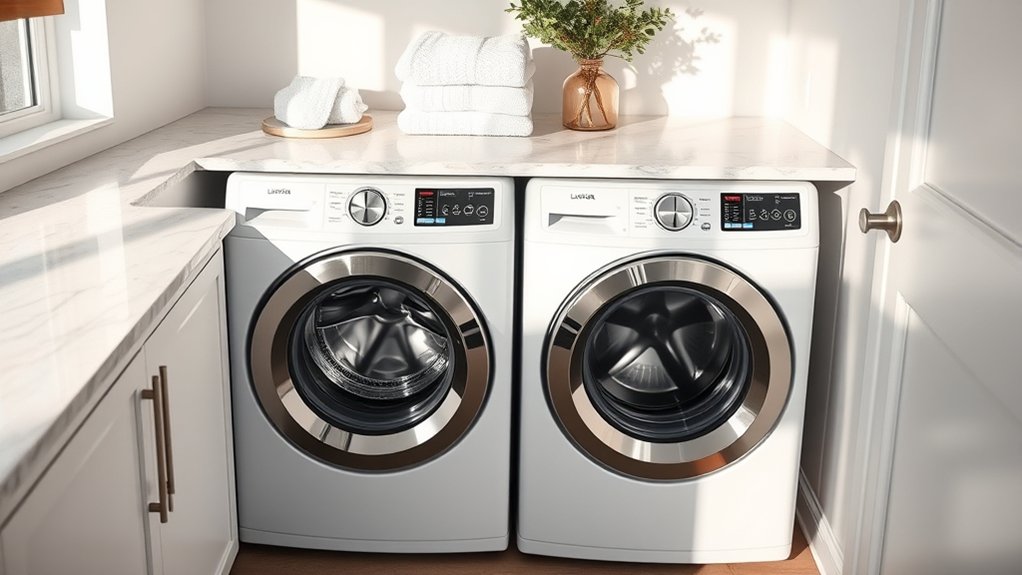
The best overall under-counter washer dryer balances compact dimensions with dependable cleaning, efficient drying, quiet operation, and straightforward installation. You’ll appreciate a model that handles everyday loads without demanding constant adjustments or specialized maintenance.
Look for intuitive controls, responsive sensors, and cycles that match fabrics, soil levels, and drying needs. Innovative features such as automatic detergent dispensing, moisture detection, steam refresh, and app alerts can simplify laundry while helping you avoid wasted water and energy.
Smart controls, responsive sensors, and specialized cycles simplify laundry while improving efficiency and protecting fabrics.
Brand reputation also matters. Established manufacturers typically provide stronger warranties, accessible parts, clearer documentation, and more reliable customer support.
Before you buy, confirm the unit’s venting requirements, electrical specifications, door clearance, and installation method. A reversible door, vibration control, and a durable stainless-steel drum can further improve daily usability.
Choose the washer dryer that delivers balanced performance across washing, rinsing, spinning, and drying rather than excelling in only one stage. That dependable versatility makes it the strongest all-around choice for your home.
Best Compact Unit for Small Apartments

For a small apartment, choose a compact unit that fits neatly under the counter. Its space-saving design helps preserve valuable room without sacrificing cleaning power. Plus, its quiet performance is ideal for close living quarters.
Space-Saving Dimensions
When every inch matters, a compact under-counter washer and dryer can give your apartment full laundry functionality without overwhelming the room. Look for a unit measuring about 24 inches wide, 24 inches deep, and 33 to 34 inches high, so it can slide beneath a standard countertop.
Measure your opening carefully, allowing extra space for hoses, ventilation, door clearance, and easy servicing. A front-loading design lets you stack storage above it or place a slim shelf nearby, while a reversible door can simplify access in tight layouts.
Choose a model with Smart technology to monitor cycles from your phone and prevent unnecessary trips. Prioritize eco-friendly materials and efficient water use, too. You’ll gain practical capacity without sacrificing valuable cabinet, walkway, or living space in your apartment.
Quiet Washing Performance
How quiet is your washer during a spin cycle? In a small apartment, you’ll appreciate a compact unit engineered for peaceful performance. Look for a model with insulated panels, a brushless motor, and variable-speed operation.
These features support effective noise mitigation, so you can run laundry while working, sleeping, or relaxing nearby. Balanced drums and sturdy leveling feet provide vibration reduction, preventing the machine from rattling cabinets or disturbing neighbors below.
You’ll also benefit from a gentle ramp-up and ramp-down during spinning, which limits sudden bursts of sound. Check the manufacturer’s decibel rating, but keep in mind that installation matters.
Level the appliance carefully and leave the recommended clearance around it. With the right setup, your under-counter washer delivers clean clothes without turning your apartment into a laundry room soundtrack.
Best Stackable Washer-Dryer Pair
A best stackable washer-dryer pair gives you full-size cleaning performance while preserving valuable floor space beneath the counter. Choose a matched set designed for secure vertical installation, so you’ll gain storage without sacrificing dependable access or stability. Measure your alcove carefully, then confirm the washer, dryer, stacking kit, door swing, and venting requirements before buying.
Look for front-load models with coordinated controls and a reversible dryer door. Their aligned drums make transferring clothes simple, while adjustable feet help you level the pair on uneven flooring.
Innovative technology, such as load-sensing cycles, steam options, and app-based diagnostics, can make daily laundry easier without complicating operation. Select a compact design with clear displays and reachable dispensers, especially if you’ll install the washer beneath a counter.
Eco-friendly materials can improve durability and reduce replacement waste. With the correct kit and professional installation, you’ll create a tidy, space-conscious laundry station that fits neatly into your 2027 home.
Best Energy-Saving Under-Counter Unit
To choose the best energy-saving under-counter unit, compare its energy-efficiency rating before buying. Look for low-consumption wash cycles that clean effectively while using less electricity and water. This can help lower your utility bills without sacrificing everyday performance.
Energy Efficiency Ratings
When energy savings matter, choose an under-counter washer and dryer with high Energy Star ratings and efficient cycle options. Check each model’s certified annual energy use rather than relying on marketing claims.
A lower figure generally means less power consumption and smaller utility bills over the appliance’s life. Compare these details before you buy:
- Energy Star certification: Confirms the unit meets current efficiency standards.
- Annual kilowatt-hours: Estimates electricity use under standardized testing.
- Water factor: Shows how efficiently the washer uses water, which also affects heating costs.
Read the yellow EnergyGuide label, if provided, and compare matching capacities. You’ll also want a model with automatic load sensing, which can prevent unnecessary resource use.
Review rebates, warranty coverage, and installation requirements to calculate your true long-term value. Avoid choosing solely by purchase price.
Low-Consumption Wash Cycles
Low-consumption wash cycles reduce water and electricity use without sacrificing everyday cleaning performance. When you choose an under-counter washer with an Eco mode, you’ll typically get slower tumbling, cooler temperatures, and extended soaking that lift everyday soils efficiently.
These settings help you lower utility costs while supporting Water conservation, especially when you run full loads instead of several partial ones.
For stronger results, pretreat stains and measure Eco friendly detergents carefully. Excess soap can require additional rinses and cancel out your savings.
Look for adjustable cycle lengths, automatic load sensing, and high-speed spin options, which remove more moisture before drying. You’ll then spend less energy in the dryer.
A delay-start feature can also let you schedule washing during off-peak hours. Choose a machine that displays estimated water and energy use so you can track your household’s progress.
Best Quiet Unit for Kitchens
The best quiet under-counter washer and dryer for a kitchen combines sound-dampening insulation, stable spin cycles, and vibration control to keep laundry noise unobtrusive. Choose a model with a low-decibel wash rating, balanced drum, and insulated cabinet, so you can cook, work, or relax nearby without constant humming.
A quiet under-counter washer and dryer blends sound-dampening insulation, balanced spinning, and vibration control for peaceful kitchen living.
For effective noise reduction, prioritize these features:
- Brushless motors generally operate more quietly and efficiently than conventional designs.
- Adjustable leveling feet help you stabilize the appliance and limit rattling on hard floors.
- A gentle closing door and well-sealed panels reduce clicks, resonance, and escaping mechanical sound.
You’ll also appreciate installation ease when the unit includes clear leveling guidance, front-access controls, and connections positioned for a tight cabinet fit. Before buying, measure the enclosure and check ventilation requirements, because cramped placement can amplify vibration.
Run the appliance during your normal kitchen hours to judge its real-world sound profile. A quiet unit should fade into the background rather than compete with conversation, music, or meal preparation, even during the final spin.
Best High-Capacity Compact Washer Dryer
If kitchen noise isn’t your main concern, a high-capacity compact washer dryer can handle larger loads without taking up full-size floor space. Look for a model offering at least 2.4 cubic feet, so you can wash towels, bedding, and weekly clothing with fewer cycles. Strong drum movement and adaptable drying sensors help manage bulky loads without over-drying fabrics.
| Feature | Why It Matters |
|---|---|
| 2.4–2.8 cu. ft. capacity | Fits more laundry in limited space |
| Sensor drying | Stops heat when clothes reach dryness |
| Wash cycle technology | Adjusts time, temperature, and tumbling |
You’ll benefit from Laundry automation when the unit weighs each load, dispenses detergent, and selects suitable settings automatically. A ventless heat-pump dryer can simplify installation, though drying may take longer than washing.
Check door clearance, stacked dimensions, and electrical requirements before buying. Choose a stainless-steel drum and a sturdy suspension system for dependable performance under frequent use.
If you regularly wash oversized items, verify the manufacturer’s recommended load size rather than relying only on advertised capacity. This approach helps you match compact dimensions with genuinely useful cleaning power.
Best Budget-Friendly Laundry Unit
A budget-friendly laundry unit should keep purchase and operating costs manageable without sacrificing essential cleaning performance. For your under-counter space, choose a compact washer-dryer with straightforward controls, efficient cycles, and a capacity that matches your weekly loads. You’ll save more by comparing total ownership costs, not just the shelf price.
- Check efficiency: Look for low water use, sensible energy ratings, and shorter cycles that won’t inflate utility bills.
- Verify installation: Confirm dimensions, venting requirements, hookups, door clearance, and whether delivery or stacking hardware costs extra.
- Review protection: Compare warranty coverage, service availability, and replacement-part pricing before you buy.
Useful maintenance tips include cleaning the lint filter after every drying cycle, wiping the detergent drawer monthly, and inspecting hoses for bulges or leaks. Avoid overloading, since crowded drums clean poorly and strain components.
A basic model may offer fewer programs, but dependable performance and accessible controls can matter more than app features. Choose a reputable brand with responsive support, and you’ll gain practical value without stretching your remodel budget.
For a premium custom remodel, choose a washer and dryer that blend seamlessly with your luxury design. Look for sleek finishes, integrated controls, and dimensions that align with your custom cabinetry. That way, you get a polished look without sacrificing convenient access to your laundry.
Luxury Design Integration
Luxury under-counter washer and dryer units bring appliance performance into the overall design rather than making it an afterthought. For your premium remodel, choose a model that looks refined while delivering quiet, capable cleaning.
Luxury finishes, including brushed metal, glass, or richly colored panels, can raise the laundry zone and coordinate with surrounding décor. Smart technology adds convenience through remote controls, cycle alerts, energy monitoring, and automatic detergent dispensing.
Evaluate these three design priorities:
- Visual restraint: Select streamlined controls, concealed hardware, and a clean front profile.
- Tactile quality: Look for solid-feeling doors, responsive interfaces, and smooth, durable surfaces.
- Atmosphere: Prioritize low vibration and quiet operation so the appliance won’t disrupt nearby living spaces.
You’ll create a polished, furniture-like experience without sacrificing wash performance, drying precision, or everyday usability in your custom remodel.
Custom Cabinet Compatibility
Custom cabinet compatibility should guide your premium under-counter washer and dryer selection, because the right units will fit cleanly without compromising storage, ventilation, or access.
Measure your niche carefully, including width, depth, height, door swing, hose clearance, and ventilation requirements. Choose models with adjustable feet, reversible doors, and front service access so you can align them with custom panels and surrounding drawers.
Confirm that the cabinetry can support the required airflow and tolerate humidity, especially beneath countertops.
Smart technology can improve convenience through remote cycle control, leak alerts, and maintenance notifications, but confirm that your network works reliably in the installation area.
Ask your remodeler to coordinate plumbing, electrical outlets, and trim details before delivery.
Follow the manufacturer’s maintenance tips to protect finishes, prevent odors, and preserve efficient operation for years.
Choose by Space, Capacity, and Budget
Choose an under-counter washer and dryer by measuring your available width, depth, and height first. Then match the pair’s capacity to your laundry habits and budget.
Leave clearance for ventilation, hoses, door swing, and leveling. A tight fit can hinder performance and future repairs.
Allow space for ventilation, hoses, door swing, and leveling to support reliable performance and easier future repairs.
- Space: Compact 24-inch models suit apartments and narrow kitchens, while 27-inch pairs offer more room but require wider cabinetry. Confirm ventless or vented requirements before buying.
- Capacity: Choose a smaller drum for one or two people, or a larger washer if you frequently wash bedding, towels, or children’s clothing. The dryer should handle each load without overfilling.
- Budget: Compare the purchase price, installation, energy use, and expected service costs. A higher-efficiency model may save money over time, but verify available rebates and installation fees.
Review maintenance tips before committing, including filter cleaning and hose inspection. Also compare warranty coverage, especially for the motor, drum, controls, and labor.
Choose reliable features over unnecessary extras.
Frequently Asked Questions
Can Under-Counter Washer-Dryer Units Be Installed Beneath Standard Kitchen Countertops?
Yes, you can install an under-counter washer-dryer beneath standard kitchen countertops, provided the unit’s height, width, depth, ventilation, plumbing, and electrical requirements fit your space.
You’ll typically remove the appliance’s top panel or choose a purpose-built integrated model for proper clearance. Check countertop support and door swing before installation.
Luxury features, such as quiet operation and steam cycles, add convenience, while energy efficiency helps reduce water and electricity costs over time.
Do Under-Counter Laundry Units Require Special Plumbing or Electrical Connections?
Yes, you’ll need to check specific plumbing requirements and electrical specifications before installation. Most units connect to standard hot and cold water lines, a drain, and a grounded outlet, but compact models may require different fittings or dedicated circuits.
Don’t let hidden details trip you up: verify voltage, amperage, outlet location, drain height, and water pressure in the manufacturer’s guide. You should also hire a licensed professional when local codes or ventilation requirements apply.
How Often Should Under-Counter Washer-Dryer Filters and Vents Be Cleaned?
You should clean your under-counter washer-dryer’s lint filter after every drying cycle and inspect its vent monthly. Clean the vent thoroughly every six to twelve months, or sooner if drying takes longer, clothes feel hot, or airflow weakens.
Check the washer’s pump filter every one to three months, removing debris and buildup. Your maintenance routine should include checking hoses and seals.
Follow the manufacturer’s schedule for filter replacement and professional vent servicing.
Can These Washer-Dryer Units Be Repaired Without Removing Surrounding Cabinets?
Yes, you can often repair these washer-dryer units without removing surrounding cabinets. A cramped space can feel narrower than a needle’s eye!
Technicians may access filters, pumps, belts, hoses, controls, and vents through the front, toe-kick, or removable panels.
However, major drum, motor, or bearing repairs might require sliding the unit out. Check installation clearances before service.
Easy access lowers maintenance costs, while efficient servicing can preserve energy efficiency and prevent worsening damage.
What Warranty Coverage Is Typically Included With Under-Counter Washer-Dryer Units?
You’ll typically get a one-year limited warranty covering parts and labor for manufacturing defects, while sealed-system components, motors, or drums may receive longer coverage, often five to ten years.
You’ll usually pay for service visits, installation issues, cosmetic damage, blockages, and improper use. Check whether coverage includes cabinet removal, since access can affect repairs.
Also review exclusions involving energy efficiency, noise levels, water connections, and required maintenance. Register your unit promptly to activate coverage.
Conclusion
Choosing the right under-counter washer and dryer comes down to your space, laundry habits, and budget. Measure carefully, compare capacity and installation requirements, and prioritize efficiency if you’ll run frequent loads.
Whether you need a budget-friendly compact unit or a premium setup for a custom remodel, you’ve got practical options for 2027. Choose the under-counter washer and dryer setup that fits your home, not just the latest trend, and turn even the smallest laundry area into a powerhouse.