7 Benefits of an Induction Stove and Oven
Many people struggle with slow cooking, uneven results, messy cleanup, and too much heat in the kitchen. You’re not alone—an induction stove and oven can help solve these everyday frustrations while making cooking more efficient and enjoyable.
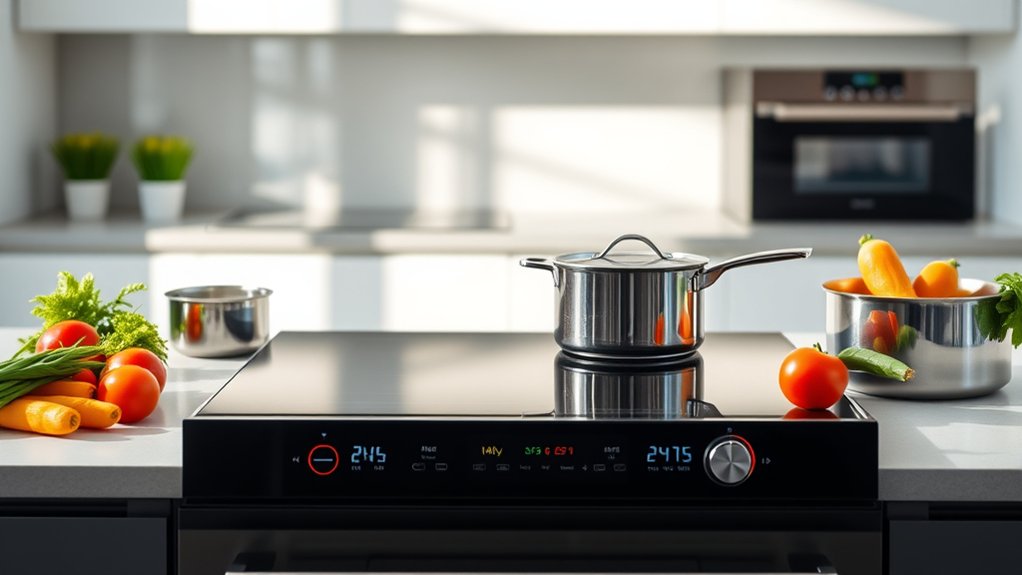
An induction stove and oven helps you cook meals faster while giving you precise temperature control for reliable results. You’ll use less energy because heat transfers directly to compatible cookware, and the surface stays cooler for improved kitchen safety.
Cleanup is easier because spills are less likely to bake onto the cooktop.
You’ll also reduce kitchen heat and enjoy versatile modes such as convection, broiling, air-frying, proofing, warming, and dehydrating. Keep exploring to find out how these benefits simplify everyday cooking.
Key Takeaways
- Faster cooking with direct heat transfer, boiling water quickly and reducing preheating time.
- Precise temperature control supports consistent simmering, melting, baking, roasting, and searing.
- Greater energy efficiency minimizes heat loss, lowers electricity use, and reduces kitchen heat.
- Enhanced safety includes cooler surfaces, automatic shutoff, no open flames, and child-lock controls.
- Smooth cooktops simplify cleanup while versatile modes support broiling, convection cooking, air-frying, proofing, and dehydrating.
Cook Meals Faster With an Induction Stove
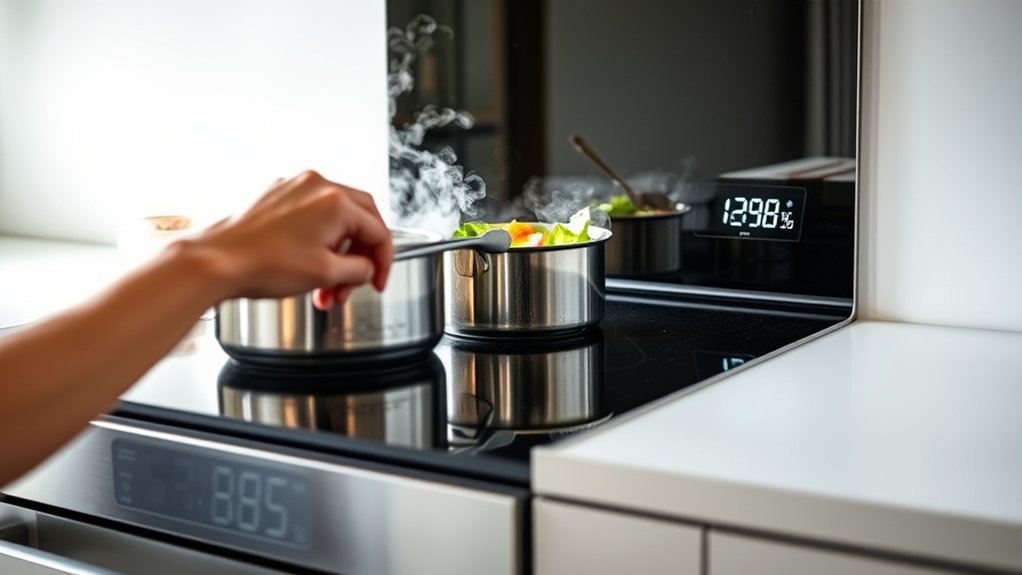
Induction stoves cook meals faster by transferring heat directly to your cookware instead of warming a burner first. You’ll notice the difference when you boil water, sauté vegetables, or sear meat. Energy reaches the pan immediately, so you spend less time waiting for cooking to begin and more time serving your food.
This speed can simplify your routine, especially on busy weeknights. You can start pasta water while completing ingredient preparation, then move efficiently from chopping to cooking without long pauses.
Because the pan heats quickly, you’ll also finish multiple components closer together, helping you serve everything while it’s fresh.
Faster cooking supports better meal presentation, too. Vegetables retain appealing color, proteins reach the table sooner, and side dishes don’t sit as long before serving.
You can prepare a complete meal in less time while keeping your kitchen workflow organized. With induction, quick cooking becomes a practical advantage for everyday meals and planned gatherings alike.
Control Heat More Precisely
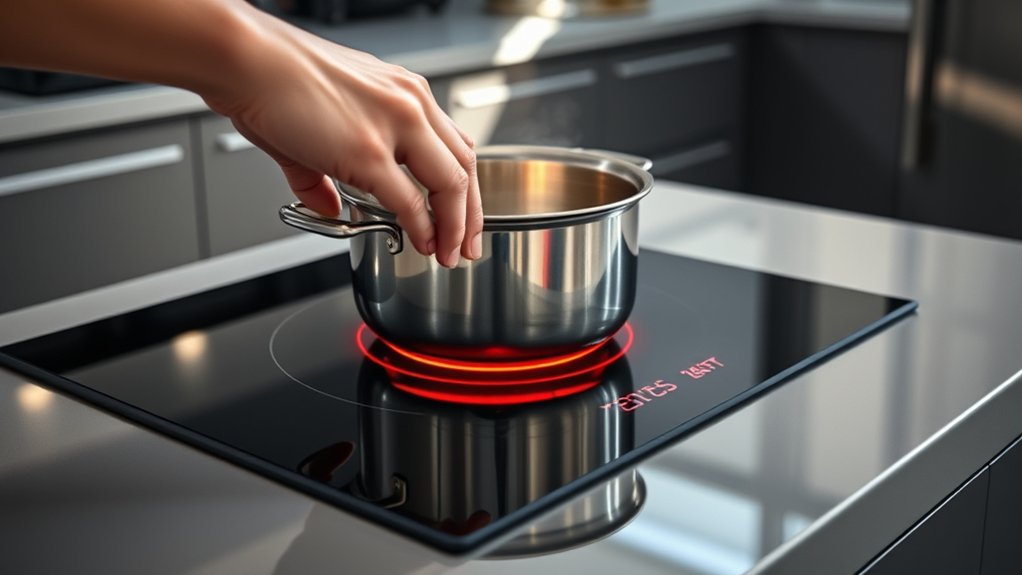
You can make precise temperature adjustments with an induction stove, giving you better control over every dish. Because the heat responds instantly, you can raise or lower the temperature without delay. As a result, you’ll cook more consistently and avoid scorching or undercooking.
Precise Temperature Adjustments
When you need exact heat control, an induction cooktop lets you adjust the temperature quickly and consistently. You can select a specific setting instead of guessing with broad low, medium, or high levels.
This precision helps you simmer sauces without scorching, melt chocolate smoothly, and maintain steady temperatures for delicate recipes. Temperature calibration keeps the selected setting reliable, so you can repeat successful results with less trial and error.
Even heat distribution across compatible cookware supports consistent cooking from edge to edge, helping you avoid hot spots and uneven browning. You’ll also find it easier to follow recipes that call for precise temperatures, whether you’re reducing a sauce or gently warming ingredients.
With clear controls and predictable settings, you stay in charge of each cooking stage and can fine-tune results confidently.
Instant Heat Response
With an induction cooktop, heat responds almost instantly when you adjust the controls, giving you precise command over every cooking stage. Turn the setting down, and your pan cools quickly, helping you prevent scorching, boiling over, or overcooking delicate foods.
Turn it up, and you’ll reach a simmer or sear without waiting for a traditional burner to transfer heat. This responsiveness lets you manage sauces, chocolate, and temperature-sensitive recipes with greater confidence.
You also waste less heat because the cooktop transfers energy directly to compatible cookware, supporting Energy efficiency while keeping your kitchen cooler. Faster adjustments improve Kitchen safety, too, so you can react promptly to spills, unexpected flare-ups, or unattended pans.
With this precise control, you’ll cook more consistently and feel more confident every day.
Waste Less Energy While Cooking
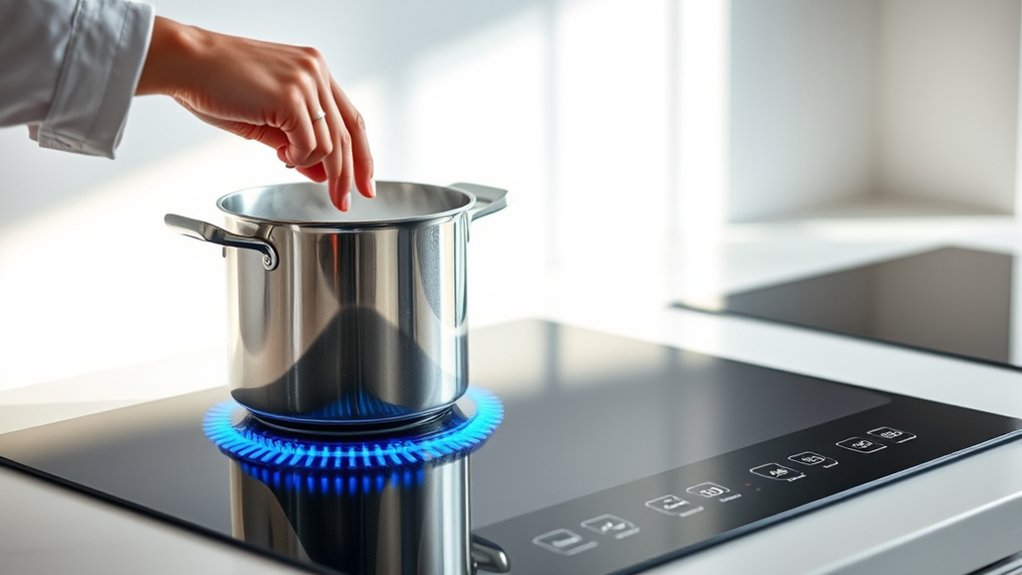
Induction cooking wastes less energy by transferring heat directly to the cookware instead of heating the surrounding air. You’ll notice less wasted heat escaping around your pots and pans, so more electricity goes toward preparing your meal.
Induction directs energy straight to your cookware, reducing wasted heat and making everyday cooking more efficient.
This direct transfer helps water boil faster and lets you cook efficiently at lower settings once your food reaches the desired temperature.
Because induction responds quickly to temperature changes, you can reduce power immediately when a recipe calls for gentle simmering.
The cooktop also stops generating heat as soon as you remove compatible cookware, preventing energy loss during interruptions. Unlike traditional electric elements, it doesn’t need to stay hot for long periods before or after cooking.
These small efficiencies can lower your household energy use over time. If you’re pursuing Energy conservation, choosing induction supports practical, eco friendly cooking without changing your favorite recipes.
Match your pan size to the cooking zone and use lids when appropriate to conserve even more energy during everyday meals.
Improve Kitchen Safety With Induction
Induction cooking can help reduce burn risks because it heats the cookware rather than the surrounding surface. Nearby areas stay cooler too, making it safer to move around your kitchen. And if you accidentally leave the stove unattended, its automatic safety shutoff provides an extra layer of protection.
Reduced Burn Risk
How often do you worry about burns from a hot cooktop? Induction helps reduce that risk because it heats compatible cookware directly instead of using an exposed flame or glowing heating element.
When you remove the pan, cooking stops, which can help prevent accidental burns during busy meal preparation.
- You’ll avoid open flames, reducing the chance of clothing or towels catching fire.
- You can respond quickly by lifting the cookware away from the cooking zone.
- You’ll gain better child safety, especially when children help in the kitchen.
- You can use clear controls and safety locks to limit unintended operation.
Induction cooking still requires care: cookware and its contents can remain hot, and you should supervise children.
Use oven mitts, keep handles turned inward, and follow your appliance’s safety instructions. These habits strengthen your kitchen’s protection.
Cooler Surrounding Surfaces
Because induction heats the cookware rather than the surrounding cooktop, nearby surfaces generally stay cooler during cooking. You’ll notice less heat spreading across the cooking area, which helps protect adjacent counter space, control panels, and nearby utensils.
Since the cooktop transfers energy directly into compatible pans, it produces fewer residual hot spots around the active cookware than traditional electric or gas methods.
These cooler surfaces can make meal preparation more comfortable, especially when you need to reach for ingredients or use nearby controls. A lower surface temperature also helps reduce the chance of accidentally touching a dangerously hot area beside the pan.
However, you should still treat the cookware and the glass surface beneath it as hot during and after cooking. Keep towels, packaging, and other heat-sensitive items away from the cooking zone.
Automatic Safety Shutoff
If a pan is left empty or removed from the cooking zone, an induction cooktop can automatically shut off the heat. This helps prevent overheating and unattended-cooking accidents.
This automatic shutoff gives you extra protection when distractions arise or cooking finishes unexpectedly.
- Prevent dry heating: The cooktop detects an unsuitable or empty pan and stops supplying energy. This protects cookware and reduces fire risks.
- Limit unattended cooking: If you walk away, the burner won’t continue heating indefinitely after you remove the pan.
- Support child safety: Children may touch controls or move cookware, but automatic shutoff helps limit dangerous heat exposure.
- Add peace of mind: Many models also stop after extended operation or detect overheating. This gives you another layer of kitchen protection.
You’ll still need to use the lock function, supervise cooking, and follow safety instructions. However, this feature makes daily meals safer.
Clean Up Induction Cooking More Easily
Induction cooking makes cleanup easier because the cooktop stays relatively cool, so spills don’t bake onto the surface. Once you finish cooking, let the surface cool briefly, then wipe it with a damp microfiber cloth. You’ll remove grease, sauce, and crumbs before they harden.
Use these simple Cleaning techniques for a polished finish:
| Mess | Quick response |
|---|---|
| Fresh spill | Wipe with a damp cloth |
| Dried residue | Loosen with a cooktop scraper |
For stubborn marks, apply a small amount of manufacturer-approved cooktop cleaner and buff gently. Avoid abrasive powders, steel wool, and rough scrubbers because they can scratch the glass.
Lift pans instead of sliding them, since grit beneath cookware may leave scuffs. Keep the control panel dry, and don’t spray cleaner directly onto it.
Regular Maintenance tips include wiping after each use, checking the surface for cracks, and cleaning the edges where crumbs collect. Store cookware carefully, and use flat-bottomed pans to reduce residue and prevent scratches.
With these habits, you’ll spend less time scrubbing and keep your induction range looking sleek.
Reduce Heat in the Kitchen
Beyond simpler cleanup, an induction stove can reduce heat in your kitchen. It transfers energy directly to compatible cookware, so less heat escapes around the pan.
As a result, your room may feel more comfortable while you prepare meals, especially during warm weather. You’ll also spend less energy cooling the space afterward.
- Limit radiant heat: The cooktop surface stays cooler than traditional electric or gas burners, reducing heat released into your kitchen.
- Improve comfort: You won’t stand over strong flames or glowing elements, so cooking feels less intense.
- Support air circulation: Keep doors or windows open when practical to move lingering warmth outside.
- Plan ventilation improvement: Use your range hood during cooking to capture steam, odors, and remaining heat before they spread.
Because induction heats cookware efficiently, you can maintain a more pleasant indoor temperature without sacrificing everyday cooking control.
You’ll appreciate the difference when preparing multiple dishes or cooking for guests. Less ambient heat also helps your cooling system work less, which may support lower household energy use.
Use Versatile Induction Oven Cooking Modes
Modern induction ovens give you flexible cooking modes for roasting, baking, broiling, convection cooking, and more. You can match heat distribution and intensity to each recipe, improving results while simplifying meal preparation.
This cooking versatility helps you crisp vegetables, brown casseroles, or bake delicate pastries without switching appliances. With precise mode selection, you’ll choose the setting that suits your food and schedule.
| Mode | Best use |
|---|---|
| Convection | Even baking and roasting |
| Broil | Fast browning and crisping |
Convection circulates hot air around your dish, so you’ll often cook faster and more evenly. Roast meats with steady heat, bake multiple trays with fewer hot spots, or use broil mode to finish cheese and create a golden crust.
Many models also offer proofing, warming, air-frying, and dehydrating settings. You won’t need specialized countertop equipment for every task.
Check your oven’s instructions, adjust temperatures for convection when needed, and monitor unfamiliar recipes until you learn how each mode performs.
This flexibility lets you prepare varied meals confidently, from weekday dinners to elaborate weekend baking projects.
Frequently Asked Questions
Can Induction Cookware Work on Any Type of Stovetop?
No, induction cookware won’t work on every stovetop. You need to take into account cookware compatibility and material requirements.
Your cookware must contain a magnetic metal, such as cast iron or magnetic stainless steel, to heat on induction. However, that same cookware generally works on gas and electric stoves, too.
Check for an induction symbol or test the base with a magnet. Aluminum, copper, glass, and nonmagnetic stainless steel won’t work alone.
How Much Does an Induction Stove Typically Cost to Install?
You’ll typically pay $500–$2,000 to install an induction stove, though costs can rise to $3,000 if you need a new 240-volt circuit or electrical panel upgrade. Nearly all induction ranges require 240 volts, making electrical work the biggest variable.
During the installation process, an electrician checks the wiring, installs the outlet, and tests the appliance. For a useful cost comparison, replacing an existing electric range usually costs less than converting from gas or adding new circuitry.
Does Induction Cooking Require Special Electrical Wiring?
Usually, you’ll need a dedicated 240-volt circuit for a full-size induction range, similar to an electric stove. Your existing wiring may work if it supports the appliance’s amperage, but an electrician should verify wiring compatibility, breaker capacity, outlet type, and grounding.
Smaller portable induction cooktops often use a standard 120-volt outlet. For electrical safety, don’t use extension cords, overloaded circuits, or improper adapters.
Hire a licensed professional when upgrades are necessary.
What Maintenance Does an Induction Stove and Oven Require?
You won’t need complicated maintenance for an induction stove and oven. The theory that induction appliances demand constant servicing doesn’t hold up: you mainly wipe the smooth cooktop after spills and clean the oven according to its manual.
Check seals, racks, and ventilation periodically, and replace damaged cookware or cords promptly. Your Cleaning frequency depends on use, while Power consumption requires no special upkeep. Just keep vents clear for efficient operation and safe performance.
Are Induction Stoves Suitable for Households With Pacemakers?
Yes, you can often use an induction stove with a pacemaker, but you should confirm compatibility with your cardiologist and device manufacturer. Induction cooktops generate electromagnetic fields that may cause pacemaker interference, especially if you stand very close or use damaged equipment.
For magnetic field safety, keep your implanted device at least two feet from the active cooking zone, follow the manufacturer’s guidance, and stop using the cooktop if you notice symptoms.
Conclusion
With an induction stove and oven, your kitchen becomes a well-run ship. Meals reach the table faster, while precise controls steer heat exactly where you need it.
Energy stays aboard instead of drifting away, and cooler surfaces help keep your crew safe. Cleanup takes less effort, and versatile oven modes let you chart new culinary courses.
Choose an induction stove and oven, and you’ll turn everyday cooking into a smoother voyage that saves time, reduces waste, and makes every meal feel thoughtfully prepared.