
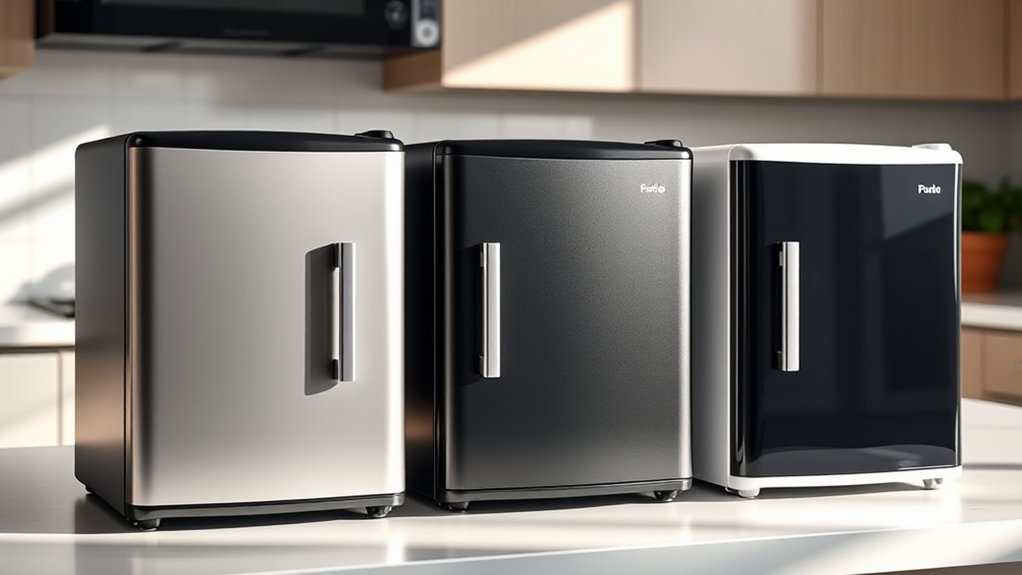
Top 3 4 Cu Ft Refrigerators for Compact Spaces
Finding the right refrigerator for a tight space can be frustrating, especially when you need useful storage without sacrificing room. You’re not alone—many people struggle to balance size, convenience, and performance. So this guide highlights the top 3–4 cu. ft. refrigerators for compact spaces.
For compact spaces, choose a 3–4 cu. ft. refrigerator with adjustable shelves, door bins, and a separate freezer compartment. Reversible doors help you fit the unit into dorm rooms, offices, studios, RVs, or guest rooms.
Prioritize energy-efficient models with quiet compressor ratings, easy-to-clean finishes, and enough clearance for ventilation and door opening. Measure your space carefully, including handles and hinges. Then compare shelf dimensions and freezer capacity to match your routine.
Keep comparing key details to find your best fit.
Key Takeaways
- Compare the top three 4-cu.-ft. refrigerators by storage layout, adjustable shelves, door bins, and freezer capacity.
- Verify dimensions, hinge and handle clearance, and ventilation space before choosing a model for your compact room.
- Prioritize reversible doors to accommodate dorm rooms, offices, studios, guest rooms, and other challenging layouts.
- Select energy-efficient, low-noise models to reduce operating costs and minimize disruption in quiet spaces.
- Match each refrigerator’s finish, controls, cleaning requirements, and storage capacity to your budget and daily routine.
Compare the Best 3–4 Cu. Ft. Refrigerators
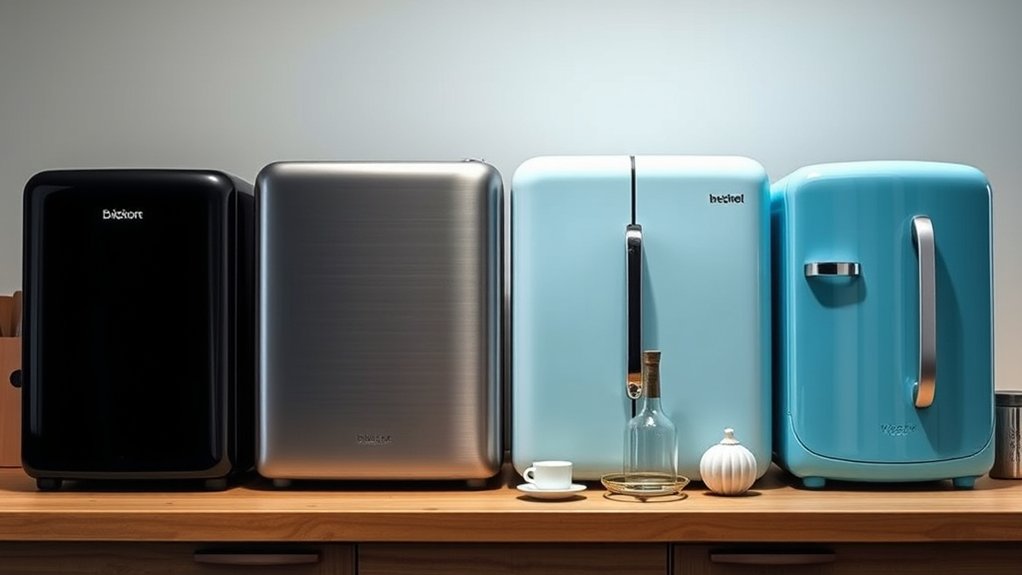
If you need more storage than a dorm-size unit but still want to conserve space, a 3–4 cu. ft. refrigerator offers a practical middle ground. You’ll find enough room for fresh groceries, drinks, and frozen essentials without overwhelming a compact kitchen, office, or apartment.
When you compare models, check the interior layout first. Adjustable shelves, door bins, and a separate freezer compartment help you organize food efficiently. Reversible doors can also simplify placement when every inch matters.
Prioritize adjustable storage, useful door bins, freezer space, and reversible doors for flexible organization in compact kitchens.
Look for energy efficiency ratings or low annual energy use to reduce operating costs over time. Your preferred finish matters, too. Stainless steel, black, and white options can complement your room, while a stylish design makes the appliance feel intentional rather than temporary.
Review temperature controls, noise ratings, and warranty coverage before choosing. A reliable compressor, easy-clean surfaces, and consistent cooling often matter more than extra features.
Measure your available floor and clearance space carefully so your selected refrigerator fits comfortably.
Best 3–4 Cu. Ft. Fridges by Use Case
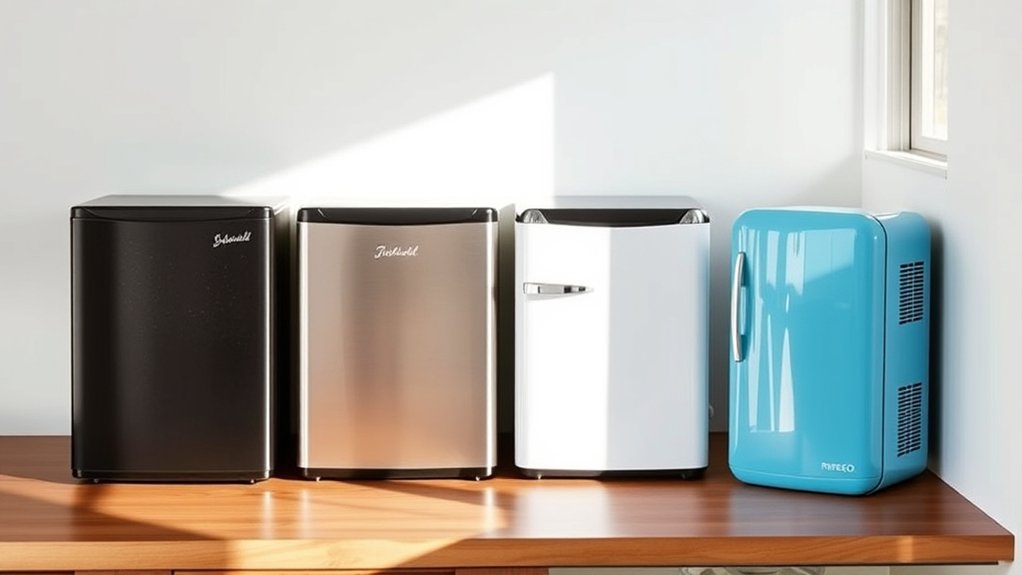
The best 3–4 cu. ft. refrigerator depends on where and how you’ll use it. For a dorm room, choose a straightforward model with adjustable shelves and a practical layout for drinks, snacks, and leftovers.
In a home office, a quiet, polished fridge with a dedicated can holder keeps refreshments organized without distracting from your work. If you’re furnishing a studio apartment, prioritize versatile storage and a finish that complements your kitchen.
For an RV or guest room, select a lightweight model with simple controls and dependable performance. A compact fridge for entertaining should offer accessible door storage and an easy-to-clean interior.
Consider design aesthetics, too. Stainless-look finishes suit modern spaces, while black or white models blend into classic décor. You’ll also save on operating costs when you choose strong energy efficiency.
Match the fridge’s features to your routine, budget, and preferred style. That way, you’ll get useful storage without paying for extras you won’t use.
Check Dimensions, Freezer Space, and Noise
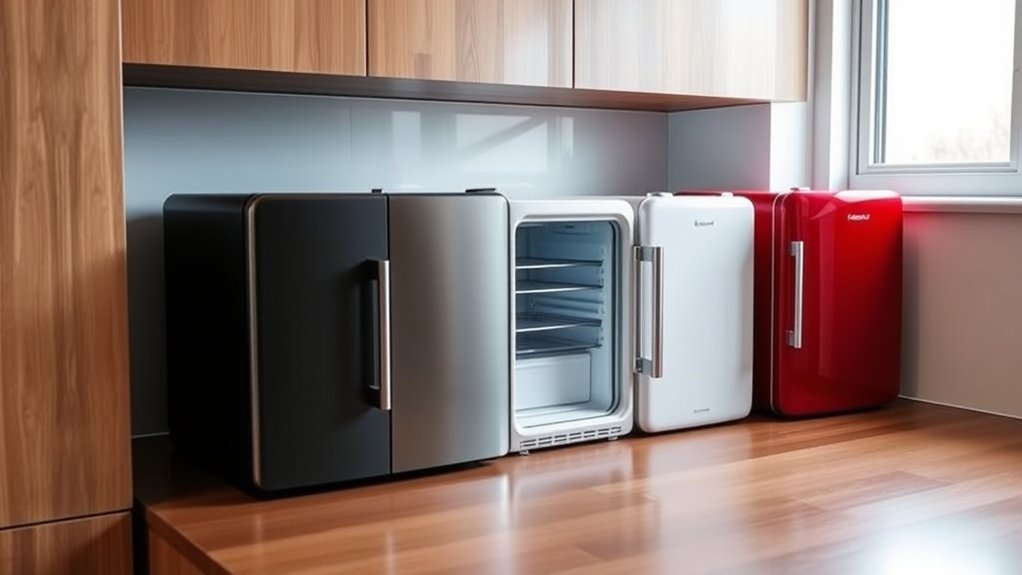
Before buying a compact refrigerator, measure its available space, including height, width, depth, and door clearance. Leave extra room around the unit for ventilation, and confirm the door can open fully without hitting walls, cabinets, or appliances. Compare the listed dimensions with your measurements, including hinges and handles.
Measure your space carefully, allow for ventilation and door clearance, and compare dimensions including hinges and handles.
Next, examine freezer space carefully. Some 4 cu. ft. models include a separate freezer compartment, while others offer only a small icebox. Decide whether you need room for frozen meals, ice cream, or ice trays, and check shelf and compartment dimensions rather than relying on capacity alone.
Noise matters in bedrooms, offices, and studio apartments. Look for a low-decibel rating, read user reviews, and listen for complaints about compressor cycling or rattling. Energy efficiency can reduce operating costs and heat output.
Finally, consider design aesthetics. Choose a finish, handle style, and layout that complement your space without sacrificing practical storage or easy cleaning.
Frequently Asked Questions
How Long Do Compact Refrigerators Typically Last?
You can typically expect a compact refrigerator to last about 10 years, though careful use may extend its life. You’ll get better results when you keep the coils clean, maintain proper airflow, and avoid overloading its storage capacity.
You should also monitor energy consumption, since rising electricity use can signal aging components. Frequent frost buildup, unusual noises, or inconsistent temperatures may indicate repairs are needed or that replacement offers better value for you.
Are Compact Refrigerators Energy Efficient?
Yes, compact refrigerators can be energy efficient. Imagine you place a modern 4-cubic-foot model in your dorm room and notice a lower electric bill than with an older mini-fridge.
Check the Energy Star label to compare energy consumption before buying. Choose an inverter compressor, adequate insulation, and adjustable temperature controls for additional power savings.
You’ll get the best efficiency by keeping vents clear, limiting door openings, and avoiding overcrowding, which helps air circulate.
Can Compact Refrigerators Be Transported on Their Sides?
Yes, you can transport compact refrigerators on their sides, but keep them upright whenever possible. Before moving yours, empty and defrost it, secure the doors, and wrap it carefully.
For essential Transportation tips, place the unit on its side only briefly, protect the compressor, and avoid rough handling. After arrival, stand it upright for several hours, ideally 24, before plugging it in.
Your Placement considerations include ventilation, level flooring, and clearance from heat sources.
How Should I Clean and Deodorize a Compact Refrigerator?
Unplug your compact refrigerator, remove all food, and take out shelves and drawers. Wash surfaces with warm water and mild dish soap, then rinse and dry thoroughly.
Wipe the door gasket and clean spills immediately. For stubborn odors, use a baking-soda solution; activated charcoal offers another deodorizer option.
Don’t use bleach or abrasive cleaners. Follow a weekly cleaning schedule for spills and monthly deep cleaning.
Leave the door open briefly before restocking.
What Warranty Coverage Is Available for Compact Refrigerators?
Warranty options for compact refrigerators typically include a one-year limited warranty covering defects in materials and workmanship. You’ll usually receive parts and labor coverage, while cosmetic damage, misuse, improper installation, and normal wear remain excluded.
Some manufacturers offer extended plans covering mechanical failures beyond the initial period. Review the coverage details before purchasing, confirm authorized service requirements, and keep your receipt.
Registering your refrigerator can also simplify future claims and support.
Conclusion
A 3–4 cu. ft. refrigerator can be a small anchor in a compact space, keeping your essentials organized without taking over the room. Choose the model that fits your routine: a freezer for frozen meals, quiet operation for shared spaces, or slimmer dimensions for tight corners.
Before you buy, measure carefully and compare usable storage—not just capacity. With the right 3–4 cu. ft. refrigerator, you’ll turn limited space into a cool, convenient haven that works every day.