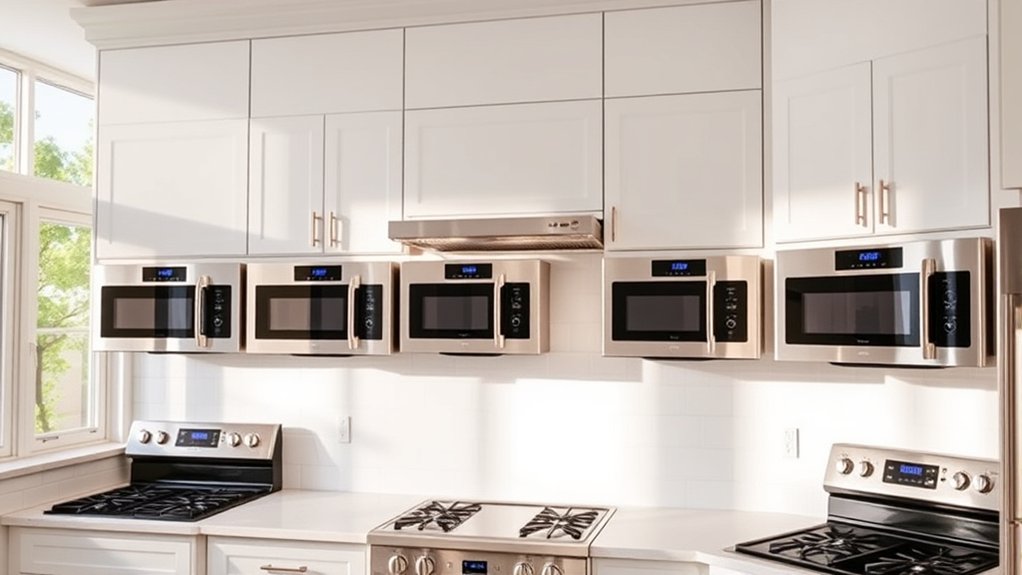
7 Best Above Range Microwaves With Exhaust Fans for 2027
Finding the right above-range microwave with a powerful exhaust fan can be frustrating, especially when you need reliable cooking performance without filling your kitchen with smoke and odors. You’re not alone—many people struggle to balance ventilation, capacity, noise, and easy installation in one appliance.
The 7 best above-range microwaves for 2027 should give you at least 1,000 watts, spacious cooking capacity, sensor controls, and a washable two-speed exhaust fan.
Prioritize strong CFM airflow, quiet operation, easy-clean interiors, bright lighting, and flexible upward, rear, or recirculating venting.
If you have a smart home, Wi-Fi and voice controls add convenience. Measure your cabinet opening, clearance, and duct path carefully before buying.
You’ll find the top picks and ideal match for your kitchen below.
Key Takeaways
- Choose a 30-inch over-the-range microwave with sufficient capacity for dinner plates, casseroles, and larger bowls.
- Prioritize exhaust fans rated around 300–400 CFM, washable filters, and flexible upward, rear, or recirculating venting.
- Look for at least 1,000 watts, sensor cooking, multiple power levels, inverter heating, and dependable turntable performance.
- Consider Wi-Fi connectivity, smartphone controls, voice-assistant compatibility, presets, and control-lock safety features.
- Compare noise ratings, interior lighting, easy-clean finishes, installation clearances, and durable stainless-steel construction.
Best Overall: Strong Cooking and Ventilation
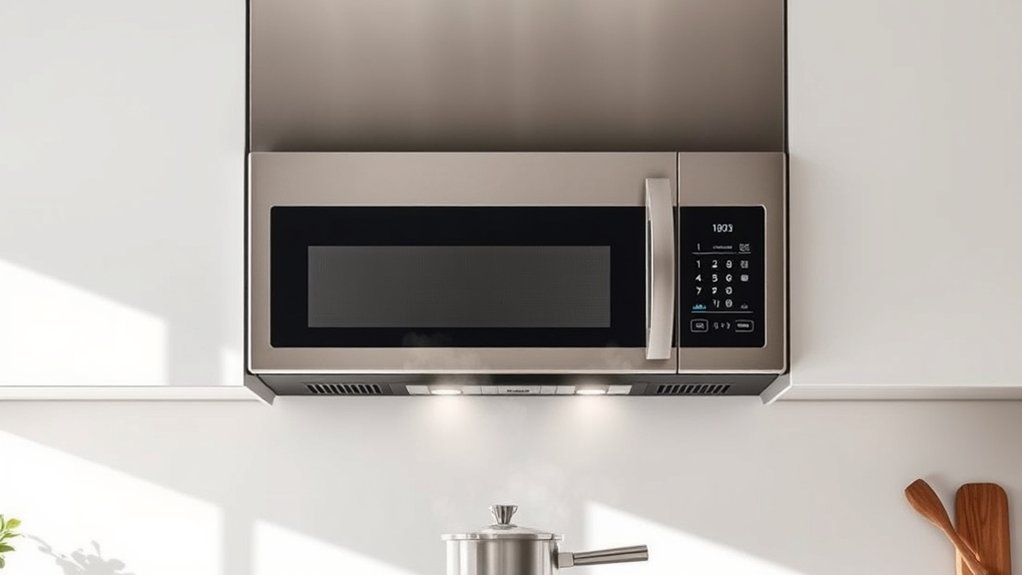
The best overall above-range microwave combines powerful cooking performance with effective ventilation, helping you prepare meals quickly while keeping smoke, steam, and odors under control. You’ll appreciate a spacious interior that handles dinner plates, casseroles, and larger serving bowls without crowding.
Sensor cooking adjusts time and power automatically, reducing guesswork and helping prevent overcooked edges or cold centers. Multiple power levels, quick-start controls, and a dependable turntable add practical cooking versatility for everyday meals, reheating, and defrosting.
A strong exhaust fan matters just as much. Look for multiple fan speeds and a washable filter that captures grease efficiently while venting kitchen air. Bright cooktop lighting improves visibility beneath the unit, too.
Quiet operation keeps conversations comfortable when the fan runs during cooking. Finally, consider the microwave’s finish and control layout. Clean lines, readable buttons, and a coordinated exterior contribute to aesthetic appeal, allowing this capable appliance to blend naturally with your kitchen instead of dominating it.
It should also offer durable construction and intuitive settings that make daily use feel effortless.
Best Budget Pick: Reliable Essentials
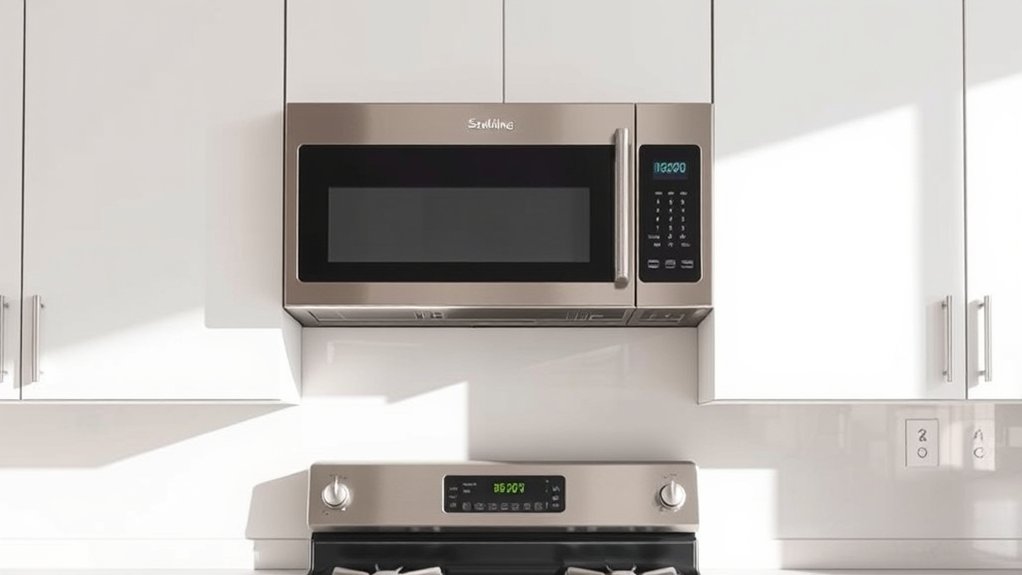
A budget-friendly above-range microwave can still deliver reliable everyday cooking and ventilation without unnecessary extras. You’ll get practical presets, a turntable, useful capacity, and a vent fan that clears routine steam and odors.
Choose a model with accessible controls and a durable stainless-steel or painted finish to support your kitchen aesthetics without inflating the price.
| Feature | What to seek |
|---|---|
| Cooking | Sensor reheating and clear presets |
| Ventilation | Two-speed fan with washable filter |
| Installation | Standard width and simple mounting |
| Efficiency | LED lighting and energy efficiency |
Before buying, measure your cabinet opening, outlet location, and backsplash height. Confirm the microwave’s depth won’t interfere with your cooking space or cabinet doors.
A straightforward control panel helps you cook quickly, while a removable filter simplifies maintenance. You don’t need specialty programs if you mainly reheat leftovers, cook frozen meals, and soften ingredients.
Compare warranty coverage and replacement-filter costs, too. This pick makes sense when you want dependable daily performance and sensible value.
Quietest Pick: Low-Noise Ventilation
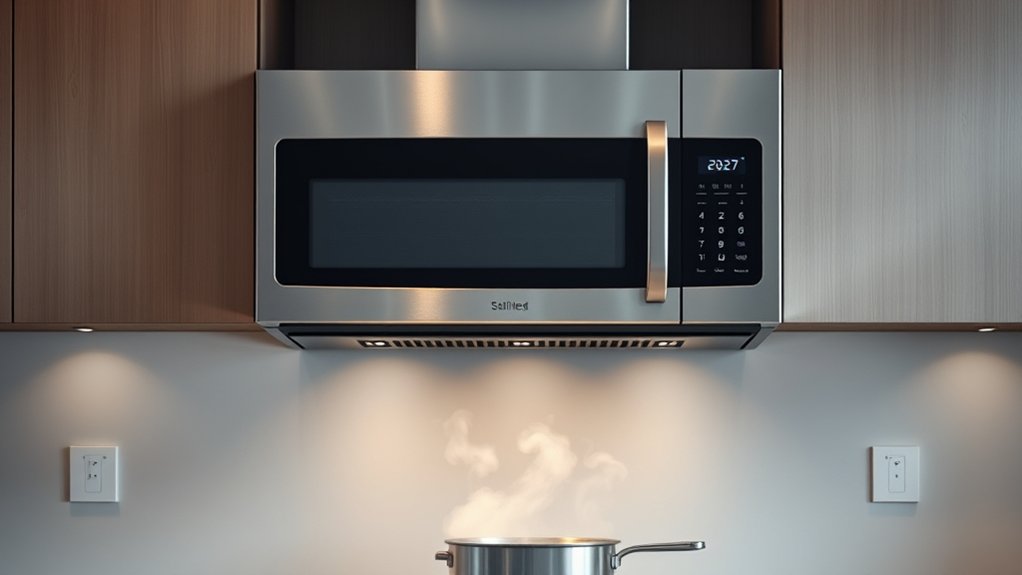
For quieter cooking, prioritize an above-range microwave with a low-noise exhaust fan that clears steam and odors without overpowering conversation. When you compare models, check published sones or decibel ratings, but keep in mind that manufacturers may measure them differently.
Choose a unit with multiple fan speeds, so you can use a gentle setting for simmering and reserve higher ventilation for messier meals. Look for sound insulation around the motor and ductwork, plus a smoothly mounted blower that limits rattling and vibration.
A well-sealed door and sturdy metal housing can also support noise reduction while the microwave runs. Read owner reviews for comments about humming, clicking, and airflow noise, since real kitchens reveal sounds specifications may miss.
You’ll appreciate controls that let you switch the fan off promptly after cooking, as well as a bright display that won’t require repeated button presses. With quieter ventilation, you can chat, watch television, or help with homework while dinner cooks.
Most Powerful Pick: Fast Cooking and Strong Airflow
You’ll get fast, efficient cooking when you need meals ready in a hurry. Plus, the powerful exhaust ventilation quickly clears away smoke, steam, and odors. Convenient controls make it easy to adjust cooking settings with minimal effort.
Rapid Cooking Performance
Rapid cooking performance matters when you need dinner ready quickly. The most powerful above-range microwaves combine high-wattage heating with strong exhaust airflow to handle both tasks efficiently. You’ll notice the biggest difference when reheating family-size portions or cooking dense foods.
- Choose at least 1,000 watts for quicker heating.
- Look for sensor cooking to prevent overcooked edges.
- Use preset buttons for popcorn, vegetables, and frozen meals.
- Check microwave insulation to help retain heat and reduce noise.
- Prefer a clear user interface for fast, accurate adjustments.
A well-calibrated magnetron distributes energy more evenly, so you’ll spend less time stopping and stirring. Inverter-style power control can also deliver steadier heating at lower settings, helping delicate foods warm without drying out.
Confirm that the turntable fits your dishes, and select a spacious interior if you regularly cook large portions. These features make your routine faster without sacrificing control or consistency.
Powerful Exhaust Ventilation
Fast cooking is only half the job when your range microwave also handles kitchen ventilation. A powerful exhaust system removes smoke, steam, grease, and lingering odors before they spread through your kitchen.
Look for a model with strong fan speeds and effective ductwork, so you can match ventilation to everything from simmering sauces to high-heat searing. Airflow efficiency matters because a high-rated fan won’t help much if the design loses suction or sends air back into the room.
Recirculating models should include reliable charcoal filtration, while externally vented units typically clear airborne contaminants more effectively. You’ll also need regular filter maintenance to preserve performance.
Wash reusable grease filters as directed and replace charcoal filters on schedule. With dependable ventilation, you’ll cook more comfortably and protect nearby cabinets from buildup.
Convenient Cooking Controls
Convenient cooking controls let you prepare meals quickly without sacrificing control over ventilation or heating. Choose an over-the-range microwave that puts essential settings within easy reach, so you won’t waste time steering through confusing menus.
The most powerful pick combines fast cooking with strong airflow, helping you heat food and clear smoke efficiently.
- One-touch buttons simplify popcorn, reheating, and defrosting.
- Manual presets let you customize cooking times and power levels.
- A responsive timer helps you monitor every dish precisely.
- Multi-stage programming handles thawing, cooking, and resting automatically.
- A control lock supports child safety around hot surfaces.
Look for bright displays, clearly labeled keys, and tactile feedback, especially if you cook while multitasking. Convenient lighting and an easy-to-adjust vent fan add practical value.
With intuitive controls, you’ll gain speed, consistency, and confidence during everyday meal preparation without sacrificing ventilation performance.
Best for Small Kitchens: Compact Installation
For small kitchens, a compact over-the-range microwave can save valuable counter space without sacrificing everyday cooking or ventilation. Look for a model around 30 inches wide that aligns with your range and leaves enough clearance above the cooktop.
A shallower design can improve movement through a narrow workspace, while a well-placed exhaust fan helps remove smoke, steam, and cooking odors.
Before buying, measure the available wall width, cabinet depth, and space between the cooktop and mounting surface. Check the manufacturer’s installation requirements, including electrical access, venting options, and support hardware.
You’ll also need a sturdy wall or properly reinforced cabinet to hold the unit securely. Choose recirculating ventilation if exterior ductwork isn’t practical, but replace charcoal filters regularly to maintain airflow.
Finally, consider kitchen aesthetics. A simple stainless-steel or matching finish can make the appliance blend into your layout, while interior lighting and an easy-clean cavity add practical value without increasing its footprint or crowding nearby cabinets.
Best Smart Pick: Connected Cooking Controls
You can adjust cooking settings from your phone using convenient Wi-Fi controls. You can also use voice assistant integration to start, stop, or monitor select functions hands-free. Together, these features make busy kitchen routines simpler and more flexible.
Wi-Fi Cooking Controls
If you want more control than a standard above-range microwave offers, Wi-Fi cooking controls let you start, stop, and adjust cooking from your phone or compatible voice assistant. With the companion app, you can monitor progress while preparing other dishes, receive cycle notifications, and save frequently used settings.
Look for these practical advantages:
- Recipe customization for time, power, and serving size
- Remote start and pause through the app
- Cooking alerts that help prevent overcooking
- Safety features such as control locking and status checks
- Preset programs for popcorn, reheating, and defrosting
Before choosing a model, confirm your kitchen has reliable Wi-Fi and check whether remote starting requires an in-person safety confirmation.
You’ll also want an intuitive app with clear controls, dependable notifications, and settings that remain useful beyond basic reheating. These features make connected cooking more convenient without complicating everyday meals.
Voice Assistant Integration
Voice assistant integration lets you control compatible above-range microwaves with simple commands through Alexa, Google Assistant, or another supported platform. With voice commands, you can start cooking, add time, stop the cycle, or check remaining time while your hands stay busy.
This feature proves especially useful when you’re preparing several dishes or handling messy ingredients. Before buying, confirm that the microwave supports your preferred assistant and required voice functions.
Some models only offer basic controls, while others connect to broader cooking features. Smart home integration can also link the microwave with routines, allowing you to coordinate lighting, timers, and other connected appliances.
You’ll still need the microwave’s app, a stable Wi-Fi connection, and compatible devices for reliable performance. Review privacy settings if voice data concerns you.
Check Fan Power, Fit, and Venting
Check each microwave’s fan power, dimensions, and venting options before you buy. A powerful blower removes smoke and cooking odors faster, but performance depends on your kitchen’s ductwork and installation.
Confirm the unit fits your cabinet opening, leaves proper clearance above the range, and matches your electrical connection. If you can’t connect exterior ducts, choose a model with effective recirculating filtration.
- Compare fan speeds and airflow ratings, measured in cubic feet per minute (CFM).
- Measure cabinet width, height, and depth, including trim and door swing.
- Verify whether the microwave vents upward, backward, or through recirculation.
- Look for washable filters and affordable replacements to support venting efficiency.
- Read reliability reviews to assess fan durability under frequent, high-heat use.
Select the strongest fan your layout can support, but don’t sacrifice cooking capacity or safe installation. A qualified installer can confirm duct size, routing, and clearances before you purchase.
That preparation helps your microwave manage steam, grease, and odors without excessive noise or reduced performance.
Frequently Asked Questions
How Often Should I Clean the Microwave’s Grease Filter?
Clean your microwave’s grease filter about once a month if you cook regularly, or every two to three months with lighter use. Increase cleaning frequency when you notice grease buildup, reduced airflow, or lingering odors.
For effective filter maintenance, remove the filter, soak it in hot water and dish soap, gently scrub it, rinse thoroughly, and let it dry completely before reinstalling. Don’t operate the exhaust fan without its filter.
Can Above-Range Microwaves Be Installed Over a Gas Cooktop?
Yes, you can install an above-range microwave over a gas cooktop, but you’ll need to follow the manufacturer’s installation requirements carefully. Check the specified clearance above burners, cabinet dimensions, ventilation method, and electrical needs.
Safety considerations include keeping flames away from the microwave’s underside, preventing heat damage, and ensuring proper venting outdoors when possible. Have a qualified installer verify gas connections, mounting strength, and local codes before you fire up your new appliance.
Do These Microwaves Require Professional Installation?
Yes, you’ll usually want professional installation for an above-range microwave, especially over a gas cooktop. Installation requirements include secure wall mounting, proper electrical grounding, correct cabinet spacing, and appropriate venting or recirculation setup.
A qualified technician can verify clearances and prevent damage or safety hazards. Afterward, follow maintenance tips: clean grease filters regularly, wipe the exterior, inspect the vent path, and test the exhaust fan periodically to maintain performance.
How Long Do Above-Range Microwaves Typically Last?
You can typically expect an above-range microwave to last about 7–10 years, though heavy use may shorten that span. About one in five microwave ovens needs repair or replacement within its first five years, making microwave durability worth considering before you buy.
You’ll extend its life with simple maintenance tips: clean grease filters regularly, avoid running it empty, wipe spills promptly, and guarantee proper ventilation. Replace it when heating becomes inconsistent or controls fail.
Can I Replace the Microwave’s Charcoal Filter Myself?
Yes, you can usually replace your microwave’s charcoal filter yourself. For safe filter replacement, unplug the appliance or switch off its circuit breaker first.
Remove the grille or filter cover, slide out the old filter, and install the manufacturer-approved replacement in the correct direction. Your owner’s manual will show the exact steps.
This simple DIY maintenance task typically takes only a few minutes, but don’t wash charcoal filters unless the manual specifically permits it.
Conclusion
Whether you prioritize strong cooking, quiet airflow, smart controls, or a budget-friendly price, you’ll find an above-range microwave to match your kitchen. Before buying, measure your cabinet space, compare fan power, and confirm your venting setup.
A compact model can save room, while a powerful unit clears steam faster. Think of your kitchen like a medieval castle: the right microwave is its drawbridge, defending against smoke, splatters, and clutter while making everyday meals easier.
For the best above range microwaves with exhaust fans, choose a model that fits your space, matches your ventilation needs, and simplifies daily cooking.