
3 Key Pros and Cons of Induction Cooktops
Choosing the right cooktop can be frustrating, especially when you want faster cooking, better control, and improved safety without overspending. You’re not alone—many home cooks struggle to balance convenience, cookware compatibility, and long-term value. That’s where understanding the key pros and cons of induction cooktops can help.
Induction cooktops give you faster boiling, precise temperature control, and better energy efficiency because they heat cookware directly. They’re also safer, with no open flame, cooler surfaces, and automatic shutoff features.
However, you’ll need magnetic, flat-bottomed cookware, and replacing incompatible pans can add expense. You’ll also face a higher purchase price, possible installation costs, specialized repairs, and occasional humming.
If you’re weighing convenience, safety, and long-term value, the details below can help you decide.
Key Takeaways
- Pro: Induction cooktops heat cookware directly, delivering faster boiling, precise temperature control, and improved energy efficiency.
- Pro: Their cooler surface, no open flame, and automatic shutoff features can improve kitchen safety.
- Con: They require magnetic, flat-bottom cookware, potentially forcing you to replace aluminum, copper, glass, or incompatible pans.
- Con: Higher purchase, installation, and potential repair costs can make induction cooktops more expensive initially.
- Con: Glass surfaces may scratch, compatible units might need dedicated circuits, and some cookware produces humming or clicking sounds.
Induction Cooktops: Faster, Safer, and More Efficient
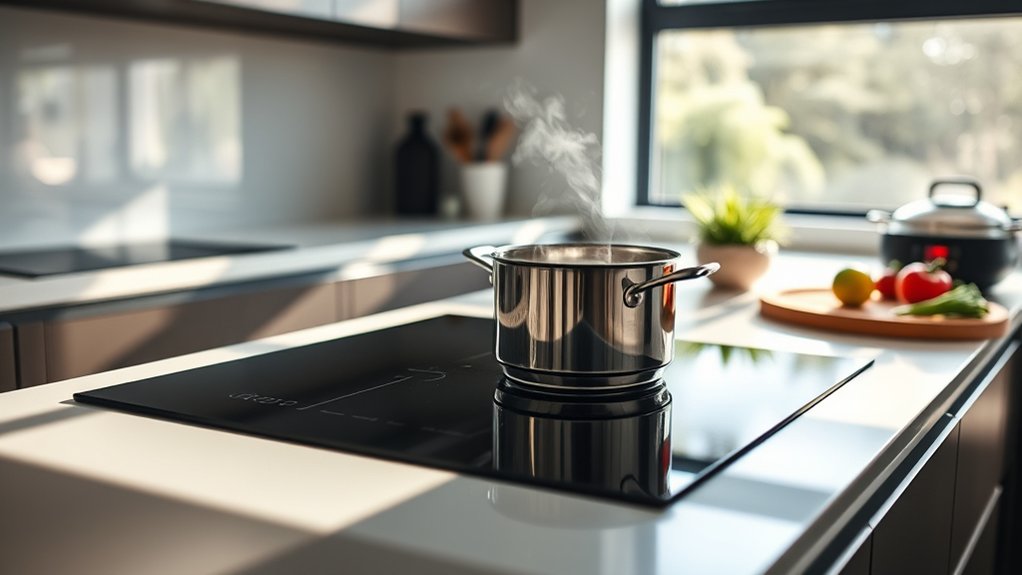
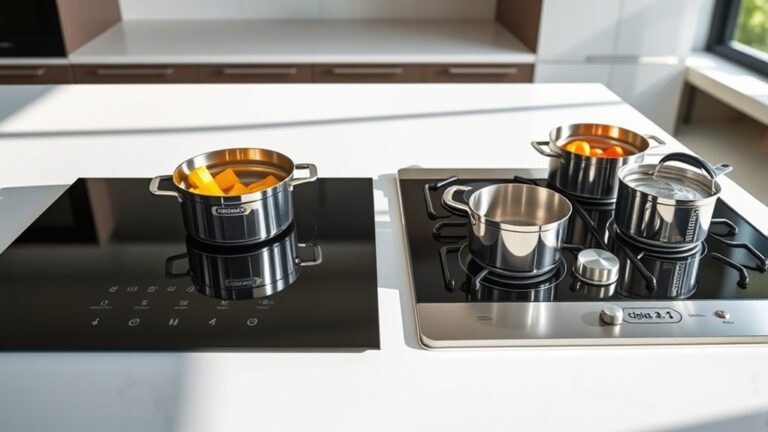
Induction cooktops heat magnetic cookware directly, so they boil water faster and waste less energy than traditional electric or gas models. You’ll notice responsive temperature control, allowing you to reduce heat immediately when a sauce reaches a simmer.
Because the surface transfers energy efficiently, less heat escapes into your kitchen. This can keep the room more comfortable and reduce cooling demands.
You’ll also benefit from a safer cooking experience. The surface doesn’t produce an open flame, and it stays cooler than conventional burners, lowering the risk of accidental burns.
Many models shut off automatically when you remove the pan, adding another layer of protection.
Lower energy consumption can translate into meaningful savings over time, depending on your electricity rates and cooking habits. However, you should consider the cost implications of purchasing an induction unit, since the initial price may exceed that of basic electric or gas cooktops.
For frequent cooks, improved speed, safety, and efficiency may justify the investment.
Does Your Cookware Work With Induction?
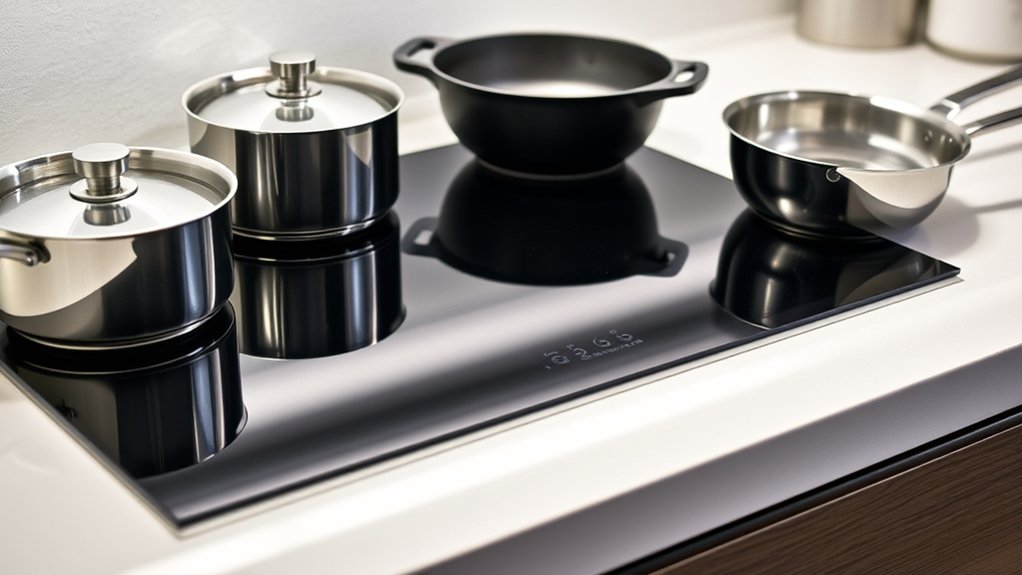
To get those speed and efficiency benefits, you’ll need cookware with a magnetic base. Induction works by creating a magnetic field that heats compatible pots and pans directly, so cookware compatibility matters before you buy or install a cooktop.
Test each piece with a refrigerator magnet. If the magnet sticks firmly to the bottom, the pan probably has the necessary magnetic properties. Cast iron and many stainless-steel pans usually work, while aluminum, copper, glass, and ceramic cookware generally won’t unless they include a magnetic layer. Check the manufacturer’s label for an induction-compatible symbol, too.
Test cookware with a magnet: if it sticks firmly, the pan likely works with induction.
Your pan should also have a flat bottom that makes full contact with the cooking surface. A warped or rounded base may heat unevenly or fail to activate the burner.
Remember to check every piece individually, since a cookware set can contain both compatible and incompatible pans. Replacing only unsuitable items with induction-ready cookware can help you switch over without buying an entirely new collection.
The Biggest Drawbacks of Induction Cooktops
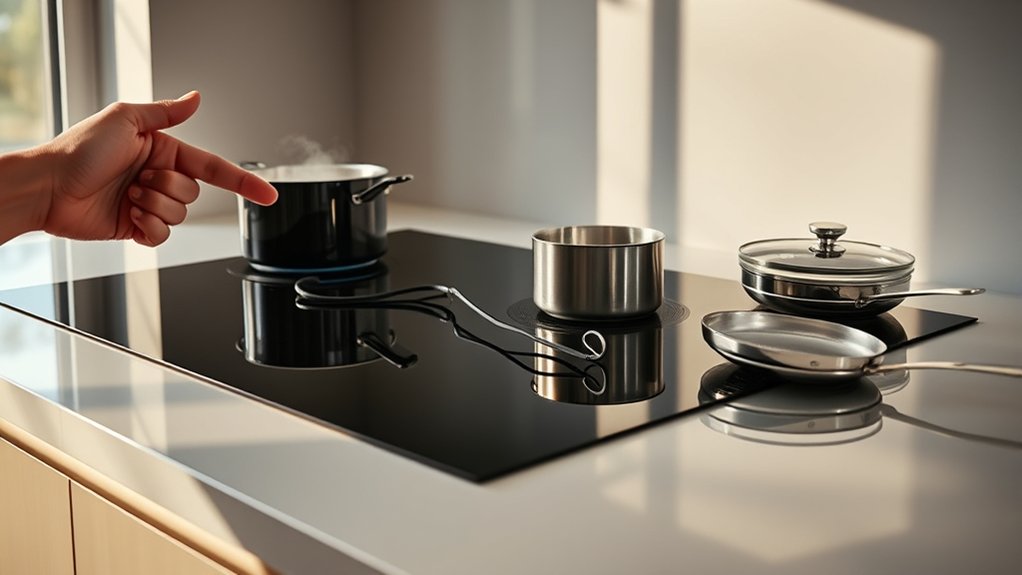
Despite their speed and efficiency, induction cooktops have a few drawbacks you’ll want to weigh before making the switch. The biggest hurdle involves compatibility. You’ll need magnetic cookware, such as cast iron or many stainless-steel pans, so replacing noncompatible pieces can quickly increase your expenses.
Cost considerations extend beyond cookware. Induction models often cost more upfront than standard electric or gas cooktops, and repairs may require specialized technicians.
Although precise heating can reduce energy waste, your energy consumption still depends on cooking habits, appliance efficiency, and local electricity rates. If electricity costs more than gas in your area, daily operation might not feel especially economical.
You’ll also need a reliable electrical connection. Some powerful units require dedicated circuits, adding installation costs.
The glass surface can scratch or crack if you drop heavy cookware, and it may show fingerprints easily. Finally, you might dislike the subtle humming or clicking sounds certain pans produce.
Weigh these drawbacks against your priorities, budget, kitchen setup, and cooking style before buying.
Frequently Asked Questions
How Much Electricity Does an Induction Cooktop Typically Consume?
An induction cooktop typically uses 1,200 to 3,700 watts per active cooking zone, while larger models may draw up to 7,400 watts across several zones. Your actual electricity use depends on cooking time, temperature, cookware, and the number of zones operating.
Because induction transfers heat directly to compatible pans, its Energy efficiency is high, helping reduce Power consumption compared with many traditional electric cooktops. A one-hour session might use roughly 1–3.7 kilowatt-hours.
Can Induction Cooktops Be Installed Over Wall Ovens?
Yes, you can install an induction cooktop over a wall oven, but the details matter more than they first appear. You’ll need compatible appliances, proper ventilation, sufficient cabinet clearance, and wiring that meets local codes.
Check both manufacturers’ installation instructions before planning your layout, because heat and airflow requirements can vary. During kitchen remodeling, consult a qualified electrician or installer to confirm compatibility, protect your warranty, and avoid costly surprises later.
Do Induction Cooktops Require Special Electrical Wiring?
Yes, you’ll usually need a dedicated 240-volt circuit for an induction cooktop, similar to an electric range. Check the model’s wattage and amperage because installation requirements vary; some compact units use standard 120-volt outlets.
A qualified electrician should install the proper breaker, wiring, and outlet to meet local codes. Induction’s energy efficiency may reduce operating costs, but it doesn’t eliminate the need for adequate electrical capacity, ventilation, and safe clearance during installation.
How Do You Clean and Maintain an Induction Cooktop?
Like caring for glass, you’ll keep an induction cooktop clean with gentle, regular attention. Let the surface cool, then wipe spills using a damp microfiber cloth and mild dish soap.
For baked-on residue, use a cooktop scraper held nearly flat. Don’t use abrasive pads, bleach, or harsh powders. These cleaning tips prevent scratches.
Your maintenance routine should include drying the surface, removing cookware debris, and checking controls weekly. Never immerse the cooktop or spray liquid directly onto it.
What Safety Features Should You Look for When Choosing One?
Look for child safety features such as control locks that prevent accidental activation, especially in busy kitchens. Choose a model with overheat protection, which automatically reduces power or shuts off when temperatures rise dangerously.
You’ll also want automatic pan detection, so the cooktop won’t heat without compatible cookware, plus residual-heat indicators that warn you about hot surfaces. Consider a timer with automatic shutoff, spill-resistant controls, and sensors that detect empty or improperly positioned pans.
Conclusion
Ultimately, induction cooktops deliver speed, safety, and efficiency—provided your cookware cooperates. You’ll enjoy rapid heating, precise control, and a cooler kitchen, but you may also face higher costs, annoying noise, and pans that suddenly become useless.
Ironically, this “simpler” cooking upgrade can require the most preparation. Before switching, test your pots, check your budget, and consider your cooking habits.
If the advantages outweigh the quirks, induction cooktops could make your kitchen smarter and your cooking faster.