Induction Stove Versus Electric: Three Key Differences
Choosing between an induction stove and an electric stove can feel confusing, especially when you want faster cooking, better temperature control, and lower energy use. You’re not alone—many home cooks struggle to know which option fits their kitchen and budget.
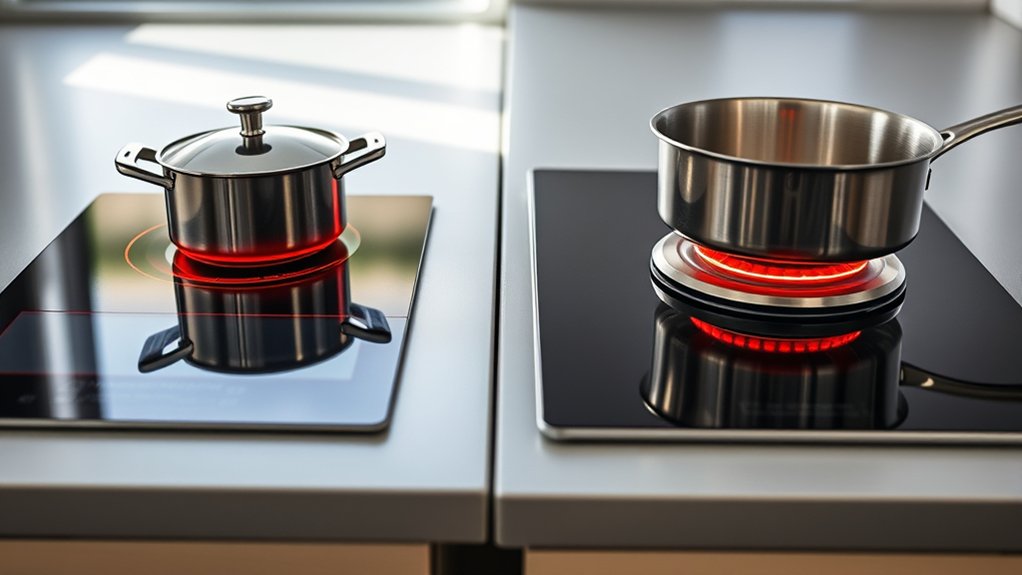
Induction and electric stoves differ mainly in speed, control, and efficiency. Induction heats compatible magnetic pans directly, so you’ll boil water faster and adjust temperatures almost immediately. Electric burners heat gradually through resistance elements, which makes them slower to respond.
Induction also wastes less energy and keeps the surface cooler, while electric models cost less and work with more cookware. Your choice depends on your pans, budget, and cooking habits; the details below can help you decide.
Key Takeaways
- Heating method: Induction uses magnetic fields to heat compatible cookware directly, while electric stoves heat resistance elements first.
- Speed and efficiency: Induction generally boils water faster and wastes less energy than conventional electric burners.
- Temperature control: Induction adjusts heat almost immediately, whereas electric burners respond more slowly and retain heat after adjustment.
- Cookware requirements: Induction requires magnetic cookware, such as cast iron or magnetic stainless steel; electric stoves accommodate most flat-bottomed pans.
- Safety and cleaning: Induction surfaces stay cooler and wipe clean easily, while electric burners remain hot longer and may require more maintenance.
Induction vs. Electric Stoves: Which Is Better?
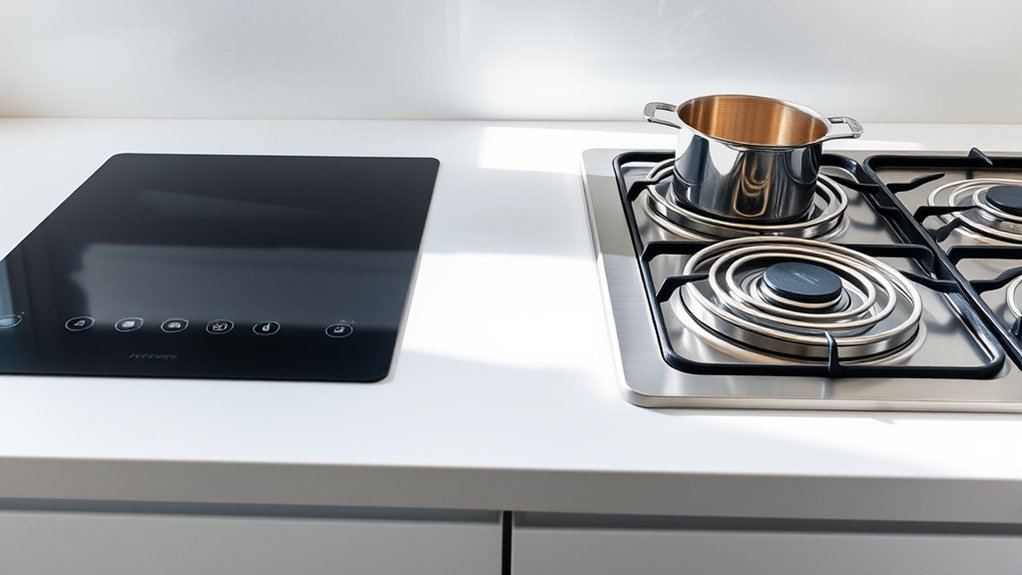
Choosing between induction and electric stoves depends on your cooking habits, budget, and priorities. If you value speed, precise control, and a cooler kitchen, induction may suit you better. It responds quickly to temperature adjustments and typically offers strong Energy efficiency, helping you reduce wasted power during everyday cooking.
An electric stove can make more sense if you want a lower upfront price, straightforward installation, or broad Cookware compatibility. You can use nearly any flat-bottomed pot or pan, while induction requires magnetic cookware or an added converter plate. Electric models also provide familiar controls and often cost less to replace.
Consider your kitchen setup before deciding. Check your electrical capacity, available counter space, and preferred pan collection. Choose induction if performance and efficiency matter most to you. Choose electric if affordability and flexibility carry greater weight.
Neither option suits every household, so compare long-term operating costs, cleaning needs, and cooking preferences before you buy.
How Does Each Stove Produce Heat?
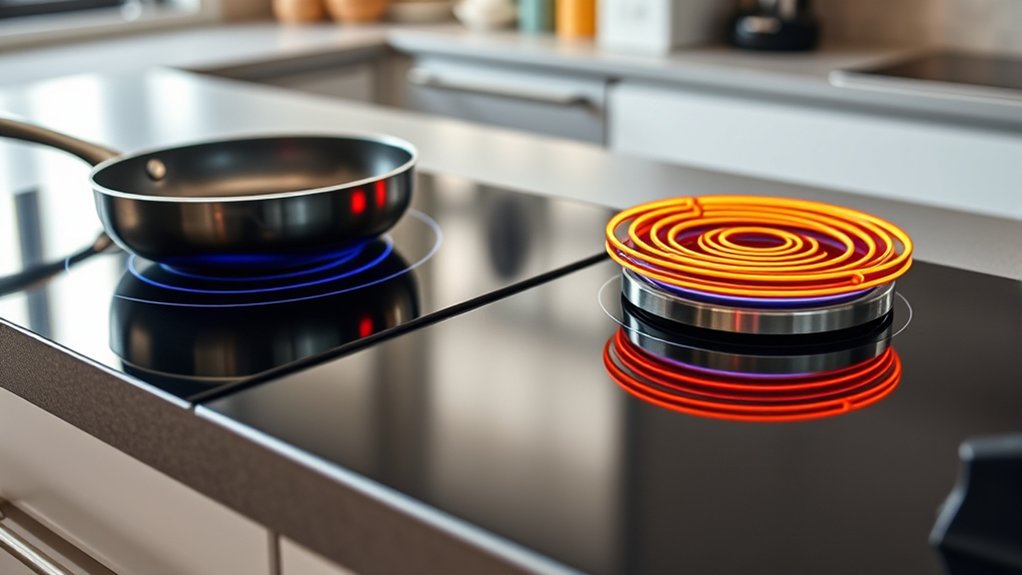
The main difference lies in how each stove transfers energy to your cookware. With magnetic induction, a copper coil beneath the glass surface creates a rapidly changing magnetic field.
Induction stoves use magnetic fields to generate heat directly inside compatible cookware.
When you place compatible cookware on top, that field generates electrical currents inside the pan, producing heat directly in its metal.
Electric heating works differently. An electric current travels through a resistance element, such as a radiant coil or ribbon.
The element becomes hot, then transfers heat through the cooktop surface to your pan. Your cookware doesn’t create heat itself; it receives energy from the heated element.
- Magnetic induction heats compatible pans from within.
- Electric heating warms a separate element first.
- Induction requires magnetic cookware, such as cast iron or magnetic stainless steel.
- Electric models accept a broader range of flat-bottomed pans.
- Both systems use electricity, but they deliver it differently.
You’ll notice that induction keeps the surrounding surface relatively cooler, while electric heating leaves residual heat after you remove the pan.
Which Stove Cooks Faster?
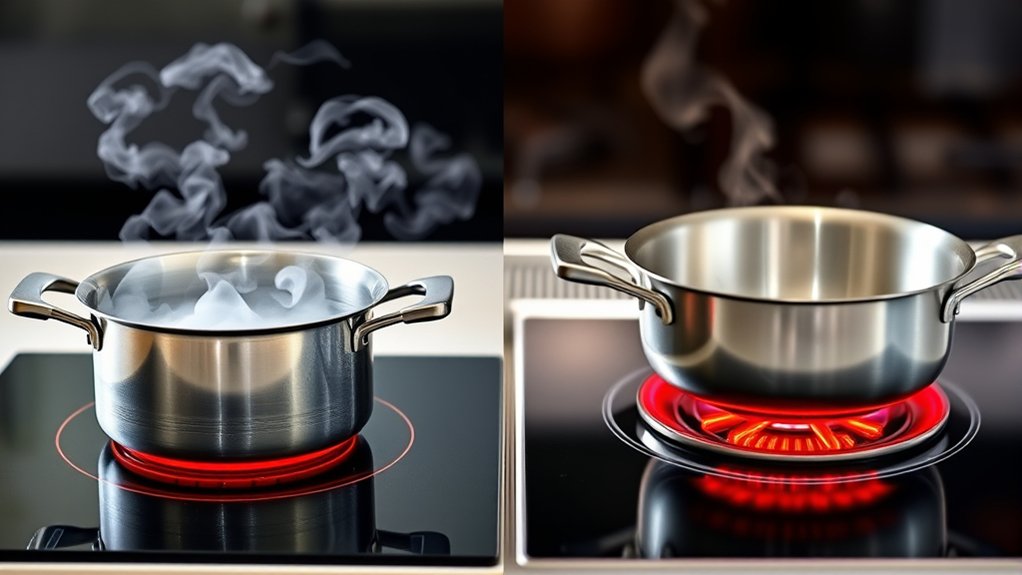
When it comes to heating speed, induction usually transfers energy to your cookware more efficiently than an electric stove. As a result, water may boil faster, helping you get meals on the table sooner.
Heating Speed
Heating Speed
Induction stoves generally heat faster than standard electric stoves because they transfer energy directly to compatible cookware instead of warming a burner first. When you’re boiling water, sautéing vegetables, or searing meat, you’ll usually reach cooking temperature sooner with induction.
Standard electric burners can take longer to glow and respond when you adjust the dial.
- Boil water noticeably faster with induction.
- Start cooking sooner after switching it on.
- Adjust temperatures more quickly between steps.
- Enjoy steadier heat distribution across compatible pans.
- Improve cooking efficiency during busy meal preparation.
Your pan’s material and size still matter. Flat, magnetic cookware helps induction perform at its best, while a warped or oversized pan may slow results.
Electric stoves remain dependable, especially when you value lower upfront costs. For faster everyday cooking, though, induction typically gives you the edge.
Energy Transfer
Energy transfer explains why induction usually cooks faster than a standard electric stove. Induction sends electromagnetic energy directly into compatible cookware, so your pan generates heat across its base with minimal loss.
A standard electric stove first heats a coil, then transfers heat through the cookware. That extra step slows your response and wastes energy.
Strong heat conduction inside the pan spreads warmth efficiently, while the surrounding surface stays relatively cooler. You’ll feel the difference when you adjust the control: induction responds almost immediately, helping you cook with confidence and less wasted power.
| Stove | What you feel |
|---|---|
| Induction | Direct, responsive heat |
| Electric | Delayed heat transfer |
| Induction | Better Energy efficiency |
| Electric | More heat loss |
Choose induction when quick, controlled energy transfer matters most.
Boiling Time
That faster, more direct heat transfer usually means induction boils water sooner than a standard electric stove. When you’re preparing pasta, tea, or vegetables, you’ll notice induction responds quickly and wastes less heat around the pan.
Its boiling efficiency improves further when you match the pot size to the cooking zone and use a lid. Electric coils can still deliver reliable results, but they often need more time to warm the element and transfer heat through the cookware.
- Induction typically reaches a boil first.
- A magnetic field heats compatible cookware directly.
- Electric coils lose heat before water warms.
- Lids shorten boiling time on either stove.
- Smaller amounts show the clearest difference.
You’ll get the best rapid heating with a flat, induction-compatible pot, sufficient water, and a covered vessel. For occasional cooking, electric may be adequate; for speed, induction usually wins.
Which Stove Offers Better Temperature Control?
When it comes to temperature control, induction stoves typically offer more precise heat adjustments than electric models. You can raise or lower the heat quickly, which makes it easier to maintain a consistent cooking temperature. Electric stoves respond more slowly, so fine-tuning the heat can be a bit more difficult.
Precise Heat Adjustments
Induction stoves offer more precise heat adjustments because they change the cookware’s temperature almost instantly when you raise or lower the setting. You’ll notice this responsiveness when melting chocolate, simmering sauces, or searing meat.
Electric burners typically need time to heat up and cool down, so you must anticipate changes and adjust earlier. Your temperature regulation improves with induction’s direct energy transfer and clearly marked controls.
A responsive user interface also helps you choose exact power levels quickly.
- Increase heat without waiting for coils to warm.
- Lower power promptly when food threatens to scorch.
- Make small adjustments for delicate recipes.
- Select repeatable settings with digital controls.
- React quickly when your recipe changes.
With induction, you’ll spend less time compensating for delayed burner responses. Electric stoves can still provide useful control, but their residual heat makes fine adjustments more demanding.
Choose induction if immediate control matters most during active cooking.
Consistent Cooking Temperatures
Consistent temperatures depend on how steadily a stove delivers and maintains heat, and induction usually has the advantage. It transfers energy directly to your cookware, so it responds quickly when you raise or lower the setting.
Once you choose a temperature, induction can maintain it with minimal fluctuation. This helps you simmer sauces, melt chocolate, or cook delicate foods without constant adjustments.
Electric stoves can still provide reliable results, but their heating elements cycle on and off to reach your selected setting. You may notice brief hot and cool periods, especially during low-temperature cooking.
Residual heat also remains after you reduce power or turn the burner off, which can affect timing.
For stronger cooking consistency and more precise temperature regulation, you’ll generally find induction easier to control. An electric stove works well, but you’ll need to anticipate its slower response.
Which Stove Uses Less Energy?
Although both stoves use electricity, an induction stove generally uses less energy because it transfers heat directly to compatible cookware, while a standard electric stove heats a burner before the pan.
That direct transfer reduces wasted heat and can improve energy efficiency during everyday cooking. You’ll also notice faster heating, which may shorten cooking times and further limit power consumption.
Direct heat transfer reduces waste, speeds cooking, and may lower electricity use during everyday meal preparation.
- Induction sends energy straight into the pan.
- Electric burners lose heat around the pan’s base.
- Induction typically boils water faster.
- Lower cooking times can reduce electricity use.
- Your savings depend on meal length and settings.
An induction cooktop may draw substantial power while operating, but it usually uses that power more effectively.
A conventional electric stove continues radiating heat after you adjust or switch off the burner, creating additional waste.
To maximize savings, match the heat level to your recipe, cover pots when possible, and turn the stove off as soon as cooking ends.
Your local electricity rate and cooking habits will determine the actual cost difference.
Both options remain more efficient than gas in some homes, especially when you use them thoughtfully.
Will Your Cookware Work With Induction?
Before switching to induction, check whether a magnet sticks firmly to the bottom of your cookware. If it does, the pan likely contains magnetic stainless steel or cast iron and should heat properly.
If the magnet barely attracts or doesn’t stick, choose another pan.
| Cookware type | Induction result |
|---|---|
| Cast iron | Works well |
| Magnetic stainless steel | Works well |
| Aluminum or copper | Usually won’t work |
| Glass or ceramic | Won’t work |
For reliable cookware compatibility, inspect each pan’s base for an induction-ready symbol. You can also confirm its materials in the manufacturer’s specifications.
Some stainless-steel pans look suitable but contain too little magnetic metal to activate the cooktop.
Enamel-coated cast iron generally works, provided its base sits flat and won’t scratch the surface.
You can also buy an induction adapter plate for nonmagnetic cookware. However, it transfers heat less efficiently and responds more slowly.
Building a set of induction cookware may cost more initially, but matching pans will give you consistent heating and dependable performance.
Check pan dimensions, too. The base should align with the cooking zone.
Which Stove Is Easier to Clean?
When it comes to cleaning, an induction stove is usually easier. Its smooth surface makes wiping up spills quick and simple, and because the cooking area stays cooler, you’ll likely deal with fewer burnt-on messes. With an electric stove, you’ll need to remove and clean the traditional coils and catch pans.
Smooth Induction Surface
A smooth induction surface is generally easier to clean than a traditional electric cooktop because it stays relatively cool around the cookware. You can wipe its sleek design with a soft cloth and suitable cooktop cleaner, keeping daily maintenance simple.
Unlike many electric models, induction units typically have fewer raised elements and tight spaces where crumbs collect. For an efficient routine, you can:
- Let the surface cool completely.
- Remove cookware and loose debris.
- Apply a small amount of cleaner.
- Wipe with a nonabrasive cloth.
- Dry the smooth surface thoroughly.
The flat glass panel also gives you broad, uninterrupted wiping space. You won’t need to work around exposed coils, burner rings, or bulky supports.
Still, check your manufacturer’s instructions, since abrasive pads and harsh chemicals can damage the finish. With gentle care, your induction cooktop stays polished and attractive.
Fewer Burnt Spills
Induction cooktops usually produce fewer burnt spills because the glass surface doesn’t heat as intensely beyond the cookware.
When sauce bubbles over, you can wipe it away sooner instead of watching it bake onto a scorching zone. That advantage makes spill prevention easier during busy cooking.
| Situation | Induction | Electric |
|---|---|---|
| Boiling sauce | Less scorching | More residue |
| Wipe-up timing | Immediate | Often delayed |
| Helpful safety features | Cool surrounding glass | Hot coils retain heat |
You’ll still need to address spills promptly, but induction reduces the chance of hardened, smoky messes.
Its responsive temperature control also helps you prevent splatters before they spread. Electric models can cook effectively, yet exposed heating elements may keep nearby drips hot after you lift the pan.
For everyday cleanup, induction generally leaves you with fewer burnt spots to manage.
Traditional Coil Cleaning
Once spills reach the cooking hardware, traditional electric coils require more hands-on cleaning. Traditional coil cleaning means you’ll wait until each coil cools, lift it carefully, and wipe away residue.
You must also clean the drip pans, since grease and crumbs collect beneath the cookware. Never submerge a coil or use harsh abrasives; moisture can damage its electrical connection.
For practical maintenance tips, follow this quick routine:
- Unplug the range before cleaning.
- Let coils cool completely.
- Wipe coils with a damp cloth.
- Soak removable drip pans in warm, soapy water.
- Dry every part before reinstalling.
You’ll spend more time scrubbing around raised coils than you would on a smooth induction surface. However, regular cleaning prevents baked-on grime and keeps heat transfer consistent.
If a spill hardens, use a manufacturer-approved cleaner rather than scraping aggressively. Induction wins convenience, but careful upkeep keeps electric cooking dependable.
What Will Each Stove Cost to Buy?
Purchase prices vary widely, but induction stoves usually cost more upfront than standard electric models. For your cost comparison, expect standard electric ranges to offer the lowest entry price, especially if you choose a basic coil model.
Induction ranges typically include advanced controls and specialized cooking technology, which raises the purchase price. Freestanding models generally cost less than slide-in or built-in designs, regardless of the heating method.
Induction ranges cost more for advanced technology, while freestanding designs usually provide the most affordable option.
You’ll also need to contemplate size and features. A compact two-burner induction unit may cost less than a full-size electric range, while premium models with convection ovens, smart controls, or sleek finishes can increase either option’s price.
Installation may add to your initial budget if you need electrical updates, countertop changes, or professional delivery. Compare the total checkout cost, not just the advertised price, before you decide.
If you’re replacing an existing range, measure the opening and check the available connection first. That preparation helps you avoid unexpected costs and select a model that fits your kitchen and budget.
Which Stove Is Safer for Your Household?
When household safety is your priority, induction generally offers an advantage because its cookware-compatible surface produces less residual heat than a standard electric cooktop. You’ll reduce burn risks because the glass stays cooler, though it can still warm from hot cookware.
Induction also stops heating when you remove a compatible pan, helping prevent unattended cooking incidents. Standard electric burners remain hot longer and may glow, creating more opportunities for accidental contact.
Consider these Safety concerns before choosing:
- Keep towels, paper, and packaging away from either cooktop.
- Use pan handles turned inward to prevent knocks and spills.
- Install child locks if your model includes them.
- Check cords and outlets regularly for damage or overheating.
- Clean spills promptly to prevent smoke and slippery surfaces.
Both options can create household hazards when you leave cooking unattended or use damaged cookware. You’ll need compatible magnetic pans for induction, while electric models accept more cookware.
For maximum protection, use automatic shutoff features, maintain clear counter space, and teach everyone in your home safe operating habits.
Which Stove Fits Your Cooking Style?
Your cooking habits should guide your choice: induction suits you if you value rapid heating, precise temperature control, and easy cleanup, while electric may fit better if you prefer broader cookware compatibility and straightforward operation. If you regularly sear, simmer, or prepare several dishes at once, induction gives you responsive control that helps prevent scorching and speeds up meals. You’ll need magnetic cookware, though, so check your pots and pans before switching.
Electric stoves offer dependable Cooking versatility because they work with nearly any flat-bottomed pan. Their radiant elements take longer to heat and cool, but that gradual response can benefit you when you’re learning recipes or cooking without tight timing. You’ll also find familiar controls and often lower purchase costs.
Consider Aesthetic appeal, too. Induction models provide sleek, uninterrupted surfaces that suit modern kitchens, while electric options offer practical designs in various sizes. Choose the stove that matches your cookware, routines, budget, and preferred level of control.
Frequently Asked Questions
Can Induction Stoves Operate During Power Outages?
No, you can’t use an induction stove during a power outage because it needs electricity to create its magnetic cooking field. For emergency cooking, you’ll need an alternative, such as a gas camping stove, propane burner, outdoor grill, or battery-powered appliance designed for cooking.
Never use fuel-burning equipment indoors, since it can produce dangerous carbon monoxide. Keep suitable supplies ready, and follow local safety guidance whenever your power fails unexpectedly.
How Long Do Induction and Electric Stoves Typically Last?
You can think of each stove as a household traveler: an induction model typically journeys 10–15 years, while an electric radiant stove often lasts 13–15 years. Your Durability comparison depends on usage, quality, and care, so either appliance may exceed those ranges. Maintenance differences matter: you’ll protect induction’s electronics with gentle cleaning, while you’ll replace electric coils or burners more easily. Regular upkeep helps both stoves serve your kitchen reliably for years.
Do Induction Stoves Produce Noise While Operating?
Yes, your induction stove can produce some noise while operating, though it usually stays relatively quiet. You might hear a soft hum, buzz, clicking, or fan noise, especially at higher settings or when cookware interacts with the magnetic field.
Noise levels vary by model, pan size, and material. You’ll often notice these sounds more than with electric coils, but they typically don’t affect cooking efficiency or indicate a problem.
What Electrical Installation Requirements Do Induction Stoves Have?
About 90% of induction cooktops require a dedicated 240-volt power supply, though some portable models use standard 120-volt outlets. You’ll need adequate circuit capacity, typically 30–50 amps, depending on the cooktop’s wattage.
Have a licensed electrician install the appropriate breaker, wiring, outlet, and grounding. You shouldn’t share the circuit with other major appliances.
Check your model’s specifications and local electrical codes before installation to guarantee safe, reliable operation.
Are Induction and Electric Stoves Available in Different Sizes and Styles?
Yes, you’ll find both induction and electric stoves in various sizes and styles. Size variations range from compact two-burner cooktops and apartment-friendly ranges to spacious 36-inch models.
Design options include freestanding, slide-in, drop-in, and built-in cooktops, with finishes such as stainless steel, black, or white. You can also choose smooth glass surfaces or traditional coil burners, depending on your cooking preferences, kitchen layout, and available installation space.
Conclusion
Choosing between an induction stove and electric is like choosing a travel companion. Induction moves swiftly, responds to every turn, and leaves little mess behind, while electric offers a familiar, budget-friendly path that welcomes nearly any cookware.
If you value speed, precision, efficiency, and safety, an induction stove may lead you farther. If upfront cost matters most, electric can serve you well.
Consider your cooking habits, household needs, and budget to find the stove that fits best.