What Is the Ideal Freezer Temp?
Many people struggle to find the ideal freezer temp, especially when food develops frost, loses quality, or partially thaws. You’re not alone—setting the right temperature can make a big difference in food safety and storage.
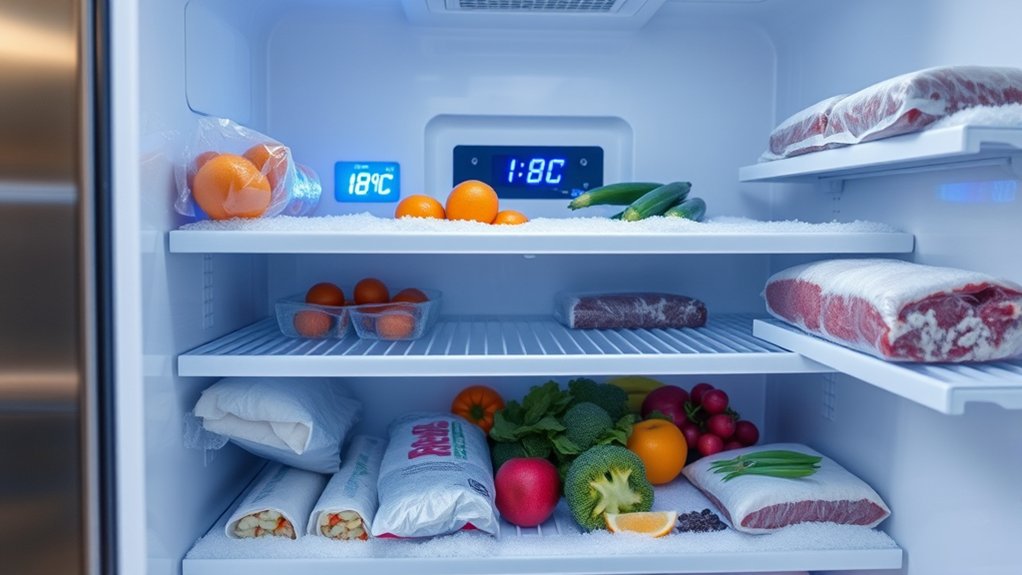
Set your freezer to 0°F (-18°C) to keep food safely frozen and preserve its quality. Use an appliance thermometer to verify the actual temperature, since the built-in display may show only the selected setting.
Place the thermometer near the center, avoid blocking vents, and wait several hours before checking it. Make small adjustments, then allow 12–24 hours for the temperature to stabilize.
You’ll also learn how to manage storage, frost, outages, and temperature problems.
Key Takeaways
- Set your freezer to 0°F (-18°C), the recommended temperature for safe, long-term food storage.
- Verify the actual temperature with a freezer-rated appliance thermometer, since built-in displays may show only the setting.
- Place the thermometer in the center, away from walls, vents, and packages, and allow several hours before reading.
- Keep the temperature steady by limiting door openings, maintaining airflow, and ensuring the door seals tightly.
- Adjust settings in small increments, waiting 12–24 hours between changes, and consult a technician for persistent problems.
Set Your Freezer to 0°F
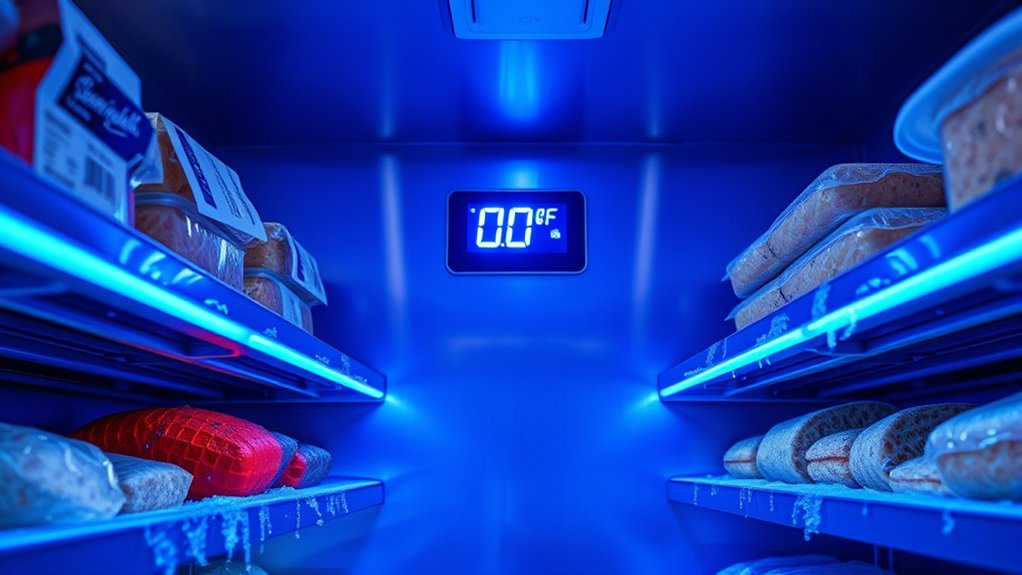
Set your freezer to 0°F to keep food safely frozen and preserve its quality. This setting gives you a reliable target for storing meat, vegetables, prepared meals, and other frozen items.
Set your freezer to 0°F for safe storage and better quality across meat, vegetables, meals, and other frozen foods.
Use your appliance’s control panel or dial to select 0°F, then place an independent freezer thermometer inside to confirm the actual temperature. Built-in displays can show the selected setting rather than the conditions around your food.
Keep the door closed as much as possible after you adjust the temperature. Frequent openings let warm air enter and can create short-term fluctuations.
Don’t pack items so tightly that cold air can’t circulate, and leave space around vents. Arrange newer packages behind older ones, then label leftovers with dates so you can use them promptly.
A steady 0°F setting also helps protect frozen desserts from ice crystal formation, which can make their texture coarse or icy. Check the thermometer periodically and adjust the control if readings drift above your target.
Why Does Freezer Temperature Matter?
Your freezer temperature matters because it helps keep food safe and fresh. Set it to 0°F to slow bacterial growth and preserve food quality. Keeping the temperature steady also helps your freezer use energy more efficiently.
Food Safety
Why does freezer temperature matter? It protects you from foodborne illness and preserves the quality of your meals. Keep your freezer at 0°F (-18°C) or below.
At this temperature, freezing stops most bacteria from growing, although it doesn’t kill them. Handle frozen foods safely by washing your hands, preventing cross-contamination, and returning items promptly after shopping.
Seal food in airtight storage containers or sturdy freezer bags to prevent exposure, freezer burn, and moisture loss. Label each package with its contents and freezing date, then follow recommended storage times for the best quality.
Never rely on smell or appearance alone to judge safety. If food partially thaws, don’t taste it. Check whether it still contains ice crystals and follow food-safety guidance before refreezing or cooking.
Energy Efficiency
Keeping your freezer at 0°F (-18°C) or below helps it run efficiently without sacrificing food safety. This setting balances cooling power and energy use, so your appliance doesn’t work harder than necessary.
A warmer temperature can cause partial thawing, while an excessively colder setting wastes electricity and may increase operating costs.
For better Energy conservation, keep the door closed as much as possible, organize items for quick access, and leave space around packages for air circulation.
Don’t place hot food inside. Let it cool safely first. Check the door seal regularly, because escaping cold air forces the compressor to run longer.
Routine Appliance maintenance also improves efficiency. Defrost manual models when ice exceeds about one-quarter inch, clean coils if accessible, and replace damaged seals promptly.
These habits reduce strain, extend your freezer’s life, and help control household energy bills.
Do Household Freezers Need Different Settings?
Most household freezers work well at the standard setting of 0°F (-18°C). You may want to adjust the temperature slightly depending on what you store and how often you open the door. Seasonal changes can affect performance, too, so keep an eye on your freezer and adjust the setting when needed.
Standard Freezer Settings
Set your household freezer to 0°F (-18°C), the standard temperature for safely preserving frozen food. This setting keeps food solid, slows bacterial growth, and helps maintain quality during storage.
You don’t need a different basic setting simply because your freezer sits above or below a refrigerator, provided it can reliably hold 0°F. Use an appliance thermometer to verify the actual temperature, since the control dial’s numbers may not match degrees.
A steady temperature also limits Ice crystal formation, which can damage food texture and cause freezer burn. Keep the door closed as much as possible, and check the seal for gaps.
Frost buildup may signal warm air entering through a loose gasket or frequent door opening. If the freezer can’t maintain 0°F, have it serviced or replace it.
Adjusting for Household Needs
Household freezers generally don’t need different temperature settings for everyday use; keep yours at 0°F (-18°C) unless you’re storing food under unusual conditions or following specific manufacturer guidance.
You might adjust the setting slightly if your freezer struggles to hold that temperature, but first check the door seal, airflow, and thermostat.
Temperature calibration helps you confirm the displayed setting matches the actual interior temperature, so place an appliance thermometer inside and allow it to stabilize before making changes.
If your freezer remains too warm, avoid overloading it and keep vents unobstructed.
Regular freezer maintenance, including defrosting models that accumulate ice and cleaning coils when applicable, supports consistent cooling.
Follow your owner’s manual, especially for compact, garage-ready, or specialty freezers.
Don’t change the setting solely to freeze food faster; safe, steady storage matters most.
Seasonal Temperature Considerations
Seasonal changes usually don’t require a different freezer setting: keep it at 0°F (-18°C) year-round. Your freezer maintains food safety and quality best at this temperature, regardless of outdoor conditions.
However, extreme weather can affect performance, especially if you keep the appliance in a garage, basement, or other unconditioned space. During summer heat, check for temperature fluctuations and assure adequate airflow around the freezer.
In winter, avoid turning the setting lower simply because the surrounding air feels cold; the appliance still needs consistent internal control. Instead of making seasonal adjustments, use a freezer thermometer to verify the actual temperature.
Keep the door closed, inspect the seal, and remove excess frost. If readings rise above 0°F, reduce warm-air exposure and have the appliance serviced if needed.
How Do You Check Freezer Temperature?
To check your freezer temperature, place an appliance thermometer in the center and leave it there for several hours before reading it. Choose a thermometer designed for freezer use, since a regular indoor model might not remain accurate at low temperatures.
Keep the door closed during the test so warm air doesn’t affect the result. After several hours, read the display promptly and record the temperature.
For a reliable check, repeat the process at a different time, especially after adding groceries or noticing soft frozen desserts.
Compare your reading with your freezer’s recommended setting, typically 0°F (-18°C). If the temperature stays too warm, lower the control slightly and test again after the unit stabilizes.
If it’s too cold, raise the setting gradually to protect food quality and reduce energy use. Avoid judging performance by ice buildup or the condition of storage containers alone.
Replace the thermometer if its reading seems inconsistent, damaged, or difficult to read.
Where Should You Place the Thermometer?
Place the thermometer in the center of the freezer, away from the walls, vents, door, and frozen food packages. This position gives you a more representative reading of the compartment’s overall temperature.
Don’t hang it near the air outlet, where circulating air can create an unusually cold measurement, or against a surface that transfers temperature directly.
For better Placement optimization:
- Set the thermometer on a middle shelf or in a small basket.
- Keep it visible without leaving the door open longer than necessary.
- Let it sit undisturbed for several hours before reading it.
Choose a model designed for freezer use, since ordinary indoor thermometers may not remain accurate at low temperatures.
Check the manufacturer’s instructions for Temperature calibration, and compare the reading with a second reliable thermometer if you suspect an error.
Record the result at the same time each day so you can make meaningful comparisons. Avoid placing the device beneath food, where trapped cold air may distort its reading.
Why Is Your Freezer Getting Too Warm?
If your freezer is getting too warm, check the door seal, temperature setting, and airflow first. A damaged or dirty gasket can let cold air escape, while frequent door openings allow warm, moist air inside.
Make sure food packages don’t block vents or prevent the door from closing completely. Overloading the compartment restricts circulation, but an almost empty freezer may also struggle to hold cold air.
Heavy frost buildup can insulate the walls and reduce cooling performance. Follow safe defrosting tips: move food to a cooler, unplug the appliance, and let ice melt naturally.
Don’t chip frost with a knife, which can damage coils or liners. During freezer cleaning, wipe spills promptly and remove debris from the gasket.
A warm room, blocked exterior vents, or a failing fan, thermostat, compressor, or start relay may also cause trouble. If the freezer remains warm after you clear these issues, protect your food and schedule professional service promptly.
How Do You Adjust the Temperature?
To adjust your freezer, find the temperature controls inside the unit or on the front panel. Set the temperature to the recommended 0°F (-18°C). Then, check it with a thermometer and fine-tune the setting if needed.
Locate the Temperature Controls
Where you find the temperature control depends on your freezer’s design: look for a dial, slider, or digital panel inside the compartment, along the upper edge, or on the exterior door. Check your owner’s manual if you can’t spot it quickly.
Before adjusting anything, identify which control operates the freezer rather than the refrigerator. Some models hide controls behind a removable cover, grille, or electronic display lock.
For reliable Temperature calibration, note the current setting and locate any thermometer or diagnostic indicator.
- Open the door briefly to protect stored food.
- Look for labels such as “Freezer,” “Temp,” or “Control.”
- Check the control panel’s lock symbol and unlock it if necessary.
Knowing the control’s location supports Energy conservation because you’ll avoid unnecessary door opening and random adjustments.
Don’t change the setting yet. First, confirm the control’s function and operation.
Set The Recommended Temperature
Set the freezer to 0°F (-18°C), the recommended temperature for safely storing frozen food. Use the temperature control you located to select this setting.
On a digital model, press the temperature buttons until the display reads 0°F. On a dial, turn the control toward the colder side until its indicator aligns with the recommended mark.
Make small, deliberate adjustments rather than forcing the control. The correct setting helps preserve food quality, limit ice crystal formation, and maintain a consistently frozen interior.
If your freezer uses Celsius, choose -18°C instead. Check the owner’s manual if the controls include numbered settings without temperature labels; manufacturers assign those numbers differently.
Keep the door closed while the freezer reaches its selected setting. This reduces warm-air entry and helps prevent unnecessary freezer frost buildup.
Monitor And Fine-Tune
Once the freezer has reached 0°F (-18°C), check its temperature after several hours and again the next day. Use an appliance thermometer, placing it between frozen packages rather than against a wall or door.
If the reading differs, adjust the control slightly, then wait 12–24 hours before checking again. Avoid frequent changes, which can create unstable temperatures.
- Check door seals for gaps, frost, or damage that lets warm air enter.
- Review storage organization: leave space around vents, keep the door closed, and avoid packing items tightly.
- Confirm temperature calibration by comparing your freezer’s display with a reliable thermometer.
If temperatures remain too warm, inspect airflow, remove heavy frost, and verify the room isn’t excessively hot.
If readings fluctuate despite these steps, consult the manual or contact a technician. Record adjustments and thermometer readings so you’ll recognize patterns and maintain consistent performance.
How Full Should Your Freezer Be?
Keep your freezer about 70–85% full to maintain cold air efficiently without blocking its vents. This balance gives cold air room to circulate while reducing empty space that warms quickly whenever you open the door.
Keep your freezer 70–85% full to balance efficient cooling, air circulation, and temperature stability.
Use Freezer organization to group similar foods and leave clear paths around vents. Don’t pack items tightly against the rear or side walls, where they can restrict airflow and create uneven temperatures.
Instead, store frequently used foods near the front and less-used items deeper inside. Use baskets or labeled containers to keep packages accessible without prolonged searching.
Avoid overfilling, which can prevent the door from sealing and make your freezer work harder. An underfilled freezer also cycles more often because air loses cold faster than frozen food.
Arrange packages with small gaps between them to support consistent cooling. Proper spacing helps limit Ice crystal formation caused by temperature fluctuations and protects food quality.
Check that shelves remain stable and vents stay unobstructed as you add or remove items.
What Should You Do During a Power Outage?
During a power outage, keep the freezer door closed to preserve its cold temperature. Each opening allows cold air to escape, increasing energy loss and reducing the remaining chill. Avoid checking contents repeatedly; use a thermometer only if you can do so quickly.
- Wrap the freezer in blankets or towels, leaving vents and the motor area uncovered. This insulation slows heat exchange without blocking necessary airflow.
- Move perishable food to an insulated cooler with ice if the outage may last. Grouping items tightly helps them stay cold longer.
- If electricity returns, wait briefly before opening the door. Let the appliance resume normal compressor efficiency, then verify that it runs quietly and steadily.
Use a generator only outdoors, away from windows and doors, and follow its instructions. Don’t connect it directly to household outlets unless a qualified electrician installed a transfer switch.
Keep refrigerator and freezer plugs dry, and avoid overloading extension cords. Plan ahead by storing ice packs and knowing your utility’s outage updates.
When Is a Freezer Too Warm?
A freezer is too warm when its internal temperature rises above 0°F (-18°C), the level needed to keep food safely frozen. Use an appliance thermometer to check the actual temperature, because the control setting might not match the interior.
A freezer is too warm above 0°F; use an appliance thermometer to verify its actual internal temperature.
If food feels soft, bends easily, or shows melting, your freezer may be too warm. Ice crystal formation on food can indicate temperature changes, especially after partial thawing and refreezing.
Check for causes such as an overfilled compartment, a blocked air vent, a damaged door seal, or frequent door opening. Frost buildup can also restrict airflow and prevent consistent cooling.
Remove excess frost according to your manufacturer’s instructions, and make sure the door closes tightly.
Move perishable items to another freezer if the temperature stays above 0°F. Discard food that has remained above 40°F for more than two hours.
If your freezer won’t return to 0°F, unplug it only if instructed, then contact a qualified technician.
Frequently Asked Questions
Can Freezer Temperature Affect Ice Cream’s Texture and Scoopability?
Yes, freezer temperature can greatly affect ice cream’s texture and scoopability. Warmer settings may keep it softer, but they can also encourage ice crystals, causing a coarse consistency.
Colder conditions create firmer ice cream that’s harder to scoop, though they help preserve smoothness. For the best balance, keep your freezer consistently cold and let the container sit at room temperature for a few minutes before serving.
These Freezer temperature effects directly influence Ice cream texture and enjoyment.
How Often Should You Defrost a Manual-Defrost Freezer?
Think of frost as a slow-growing blanket: defrost your manual-defrost freezer whenever ice reaches about ¼ inch thick, typically once or twice yearly. Don’t wait for heavy buildup, which reduces storage space and efficiency.
For effective freezer maintenance, unplug the appliance, remove food, let the ice melt, and dry every surface before restarting it. Automatic defrosting isn’t available on these models, so regular attention keeps performance steady and protects your food.
What Foods Should Never Be Stored in the Freezer?
You shouldn’t freeze foods that lose their texture or separate badly. Avoid lettuce, cucumbers, raw potatoes, and most fresh herbs; they’ll turn limp or watery.
Don’t freeze eggs in their shells, carbonated drinks, or mayonnaise-based sauces, because pressure or separation can ruin them.
Some Dairy products, especially soft cheeses and cream, may become grainy. Frozen vegetables generally handle freezing well, but canned foods shouldn’t go in unopened.
Check packaging before freezing anything.
Can Freezing Food Change Its Nutritional Value?
Yes, freezing food can gently alter its nutritional value, but it usually preserves most nutrients remarkably well.
You’ll see the greatest nutrient retention when you freeze produce soon after harvesting and minimize exposure to air, light, and heat.
Your freezing methods matter: blanch vegetables briefly, cool them quickly, and package food tightly.
Some water-soluble vitamins may decline slightly, while minerals, protein, fiber, and calories generally remain stable during proper freezing and storage.
How Long Can Different Foods Safely Remain Frozen?
You can safely freeze most foods indefinitely, though quality declines over time. Use these food storage tips: keep ground meat and poultry for three to four months, steaks and roasts six to twelve months, cooked meat two to three months, fish two to eight months, soups two to three months, and vegetables eight to twelve months.
Apply freezer organization by labeling dates, removing excess air, and rotating older packages forward.
Conclusion
Set your freezer to 0°F to keep food safely frozen and preserve its quality. Check the temperature with an appliance thermometer, place it in a central spot, and adjust the setting gradually when needed.
Keep the freezer reasonably full, but leave room for air circulation. During a power outage, keep the door closed.
If food begins thawing or the temperature rises above 40°F, act quickly. Maintaining the ideal freezer temp helps protect your food’s safety and quality.