What Should My Freezer Temperature Be?
Wondering what your freezer temperature should be? You’re not alone—many people struggle to keep food frozen safely without causing freezer burn or wasting energy. The right temperature can make all the difference.
What Should My Freezer Temperature Be?
Set your freezer to 0°F (-18°C) or colder to keep food safely frozen and preserve its quality. Check the actual temperature with a reliable freezer thermometer, since the built-in display may show only the selected setting.
Place the thermometer near the center, wait several hours, and make small adjustments if needed. Keep the door closed, avoid overloading the freezer, and clear vents for proper airflow.
Learn how to handle temperature changes, power outages, and freezer problems.
Key Takeaways
- Set your freezer to 0°F (-18°C) or colder for safe, long-term food storage.
- Verify the actual temperature with a reliable freezer thermometer, preferably placed near the center.
- After adjusting the setting, wait about 24 hours before checking the temperature again.
- Keep vents clear, avoid overloading, and minimize door openings to maintain a stable temperature.
- During outages, keep the door closed. Discard perishable food above 40°F for too long.
What Temperature Should a Freezer Be?
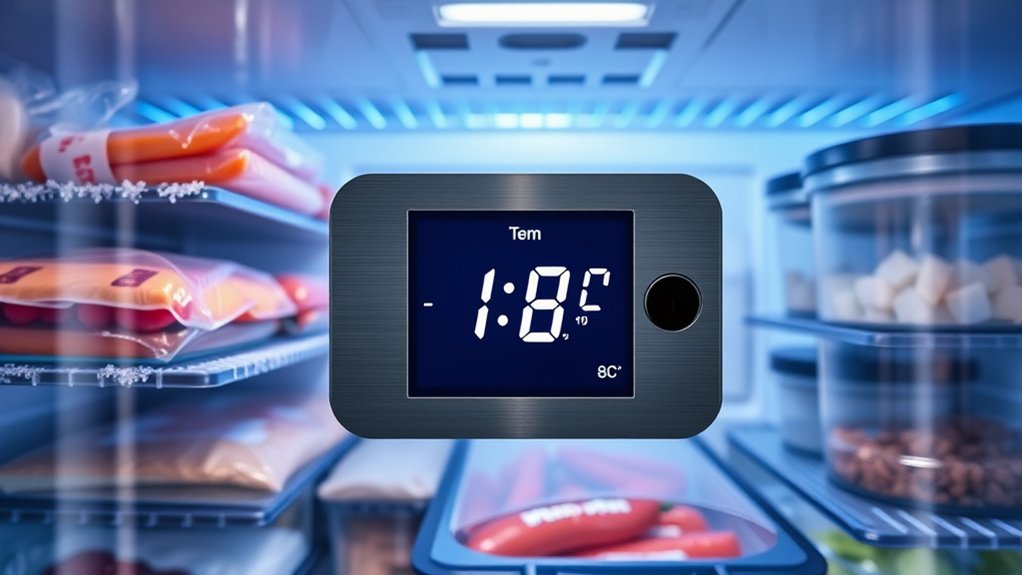
Your freezer should be set to 0°F (-18°C) or colder to keep food safely frozen and preserve its quality. Use the appliance’s control panel or dial to select this setting, then confirm the temperature with an independent freezer thermometer.
Set your freezer to 0°F (-18°C) or colder, then verify the actual temperature with an independent thermometer.
Built-in displays can show the selected setting rather than the actual interior temperature. Place the thermometer near the center, where temperature changes may be easiest to notice, and check it after several hours.
If the reading rises above 0°F, lower the setting slightly and allow time for the freezer to stabilize. Keep the door closed during this process.
Good freezer organization supports consistent performance. Leave space between packages so cold air can circulate, but avoid packing the compartment loosely.
Check the seal for gaps, and remove frost if it restricts airflow or storage space. For energy efficiency, keep the freezer away from heat sources, clean its coils when applicable, and open the door only when necessary.
Why 0°F Keeps Food Safely Frozen

At 0°F (-18°C), water in food remains frozen, slowing the chemical reactions and microbial activity that cause spoilage. Keeping your freezer at this temperature helps preserve quality while supporting food safety.
Although freezing doesn’t kill every microorganism, it prevents most bacteria from multiplying. When you thaw food, those organisms can become active again, so handle thawed items promptly and safely.
A steady 0°F setting also helps protect texture, flavor, and nutrients better than warmer conditions. Your food stays solid, reducing the risk of partial thawing and refreezing, which can create ice crystals and damage delicate foods.
This target balances preservation with energy efficiency, since setting the freezer much colder usually increases electricity use without meaningfully improving safety.
- Limits bacterial growth during storage
- Helps maintain food quality longer
- Reduces unnecessary energy consumption
How to Check Your Freezer Temperature

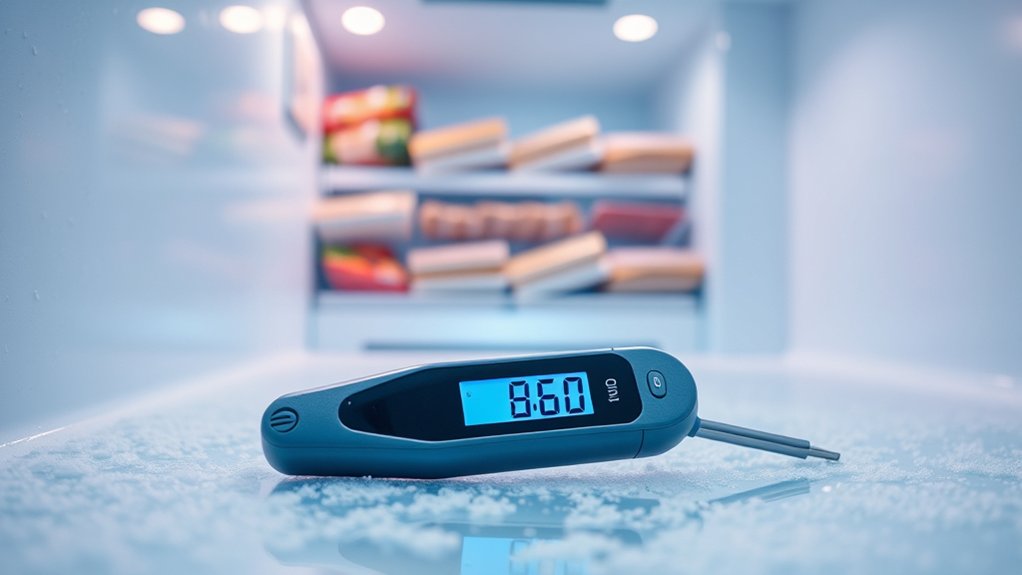
A freezer thermometer is the most reliable way to confirm that your freezer stays at 0°F (-18°C), since the built-in dial may show only a rough setting. Check the reading after the freezer has run undisturbed for several hours, ideally overnight.
Open the door briefly, read the thermometer, and record the temperature. Repeat the check on another day to confirm a consistent result.
If the temperature rises above 0°F, adjust the control slightly colder, then wait several hours before checking again.
If it remains too warm, inspect the door seal, avoid overloading the compartment, and make sure cold air can circulate.
A reading well below 0°F may indicate unnecessary Energy efficiency losses, so raise the setting gradually.
Watch for frost buildup, which can restrict airflow and affect performance. Remove excess ice according to your manufacturer’s instructions, then recheck the temperature.
Don’t rely on food hardness alone. A thermometer provides a clearer, measurable answer.
Where to Place a Freezer Thermometer
Place the freezer thermometer near the center of the compartment, away from the walls, door, vents, and cooling element. This location gives you a more representative reading of the air surrounding your frozen food.
Keep the thermometer upright or position it according to the manufacturer’s instructions, ensuring you can read the display without moving it.
For reliable results, follow these Placement tips:
- Don’t let the thermometer touch food, shelves, or packaging.
- Leave space around it so air can circulate freely.
- Check that its probe or sensor remains fully inside the freezer.
Different thermometer types suit different setups. An analog dial thermometer works without batteries and remains easy to monitor.
A digital model typically offers clearer numbers, while a remote-probe thermometer lets you read the temperature without opening the door.
Choose a model rated for freezer use, then place it where it won’t become buried or knocked aside.
After positioning it, close the door gently and allow the thermometer enough time to provide a stable reading.
What Causes Freezer Temperature Changes?
What Causes Freezer Temperature Changes?
Freezer temperatures change when you open the door, add warm food, or adjust the thermostat. Each door opening lets cold air escape and warm air enter, forcing the compressor to work harder.
Leaving the door open for several minutes creates a larger temperature swing. Placing recently cooked or hot food inside also raises the internal temperature until the freezer removes that heat.
Poor air circulation can cause uneven readings and warm spots, especially when packages block vents or shelves. Keep vents clear so cold air can move freely throughout the compartment.
A dirty condenser coil, worn door gasket, or malfunctioning thermostat can also prevent consistent cooling. Check the seal for gaps, and clean the coils according to your manufacturer’s instructions.
Power fluctuations or outages may stop the compressor temporarily. After power returns, the freezer might need several hours to stabilize.
If temperatures keep changing, inspect these causes and consider professional service for persistent mechanical problems.
How Full Should Your Freezer Be?
Keep your freezer about 70–85% full to help it cool efficiently and maintain a consistent temperature. A well-stocked freezer holds onto cold air, but packing it too tightly can block the vents and restrict airflow. Leave a little space between items so air can circulate and you can easily find what you need.
Ideal Freezer Fill Level
Aim to keep your freezer about 70–85% full, leaving enough space for air to circulate and for new items to fit easily. This balance supports practical Freezer organization without creating cramped shelves or blocked vents.
Arrange packages upright or in uniform stacks, and leave clearance around interior air outlets. Use labeled bins to group meats, vegetables, prepared meals, and frequently used items.
Keep a small open area near the front for groceries you’ll add soon.
For consistent access and better Energy efficiency, avoid packing food tightly against the door or ceiling. Check the layout regularly and remove empty boxes that waste space.
Your freezer should let you:
- See most items without unloading shelves.
- Reach older packages first.
- Close the door smoothly without forcing it.
Reorganize whenever supplies change, preserving airflow and convenient access.
Benefits of Full Freezers
A well-filled freezer holds its temperature more steadily, so it uses less energy and keeps food frozen longer during brief power interruptions. Cold items also help one another stay chilled, reducing temperature swings whenever you open the door.
You’ll waste less energy because the freezer doesn’t need to replace as much lost cold air after each opening. A thoughtfully stocked freezer can make meal planning easier, too.
You’ll have frozen snacks, vegetables, and prepared meals ready when you need them, which may reduce trips to the store. For reliable Ice cream storage, keep containers together in a consistently cold section, away from warm air near the door.
Leave some space around items so cold air can circulate and you can quickly find what you need.
Avoiding Overcrowding Issues
Full freezers work best when they’re well stocked but not packed tightly. Leave enough space between containers for cold air to circulate, helping maintain a steady temperature and protect your food.
Overcrowding can block vents, create warm spots, and make items difficult to find. Good Freezer organization keeps Food storage efficient and prevents you from leaving the door open while searching.
Use these simple practices:
- Keep vents and interior fans clear.
- Leave small gaps around packages and containers.
- Group similar foods together and label older items.
Avoid cramming flexible bags against the door or stacking containers so high that drawers won’t close smoothly.
If your freezer looks crowded, remove expired items, combine partially filled packages, or transfer food to compact, airtight containers.
A properly arranged freezer should feel full enough to retain cold but open enough for air movement and easy access.
How to Adjust Your Freezer Temperature
To adjust your freezer temperature, use the control dial or digital panel inside the compartment, then make small changes and wait about 24 hours before checking the results. Aim for 0°F (-18°C), the recommended setting for safe, long-term food storage.
Place an appliance thermometer between packages to verify the actual temperature, since the displayed setting may not reflect conditions throughout the compartment.
Turn the control toward a colder setting if your thermometer reads above 0°F, or toward a warmer setting if it reads notably below that target. Make one adjustment at a time, and allow the freezer to stabilize before making another.
Keep the door closed during this period for a consistent reading.
Good Freezer organization helps cold air circulate and makes temperature control easier. Leave space around vents, avoid packing items tightly, and label foods for quick retrieval.
Proper settings and organization also support Energy efficiency, helping your freezer run effectively without unnecessary cooling.
What to Do If Your Freezer Gets Warm
If your freezer gets warm, first check that the door seals tightly and the temperature control is set correctly. Move food away from vents, and avoid opening the door while you investigate. A crowded freezer can block airflow, while an almost empty one may struggle to hold cold air.
Check these common causes:
- Frost buildup: Thick ice on walls or vents restricts airflow. Unplug the appliance, remove food, and let the ice melt safely before cleaning and restarting it.
- Dirty coils: Dusty condenser coils make the compressor work harder and reduce energy efficiency. Clean them gently according to your manual.
- Mechanical problems: Listen for unusual clicking, buzzing, or silence from the compressor. Confirm the interior fan runs when the door switch is pressed.
After restarting, allow several hours for the temperature to stabilize. If the freezer remains warm, the seal, thermostat, fan, or compressor may need professional service. Don’t scrape ice with sharp tools, and don’t use a heater, since either can damage the freezer.
How Long Food Lasts Without Power
A closed freezer usually keeps food safely frozen for about 48 hours when it’s full, or roughly 24 hours when it’s half full, provided you don’t open the door. During power outages, keep the door shut to preserve the cold air and protect your food.
A closed freezer preserves food for about 48 hours when full, or 24 hours when half full, during an outage.
A full freezer stays colder longer because frozen items help maintain the temperature. If possible, add dry ice, but handle it with insulated gloves and guarantee proper ventilation.
Once power returns, check each item carefully. Food with ice crystals or a temperature of 40°F or below can usually be refrozen, though its texture may change.
Discard perishable food that has stayed above 40°F for more than two hours, or one hour if the room exceeds 90°F. Never taste food to judge its safety.
Place a thermometer inside your freezer so you can track conditions accurately. These food preservation steps help reduce waste and protect you during unexpected outages.
When Should You Repair or Replace It?
Replace your freezer when it no longer holds a safe temperature, needs frequent repairs, or costs more to run than a newer model. If a technician can fix a single, affordable problem, repairing it may make sense.
However, replacement often offers better reliability when the compressor, sealed system, or control board fails.
Consider these warning signs:
- Food stays soft, frost builds unevenly, or temperatures fluctuate despite adjustments.
- Repair estimates exceed half the cost of a comparable new freezer.
- Rising electricity bills, poor Energy efficiency, or unusual Noise levels suggest aging components.
Before deciding, check the warranty, appliance age, and repair availability. A freezer under ten years old with a minor fault deserves careful evaluation.
An older model that needs repeated service may keep draining your budget, even after each repair. Compare annual energy use, storage capacity, safety features, and expected operating costs.
If you replace it, choose a model with a dependable temperature alarm, efficient insulation, and enough space for your needs. Recycle the old appliance responsibly rather than leaving it curbside.
Frequently Asked Questions
Can I Freeze Food in Its Original Packaging?
Yes, you can freeze food in its original packaging, but check the label first. Most store packaging protects food briefly, while longer storage requires added protection.
Wrap packages in airtight freezer bags, foil, or plastic wrap to prevent freezer burn. Leave room for expansion in liquids, and remove excess air.
These packaging materials support safer freezing techniques. Don’t freeze damaged, leaking, or loosely sealed packages; rewrap them before freezing for better quality.
How Should I Prevent Freezer Burn?
You can keep freezer burn at bay with a few simple habits. Choose proper container selection: use freezer-safe bags, heavy-duty foil, or rigid containers that fit the food closely.
Practice airtight sealing by pressing out excess air before closing bags and securing every seam. Divide large portions into smaller packages, label them, and freeze them promptly.
Keep your freezer consistently cold, avoid frequent door opening, and use older packages first to maintain quality.
Can I Safely Refreeze Thawed Food?
Yes, you can safely refreeze thawed food if you thawed it in the refrigerator and kept it at 40°F (4°C) or colder. You may notice some texture or quality loss.
Don’t refreeze food thawed on the counter or left above 40°F for over two hours.
Follow safe thawing methods, such as refrigerator, cold-water, or microwave thawing. Cook microwave- or cold-water-thawed food before refreezing.
What Foods Should Never Be Frozen?
You shouldn’t freeze foods with high water content or delicate textures, including lettuce, cucumbers, raw potatoes, creamy sauces, custards, mayonnaise, and soft cheeses. Ice crystal formation damages their structure, leaving them watery, separated, or grainy after thawing.
You can freeze many items safely, despite common freezer temperature myths, but quality may suffer. Don’t freeze carbonated drinks in sealed containers, either, because expanding liquid can burst them.
How Do I Organize My Freezer Efficiently?
Group similar foods together and label every package with its name and date. Use stackable bins for frozen storage, keeping frequently used items near the front and longer-term foods in back.
Flatten soups, sauces, and ground meat in freezer bags so they freeze and stack efficiently. Leave small gaps for airflow, avoid overpacking, and maintain a first-in, first-out rotation.
These organization tips help you find items quickly and reduce waste.
Conclusion
Keep your freezer at 0°F (-18°C), where your food can rest safely in its icy fortress. Check the temperature with a reliable thermometer, place it near the center, and adjust the setting when readings drift.
If warm air threatens the walls, limit door openings and move perishables to safety during outages. When repairs cost more than peace of mind, replace the appliance.
Treat your freezer like a watchtower: steady care keeps every meal protected. Keeping the right freezer temperature helps protect your food and your peace of mind.