Differences Between Oven and Steam Oven: 3 Key Points
Choosing between an oven and a steam oven can be tricky, especially when you want food that’s crisp on the outside but tender and flavorful inside. You’re not alone—many home cooks struggle to balance cooking performance, energy use, cost, and kitchen space.
In this guide to the differences between oven and steam oven, we’ll compare how each appliance cooks, which foods they handle best, and what to consider before buying.
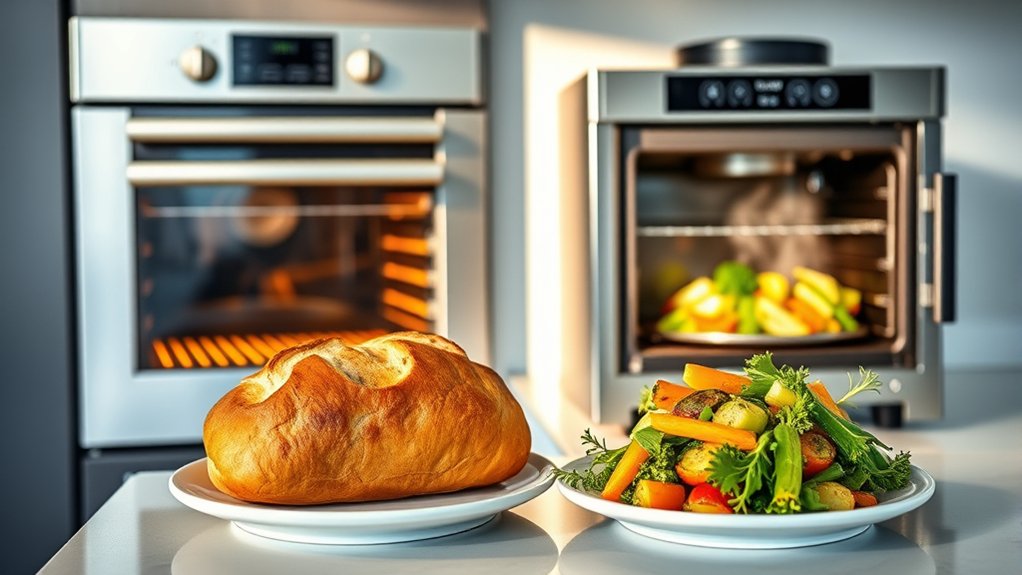
A conventional oven uses dry, circulating heat to brown and crisp foods, while a steam oven adds moisture for juicier, more tender results.
You’ll find conventional models best for bread, cookies, pizza, and roasted meats, whereas steam suits fish, vegetables, rice, and custards.
Conventional ovens generally cost less to buy and install, but steam models may cook faster and use less energy.
Your choice depends on results, space, budget, and maintenance needs; the details below can help you decide.
Key Takeaways
- Conventional ovens use dry heat, while steam ovens add moisture through vapor for gentler, juicier cooking.
- Conventional ovens excel at crisping and browning foods like bread, pizza, cookies, vegetables, and roasted meats.
- Steam ovens suit fish, poultry, vegetables, rice, grains, and custards that benefit from moisture retention.
- Steam ovens generally cost more to purchase and install because they may require water lines, drains, or reservoirs.
- Steam ovens require additional maintenance, including emptying tanks, wiping condensation, and descaling mineral buildup.
Oven vs Steam Oven: How Do They Work?
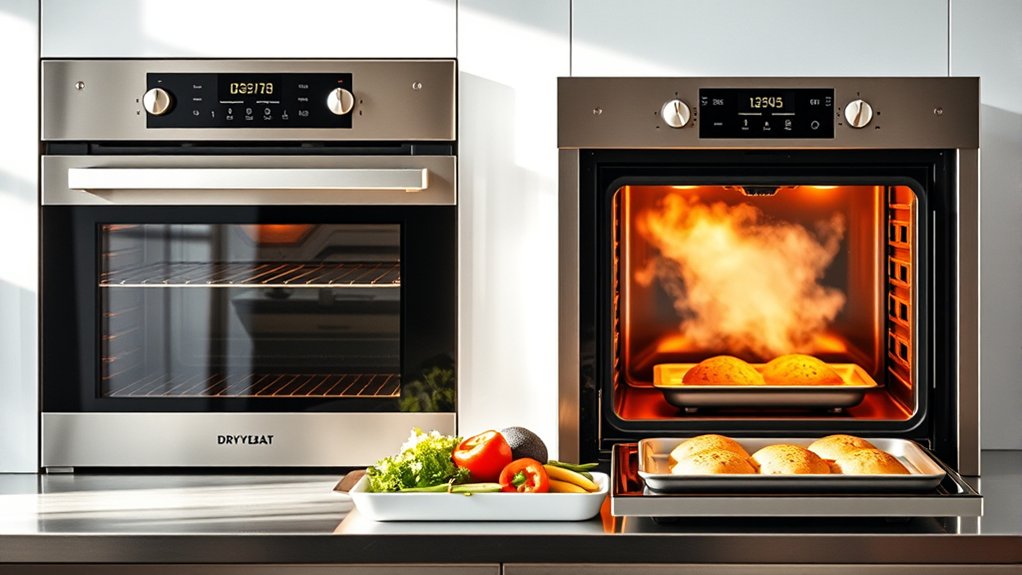
When you use a conventional oven, heating elements warm the air inside the chamber, and that dry heat cooks and browns your food. A fan may circulate heat, helping temperatures stay more consistent. You control the process mainly through temperature and cooking time, while the oven’s enclosed cavity retains heat.
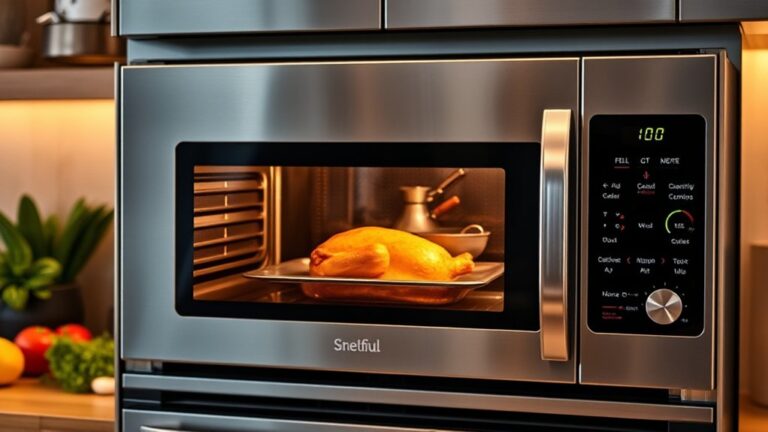
A steam oven works differently. It boils water in a built-in reservoir or connected supply, then releases vapor into the cooking chamber. You can select steam, dry heat, or a combination of both.
Steam transfers heat efficiently and keeps the environment moist, while combination settings let you adjust humidity and temperature independently.
Your choice affects kitchen space because steam models may need plumbing access, ventilation, or room for a water tank. They also require regular cleaning maintenance: wipe condensation, empty reservoirs, and remove mineral buildup.
Conventional ovens generally need less frequent moisture-related care, though both types benefit from routine interior cleaning.
What Foods Cook Best in Each Oven?
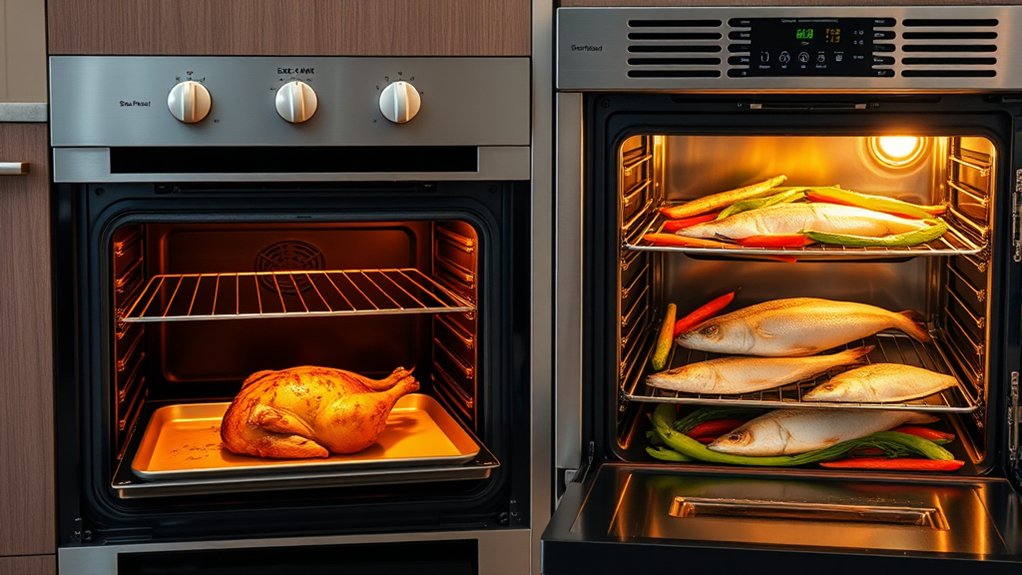
The best choice depends on the texture and moisture level you want. Choose a conventional oven for foods that benefit from dry, intense heat.
Choose a conventional oven when you want dry, intense heat for crisp, browned, and thoroughly baked results.
It’s ideal for cookies, cakes, bread, pizza, roasted vegetables, and meats with crisp, browned exteriors. You’ll also get reliable results when using techniques such as broiling, roasting, and baking on multiple racks.
Choose a steam oven when you want ingredients to stay tender and juicy. Steam works especially well for fish, poultry, vegetables, rice, grains, and custards.
It helps prevent delicate foods from drying out while preserving their natural color, nutrients, and flavor. For reheating leftovers, steam can restore moisture without making bread or meat tough.
You can combine both methods for versatile results. Start vegetables or meat with steam, then switch to dry heat for browning.
This approach gives you tenderness inside and crispness outside. For the best flavor preservation, match the oven to each ingredient’s structure and moisture content.
What Do They Cost to Install and Run?
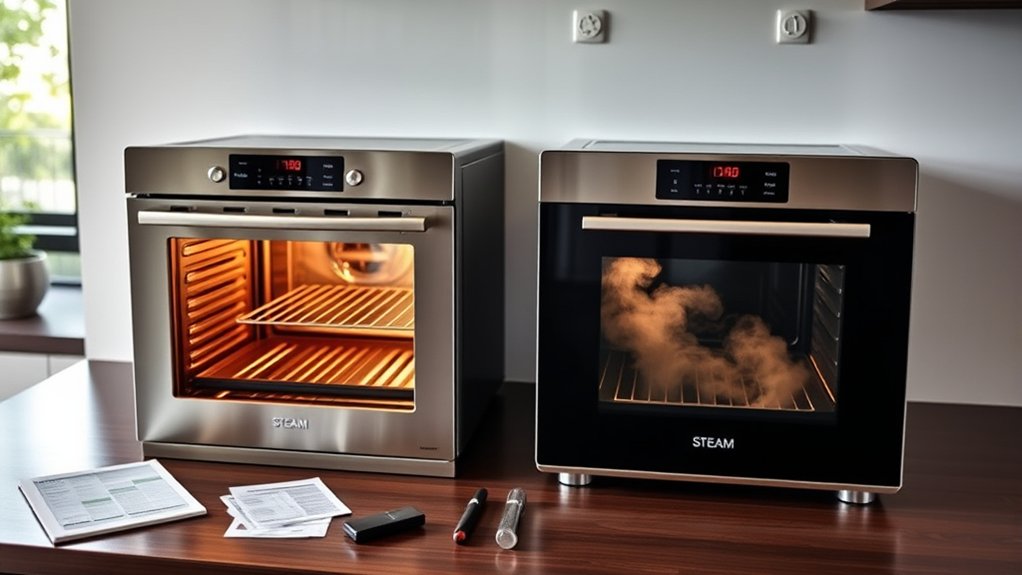
Installation and operating costs vary by oven type, size, features, and available utilities. A conventional oven usually costs less to purchase and install because it needs only electrical or gas connections.
A steam oven may require a water line, drain, filtration, or specialized cabinetry, increasing upfront expenses. Your pricing comparison should include installation, maintenance, cookware, and expected energy use, not just the sticker price.
For everyday operation, steam ovens can use less energy because they cook faster and at lower temperatures, but results depend on your habits and model.
Consider these cost factors:
- Purchase price and warranty coverage
- Electrical, gas, plumbing, and ventilation work
- Water filters, descaling, and repairs
- Cooking time and energy efficiency
- Capacity, controls, and included accessories
You’ll often spend less running a smaller conventional oven for occasional baking. However, frequent cooks may recover a steam oven’s higher price through faster cooking and reduced moisture loss.
Ask installers for written quotes, check utility requirements, and compare annual operating estimates before choosing.
Frequently Asked Questions
Can a Steam Oven Replace a Conventional Oven Entirely?
Yes, you can replace a conventional oven with a steam oven, but you’ll need to accept some limits. You’ll gain excellent moisture control, faster cooking, and strong Energy efficiency for vegetables, fish, bread, and reheating.
However, you may miss intense dry heat for crisp roasting, browning, and certain baked goods. For maximum Cooking versatility, choose a combi-steam model, which combines steam and convection. Otherwise, keep a conventional oven for frequent roasting and baking.
How Difficult Is Cleaning and Maintaining a Steam Oven?
Cleaning and maintaining a steam oven is usually manageable, especially when you use its automatic programs. Many models can complete a cleaning cycle in under an hour, giving you a useful picture of the workload.
Cleaning ease improves when you wipe spills after each use and empty the water reservoir. Your maintenance frequency depends on water hardness and usage.
Descale regularly, clean the door seal, and follow the manufacturer’s schedule to prevent buildup and odors.
Do Steam Ovens Require Special Cookware or Accessories?
You don’t usually need special cookware for a steam oven. You can use most heatproof, oven-safe dishes, including glass, stainless steel, ceramic, and silicone, provided they tolerate high temperatures and moisture.
Check your manufacturer’s guidance, since some models include perforated trays, solid pans, or dedicated steam containers. Accessory compatibility matters, so avoid unsuitable plastics, non-steam-rated materials, and tightly sealed containers.
Choose accessories designed for your model when possible for safer, better results.
How Much Kitchen Space Does Each Oven Type Need?
You’ll need more kitchen space than you might expect because compact cooking appliances rarely stay compact. A standard oven typically fits a 30-inch-wide cabinet opening, with space for ventilation and door clearance.
A steam oven may require a similar width, but its plumbing, water reservoir, drainage, and electrical connections can increase installation requirements.
Your kitchen footprint also depends on whether you choose a countertop or built-in model. Countertop units need nearby clearance, while built-ins require dedicated cabinetry and ventilation.
Are Steam Ovens Safe for Households With Children?
Yes, steam ovens can be safe for households with children when you use them carefully. For strong child safety, choose models with cool-touch doors, child locks, automatic shutoff, and concealed controls.
Keep children away while you open the door, since escaping steam can cause serious burns. Monitor noise levels, especially during steam release, and explain the danger clearly.
Never let children operate the oven, even with safety features enabled, without adult supervision.
Conclusion
Choosing between an oven and a steam oven comes down to how you cook. A conventional oven is your dependable workhorse for crisp roasts, pastries, and everyday meals, while a steam oven helps vegetables, fish, and bread stay moist and flavorful.
You’ll usually pay more to install and run steam technology, but it can reduce drying and reheating waste. Think of it like shoes: your oven is a sturdy boot; your steam oven is a specialized trainer for delicate steps.
In conclusion, the key differences between an oven and a steam oven depend on your cooking needs, budget, and preferred results.