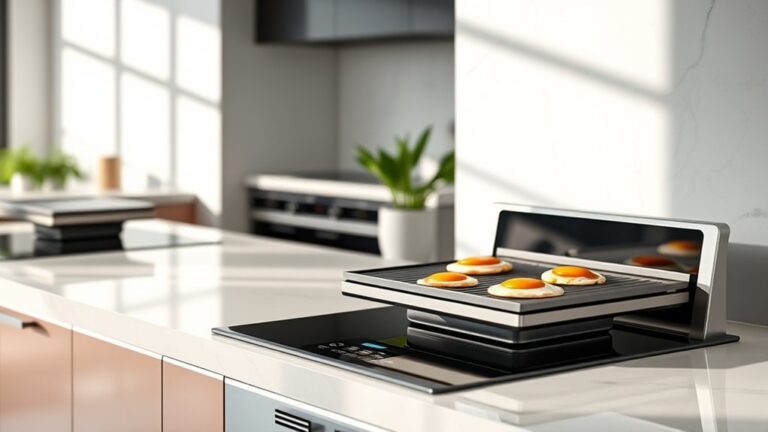
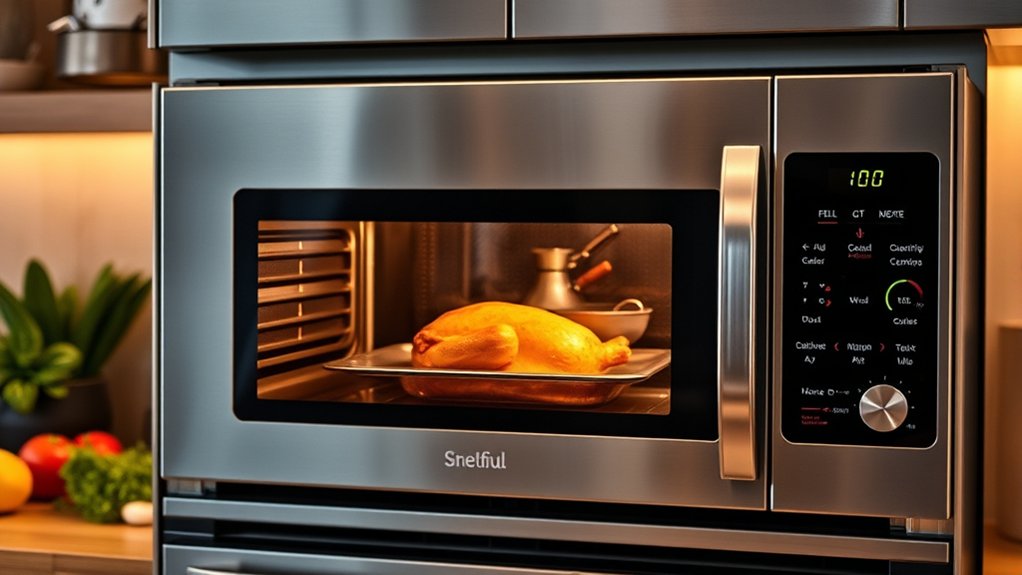
What Is a Microwave and Convection Oven Combination?
Many people struggle to find space for both a microwave and an oven, especially in small kitchens or busy homes. You’re not alone if you want faster meals without giving up crispy, browned results. A microwave and convection oven combination can help.
A microwave and convection oven combination lets you microwave, bake, roast, and brown food in one compact appliance. You can use microwave energy to heat food quickly, convection heat to circulate hot air for even cooking, or both modes together for faster meals with crisp, browned exteriors.
It’s ideal for small kitchens, busy households, and everyday portions, though capacity may be limited. You’ll learn how its modes, features, benefits, and safety practices work together.
Key Takeaways
- A microwave and convection oven combination is a single appliance that combines microwave energy with circulated hot air.
- Microwave mode rapidly reheats, defrosts, melts, and cooks food by exciting water molecules.
- Convection mode bakes, roasts, browns, and crisps food using a heating element and fan.
- Combination mode uses both technologies to cook food quickly while creating a browned, crispy exterior.
- This versatile, space-saving appliance suits small kitchens and everyday cooking but has less capacity than regular ovens.
What Is a Microwave and Convection Oven?
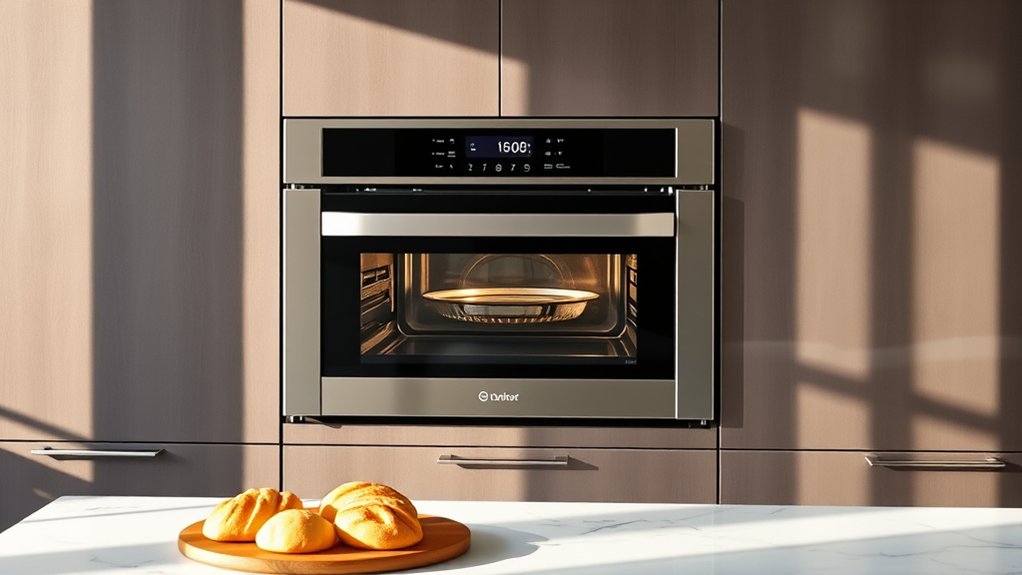
A microwave and convection oven combo is a versatile appliance that combines microwave technology with a conventional heating element and fan. You can use it to reheat leftovers, bake cookies, roast vegetables, or brown casseroles in one compact unit. The microwave function provides speed, while the convection setting delivers an oven-like finish with crisp, evenly cooked surfaces.
You’ll find combination ovens in various sizes, from countertop models to built-in designs. Choose a capacity that matches your cooking habits and available space. A countertop version can suit renters or smaller kitchens, while a built-in model can support a streamlined layout and complement your Kitchen aesthetics.
This appliance can also improve Energy efficiency when you replace separate reheating and baking equipment with one unit. You’ll save counter space and simplify meal preparation without giving up cooking flexibility. Consider preset programs, interior capacity, cleaning features, and controls before choosing a model that fits your routine.
How Do Combination Ovens Work?
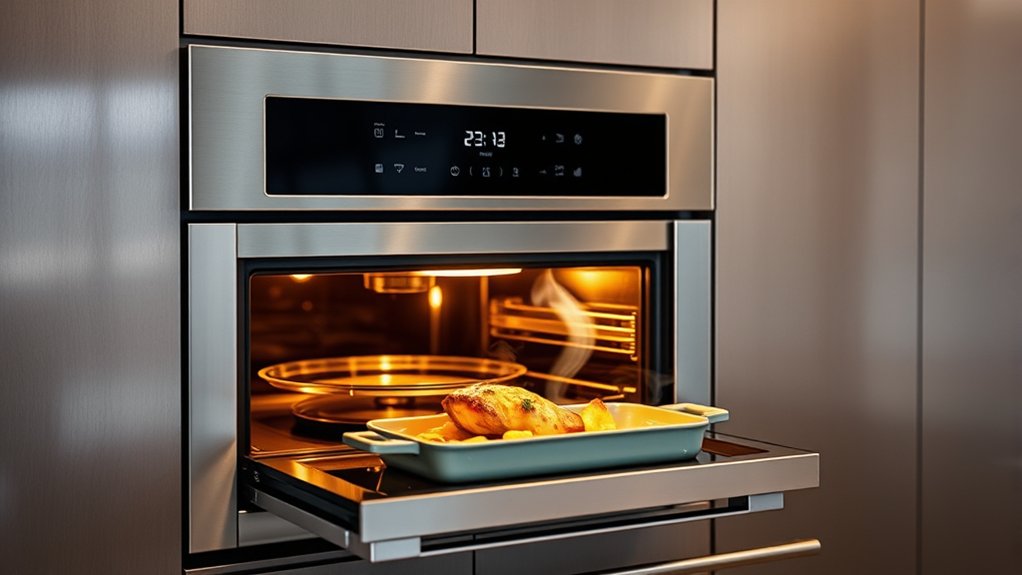
Combination ovens work by switching between, or combining, microwave energy and convection heat to cook food quickly and evenly. When you set a program, the appliance’s control system directs each heating source according to the time, temperature, and power you choose.
Microwaves excite water molecules inside your food, producing rapid internal heating. Meanwhile, a heating element warms the air, and a fan circulates that hot air around the cavity.
Microwaves heat food from within, while circulating hot air promotes even cooking and appealing browning.
This airflow promotes browning and helps maintain consistent temperatures. Through the user interface, you can select a cooking time, temperature, power level, or preset.
Sensors and programmed settings may adjust operation as your food cooks, reducing the need for constant monitoring. The oven’s insulation helps retain heat, while targeted microwave use can shorten cooking times.
As a result, you’ll often use less electricity than with separate, longer cooking methods, improving Energy efficiency. The combination also helps you achieve thoroughly cooked, attractively finished results.
Microwave, Convection, and Combination Modes
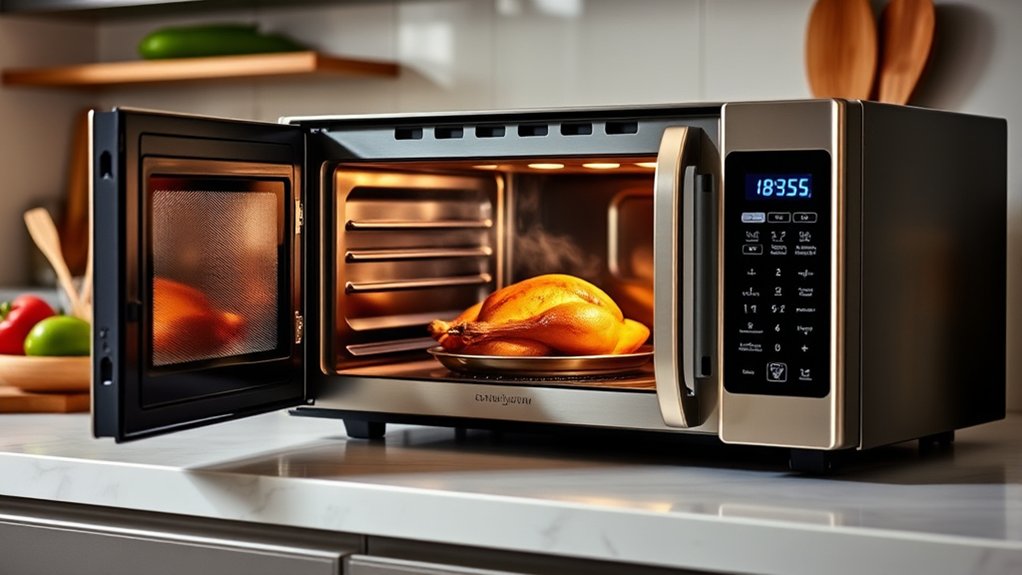
Use microwave mode for quick heating and simple cooking. Convection mode circulates hot air, so it’s ideal for browning and crisping food. Combination mode uses both methods, helping your food cook faster while improving its texture.
Microwave Mode Basics
Microwave mode heats food quickly by exciting water molecules, while convection mode circulates hot air to brown and crisp the surface. In microwave mode, you’ll use electromagnetic energy to warm food from within, making it useful for reheating leftovers, melting ingredients, steaming vegetables, and cooking quick meals.
Choose microwave-safe containers made from glass, ceramic, or labeled plastic, and avoid metal unless your manual specifically permits it. For microwave safety, cover food loosely to prevent splatters, leave room for steam, and stir or rotate portions for even heating.
Let food stand briefly after cooking so heat can distribute. Combination mode uses microwave energy and hot air together, helping you shorten cooking time while improving browning. You’ll appreciate convection efficiency when you want faster results without sacrificing a more finished appearance.
Convection Cooking Function
Convection mode shifts from microwave heating to hot-air cooking, so you can bake, roast, and crisp food with more even browning. A fan circulates heated air around your dish, helping cookies, vegetables, casseroles, and meats cook consistently.
Select the temperature and cooking time as you would with a standard oven, then place food on an appropriate rack or tray. You’ll often need to reduce the recipe’s temperature slightly because circulating heat cooks efficiently.
Preheating can improve results, especially for baked goods and foods that need a crisp surface. Convection cooking supports Kitchen versatility by handling tasks that usually require a separate oven.
It may also improve Energy efficiency for smaller portions, since you’re heating a compact cavity instead of a full-size oven. Use oven-safe cookware and leave space around dishes for airflow.
Combination Mode Benefits
Combination mode pairs microwave energy with circulating heat, helping food cook faster while still developing a browned, crisp exterior. You’ll spend less time waiting than with convection alone, while enjoying more even results than microwave cooking typically provides.
Use this setting for casseroles, roasted vegetables, chicken, and baked dishes that need a thoroughly cooked center and appealing browning.
Microwave mode excels when you’re reheating leftovers, melting ingredients, or cooking quickly without browning. Convection mode suits cookies, pastries, and foods that benefit from dry, circulating heat.
Combination mode bridges both functions, giving you flexibility for everyday meals.
You’ll also gain energy efficiency because shorter cooking times can reduce power use. Since one appliance handles multiple tasks, you’ll preserve valuable kitchen space and avoid buying separate countertop equipment.
Monitor cooking closely, because combination settings may require adjusted times.
What Can You Cook in One?
You can roast meats and vegetables evenly with convection heat, while the microwave helps speed up cooking. You can also bake cakes and pastries until they’re golden and crisp. So, whether you’re preparing a savory meal or a sweet treat, this combination gives you plenty of flexibility.
Roasting Meats and Vegetables
Roasting in a microwave and convection oven combo lets you brown meats and vegetables while cooking them more quickly than in a standard oven. Use the convection setting to circulate hot air around chicken, beef, pork, potatoes, carrots, peppers, or Brussels sprouts for even browning.
You can combine microwave power with convection heat when you need to shorten cooking time, especially for thick cuts or dense vegetables. Place food on a suitable rack or pan, leave space around each piece, and follow recommended internal temperatures for safe results.
Your appliance’s presets may simplify roasting, but you should still monitor doneness. This approach supports energy efficiency because shorter cooking cycles use less power.
It also saves kitchen space by combining two appliances, helping you prepare complete savory meals without crowding your counters.
Baking Cakes and Pastries
When you use the convection setting, you can bake cakes, muffins, cookies, pies, and pastries with evenly distributed heat and nicely browned surfaces. Preheat the oven, choose the recommended temperature, and position your pan on the rack specified in your recipe.
Convection airflow may cook food faster, so check it several minutes early and reduce the temperature slightly if necessary. Use microwave power only for recipes designed for combination cooking; excessive moisture can prevent proper browning or create a rubbery texture.
For consistent results, measure ingredients accurately, avoid opening the door repeatedly, and let baked goods cool before adding Cake decoration. You can also create crisp, delicate desserts through careful Pastry layering, brushing each sheet lightly with butter, then baking until golden and flaky.
Always use microwave-safe, ovenproof cookware.
When Should You Use Each Mode?
Choose microwave mode for quick reheating, defrosting, or cooking foods that retain moisture, while convection mode works best for browning and crisping dishes like roasted vegetables, baked goods, and casseroles. You’ll get the best results by matching the mode to your food’s texture and cooking goal.
Match microwave and convection modes to your food’s moisture, texture, and desired finish for faster, better cooking results.
- Microwave: Heat leftovers, soften butter, steam vegetables, or defrost meat quickly.
- Convection: Bake cookies, roast vegetables, brown casseroles, or crisp frozen foods.
- Combination: Use both modes when you want moist interiors and browned exteriors, such as with a roast or baked pasta.
- Energy efficiency: Choose the shortest effective mode to reduce cooking time and conserve energy.
Consider the food’s size, moisture, and desired finish before selecting a setting. Microwave cooking offers speed, while convection cooking develops color and texture.
Combination cooking expands your cooking versatility when one mode alone can’t deliver the result you want. Follow your appliance’s recommended temperatures, cookware guidance, and timing adjustments for consistent, safe results.
Check food during cooking, since compact ovens can heat unevenly and finish faster than expected.
Combination Oven vs. Regular Oven
A combination oven gives you microwave speed alongside convection browning, while a regular oven relies mainly on steady radiant heat for baking and roasting. You can switch between microwave, convection, or both, whereas a regular model uses conventional or fan-assisted heat. That difference influences cooking style, space, and daily control.
| Feature | Combination oven | Regular oven |
|---|---|---|
| Heating | Microwave and convection | Conventional or fan heat |
| Best fit | Quick, crisp meals | Baking and roasting |
| Controls | Multiple cooking modes | Primarily oven settings |
| Design | Compact, versatile | Larger, traditional |
For Energy efficiency, compare cooking times and power ratings rather than assuming one option always wins. A combination model may suit you if counter space matters, while a regular oven can offer greater capacity for large dishes.
Consider kitchen aesthetics, too. A built-in combination unit creates a streamlined appearance, whereas a traditional range gives your kitchen a familiar focal point.
Your choice should match your recipes, available space, and preferred cooking workflow. Check dimensions, ventilation requirements, and electrical specifications before installation to ensure the appliance fits safely.
Benefits and Limitations to Expect
Beyond comparing features with a regular oven, consider how a microwave and convection combo will affect your daily cooking. You’ll gain speed, flexibility, and useful countertop space, but you’ll also accept compromises.
- Faster meals: Microwave power heats leftovers and cooks small portions quickly, while convection heat browns and crisps food more effectively.
- Space savings: One appliance can handle tasks that might otherwise require separate equipment, helping you maximize a compact kitchen.
- Energy trade-offs: Energy efficiency considerations depend on the meal. Using microwave power for small servings may consume less energy than heating a full-size oven, but combination cooking can draw more power.
- Practical limits: You’ll have less interior capacity than many conventional ovens, and cooking times may require adjustment. Some foods can cook unevenly if you overload the cavity.
Kitchen appliance comparisons should include cleaning effort, noise, and countertop clearance. You’ll also need suitable cookware and may find that complex meals require batches.
Still, the combo offers convenient everyday performance when speed and versatility matter most.
Which Features Should You Look For?
When choosing a microwave and convection oven combo, look for cooking modes that suit the meals you usually prepare. Make sure the capacity and overall size fit both your kitchen and cooking needs. An easy-to-clean interior is also a helpful feature, saving you time and effort after each use.
Cooking Modes
Look for a microwave and convection oven combo with versatile cooking modes, such as microwave, convection, broil, and combination settings. Each mode serves a distinct purpose, helping you prepare meals with greater control and convenience.
- Microwave: Reheat leftovers, soften ingredients, or cook quickly while preserving moisture.
- Convection: Circulate hot air to brown, crisp, and bake food evenly.
- Broil: Apply intense top heat to toast surfaces, melt cheese, or finish dishes.
- Combination: Use microwave energy and convection heat together for faster cooking with browned results.
Check whether you can adjust power levels, temperature, cooking time, and mode sequences. Sensor cooking can automatically detect moisture and stop when food reaches the right doneness.
These controls support Cooking speed without sacrificing texture. Efficient programs may also improve Energy efficiency by limiting unnecessary heating and reducing overall cooking time.
Capacity and Size
After choosing the right cooking modes, consider how much space the microwave and convection oven combo needs for your meals and kitchen. Evaluate your Kitchen space before selecting a model.
Measure the countertop or cabinet opening, including height, width, and depth, then compare those figures with the listed Appliance dimensions. Leave sufficient clearance around vents and the door so you can use the unit safely and comfortably.
Next, match capacity to your cooking habits. A compact interior suits one or two people and reheating smaller portions, while a larger cavity accommodates family-size dishes, baking pans, and multiple servings.
Check the turntable or rack dimensions, not just the stated capacity, because interior layouts vary. Choose a size that handles your cookware without overwhelming your available space or limiting nearby workspace.
Ease of Cleaning
Cleaning features can make daily cooking much easier, so prioritize a microwave and convection oven combo with a smooth, stain-resistant interior and a removable turntable or rack. These details simplify Cleaning maintenance and help you handle spills before odors or baked-on grease develop.
Look for:
- A nonstick or enamel cavity that wipes clean quickly.
- A removable door or accessible glass for thorough cleaning.
- Dishwasher-safe racks, trays, and turntables to reduce scrubbing.
- Steam-clean or self-clean settings for stubborn residue.
Choose a model with rounded interior corners, because they leave fewer places for crumbs and grease to collect. Check whether the manufacturer recommends specific cleaners, since harsh abrasives can damage finishes.
For effective stain removal, wipe fresh splatters with a damp cloth, then use mild soap and water. Always let surfaces cool before cleaning, and dry them afterward to prevent streaks and lingering moisture.
How Can You Use One Safely?
To use a microwave and convection oven combo safely, follow the manufacturer’s instructions and select the correct cooking mode for each dish. Keep metal racks, foil, and utensils out of microwave mode unless the manual specifically approves them.
Use microwave-safe glass, ceramic, or labeled containers, and loosen lids so steam can escape. In convection mode, use heat-resistant cookware and oven mitts when handling hot dishes.
Never operate the appliance empty, and don’t heat sealed containers, whole eggs, or foods with unvented skins. Stir or rotate food as directed, then check its internal temperature before serving.
Keep the vents clear, and leave space around the unit for proper airflow. Wipe spills promptly after the oven cools, and unplug it before cleaning or inspecting it.
Good Kitchen safety also means keeping children away during operation. For reliable appliance maintenance, check the door seal, cord, and interior regularly.
Stop using the oven if you notice damage, sparking, or unusual noises.
Who Should Buy a Combination Oven?
Once you know how to use a combination oven safely, you can decide whether it fits your cooking habits. You’ll benefit most if you want one appliance that reheats, bakes, roasts, and crisps food without switching between machines.
- Small households: You can prepare quick meals and smaller portions efficiently without heating a full-size oven.
- Busy cooks: You’ll save time by microwaving, convection-baking, or combining both modes for faster results.
- Limited kitchens: If kitchen space is tight, one versatile appliance can replace separate equipment.
- Efficiency-minded shoppers: You may improve energy efficiency by using a smaller cavity for everyday cooking instead of a large oven.
Choose a different option if you regularly cook large meals, need multiple dishes at once, or prefer specialized appliances.
Before buying, measure your counter, check the interior capacity, and compare the controls. You’ll also want enough ventilation and a power outlet nearby.
A combination oven suits you when convenience, flexibility, and compact design matter more than maximum capacity.
Frequently Asked Questions
How Much Counter Space Does a Microwave and Convection Oven Combination Require?
You’ll typically need 2 to 4 square feet of counter space for a microwave and convection oven combination, depending on its dimensions. Most countertop models measure about 20–24 inches wide, 16–20 inches deep, and 12–15 inches tall.
Check the manufacturer’s clearance requirements, especially around vents and the rear. During kitchen layout planning, prioritize appliance integration, stable support, and easy door access.
You’ll also want nearby outlets and sufficient ventilation for safe operation.
How Much Electricity Does a Combination Microwave and Convection Oven Use?
You’ll typically use 1,000–1,500 watts in microwave mode and 1,300–1,800 watts in convection mode, though models vary. The theory that combination cooking always consumes more electricity isn’t entirely true: shorter cooking times can offset higher power consumption.
For example, running a 1,200-watt setting for 30 minutes uses about 0.6 kilowatt-hours. Your actual energy efficiency depends on temperature, cooking duration, food quantity, and whether you use microwave, convection, or both.
How Do You Clean a Microwave and Convection Oven Combination?
Unplug the unit and remove its turntable, rack, and accessories before cleaning. Wipe the interior with a soft cloth dampened in warm, soapy water; use steam from a microwave-safe bowl of water and lemon to loosen grime.
Don’t use abrasive pads, harsh chemicals, or excess water near vents. Clean the exterior and door gently, then dry everything thoroughly. Follow these Cleaning tips and include regular Maintenance routines to prevent odors, grease, and buildup.
Can Combination Ovens Be Installed Over a Wall Oven?
Yes, you can install some combination ovens over a wall oven, but you’ll need to verify the manufacturer’s installation requirements first. Check ventilation, cabinet dimensions, electrical circuits, clearances, and weight support.
Proper wall oven integration depends on compatible models and approved trim kits; don’t stack appliances without specific authorization. Consider kitchen layout considerations, including user access, heat management, and serviceability.
Hire a qualified installer to confirm safety and maintain your warranties.
How Long Do Microwave and Convection Oven Combinations Typically Last?
You can expect a microwave and convection combination to last about 7–10 years, like a dependable kitchen companion that serves you faithfully before retiring. Your habits shape its journey: follow Maintenance tips, clean spills promptly, avoid slamming the door, and schedule repairs early.
You’ll extend its lifespan with sensible use, while energy efficiency often improves when you replace an aging unit. Heavy use may shorten its service life.
Conclusion
A microwave and convection oven combination gives you the best of both worlds in one compact appliance. You can quickly reheat meals, bake evenly, roast foods, or combine microwave speed with convection browning.
By choosing the right mode, you’ll cook more efficiently while saving counter space. Just follow safety guidelines and learn each setting’s strengths.
With the right features, this versatile microwave and convection oven combination can become your kitchen’s Swiss Army knife, handling everyday meals with ease.