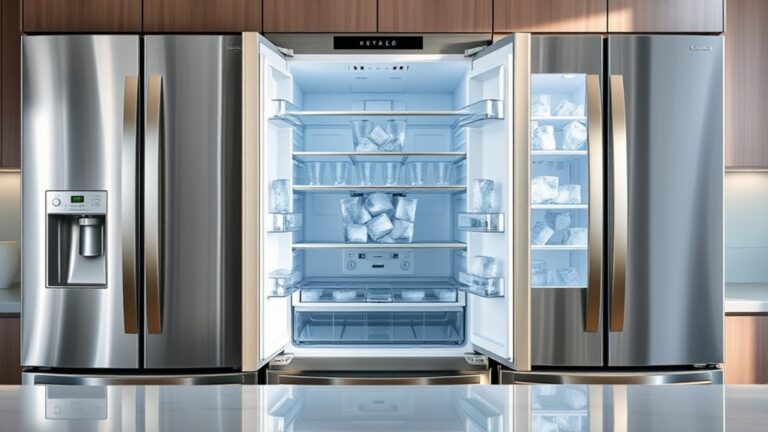
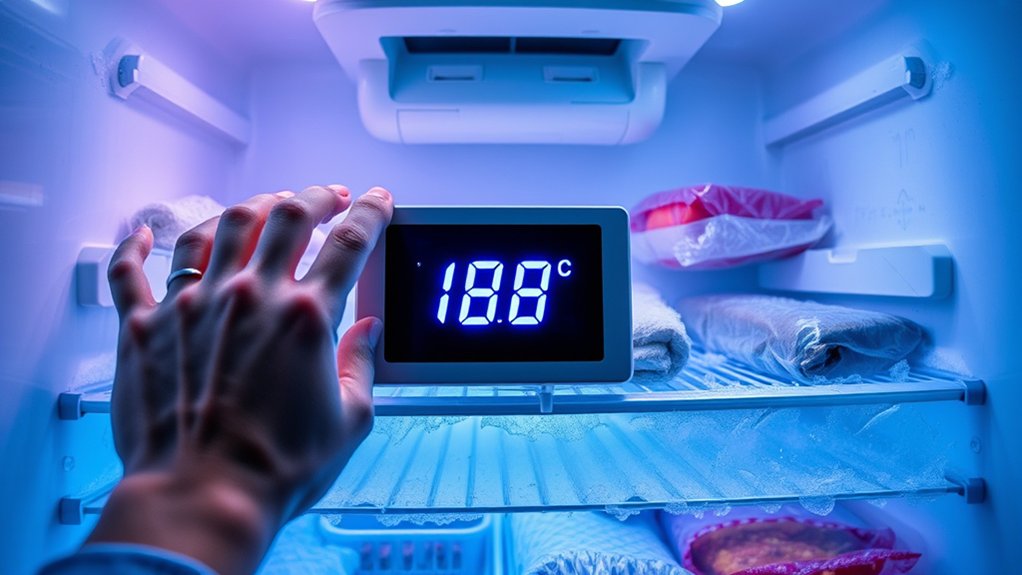
What Temperature Should Your Freezer Be Set At?
Many people struggle to keep their freezer at the right temperature, especially when food develops ice crystals, loses quality, or starts to thaw. You’re not alone—finding the best setting can help protect your groceries and give you greater peace of mind.
What Temperature Should Your Freezer Be Set At?
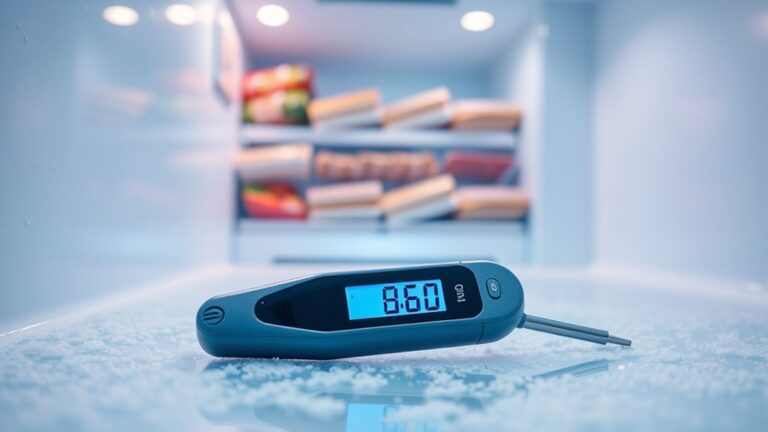
Set your freezer to 0°F (-18°C) or colder to keep food safely frozen and preserve its quality. Use an independent freezer thermometer because the control panel usually shows the selected setting, not the actual temperature.
Place the thermometer centrally, away from vents, walls, and packages, then check it after several hours or overnight. Keep the door closed while cooling, and don’t block air vents.
Below, you’ll find guidance on temperature checks, warm freezers, storage, and thawed food.
Key Takeaways
- Set your freezer to 0°F (-18°C) or colder for safe, long-term food storage.
- Use an independent freezer thermometer because built-in displays typically show the selected setting, not the actual temperature.
- Place the thermometer centrally, away from walls, vents, shelves, and packages, then wait several hours before checking.
- Keep the door closed while cooling. Most freezers reach 0°F within 4–12 hours, though loaded units may take 24 hours.
- Avoid excessively cold settings, which increase energy use and may cause freezer burn without improving food safety.
What Temperature Should Your Freezer Be Set At?
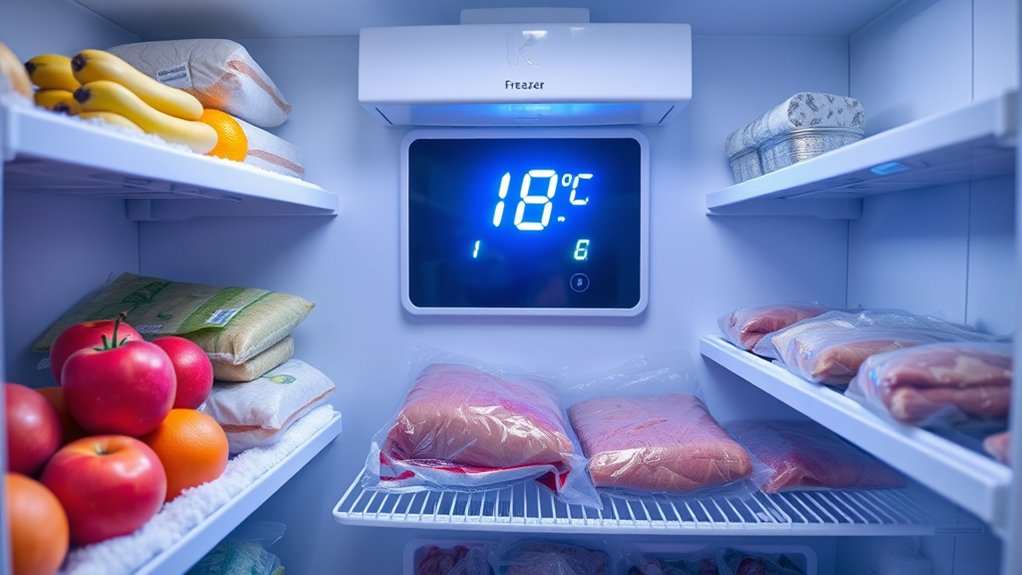
Set your freezer to 0°F (-18°C) or colder to keep food safely frozen and preserve its quality. Use your appliance’s control panel or dial to select this setting, then place a separate freezer thermometer inside to confirm the actual temperature.
Set your freezer to 0°F (-18°C) or colder, then verify the actual temperature with a separate freezer thermometer.
Built-in displays can show the selected setting rather than the conditions around your food.
Arrange items so cold air can circulate freely. Keep frozen snacks, vegetables, and other frequently used foods in accessible areas, while placing large packages deeper inside.
Don’t pack the compartment so tightly that vents become blocked, and avoid leaving the door open while you organize groceries.
Check the thermometer regularly, especially after adding a large load or experiencing a power interruption.
If your freezer has adjustable Temperature zones, set each section according to its intended use and follow the manufacturer’s instructions.
Defrost manual models when ice buildup interferes with storage space or prevents the door from sealing properly.
Why Does Freezer Temperature Matter?
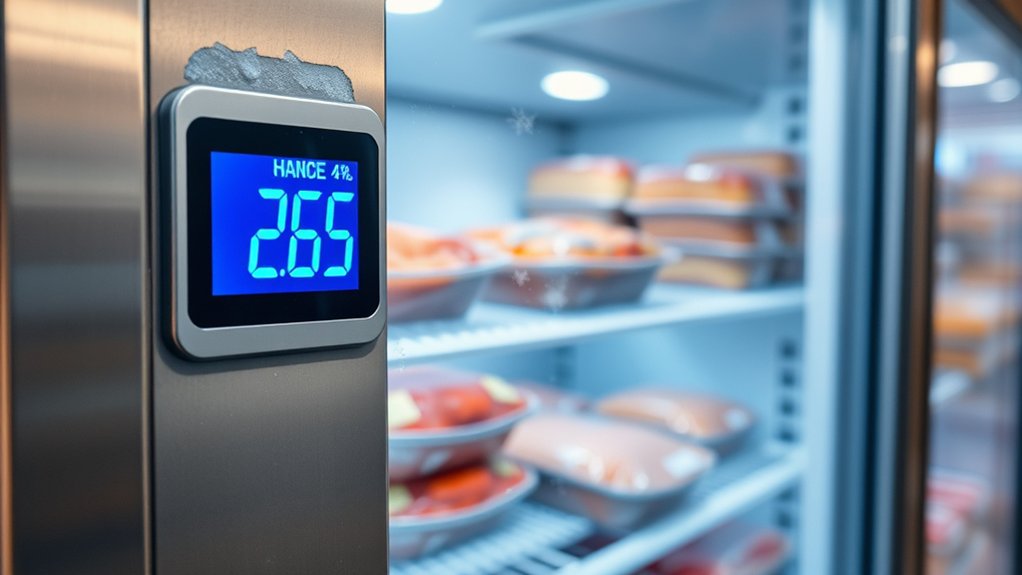
The right freezer temperature keeps food at 0°F (-18°C) or colder, slowing bacterial growth and preserving flavor, texture, and nutrients. Maintaining that temperature protects your groceries and supports reliable food preservation, especially during long-term storage.
When your freezer runs warmer, food can partially thaw and refreeze. That cycle creates larger ice crystals, damages texture, causes freezer burn, and may increase spoilage risks.
A consistently cold freezer also helps you avoid unnecessary waste and protects meals you’ve prepared in advance.
It supports freezer efficiency, too. Stable temperatures reduce strain on the appliance, help it use energy predictably, and prevent food from warming whenever you open the door.
- Safety: You’ll limit conditions that encourage microbial growth.
- Quality: You’ll preserve taste, color, texture, and nutrients.
- Savings: You’ll waste fewer groceries and protect your budget.
- Performance: You’ll help your freezer operate reliably over time.
Keeping food properly frozen isn’t just about convenience. It’s a practical way to protect your health, resources, and meal quality.
How Can You Check Your Freezer Temperature?
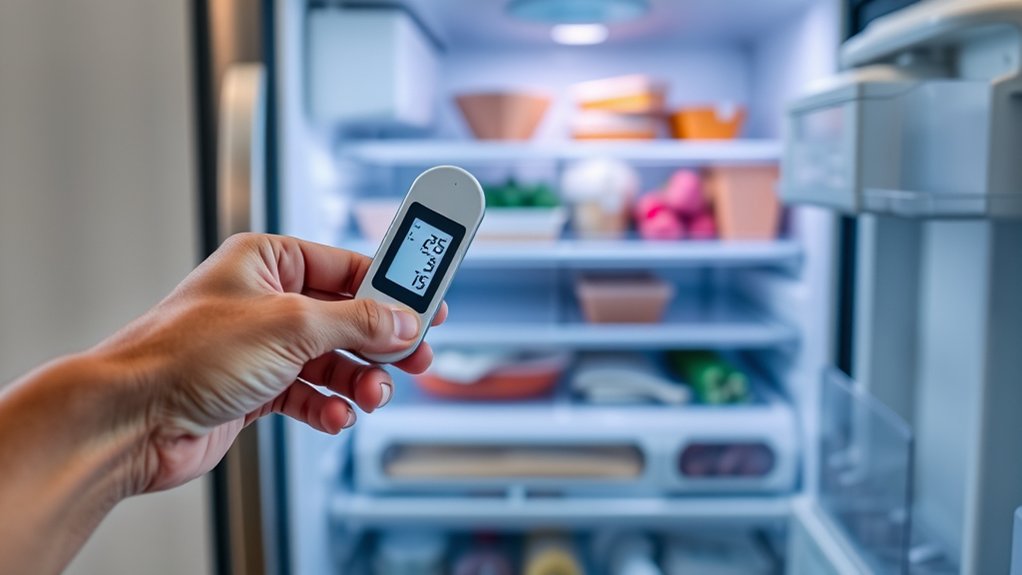
You can check your freezer’s temperature with a freezer thermometer for the most accurate reading. If your appliance has a built-in temperature display, check it regularly for a quick update. Comparing the two readings can help confirm that your freezer is set to the right temperature.
Use a Freezer Thermometer
For an accurate reading, place a freezer thermometer between food packages in the center of the compartment, where it won’t touch the walls. Let it sit for several hours, preferably overnight, so the reading reflects the freezer’s steady temperature rather than a temporary fluctuation.
- Check the thermometer when you haven’t recently opened the door or added warm food.
- Confirm the temperature reaches 0°F (-18°C) or colder for safe, long-term storage.
- Record the reading and repeat it at different times to spot inconsistent cooling.
- Move the thermometer if it rests against a package, shelf, wall, or cooling vent.
If the temperature stays too warm, reduce the setting gradually and keep the door sealed. A reliable thermometer supports freezer efficiency and Energy savings by helping you avoid unnecessary overcooling while protecting frozen food. Replace its battery or verify its accuracy as needed.
Check Built-In Temperature Displays
If your freezer has a built-in temperature display, check it after the door has remained closed for several hours to get a steadier reading. Read the number without opening the door, if the display remains visible from outside. Your freezer should typically read 0°F (-18°C), though the manufacturer may recommend a slightly different setting.
Built in displays can offer convenient monitoring, but they may not measure the temperature where your food sits. Place a separate freezer thermometer inside to compare readings.
If the numbers differ, don’t assume the display is correct. Check your owner’s manual for temperature calibration instructions, or adjust the control gradually and recheck after several hours.
Replace the display’s batteries, if applicable, when the reading appears blank or erratic. Record occasional readings to spot temperature changes before food begins to thaw.
Where Should You Put the Freezer Thermometer?
Where should you put the freezer thermometer for the most accurate reading? Place it in the center of the freezer, where food usually sits. This location gives you a practical reading of the surrounding air without interference from the walls, door, or cooling outlet.
Follow these placement tips:
- Hang or stand the thermometer securely so it won’t touch shelves, packages, or the freezer floor.
- Keep it away from the door, where frequent opening exposes it to warmer air.
- Don’t position it beside the vent or cooling element, which may create an unusually cold reading.
- Leave it in place for several hours before checking the display, allowing the temperature to stabilize.
Check the reading at the same time each day for consistent comparisons.
If your thermometer includes thermometer calibration instructions, verify its accuracy occasionally with an ice-water test or according to the manufacturer’s guidance.
A readable, accessible position makes routine checks easier without disturbing stored food or leaving the door open unnecessarily.
What Causes a Freezer to Run Warm?
A freezer may run warm because of a blocked vent, a worn door seal, excessive frost buildup, or a malfunctioning thermostat or compressor. When air can’t circulate, cold spots develop while other areas become too warm.
A damaged gasket lets warm, humid air enter whenever the door closes, forcing the appliance to work harder. Frequent door openings, an overpacked compartment, or placing hot food inside can also raise the temperature temporarily.
Poor freezer insulation allows cold air to escape through the cabinet, increasing energy use and reducing performance. You may notice unusual compressor noise, such as loud clicking, buzzing, or repeated starts, when the motor struggles or cycles improperly.
A faulty thermostat can misread the interior temperature and stop cooling too soon. Likewise, restricted airflow around the condenser or a failing compressor can prevent adequate cooling.
Even a nearby heat source or an unusually warm room can make your freezer run above its intended temperature.
How Do You Fix a Warm Freezer?
How do you fix a warm freezer? Start by checking whether the door closes tightly and the gasket seals evenly. Move food away from interior vents, and don’t pack shelves so tightly that air can’t circulate.
Then check these steps:
- Confirm the freezer’s setting and lower it slightly if necessary. Clean dusty condenser coils, and make sure the appliance has room for ventilation.
- Inspect the door gasket for cracks, gaps, or hardened sections. Clean it with warm, soapy water; replace it if it won’t seal.
- Follow proper defrosting maintenance. If thick ice covers the walls or evaporator area, unplug the freezer, protect food, and let the ice melt naturally. Never chip it with a knife.
- Review power outage procedures. Verify the outlet, breaker, and cord, then keep the door closed during interruptions.
If the freezer still runs warm after these checks, arrange professional service. A failed fan, thermostat, relay, or compressor may require replacement. Don’t refreeze food that smells abnormal or feels unsafe.
How Long Does a Freezer Take to Reach 0°F?
Most freezers take about 4 to 12 hours to reach 0°F after startup, though a newly loaded or recently defrosted unit may need up to 24 hours. You’ll get a more accurate estimate if you leave the door closed during this period. Opening it repeatedly releases cold air and makes the compressor work longer.
Most freezers reach 0°F within 4 to 12 hours, but warm loads or recent defrosting can extend cooling to 24 hours.
Your freezer’s size, starting temperature, room temperature, and food load all affect cooling time. An empty cabinet may cool quickly, while warm groceries can extend the process.
Arrange items loosely at first so cold air can circulate, then add more food after the freezer stabilizes.
Use an appliance thermometer to check progress instead of relying only on the control setting. Temperature calibration matters because a dial’s number may not match the actual interior temperature.
If your freezer hasn’t reached 0°F after 24 hours, inspect the door seal, ventilation, and condenser area. Improving freezer efficiency can shorten recovery time and support consistent storage.
Can a Freezer Be Set Too Cold?
Yes, a freezer can be set colder than necessary, although temperatures below 0°F generally won’t make food safer. Your freezer should typically remain at 0°F, the standard temperature for preserving food quality and limiting microbial growth.
Setting it much colder can increase energy use without providing meaningful protection.
- Freezer efficiency: Colder settings make the compressor run longer, raising electricity consumption and potentially shortening the appliance’s service life.
- Temperature regulation: A reasonable setting gives the freezer enough cooling capacity to recover after door openings without constant operation.
- Food quality: Excessive cold can dry foods more quickly, causing freezer burn and changes in texture, even though it won’t usually create a safety benefit.
- Appliance performance: Extreme settings may strain seals, sensors, and mechanical components, especially in older models.
Use an independent appliance thermometer to verify the actual temperature, since the dial’s numbers don’t always match the interior.
If your freezer stays well below 0°F, adjust it gradually and recheck it after several hours.
How Should You Store Food in a Freezer?
Once your freezer is set near 0°F, proper food storage helps preserve quality and prevent freezer burn. Wrap foods tightly in freezer-safe packaging, removing as much air as possible before sealing. Use airtight containers or heavy-duty freezer bags, and label each package with its contents and freezing date.
Seal foods tightly, remove excess air, and label packages with contents and freezing dates to preserve quality and prevent freezer burn.
For Food safety, divide large amounts into shallow portions so they freeze quickly and evenly. Keep raw meat, poultry, and seafood sealed on lower shelves to prevent leaks onto other foods.
Store frequently used items near the front, while placing newer packages behind older ones. This Storage organization approach helps you follow a first-in, first-out system and reduces waste.
Avoid overloading your freezer, since crowded shelves restrict cold-air circulation. Leave space between packages and don’t block vents.
Keep foods away from the door when possible, because temperatures fluctuate there. Check that packages remain sealed, and arrange your freezer regularly so you can find items easily.
When Should You Discard Thawed Food?
Discard thawed food when it has stayed above 40°F for more than two hours, or for more than one hour if the surrounding temperature exceeds 90°F. Don’t taste food to decide whether it’s safe; harmful bacteria may not change its smell, flavor, or appearance.
For food safety, use a refrigerator thermometer and check temperature accuracy regularly.
- Still cold: Cook or refreeze food that thawed in the refrigerator while it remains at 40°F or below. Quality may decline, but it’s generally safe.
- Ice crystals remain: You can refreeze food that still contains ice crystals or feels refrigerator-cold, though texture might suffer.
- Warm perishable food: Discard meat, poultry, seafood, eggs, dairy, cooked leftovers, and cut produce left above 40°F beyond the safe limit.
- Power outage: Keep the freezer closed. A full freezer usually holds a safe temperature for about 48 hours; a half-full one, about 24 hours.
When uncertain about time or temperature, throw it out. The cost of replacement is lower than the risk of foodborne illness.
Frequently Asked Questions
Can Freezer Temperature Affect Energy Consumption?
Yes, your freezer temperature can markedly affect energy consumption. If you set it colder than necessary, the compressor runs longer, increasing electricity use and potentially shortening appliance life.
For better energy efficiency, maintain the recommended setting near 0°F (-18°C), and avoid frequent door openings. Temperature accuracy matters, so use an independent thermometer to verify performance.
Keep the freezer reasonably full, but leave enough space for air circulation and consistent cooling.
How Often Should You Clean and Defrost Your Freezer?
Clean your freezer every three to six months, and defrost it whenever ice exceeds one-quarter inch. Start with a swift scrub: remove food, unplug the appliance, and wash interior surfaces with mild soap and warm water.
Dry everything thoroughly before restoring power. Practice smart freezer organization to prevent spills and overcrowding. Include regular shelf maintenance by wiping shelves monthly and checking seals.
Don’t chip ice with sharp tools; use safe, gentle methods instead.
What Is the Typical Lifespan of a Freezer?
You can typically expect your freezer to last 10–15 years, though quality, usage, and placement affect its lifespan. With regular freezer maintenance, you’ll help it run efficiently and identify problems early.
Clean the interior, defrost when ice builds up, check door seals, and vacuum the coils periodically. Replace your freezer sooner if it struggles to stay cold, makes unusual noises, or needs frequent repairs.
Protect food safety by monitoring its temperature consistently.
Can You Safely Refreeze Food After It Has Thawed?
You can safely refreeze food if it thawed in the refrigerator and stayed at 40°F or below, though its texture may change. If you thawed it in cold water or the microwave, cook it before refreezing.
Never refreeze food left at room temperature for over two hours, or one hour above 90°F. Follow food safety practices and reliable thawing guidelines, and when in doubt, throw it out to protect yourself.
What Freezer Features Help Maintain Consistent Temperatures?
Look for features that make temperature swings practically disappear: precise electronic controls, temperature calibration, and built-in sensors that adjust cooling automatically. Choose a model with rapid-freeze capability to lower temperatures quickly after you add groceries.
A tightly sealing door, insulated walls, and frost-free operation also help preserve consistency. Watch for frost buildup, which can block airflow and create warm spots. An alarm alerts you when temperatures rise unexpectedly.
Conclusion
Keep your freezer at 0°F (-18°C) to protect food, preserve quality, and prevent waste. Check the temperature with a freezer thermometer, place it in a central spot, and give the appliance time to stabilize.
Pack food properly, leave room for cold air to circulate, and watch for warning signs such as frost, thawing, or temperature swings. If food has fully thawed and stayed warm, discard it.
Set the right freezer temperature, store food smartly, and keep every frozen meal fresh, safe, and satisfying.